
 English
 Chinese
 Dutch
 Arabic
 Spanish
 Portuguese
 Russian
 French
 Italian
 German
 Japanese
Near the end of the Sermon on the Mount, Jesus says “I never knew you” to people who call him “Lord, Lord” and point to miracles done in his name. He does not say the miracles never happened. To be known by him is to belong to him, and these people never did. The test he sets is doing “the will of my Father.”
“Not everyone who says to me, ‘Lord, Lord,’ will enter the kingdom of heaven, but the one who does the will of my Father who is in heaven. On that day many will say to me, ‘Lord, Lord, did we not prophesy in your name, and cast out demons in your name, and do many mighty works in your name?’ And then will I declare to them, ‘I never knew you; depart from me, you workers of lawlessness.’” (Matthew 7:21–23, English Standard Version)
Most people know the words as the King James Version gives them: “I never knew you: depart from me, ye that work iniquity.”
Jesus speaks them to people who were sure they were his. Yet the word that shuts them out is the same word he uses to comfort his own: “I know my own and my own know me,” he says of those who follow him (John 10:14). Everything in the passage turns on that one word. On that day the question will be whether he knows us as his own, and nothing we have done in his name can answer it for us.
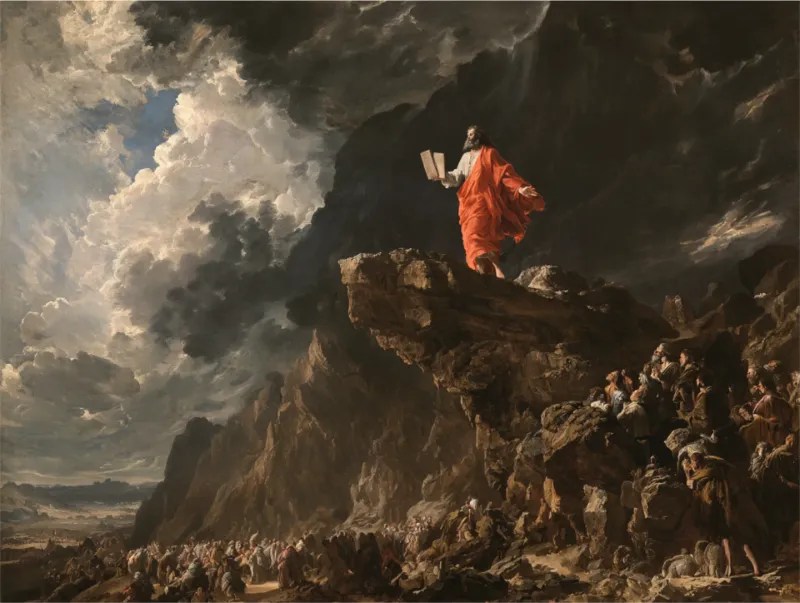
Who is Jesus talking to?
He is speaking of “many” people “on that day,” the day of judgment, with himself as the judge. These are not outsiders, for they call him Lord twice, and their defence is a list of three things done “in your name”: prophecy, casting out demons and “many mighty works.” Jesus does not say they are lying. John Chrysostom, the fourth-century bishop, took the gifts to be real and pointed to Judas, one of the twelve given “authority over unclean spirits” (Matthew 10:1): “even he too, wicked as he was, had a gift.” John Wesley, the founder of Methodism, drew the same lesson in his notes on the verse: “even the working of miracles is no proof that a man has saving faith.”
The verses follow straight on from a warning about false prophets, “who come to you in sheep’s clothing but inwardly are ravenous wolves,” and who are known “by their fruits” (Matthew 7:15–16). John Calvin, the reformer of Geneva, read verses 21 to 23 as still aimed chiefly at false teachers, but he added, “This doctrine embraces all hypocrites, whatever may be their rank or station.”

What does “I never knew you” mean?
Jesus cannot mean that he knows nothing about these people, since he repeats their words and names their deeds. In the Bible, to “know” someone often means to choose or claim them as one’s own. God says to Israel through the prophet Amos, “You only have I known of all the families of the earth” (Amos 3:2). God was aware of every nation; the word means that Israel was his. Jesus uses the word the same way of his followers: “I know my own and my own know me” (John 10:14). Paul corrects himself in mid-sentence to make the point: “now that you have come to know God, or rather to be known by God” (Galatians 4:9).
To be known by Christ, then, is to belong to him. Paul writes of a seal on the church’s foundation: “The Lord knows those who are his” (2 Timothy 2:19). Calvin thought Paul probably drew those words from this passage, and he summed up what Jesus will declare: “That he never reckoned them among his own people, even at the time when they boasted that they were the pillars of the church.”
The Greek word for “never,” oudepote, means “not ever” in Thayer’s lexicon, so Jesus is not saying that he once knew them and then stopped. Wesley’s note reads, “There never was a time that I approved of you: so that as many souls as they had saved, they were themselves never saved from their sins.” The verb translated “declare,” homologēsō, usually means to confess, and Calvin heard a reply in it: they confessed Christ with their tongues, and he “will confess on the opposite side, that their profession is deceitful and false.”
“Depart from me” repeats the words of a psalm: “Depart from me, all you workers of evil, for the Lord has heard the sound of my weeping” (Psalm 6:8). Matthew’s word for their wrongdoing is anomia, lawlessness, which the King James Version gives as “iniquity.”

Why doing the Father’s will is the test
Verse 21 sets the test before the scene begins: the one who enters is “the one who does the will of my Father who is in heaven.” Later in Matthew, Jesus uses the same phrase for his own family: “whoever does the will of my Father in heaven is my brother and sister and mother” (Matthew 12:50). Augustine of Hippo, in his commentary on the sermon, warned readers not to “think that the mere fact of one saying to our Lord, Lord, Lord, belongs to those fruits.” The fruits, he wrote, are “to do the will of the Father who is in heaven.”
It would be easy to hear this as a list of good deeds that earn heaven, but the people who are turned away have just such a list, and it is the very thing they plead. Calvin read the Father’s will as including faith in Christ, and pointed to Jesus’ words in John: “this is the will of my Father, that everyone who looks on the Son and believes in him should have eternal life” (John 6:40). The verses in Matthew, he wrote, “do not exclude faith, but presuppose it as the principle from which other good works flow.”
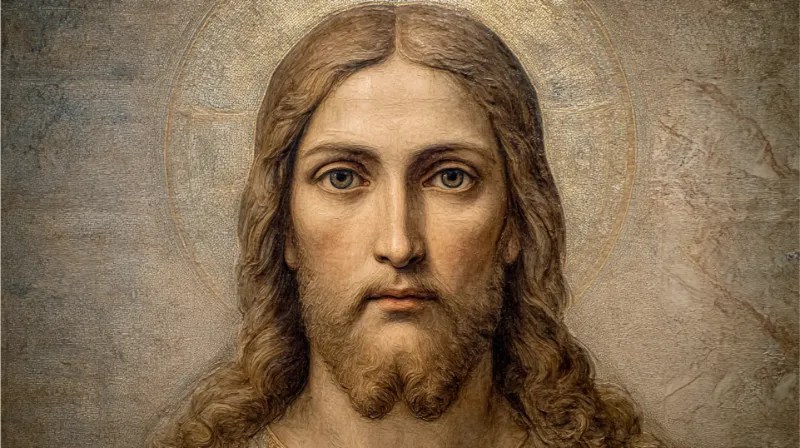
The end of the Sermon on the Mount
The sermon fills Matthew 5 to 7. It opens with the Beatitudes, which bless “the poor in spirit,” “those who mourn” and “the merciful,” and closes with four pictures, each a choice between two ways: a narrow gate and a wide one (7:13–14), healthy trees and diseased ones (7:15–20), those who say “Lord, Lord” and those who do the Father’s will (7:21–23), and two houses. The last follows at once: “Everyone then who hears these words of mine and does them will be like a wise man who built his house on the rock.” The house built on sand, by the man who hears and does not act, falls in the storm, “and great was the fall of it” (Matthew 7:24–27).
“These words of mine” are the sermon itself, so the Father’s will is nothing hidden from us. It is what Jesus has just been teaching: “Love your enemies and pray for those who persecute you” (5:44); pray “to your Father who is in secret” (6:6); forgive, “for if you forgive others their trespasses, your heavenly Father will also forgive you” (6:14). The same sermon teaches its hearers to pray, “forgive us our debts, as we also have forgiven our debtors” (6:12). So in the sermon’s own terms, building on the rock includes praying that prayer.
Luke’s version: the shut door
Luke has two passages that run alongside this one. In his shorter version of the sermon, Jesus asks, “Why do you call me ‘Lord, Lord,’ and not do what I tell you?” and tells of the two houses (Luke 6:46–49). The second comes closer to Matthew’s words. On the road to Jerusalem someone asks, “Lord, will those who are saved be few?” Jesus answers, “Strive to enter through the narrow door,” and describes a master of the house who has shut the door. The people outside knock and plead acquaintance, not miracles: “We ate and drank in your presence, and you taught in our streets.” He answers, “I do not know where you come from,” and, “Depart from me, all you workers of evil!” (Luke 13:23–27). They had been near Jesus, and still he did not know them. The story ends with others coming in: “people will come from east and west, and from north and south, and recline at table in the kingdom of God” (13:29). Matthew has another shut door in the parable of the ten virgins: “Truly, I say to you, I do not know you” (Matthew 25:12).
How Catholic, Orthodox and Protestant Christians read it
Every tradition hears in this passage a warning against faith that stays on the lips. Where they part ways is over two questions it leads into: can a Christian be sure, now, of being saved, and can grace, once given, be lost? Catholic, Orthodox, Lutheran and Methodist teaching all say that it can be lost and regained through repentance. Reformed teaching says that true believers never finally fall away, so those who seem to fall never truly believed.
Catholic
The Council of Trent taught that “no one can know with a certainty of faith, which cannot be subject to error, that he has obtained the grace of God,” and that no one should promise himself perseverance to the end “with an absolute certainty,” yet “all ought to place and repose a most firm hope in God’s help.” It also taught that those who “by sin, have fallen from the received grace of Justification” may “be again justified” through “the sacrament of Penance.”
The Catechism of the Catholic Church teaches that grace “cannot be known except by faith,” so “we cannot therefore rely on our feelings or our works to conclude that we are justified and saved.” The same paragraph then quotes this chapter, “Thus you will know them by their fruits,” and says that reflecting on God’s blessings in our lives and in the saints “offers us a guarantee that grace is at work in us.” It gives Joan of Arc’s reply when her judges asked whether she knew she was in God’s grace: “If I am not, may it please God to put me in it; if I am, may it please God to keep me there.” The Catechism describes Christian hope in words close to this passage: heaven is “promised by God to those who love him and do his will.”
Orthodox
The Orthodox Church in America’s teaching handbook, The Orthodox Faith by Thomas Hopko, describes hope as “the assurance of the good outcome of our lives lived by faith in God” and “the confidence that, despite all darkness and sin, the light of the loving forgiveness of God is upon us.” An unsigned pastoral reply to a reader on the same church’s website explains that “Orthodox Christianity understands that we are ‘being saved,’ not ‘already saved.’” Orthodoxy, it says, “would say that one can indeed jeopardize one’s salvation, but that it is not realistic to say that one has ‘lost’ something that one has yet to experience or possess in its fullness.” Faith “must be active and living, manifested by works of righteousness, whereby we cooperate with God to do His will,” and however far a baptized person falls, “we always have the possibility to repent.” Chrysostom, a Father honoured in East and West alike, heard in verse 23 the end of a mistaken confidence: “For now indeed they suppose they are my friends; but then shall they know, that not as to friends did I give to them.”
Lutheran
The Augsburg Confession says that faith “is bound to bring forth good fruits,” but “that we should not rely on those works to merit justification before God.” Martin Luther pointed troubled believers to their baptism: “Nevertheless I am baptized; but if I am baptized, it is promised me that I shall be saved and have eternal life, both in soul and body.” Beside that firm promise Lutherans set a real warning, for they also teach that faith can be lost. Luther’s Smalcald Articles say that when believers fall into open sin, “as David into adultery, murder, and blasphemy,” then “faith and the Holy Ghost has departed from them.” The way back stays open: the Augsburg Confession teaches that “for those who have fallen after Baptism there is remission of sins whenever they are converted.”
Reformed
Reformed churches teach that true believers cannot finally fall away, and the Westminster Confession of Faith says that those whom God has “effectually called, and sanctified by his Spirit, can neither totally nor finally fall away from the state of grace.” Read this way, “I never knew you” describes people who were never true believers, however they looked. The Confession draws the same line when it turns to assurance: “hypocrites and other unregenerate men may vainly deceive themselves with false hopes,” yet “such as truly believe in the Lord Jesus, and love him in sincerity, endeavoring to walk in all good conscience before him, may, in this life, be certainly assured that they are in the state of grace.” A true believer, it adds, may have that assurance “shaken, diminished, and intermitted.” The debate between this view and the next is set out in our comparison of Calvinism and Arminianism.
Wesleyan and Arminian
John Wesley preached a whole sermon on these verses and the two houses. He warned against building on “my orthodoxy, or right opinions,” on doing no harm, and even on good works, and he told those who preach in Christ’s name to “learn to hang naked upon the cross of Christ, counting all thou hast done but dung and dross.” Unlike Reformed churches, Methodists teach that a believer can fall away and return. The Methodist Articles of Religion say, “After we have received the Holy Ghost, we may depart from grace given, and fall into sin, and, by the grace of God, rise again and amend our lives.” Even so, Wesley read verse 23 as Calvin did, as a word to people Christ had never approved. On assurance, Wesley taught the witness of the Spirit, which he described as “an inward impression on the soul, whereby the Spirit of God directly witnesses to my spirit, that I am a child of God.” His note on verse 23 ends with a question he put to himself: “Lord, is it my case?”
Should a Christian be afraid of “I never knew you”?
The passage is a warning, and every tradition above takes it seriously. But it is no verdict on someone who turns to Christ asking for mercy, and several details in the text point that way.
The people in the scene plead their own record, “did we not prophesy in your name,” and nowhere in their plea do they ask for mercy. Yet the sermon Jesus has just preached blesses “the poor in spirit” and “those who mourn,” and gives its hearers words for their failures: “forgive us our debts.”
Jesus also told his disciples where to put their confidence. When the seventy-two came back rejoicing that demons obeyed them, he said, “do not rejoice in this, that the spirits are subject to you, but rejoice that your names are written in heaven” (Luke 10:20). In John’s Gospel he promises, “whoever comes to me I will never cast out” (John 6:37).
The churches disagree about certainty, but none of them leaves a person who has fallen or who doubts without a way home. A Catholic who has fallen from grace “may be again justified” through Penance, as the Council of Trent teaches. An Orthodox Christian is told, in the reply quoted above, that “we always have the possibility to repent.” A Lutheran has the Augsburg Confession’s promise of “remission of sins whenever they are converted,” and a Methodist the Articles’ assurance that “the grant of repentance is not to be denied to such as fall into sin after justification.” Even the Westminster Confession, which holds that true believers never finally fall away, says that a believer whose assurance has faded is “supported from utter despair” until it “may, in due time, be revived.” The people in Matthew 7 came pleading their record, and whoever comes pleading mercy comes to the Lord who says, “I know my own and my own know me” (John 10:14).


Leave a Reply