
 English
 Chinese
 Dutch
 Arabic
 Spanish
 Portuguese
 Russian
 French
 Italian
 German
 Japanese
Purgatory is defined Catholic teaching; limbo never was. Purgatory is a purification after death for those who die in God’s grace but are not yet fully purified, all of whom reach heaven. Limbo was a theory, worked out by theologians from the Middle Ages on, about babies who die unbaptised; the Church now speaks of hope for them instead.
Both teachings concern the people we love after they die, and both begin from trust that God does not forget them. Catholics pray for those who are being made ready for heaven. For the smallest of the dead, the children who died before they could be baptised, the Church “can only entrust them to the mercy of God,” and it does so in hope.
| Purgatory | Limbo of infants | |
|---|---|---|
| What it is | A final purification after death | A proposed state without the vision of God |
| Who it is for | People who die in God’s grace, not yet fully purified | Infants who die unbaptised, in the theory |
| Defined doctrine? | Yes, at the Councils of Florence (1439) and Trent (1563) | No, never defined |
| Temporary? | Yes: everyone in purgatory reaches heaven | Permanent, in the theory |
| Bible passages cited | 2 Maccabees 12:46, 1 Corinthians 3:15, Matthew 12:32 | None directly |
| What the Church says today | A purification that ends in heaven | Unbaptised children are entrusted to God’s mercy, in hope (Catechism 1261) |
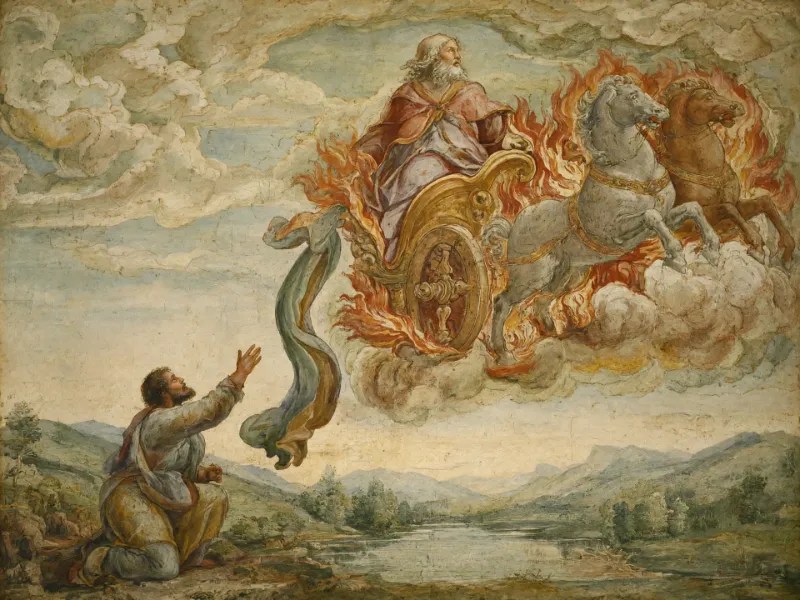
What is purgatory?
The Catechism of the Catholic Church gives the teaching in two sentences: “All who die in God’s grace and friendship, but still imperfectly purified, are indeed assured of their eternal salvation; but after death they undergo purification, so as to achieve the holiness necessary to enter the joy of heaven.” And: “The Church gives the name Purgatory to this final purification of the elect, which is entirely different from the punishment of the damned.”
Purgatory is sometimes described as a place between heaven and hell. The Catechism does not put it that way. The people in purgatory are already saved; what remains is their cleansing, and its end is heaven.
The Catechism says the Church formulated this doctrine “especially at the Councils of Florence and Trent.” At Florence, on 6 July 1439, the decree of union with the Greek Church stated that if the truly penitent die in the love of God before making satisfaction for their sins, “their souls are cleansed after death by cleansing pains,” and that the prayers, Masses and almsgiving of the living help them. At its last session, in December 1563, the Council of Trent affirmed “that there is a Purgatory, and that the souls there detained are helped by the suffrages of the faithful, but principally by the acceptable sacrifice of the altar.” The same decree told bishops to keep “the more difficult and subtle questions” out of sermons to ordinary congregations and to forbid anything that would “savour of filthy lucre.” The full decree is in Trent’s Session 25.
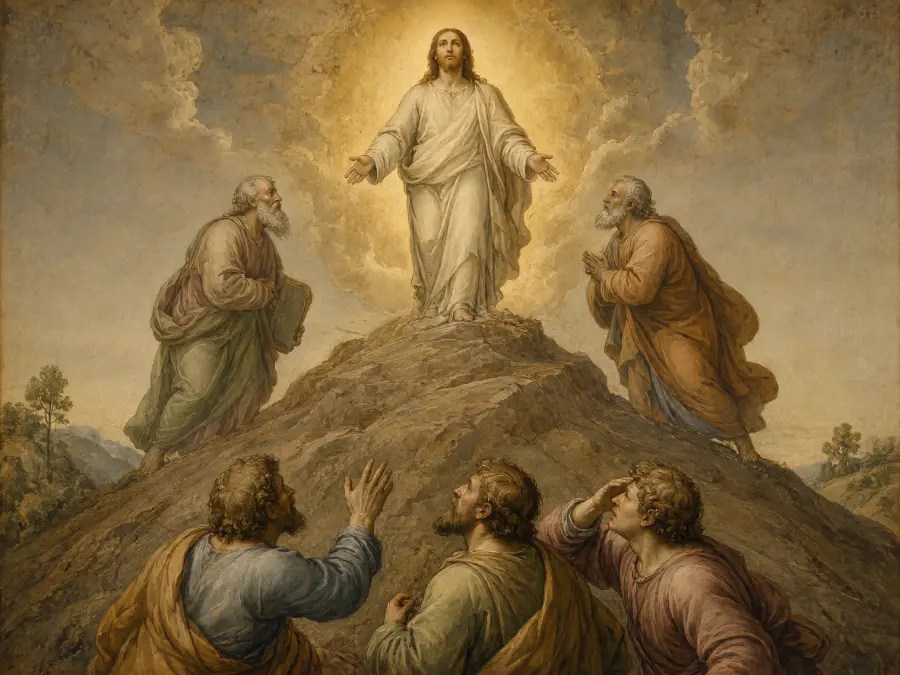
Which Bible passages does the Church cite for purgatory?
The Catechism bases the teaching partly on the practice of praying for the dead, which it finds already in Scripture, in the Second Book of Maccabees. Judas Maccabeus took up a collection and “sent twelve thousand drachms of silver to Jerusalem for sacrifice to be offered for the sins of the dead.” The passage closes, in the Douay-Rheims translation:
It is therefore a holy and wholesome thought to pray for the dead, that they may be loosed from sins.
2 Maccabees 12:46 (Douay-Rheims)
Modern translations of the Greek, including the one the Catechism quotes, say that Judas “made atonement for the dead, that they might be delivered from their sin.”
From that practice the Catechism moves to the Church’s own: from the beginning the Church has “offered prayers in suffrage for them, above all the Eucharistic sacrifice,” and commends almsgiving, indulgences and works of penance on behalf of the dead. Catholics still pray for the souls in purgatory in the same way.
The Catechism also cites Paul’s picture in 1 Corinthians of the day when each person’s work is tested by fire: “If any man’s work shall be burned, he shall suffer loss: but he himself shall be saved; yet so as by fire.” And it quotes Pope Gregory the Great on Jesus’ saying that a sin against the Holy Spirit will not be forgiven “neither in this world, neither in the world to come” (Matthew 12:32). Gregory reasoned: “From this sentence we understand that certain offenses can be forgiven in this age, but certain others in the age to come.”
Do Orthodox Christians believe in purgatory?
No, not in the Catholic form, though they pray for the dead. The Orthodox Church in America puts it in a single line: “the Orthodox Church does not believe in purgatory as a “third” or “alternate” state to heaven and hell.” Orthodox Christians still offer prayers for the departed from the moment of death, with a memorial service, the Panikhida, on the third, ninth and fortieth days, and on five Memorial Saturdays through the year. The funeral ends with the hymn “Eternal Memory”, which, the OCA explains, “is the supplication that God would remember the dead, for in the Bible it is God’s “eternal memory” which keeps man alive.”
The difference is old. The terms of reunion at the Council of Florence included what the OCA calls “a statement of the Western concept of Purgatory.” Mark of Ephesus resisted the union, and the Orthodox Church as a whole later rejected it.
Do Protestants believe in purgatory?
The Anglican and Reformed confessions reject it. The Church of England’s Articles of Religion call “the Romish Doctrine concerning Purgatory” “a fond thing vainly invented” (fond here means foolish), “and grounded upon no warranty of Scripture.” The Westminster Confession, the Reformed statement of faith of 1646, teaches that at death the souls of the righteous go to heaven and the souls of the wicked to hell, and adds: “Besides these two places, for souls separated from their bodies, the Scripture acknowledgeth none.”
Part of the disagreement is over the Bible itself. Protestants do not count 2 Maccabees as Scripture: the Church of England reads it “for example of life”, not “to establish any doctrine”, and the Westminster Confession says such books “are no part of the canon of the Scripture.” So the Maccabees passage carries no doctrinal weight for them.
What is limbo?
The word comes from the Latin limbus, meaning “hem” or “border”, the edge of something. Catholic writers used it in two senses.
The first is the limbo of the fathers: the state of the just who died before Christ and waited for him. The Catechism does not use the word limbo, but it describes the same waiting in “Abraham’s bosom”, and teaches that when Christ descended to the dead he went “to free the just who had gone before him.”
The second is the limbo of infants. It was a theory that babies who die without baptism, having committed no sin of their own, are kept from the vision of God because of original sin, but suffer no other punishment. The term itself, notes the International Theological Commission, a body of theologians that advises the Holy See, was “forged at the turn of the 12th-13th century.”
What happens to babies who die without baptism?
The Church does not claim to know. It entrusts these children to God’s mercy, and it hopes for their salvation. The Catechism says:
As regards children who have died without Baptism, the Church can only entrust them to the mercy of God, as she does in her funeral rites for them. Indeed, the great mercy of God who desires that all men should be saved, and Jesus’ tenderness toward children which caused him to say: “Let the children come to me, do not hinder them,” allow us to hope that there is a way of salvation for children who have died without Baptism.
Catechism of the Catholic Church, 1261
Elsewhere the Catechism adds that “God has bound salvation to the sacrament of Baptism, but he himself is not bound by his sacraments.”
In its 2007 study the International Theological Commission concluded that there are “serious theological and liturgical grounds for hope that unbaptised infants who die will be saved and enjoy the Beatific Vision.” It was careful about what that hope is: “We emphasise that these are reasons for prayerful hope, rather than grounds for sure knowledge.” Its closing paragraph says these reasons give “strong grounds for hope that God will save infants when we have not been able to do for them what we would have wished to do, namely, to baptize them into the faith and life of the Church.”
Where did the idea of limbo come from?
It did not come from a passage of Scripture. The International Theological Commission speaks of “the lack of any positive teaching within the New Testament” about unbaptised children. The idea grew out of a long theological argument.
In the East, Gregory of Nazianzus wrote that such children receive “neither praise nor punishment from the Just Judge”, and the Greek Fathers generally taught that they do not suffer eternal damnation, without saying where they go. In the West, Augustine took a harder line in the early fifth century, arguing against Pelagius from Jesus’ words in John 3:5 that no one can enter the kingdom of God unless born “of water and of the Spirit”. For Augustine there was no “middle ground” between heaven and hell, though he held that the punishment of these children was the “mildest condemnation” of all.
Later medieval theologians softened that view, step by step. From Peter Abelard on, most read Augustine’s mildest punishment as the loss of the vision of God with no other pain, a teaching Peter Lombard spread. Thomas Aquinas and Duns Scotus went further: these children, they held, enjoy “a full natural happiness through their union with God in all natural goods.” The idea was still being argued in 1794, when Pope Pius VI defended the right of Catholic schools to teach limbo after the Jansenist Synod of Pistoia (1786) had denounced it as a Pelagian fable.
Is limbo still Catholic teaching?
It never was defined teaching, and it has not been condemned. The International Theological Commission’s 2007 study, The Hope of Salvation for Infants Who Die Without Being Baptised, says the theory “never entered into the dogmatic definitions of the Magisterium”, though the Church’s teaching office did at times mention it in its ordinary teaching until the Second Vatican Council. “It remains therefore a possible theological hypothesis.” The Catechism of 1992 does not mention it.
The commission is an advisory body. Its statutes give it the duty “to study doctrinal problems of great importance” and in that way “to offer its help to the Magisterium of the Church”, the teaching office that belongs to the pope and the bishops. Its studies are not themselves Magisterial teaching. The commission sent this one to its president, Cardinal William Levada, who approved it for publication after receiving “the approval of the Holy father in an audience granted on January 19, 2007.” The pope then was Benedict XVI, and what he approved was its publication. The study says plainly what it does not change: none of its reasons “may be used to negate the necessity of baptism, nor to delay the conferral of the sacrament.”
Why does the Church baptise babies soon after birth?
The Catechism teaches that “The Lord himself affirms that Baptism is necessary for salvation,” and two sentences later says for whom: “Baptism is necessary for salvation for those to whom the Gospel has been proclaimed and who have had the possibility of asking for this sacrament.” Canon law asks parents to act soon: “Parents are obliged to take care that infants are baptized in the first few weeks.”
So the Church brings its children to the font in their first weeks, and it does not stop hoping for those who never reached it. It entrusts them to the mercy of God, “who desires that all men should be saved,” and to the Lord who said, “Let the children come to me, do not hinder them.”
Related reading
- Prayers for Comfort After a Death
- Do Believers Go to Heaven Immediately When They Die? Most Churches Say Yes
- Bible Mysteries: What Happens When You Die According to the Bible?
- Bible Mysteries: What Is Hell? Description Of Hell In The Bible
- Bible Mysteries: Did Old Testament Believers Go To Heaven?
- Biblical Debates: Did Jesus Descend into Hell?


Leave a Reply