
 English
  Chinese
  Dutch
Dutch  Arabic
  Spanish
  Portuguese
  Russian
  French
  Italian
  German
  Japanese
 A short funeral prayer anyone can say: “Lord God, thank you for the life of [name]. Comfort everyone who mourns, and keep us in the hope of the resurrection. Amen.” A funeral has four main moments for prayer: the opening, prayers for the family, the committal at the grave and the closing blessing.
If you, or someone you are praying for, is thinking about ending their life, call or text 988 in the US, or call Samaritans on 116 123 in the UK and Ireland. There are also more Christian and crisis lines.
Put the name of the person who has died where [name] appears. The 1928 Book of Common Prayer of the Episcopal Church prints its burial prayers for a man, with “our brother” and “his.” For a woman, say “our sister” and “her.”
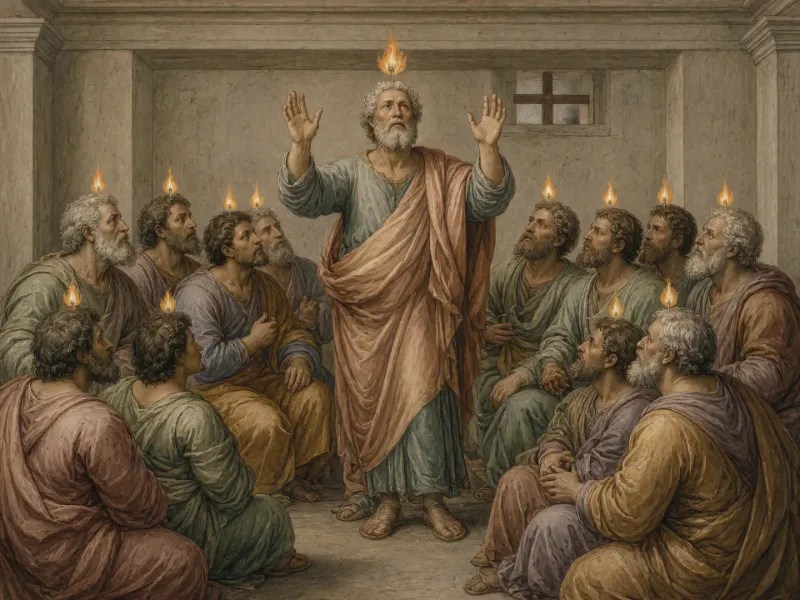
Opening prayers for a funeral service
The 1928 Book of Common Prayer begins its burial service with words of Jesus from John 11:25–26 and of Job from Job 19:25–26, said as the minister leads the coffin into the church or toward the grave.
I am the resurrection and the life, saith the Lord: he that believeth in me, though he were dead, yet shall he live: and whosoever liveth and believeth in me, shall never die.
I know that my redeemer liveth, and that he shall stand at the latter day upon the earth: and though this body be destroyed, yet shall I see God: whom I shall see for myself, and mine eyes shall behold, and not as a stranger.
The Book of Common Prayer (1928), The Order for the Burial of the Dead
The same book gives this collect, a short gathering prayer, for a service of Holy Communion at a burial. It suits the opening of any funeral.
O Eternal Lord God, who holdest all souls in life; Vouchsafe, we beseech thee, to thy whole Church in paradise and on earth, thy light and thy peace; and grant that we, following the good examples of those who have served thee here and are now at rest, may at the last enter with them into thine unending joy; through Jesus Christ our Lord. Amen.
The Book of Common Prayer (1928), The Collect “At the Burial of the Dead”
A shorter opening prayer in plain words:
Lord God, we have come together because [name] has died. We bring you our grief, our thanks for [his or her] life, and our questions. Jesus wept for his friend Lazarus, so we know you do not ask us to hide our tears. Speak to us through your word in this hour, and give us the hope of the resurrection. Amen.
For more words to begin a service, see these opening prayers for a funeral.

Prayers for the family and all who mourn
The 1928 Book of Common Prayer places this prayer at the end of its service for the burial of a child, but it asks comfort for everyone who mourns.
Almighty God, Father of mercies and giver of all comfort; Deal graciously, we pray thee, with all those who mourn, that, casting every care on thee, they may know the consolation of thy love; through Jesus Christ our Lord. Amen.
The Book of Common Prayer (1928), At the Burial of a Child
For the family
Father, this family has lost someone they cannot replace. Be their strength in the days of arrangements and visitors, and in the quiet weeks after, when the visitors have gone home. Keep them patient with one another, and send friends who will help without being asked. Your word says, “Blessed are they that mourn: for they shall be comforted” (Matthew 5:4). Comfort them. Amen.
For children who have lost a parent or grandparent
Lord Jesus, you said, “Suffer the little children to come unto me, and forbid them not” (Mark 10:14). Hold these children close today. Give the adults around them the words to answer their questions truthfully and gently, and let them always know how much [name] loved them. Amen.
In thanks for a life
Gracious God, thank you for [name]: for [his or her] laughter, work and kindness, and for everything we learned from [him or her]. “The memory of the just is blessed” (Proverbs 10:7). Let our memories become a comfort to us and not only a source of pain. Amen.
When there are regrets
Merciful God, some of us carry words we never said and things we wish we had done differently. Forgive what needs forgiving, in us and between us and [name]. Free us from “if only,” and let us remember [him or her] with love. Amen.

Funeral prayers for a mother, father, husband or wife
For a mother
Lord, thank you for our mother, [name], who carried us, fed us and prayed for us long before we knew it. We give her back to you with thanks. Comfort her children and grandchildren, and let the love she taught us go on in our homes. Amen.
For a father
Father in heaven, thank you for our dad, [name], for his work, his care and the example he set. We commend him to you with love. Help us to carry what he taught us, and comfort all who called him father. Amen.
For a husband or wife
God, you joined [name] and me, and now death has parted us. Thank you for the years we had. Stay close to me in the empty chair and the silent house, and keep me in the hope of the resurrection. Amen.
For a brother or sister
Lord, we grew up together, and I cannot picture the family without [name]. Thank you for every year we shared. Receive [him or her] into your mercy, and comfort our parents and all our family. Amen.

Prayers for the person who has died
Churches differ here. Catholics and Orthodox Christians pray for the dead. The Compendium of the Catechism of the Catholic Church teaches that the living can help souls in purgatory “by offering prayers in suffrage for them,” and the Orthodox burial service asks God to give rest to the soul of the departed. The 1928 Book of Common Prayer also includes prayers for the departed. Many Protestants do not pray for the dead. The Westminster Confession of Faith (1646) says prayer is to be made “for all sorts of men living, or that shall live hereafter; but not for the dead.” Those churches pray instead for the mourners and give thanks for the life of the one who has died.
Catholic prayers
The best known Catholic prayer for the dead is Requiem aeternam, “Eternal rest.”
Eternal rest grant unto them, O Lord, and let perpetual light shine upon them. May they rest in peace. Amen.
Compendium of the Catechism of the Catholic Church, Appendix
The older Catholic burial rite has this prayer, said at the funeral Mass and again beside the coffin before it is carried to the grave.
O God, whose property is always to have mercy and to spare, we humbly beseech Thee for the soul of Thy servant N., which Thou hast this day commanded to depart out of this world: that Thou deliver it not into the hands of the enemy, nor forget it unto the end; but command it to be received by Thy holy Angels, and conducted into Paradise, its true country; that, as in Thee it hath hoped and believed, it may not suffer the pains of hell, but may take possession of eternal joys. Through Christ our Lord. Amen.
A Manual of Prayers for the Use of the Catholic Laity (1888), The Burial of the Dead
Orthodox prayers
In the Orthodox burial service the priest says this prayer for the departed.
O God of spirits, and of all flesh, who hast trampled down Death, and overthrown the Devil, and given life unto thy world: Do thou, the same Lord, give rest to the soul of thy departed servant, N., in a place of brightness, a place of verdure, a place of repose, whence all sickness, sorrow and sighing have fled away. Pardon every transgression which he (she) hath committed, whether by word, or deed, or thought. For thou art a good God, and lovest mankind; because there is no man who liveth and sinneth not: for thou only art without sin, and thy righteousness is to all eternity, and thy word is true.
Isabel Hapgood, Service Book of the Holy Orthodox-Catholic Apostolic (Greco-Russian) Church (1906), The Order for the Burial of the Dead
Near the end of the Orthodox service the priest says three times, “Eternal be thy memory, O our brother, who art worthy to be deemed happy and ever-memorable,” and the choir answers, “Memory eternal!”
Anglican and Protestant prayers
At the grave, the 1928 Book of Common Prayer asks God to grant the departed “an entrance into the land of light and joy, in the fellowship of thy saints.” Christians who do not pray for the dead can use this prayer from the same service, which prays for the living:
O Lord Jesus Christ, who by thy death didst take away the sting of death; Grant unto us thy servants so to follow in faith where thou hast led the way, that we may at length fall asleep peacefully in thee, and awake up after thy likeness; through thy mercy, who livest with the Father and the Holy Ghost, one God, world without end. Amen.
The Book of Common Prayer (1928), The Order for the Burial of the Dead
The commendation “Into thy hands, O merciful Saviour” also comes from the 1928 Book of Common Prayer. There it belongs to the prayers for the sick and is said when a person has just died.
Into thy hands, O merciful Saviour, we commend the soul of thy servant, now departed from the body. Acknowledge, we humbly beseech thee, a sheep of thine own fold, a lamb of thine own flock, a sinner of thine own redeeming. Receive him into the arms of thy mercy, into the blessed rest of everlasting peace, and into the glorious company of the saints in light. Amen.
The Book of Common Prayer (1928), A Commendatory Prayer when the Soul is Departed

Committal prayers at the graveside
The committal is the prayer said as the body is laid in the grave. In the 1928 Book of Common Prayer, the minister says it while earth is cast on the coffin.
Unto Almighty God we commend the soul of our brother departed, and we commit his body to the ground; earth to earth, ashes to ashes, dust to dust; in sure and certain hope of the Resurrection unto eternal life, through our Lord Jesus Christ; at whose coming in glorious majesty to judge the world, the earth and the sea shall give up their dead; and the corruptible bodies of those who sleep in him shall be changed, and made like unto his own glorious body; according to the mighty working whereby he is able to subdue all things unto himself.
The Book of Common Prayer (1928), The Order for the Burial of the Dead
After the committal the service quotes Revelation 14:13: “I heard a voice from heaven, saying unto me, Write, From henceforth blessed are the dead who die in the Lord: even so saith the Spirit; for they rest from their labours.” The Lord’s Prayer follows.
In the older Catholic rite, the In paradisum is said or sung as the body is carried to the grave:
May the Angels lead thee into Paradise; at thy coming may the Martyrs receive thee, and bring thee into the holy City, Jerusalem. May the Choir of Angels receive thee, and with Lazarus, once a beggar, mayest thou have eternal rest.
A Manual of Prayers for the Use of the Catholic Laity (1888), The Burial of the Dead
A short prayer at the grave, or when ashes are laid to rest
Lord Jesus Christ, you lay in the tomb and rose on the third day. We lay [name]’s body here in your keeping and in the hope of the resurrection. Watch over this place, and bring us all at last to your kingdom. Amen.

Closing prayers and blessings
The 1928 Book of Common Prayer ends the church part of its burial service with this blessing, built on Numbers 6:24–26:
Unto God’s gracious mercy and protection we commit you. The LORD bless you and keep you. The LORD make his face to shine upon you, and be gracious unto you. The LORD lift up his countenance upon you, and give you peace, both now and evermore. Amen.
The Book of Common Prayer (1928), The Order for the Burial of the Dead
A closing prayer in plain words:
God of all comfort, we have said goodbye to [name] and commended [him or her] to you. Go with us as we leave this place. Let the love we have shown each other today continue in the weeks ahead, and keep us in the hope of seeing [name] again in your kingdom. Amen.
There are more closing prayers for a funeral for the end of a service.

A grace before the meal after a funeral
Many families share a meal after the burial, called a repast or funeral lunch. This grace is short enough to say before it:
Lord, bless this food and the hands that prepared it. Thank you for [name] and for everyone who has come to remember [him or her]. As we eat together, let our stories and our company comfort the family. Amen.

What Bible verses are read at a funeral?
The 1928 Book of Common Prayer sets passages from 1 Corinthians 15 (from verse 20) or Romans 8 (from verse 14), or John 14:1–6, as the reading, and Psalms 39, 90, 27, 46, 121 and 130 for the service in church. These shorter verses suit a reading or a printed program:
- “Let not your heart be troubled: ye believe in God, believe also in me. In my Father’s house are many mansions: if it were not so, I would have told you. I go to prepare a place for you.” (John 14:1–2)
- “Yea, though I walk through the valley of the shadow of death, I will fear no evil: for thou art with me; thy rod and thy staff they comfort me.” (Psalm 23:4)
- “But I would not have you to be ignorant, brethren, concerning them which are asleep, that ye sorrow not, even as others which have no hope. For if we believe that Jesus died and rose again, even so them also which sleep in Jesus will God bring with him.” (1 Thessalonians 4:13–14)
- “And God shall wipe away all tears from their eyes; and there shall be no more death, neither sorrow, nor crying, neither shall there be any more pain: for the former things are passed away.” (Revelation 21:4)

How is a Christian funeral service ordered?
The order differs by church, but the main parts are similar. The Compendium of the Catechism of the Catholic Church names four parts of a Catholic funeral: welcoming the body with words of comfort and hope, the liturgy of the Word, the Eucharist, and the farewell, in which the soul is entrusted to God and the body is buried “in the hope of the resurrection.”
The 1928 Book of Common Prayer follows a similar path without requiring Communion. The minister meets the coffin with the opening sentences, psalms and a reading follow in church, then, at the minister’s choice, the Creed, the Lord’s Prayer and other prayers, ending with a blessing. At the grave come the words “In the midst of life we are in death,” the committal, Revelation 14:13, the Lord’s Prayer, further prayers and a final blessing.

Can you pray at the funeral of someone who was not a believer?
Yes. The 1928 Book of Common Prayer notes that its burial service “is appropriate to be used only for the faithful departed in Christ,” but in any other case lets the minister use such parts of it, or other prayers from the book, “as may be fitting.” Prayers for the mourners, thanks for the person’s life and the committal of the body to God suit any funeral.
Lord, you knew [name] better than any of us did, and you are just and merciful. We leave [him or her] in your hands. Comfort all who loved [him or her], and draw each of us closer to you. Amen.

Prayer for Comfort in Our Sorrow
In moments of deep loss, our hearts feel heavy and broken. This prayer is a cry for God’s comfort, asking Him to be near to the brokenhearted and to wrap us in a peace that only He can provide.
O Lord, our hearts are aching with a sorrow that feels too heavy to carry. The space left by our loved one feels vast and empty, and our tears flow freely. We come before you not with answers, but with our pain, trusting that you are the God of all comfort. You see every tear we cry and understand the depths of our grief.
We ask you to draw near to us now. Let us feel your presence like a warm embrace, a steady hand in the darkness. Quiet our troubled minds and soothe our aching souls. Remind us that even when Jesus faced the death of his friend, Lazarus, He wept. You understand our human pain because you have experienced it.
Please fill this room and every grieving heart with the peace that surpasses all understanding. Guard our hearts and our minds in Christ Jesus. Help us to lean on you and on each other, finding strength not in our own abilities, but in your endless love and mercy. May your gentle spirit minister to us in our sadness and begin the slow work of healing our wounded hearts, In Jesus’ Name, Amen.
This prayer acknowledges our pain while turning to God as the ultimate source of healing. The Bible reminds us in Matthew 5:4, “Blessed are those who mourn, for they will be comforted,” promising His presence in our darkest hours.

Prayer for Hope in Eternal Life
Death feels like an end, but our Christian faith offers a profound hope of a new beginning. This prayer refocuses our minds on the promise of heaven and the eternal life that is found in Jesus Christ.
Heavenly Father, in the face of death, our hearts can be filled with fear and uncertainty. The finality of this earthly farewell is painful. But we cling to the hope you have given us through your Son, Jesus Christ. You have conquered the grave and promised a place for us in your eternal kingdom, a home where there is no more sorrow, no more tears, and no more pain.
We thank you for this incredible promise. We pray for our beloved who has passed from this life, and we trust that they are now resting safely in your loving arms, welcomed into the glory of your presence. As Jesus said, “In my Father’s house are many rooms.” We hold onto the blessed assurance that we will one day be reunited in that heavenly home.
Strengthen our faith, Lord, when it wavers. Let this hope be an anchor for our souls, firm and secure. Help us to live our lives on earth in light of this eternal promise, so that we too may one day hear you say, “Well done, good and faithful servant.” Thank you for turning our deepest sorrow into a reason for unshakable hope, In Jesus’ Name, Amen.
This prayer lifts our eyes from the sorrow of the present to the beautiful promise of the future. It is a reminder that for believers, death is not a period but a comma, as promised in John 14:2-3.

Prayer of Gratitude for a Life Well-Lived
While we grieve the loss, it is also right to celebrate and give thanks for the life that was lived. This prayer is an expression of gratitude for the gift of our loved one and the impact they had on us.
Gracious God, even as our hearts are heavy with grief, they are also overflowing with gratitude. Thank you for the precious gift of the life we are here to honor today. You blessed us with their presence, and for every moment, every memory, we give you our deepest thanks.
We thank you for their laughter that filled our rooms and our hearts. We thank you for the wisdom they shared, the kindness they showed, and the love they gave so freely. We see your goodness reflected in the unique and wonderful person they were. Their life was a testament to your creative hand, and we are better people for having known and loved them.
Help us to carry their legacy of love forward in our own lives. May the lessons they taught us continue to guide us, and may the love they shared continue to inspire us to be more compassionate, more generous, and more faithful. We release them back to you, their creator, with hearts full of love and profound thankfulness for the time we had, In Jesus’ Name, Amen.
Focusing on thankfulness can be a powerful part of healing. It allows joy to exist alongside sorrow, fulfilling the call in 1 Thessalonians 5:18 to “give thanks in all circumstances; for this is the will of God in Christ Jesus for you.”

Prayer for Strength for the Grieving Family
The weight of loss is often heaviest on the immediate family. This is a specific prayer asking God to provide a special measure of strength, unity, and support for them in the difficult days ahead.
Lord of all compassion, we lift up the family to you now. Their loss is so personal, so deep, and their journey of grief is just beginning. We ask that you would be their rock and their fortress, a very present help in this time of trouble. When they feel overwhelmed, be their strength. When they feel lost, be their guide.
Please surround them with a community of love and support. Send friends and fellow believers to walk alongside them, to listen, to help with practical needs, and to simply be present. Protect their hearts from despair and loneliness. We pray for unity among them, that they would find comfort in one another and bear this burden together with patience and grace.
Give them courage for the days to come—the quiet evenings, the special occasions, the moments when the grief feels fresh all over again. Remind them that you are the God who binds up the brokenhearted. May they feel you carrying them through this valley of sorrow, holding them securely in your everlasting arms, In Jesus’ Name, Amen.
This prayer directs our love and concern towards those most affected. We ask God to be their provider, knowing He is faithful to His promise in Isaiah 41:10: “Fear not, for I am with you; be not dismayed, for I am your God; I will strengthen you, I will help you.”

Prayer for Peace for the Departed Soul
As we say our final goodbyes, our deepest desire is that our loved one is at peace. This prayer entrusts their soul into the loving and merciful hands of God, the ultimate source of true and lasting peace.
Almighty and merciful Father, we now entrust our beloved into your care. Their work on this earth is done, and their journey has come to an end. We pray that you have welcomed them into your heavenly kingdom, into a place of light, happiness, and perfect peace. We release them from the struggles and pains of this world, from sickness, and from sorrow.
We trust in your unfailing mercy and the saving grace of your Son, Jesus Christ. Through His sacrifice, the door to eternal life was opened. We pray that our loved one has passed through that door and is now experiencing the fullness of your love. Let them rest from their labors and find eternal peace in your presence.
Lord, as we commit their body to its final resting place, we also commit their spirit to your eternal keeping. Cover them with your grace, and let perpetual light shine upon them. We hold onto the hope of resurrection, believing that what is sown in weakness is raised in power. May they rest in peace and rise in glory, In Jesus’ Name, Amen.
This prayer of commendation is an act of faith, placing our loved one into God’s care. It reflects the comfort found in Revelation 14:13, “Blessed are the dead who die in the Lord from now on… they will rest from their labor, for their deeds will follow them.”

Prayer for Cherished Memories
Memories become precious treasures when a loved one is gone. This prayer asks God to help us hold onto the good memories, finding comfort and joy in them, rather than only pain in the loss.
O God of our past, present, and future, we thank you for the gift of memory. In the coming days and years, when we think of our dear loved one, we pray that our minds would be filled with cherished moments of love, laughter, and joy. Help these memories to be a source of comfort, not just sorrow.
Allow us to remember the warmth of their smile, the sound of their voice, and the wisdom in their words. Let us recall the special times we shared, the traditions we built, and the simple, everyday moments that made life beautiful. We pray that these memories will serve as a beautiful tapestry, reminding us of the profound impact they had on our lives.
Lord, guard our hearts from being lost in what is gone, and instead, help us to be grateful for what we were given. May these memories inspire us to live more fully and love more deeply. Turn our grief into gratitude and our tears of loss into tears of thankfulness for a life that touched ours so deeply, In Jesus’ Name, Amen.
Remembering is a vital part of honoring a person’s legacy. This prayer helps frame memory as a gift, echoing the heart of Proverbs 10:7, “The memory of the righteous is a blessing.”
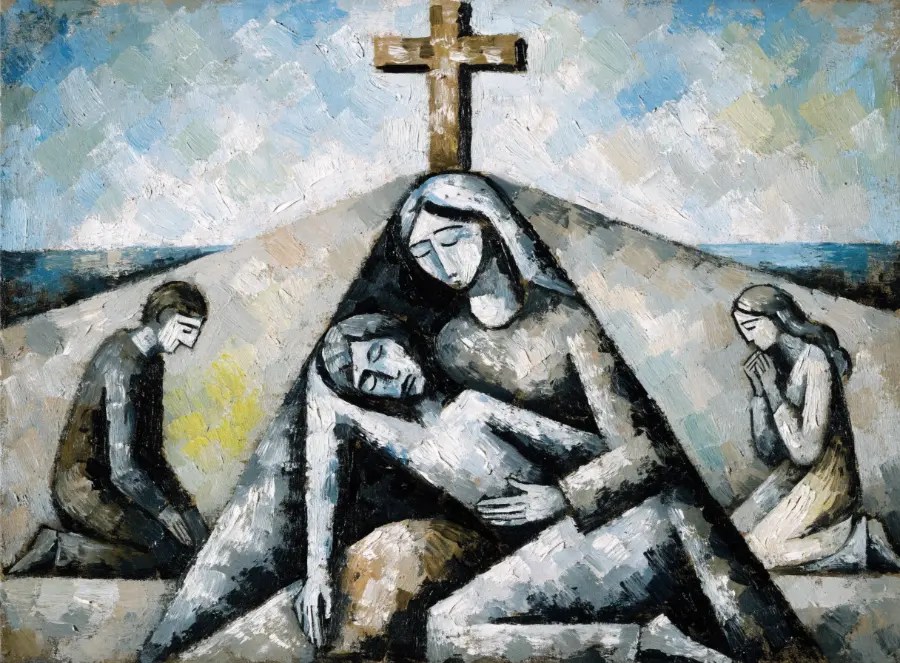
Prayer for Strength to Face Tomorrow
After the funeral, the world keeps moving, and facing a new reality without a loved one is daunting. This prayer is for the courage and strength to face the days, weeks, and months that lie ahead.
Lord, the thought of tomorrow without our loved one feels overwhelming. The path ahead seems uncertain and lonely. We do not know how to navigate this new season of life, so we turn to you, the source of all strength. We ask for the courage to face each new day, one moment at a time.
When we wake up and the reality of our loss hits us anew, grant us your morning mercies. When we feel we cannot go on, please carry us. Remind us that your grace is sufficient for us, and your power is made perfect in our weakness. Help us to find a new rhythm, a new sense of purpose, even in our grief.
We know that healing is not a single event but a journey. Give us patience with ourselves and with the process. Teach us to depend on you in a way we never have before. Be our light in the darkness and our hope for all our tomorrows, empowering us to move forward not past our love, but with it, In Jesus’ Name, Amen.
This prayer is a practical plea for divine help for the journey forward. It acknowledges our weakness and relies on God’s promise in 2 Corinthians 12:9: “My grace is sufficient for you, for my power is made perfect in weakness.”

Prayer of Release and Trust
Part of the grieving process is learning to let go and entrust our loved one fully to God. This prayer is an act of release, surrendering our loved one to God’s perfect love and our future to His sovereign plan.
Loving God, it is so hard to say goodbye. Our human hearts want to hold on tight, to turn back time, to have just one more moment. But we know we must release our beloved into your loving care. With faith and trust, we surrender them to you now. They were your child before they were ours, and they have returned home to you.
We release our need to understand why. We release our anger and our questions. We choose to trust in your sovereignty and your goodness, even when we cannot see it clearly. Help us to believe that you are holding them in a place of perfect peace, and that you are holding us in our place of painful grief.
- We place our own futures in your hands as well. We trust that you have a plan for us, a way forward. Help us to loosen our grip on what we have lost so that we can open our hands to receive the comfort and hope you want to give us. Thank you for your promise to never leave us or forsake us, In Jesus’ Name, Amen.
This prayer is a difficult but necessary step of faith. It’s a conscious choice to trust God’s heart when we can’t see His hand, holding onto the promise of Deuteronomy 31:8, “The LORD himself goes before you and will be with you; he will never leave you nor forsake you.”

Prayer to Feel God’s Presence
In the fog of grief, God can feel distant. This prayer is a simple, heartfelt plea to feel the nearness of God, asking for a tangible sense of His presence to cut through the feelings of isolation and loneliness.
Father God, in this moment of sorrow, we confess that you can feel far away. The noise of our grief can make it hard to hear your voice, and the darkness of our loss can make it hard to see your light. We feel alone in our pain, and we long to feel your presence near us.
We ask you, Lord, to break through. Make your presence known to us in a way that our hurting hearts can receive. Be the quiet whisper in our thoughts, the unexplainable peace that settles over us, the warmth in a friend’s hug. Help us to see you in the kindness of others and in the beauty of creation.
Please, Lord, do not let us feel abandoned. Remind us of your promise that you are “near to the brokenhearted and save the crushed in spirit.” Let us feel that nearness now. Be our constant companion through this lonely valley, assuring us that we are seen, we are known, and we are held securely by you, In Jesus’ Name, Amen.
This is a raw and honest prayer acknowledging a common struggle in grief. It leans on the powerful promise found in Psalm 34:18, asking God to make His nearness a felt reality for those who are hurting.
Prayer for Grace and Forgiveness
Funerals can bring up complex emotions, including regret and the need for forgiveness. This prayer asks for God’s grace to cover any unresolved issues, and for the peace that comes from both receiving and extending forgiveness.
O God of infinite grace and mercy, we come before you with humble hearts. In times of loss, our minds often turn to things we wish we had said or done differently. We confess any regrets we hold, any words left unspoken, and any actions we wish we could take back. We ask for your forgiveness and the peace that comes from being made right with you.
We also pray for our loved one who has passed. We ask that you would cover them with your grace, forgiving any of their shortcomings as we are all imperfect people in need of your saving love. We release any unresolved conflicts into your hands, trusting that your love is greater than our human failings.
Help us also to forgive ourselves. Free us from the heavy burden of “what if” and “if only.” Let your grace be a healing balm for our souls, allowing us to remember our loved one with love, not regret. Thank you that because of Christ, we can all find mercy at your throne, In Jesus’ Name, Amen.
This prayer addresses the tender area of regret with the healing power of the Gospel. It rests on the foundational truth of Ephesians 2:8, “For it is by grace you have been saved, through faith—and this is not from yourselves, it is the gift of God.”

Prayer for the Children Left Behind
The loss of a parent, grandparent, or sibling is uniquely painful and confusing for a child. This prayer specifically lifts up the youngest hearts in the room, asking for God’s special protection and comfort for them.
Gentle Shepherd, our hearts ache for the children who are grieving today. Their world has been shaken, and their loss is immense. We ask you to gather them in your arms, as you did when you were on earth, and bless them with your peace. Shield their hearts and minds from fear and confusion.
Please surround them with loving and patient adults who can offer them stability, listen to their questions, and comfort them in their sadness. Give those caregivers wisdom beyond their own to explain this loss in a way that is truthful yet gentle. Help the children to know that it’s okay to cry, to be angry, or to feel sad.
Lord, be a father to the fatherless and a special friend to these little ones. Protect their precious memories and help them to always know how deeply they were loved by the one they have lost. May they grow up feeling your constant love and protection over their lives, a love that never fails and never leaves, In Jesus’ Name, Amen.
Children’s grief is a special concern, and this prayer asks for God’s tender care. It reflects the heart of Jesus in Mark 10:14, “Let the little children come to me, and do not hinder them, for the kingdom of God belongs to such as these.”

Prayer of Final Commendation
This final prayer serves as a formal and loving act of handing our loved one over to God. It is a concluding statement of faith, trust, and hope, marking the end of the funeral service.
Into your hands, O merciful Savior, we commend your servant. Acknowledge, we humbly pray, a sheep of your own fold, a lamb of your own flock, a sinner of your own redeeming. Receive them into the arms of your mercy, into the blessed rest of everlasting peace, and into the glorious company of the saints in light.
We thank you for the victory over death and the grave won by your Son, Jesus Christ. Because He lives, we believe that our loved one will also live. We now commit their body to the ground—earth to earth, ashes to ashes, dust to dust—in the sure and certain hope of the Resurrection to eternal life.
May God the Father, who created this precious life; God the Son, who redeemed it; and God the Holy Spirit, who sanctifies it, bless and keep our loved one now and forevermore. We have entrusted them to you, and we trust you with our own aching hearts, In Jesus’ Name, Amen.
This traditional yet personal prayer provides a solemn and hopeful conclusion to the service. It is built on the cornerstone of Christian hope, as expressed in 1 Corinthians 15:22, “For as in Adam all die, so in Christ all will be made alive.”
Your turn to pray
Asked to pray out loud? Choose the occasion and how much time you have, then read one of these three.
Prefer to use your own words? Lesson 1 of Praying Out Loud shows how, free.
O Eternal Lord God, who holdest all souls in life; Vouchsafe, we beseech thee, to thy whole Church in paradise and on earth, thy light and thy peace; and grant that we, following the good examples of those who have served thee here and are now at rest, may at the last enter with them into thine unending joy; through Jesus Christ our Lord. Amen.
From this article
Almighty God, we thank you for [name], who trusted in Jesus Christ and is now at rest. We are sad, but we do not grieve “as others which have no hope” (1 Thessalonians 4:13), because your Son died and rose again. Comfort [his or her] family and friends. As we remember [name] today, strengthen our faith in the resurrection and our hope of seeing [him or her] again. In Jesus’ name, Amen.
Lord, none of us expected to be here today. [Name] was taken from us suddenly, and we are shocked, confused and, some of us, angry. We do not understand, and we will not pretend to. Jesus wept at the grave of his friend Lazarus (John 11:35); meet us in our tears. Give this family strength to get through today, and the days after, one hour at a time. Amen.
Sent. Your three prayers are on their way.
If nothing arrives in a few minutes, look in your spam or promotions folder.
Prefer to use your own words? Lesson 1 of Praying Out Loud shows how, free.
Keep this for next time. Your turn to pray has a page of its own, with our prayers for each occasion.



Leave a Reply