
 English
 Chinese
 Dutch
 Arabic
 Spanish
 Portuguese
 Russian
 French
 Italian
 German
 Japanese
The Sistine Chapel is built to the measurements of Solomon’s temple. Its interior runs about forty metres by thirteen, close to the sixty cubits by twenty that the Book of Kings gives for the house Solomon built and Babylon burned. Named for Pope Sixtus IV, it was consecrated to Our Lady of the Assumption on her feast in 1483.
The house it copies has not stood for two thousand years. Scripture gives its size plainly: “the length thereof was threescore cubits, and the breadth thereof twenty cubits” (1 Kings 6:2). Somebody in the fifteenth century took those numbers off the page and set them into a floor in Rome, and we have been walking on them ever since without looking down.
We call it the Sistine Chapel after the pope who paid for it, Sixtus IV. In Italian he is Sisto, so the room is la Cappella Sistina. Its patron is Our Lady, taken up into heaven.
What Solomon said when his own house was finished
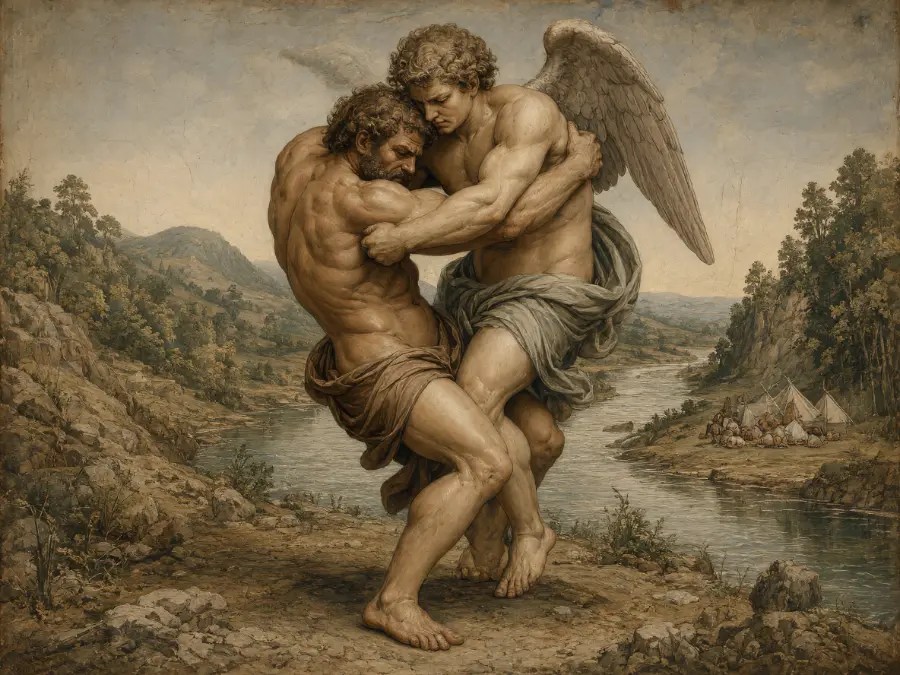
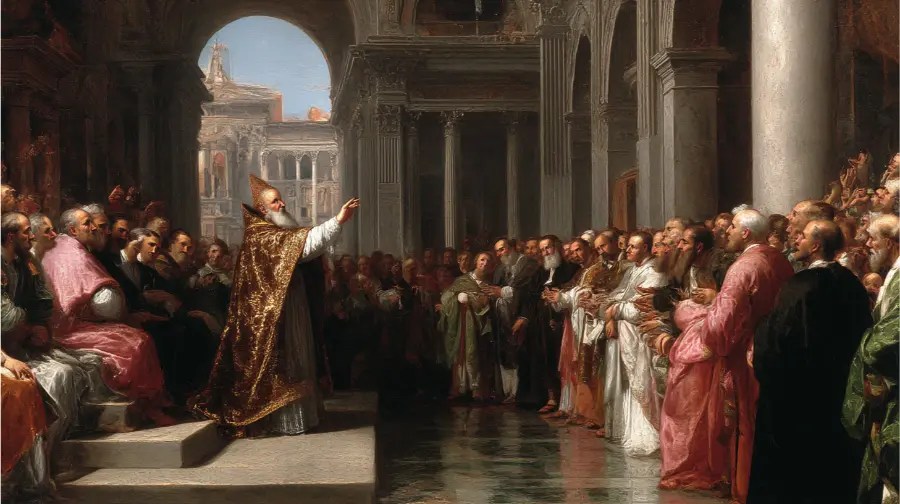
When the first temple was dedicated, the king who had built it stood before the altar in front of the whole congregation and said the thing that undoes the whole project: the heaven and heaven of heavens cannot contain thee; how much less this house that I have builded (1 Kings 8:27).
He had just spent seven years and a national fortune on a building, and he opened it by admitting it was too small. Every church we have raised since has been raised in the shadow of that sentence.
So whoever measured out a floor in Rome to match a house in Jerusalem was copying a building that confessed its own smallness: a place to stand before God and say that he cannot be held.
The walls nobody looks at
Before Michelangelo there were the side walls, painted in a single hard season in 1481 and 1482 by Perugino, Botticelli, Ghirlandaio and Rosselli. They were the best hands in Italy, hired together and told to hurry.
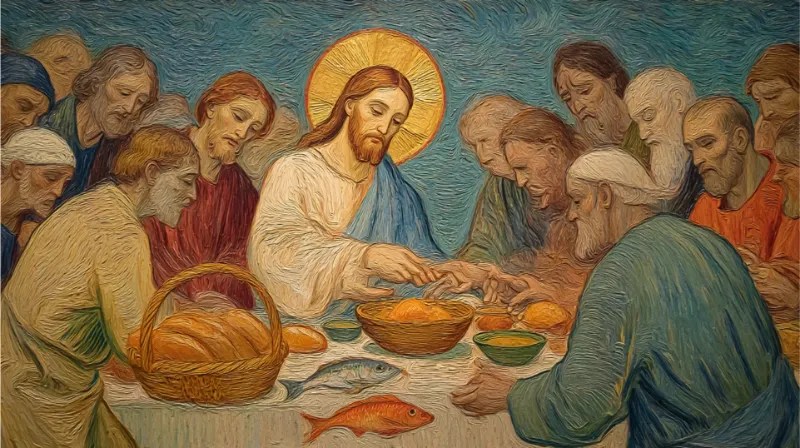
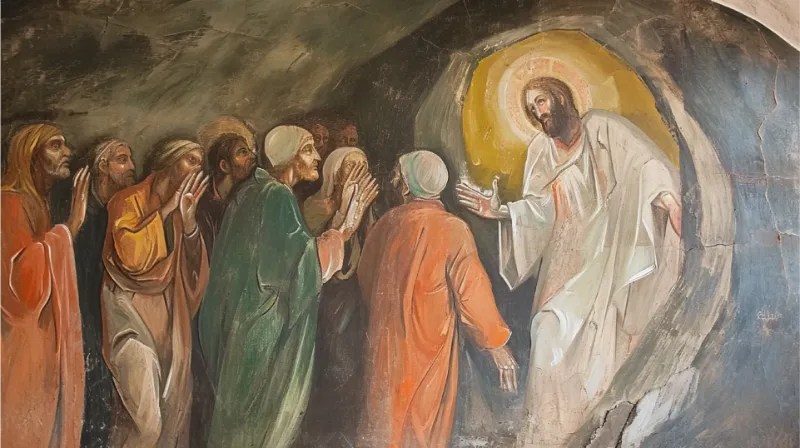
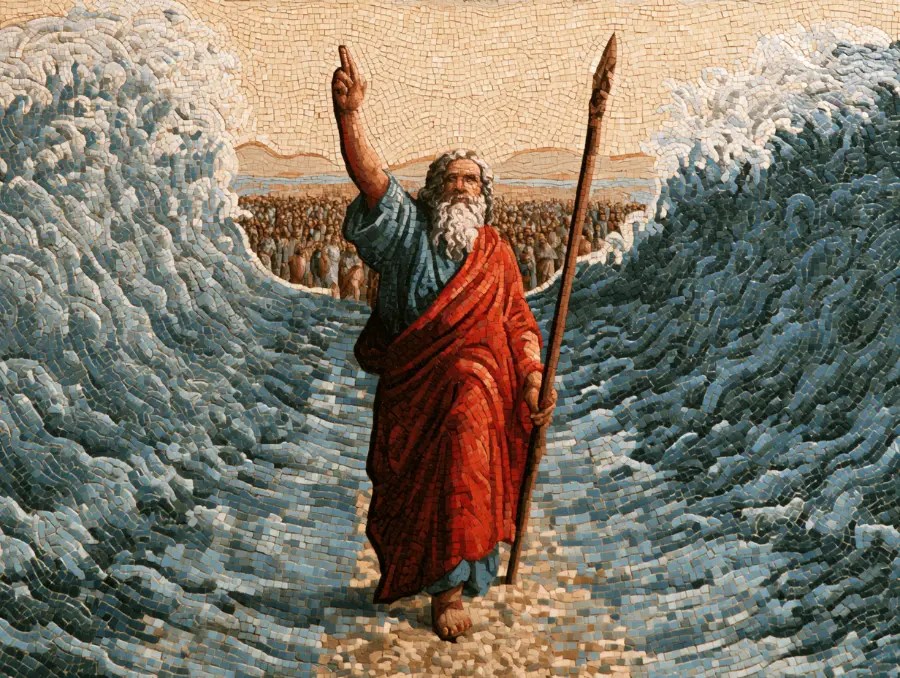
They laid the walls out as an argument we are meant to walk through. Down one wall runs Moses. Down the other, matched scene against scene, runs Christ. The sea opening faces the water of the Jordan. The law given on a mountain faces a sermon preached on one. It is one story told twice, the second time more plainly. And nearly everyone comes in, looks up, and never turns their head.
A man who did not want the work
Julius II handed Michelangelo the ceiling in 1508. Michelangelo did not want it. He was a sculptor, he said so loudly and often, and there was marble waiting for him.
He gave it four years on a scaffold of his own design, painting with his head tipped back until he could no longer read a letter unless he held it above him. He wrote a poem about how much he hated it, and drew himself in the margin, bent like a bow.
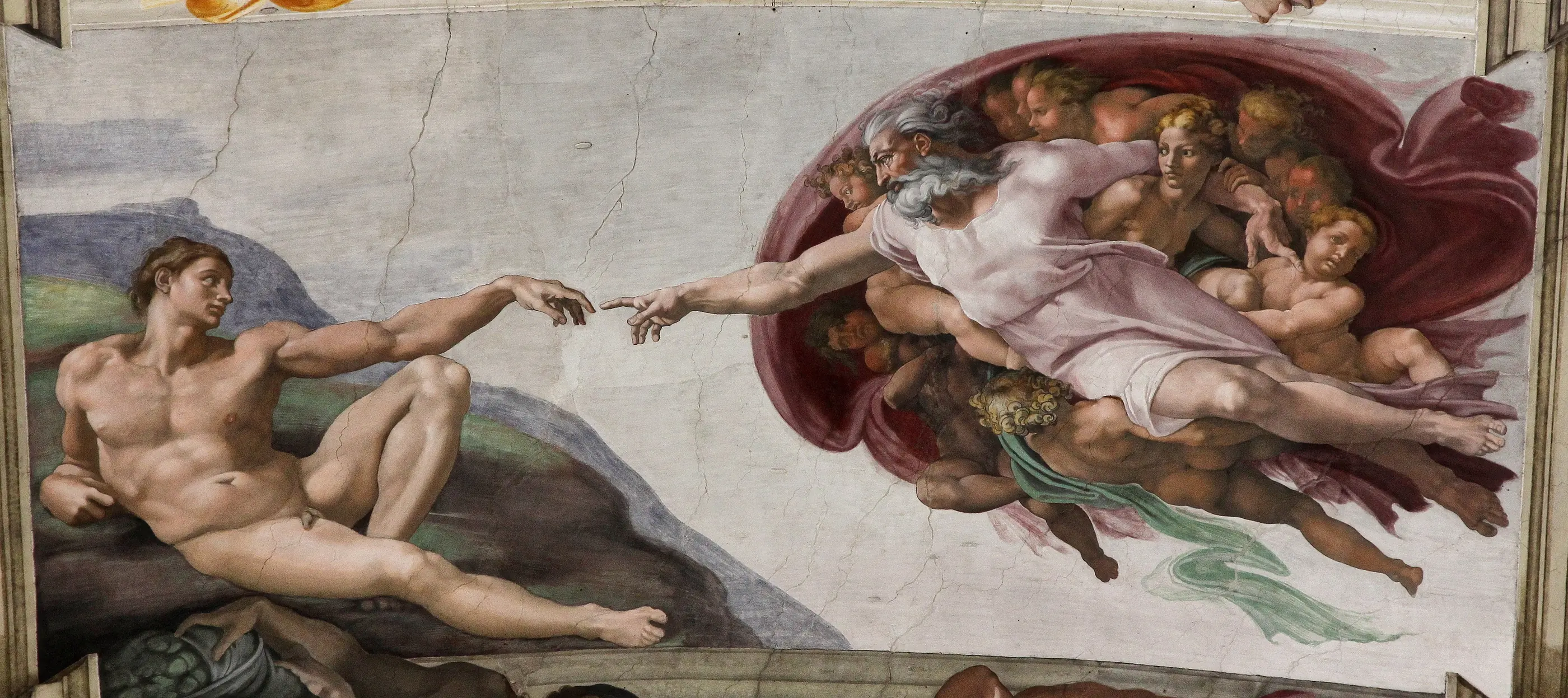
And in the middle of all that grievance he put down the two hands, one reaching, the other lying open on the ground and not quite rising to meet it. A finger’s width of plaster lies between them. Most of what we know about wanting God is in that gap.
Michelangelo put more into this scene than the two hands. Open it full screen and look closer, one detail at a time: what each part shows, the verse of Genesis behind it, and who says so.
He came back at sixty, to a frightened church in a sacked city, and painted the Judgment on the altar wall.
The room where we are given a bishop
Since 1492 the cardinals have been shut in here to choose a pope, and since 1878 nowhere else. They are locked in, cum clave, with a key, which is where the word conclave comes from. And they vote under that Judgment, with Christ coming as judge above every ballot they write.
The ballots go into a stove at the back. Black smoke means no decision. White smoke means the Church has a bishop of Rome. Since 2005 the colour has been helped along with chemical cartridges and the bells are rung as well, because too many votes had ended in smoke of an uncertain grey.
It happened again in May 2025. The smoke went white, the bells rang, and the man who came out onto the balcony took the name Leo. His first homily was preached in that room, to the men who had just elected him, under a ceiling by someone who spent four years insisting he was not a painter.
Frequently asked
Why is it called the Sistine Chapel?
It is named after Pope Sixtus IV, who had it built between 1473 and 1481. Sisto is the Italian form of his name, so the Cappella Sistina is simply Sixtus’s chapel.
Who is the chapel dedicated to?
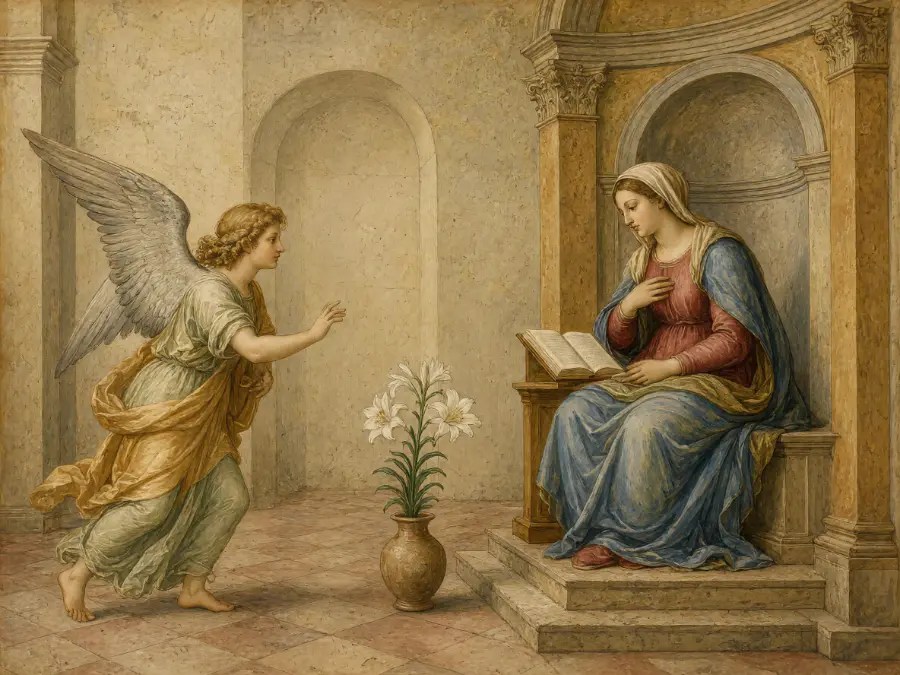
Our Lady of the Assumption. It was consecrated on 15 August 1483, the feast day itself. That surprises anyone who expects a room so bound up with Michelangelo to be dedicated to something on its ceiling.
Is it really the size of Solomon’s temple?
Its interior runs about forty metres by thirteen, which answers closely to the sixty cubits by twenty given in the first book of Kings. The match is generally taken as deliberate, though no document of the time says so outright.
How long did Michelangelo take?
Four years for the ceiling, 1508 to 1512, and five more for the Last Judgment, 1536 to 1541. And he did not paint lying on his back, whatever the story says. He stood, with his head bent backwards, which he complained was worse.
Can anyone visit?
Yes, through the Vatican Museums, and several million of us do each year. Photography is forbidden and the guards ask for silence, which holds for about ninety seconds at a time.
Too small, and built anyway
Solomon’s house was looted, rebuilt, desecrated, enlarged by Herod and burned by Rome. Nothing is left of it but a retaining wall and a set of measurements in a book.
And the measurements were enough. Somebody carried them across a sea and a thousand years and laid them out again in a city Solomon never heard of. Then they filled the room with Moses on one side and Christ on the other, and a ceiling where God leans down towards a man who has not yet woken enough to reach back.
We were never asked to rebuild the temple. Standing in its courts, Jesus spoke of its replacement, and nobody who heard him believed it: “Destroy this temple, and in three days I will raise it up” (John 2:19). John tells us what they missed: “But he spake of the temple of his body” (John 2:21).


Leave a Reply