Number 50: What does it mean in the Bible?


  • The number 50 in the Bible signifies themes of jubilee, liberation, and spiritual empowerment.
  • It is prominently associated with the Year of Jubilee, marking a time for forgiveness, restoration, and renewal every 50th year.
  • Pentecost, occurring 50 days after Easter, celebrates the descent of the Holy Spirit and the birth of the Church, connecting the Old and New Testaments.
  • Throughout Scripture, the number 50 symbolizes God’s mercy, justice, faithfulness, and His desire for a deeper relationship with His people.
This entry is part 44 of 54 in the series Biblical Numerology

Where does the number 50 appear in the Bible?

The number 50 appears in several major places throughout the Holy Scriptures, each instance carrying powerful spiritual meaning. While our research materials do not provide an exhaustive list of occurrences, we can explore some of the most notable mentions.

One of the most prominent appearances of the number 50 is in the Book of Leviticus, where God establishes the Year of Jubilee (Leviticus 25:10-11). This sacred year was to be observed every 50th year, marking a time of liberation, restoration, and renewal for the people of Israel.

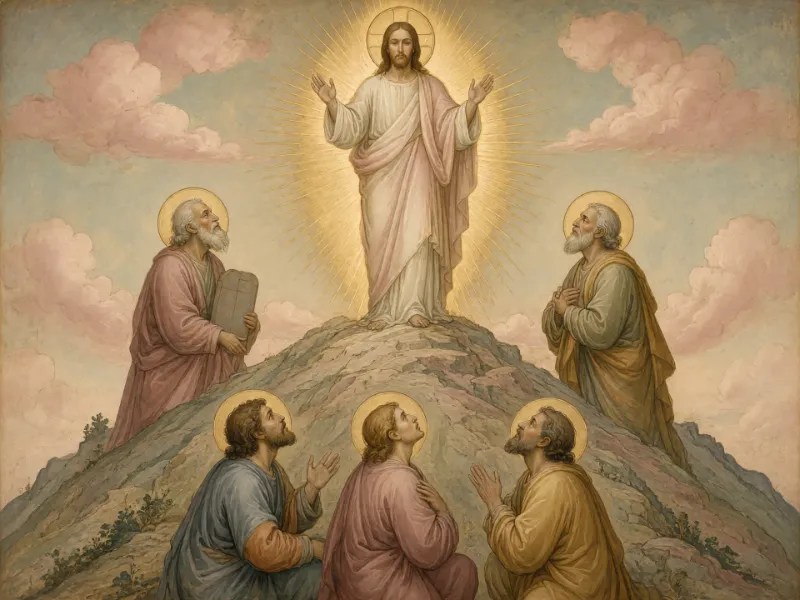
In the New Testament, we find the number 50 associated with Pentecost, which occurs 50 days after Easter. This major event marks the descent of the Holy Spirit upon the apostles and the birth of the Church (Acts 2:1-4). The term “Pentecost” itself means “fiftieth” in Greek, emphasizing the importance of this number in our faith.

The number 50 also appears in other contexts throughout the Bible. For instance, in Genesis 6:15, God instructs Noah to build the ark 50 cubits wide. In 1 Kings 7:6, we read about Solomon’s palace, which included a hall 50 cubits long. These references, while seemingly mundane, remind us that God’s wisdom permeates even the most practical aspects of life.

I encourage you to see these occurrences of the number 50 not merely as historical or architectural details as invitations to reflect on God’s divine plan. Each mention of this number in Scripture offers us an opportunity to contemplate the themes of liberation, renewal, and the outpouring of God’s Spirit in our lives.

Let us remember that while numbers in Scripture can carry significance, their primary purpose is to point us toward the greater truth of God’s love and His desire for our salvation. When we encounter the number 50 in our reading of the Bible, may it remind us of God’s faithfulness throughout history and His continuing work in our lives today.

What is the symbolic meaning of the number 50 in the Bible?

The number 50 carries rich symbolic meaning in our sacred Scriptures, representing themes of freedom, jubilee, and the outpouring of God’s Spirit. As we explore its significance, let us open our hearts to the powerful spiritual lessons it offers.

In biblical numerology, 50 is often seen as a number of completion and fullness. It is the product of 7 (representing perfection) and 8 (symbolizing new beginnings), multiplied together and then added to 2 (signifying union). This mathematical relationship suggests that 50 embodies the perfection of a new beginning in unity with God.

The most prominent symbolic use of 50 in the Old Testament is found in the concept of the Year of Jubilee. Every 50th year was declared a time of liberation, debt forgiveness, and the return of ancestral property (Leviticus 25:10-11). This cyclical observance reminded the Israelites of God’s sovereignty over time and property, and His desire for social justice and renewal.

In the New Testament, the symbolism of 50 reaches its pinnacle with the event of Pentecost. Occurring 50 days after the Resurrection, Pentecost marks the outpouring of the Holy Spirit and the birth of the Church (Acts 2:1-4). This event fulfills the promise of the Old Testament Jubilee in a spiritual sense, offering true freedom and a new beginning in Christ.

I have noticed that the symbolic use of numbers often relates to our deep-seated need for order, meaning, and cyclical renewal in our lives. The number 50 in Scripture speaks to our longing for liberation from burdens, fresh starts, and a deeper connection with the divine.

But my dear faithful, we must be careful not to become overly fixated on numerical symbolism. While numbers can carry spiritual significance, our primary focus should always be on the person of Jesus Christ and the transformative power of His love and grace in our lives.

Let us remember that when we encounter the number 50 in Scripture, it invites us to reflect on God’s desire for our freedom, renewal, and spiritual empowerment. May it inspire us to seek the jubilee of the heart that comes through faith in Christ and the indwelling of the Holy Spirit.

How is the number 50 connected to the Year of Jubilee?

The connection between the number 50 and the Year of Jubilee is a powerful testament to God’s love for justice, mercy, and renewal. This divine institution, established in Leviticus 25, offers us rich insights into God’s plan for social and spiritual restoration.

The Year of Jubilee was to be celebrated every 50th year, following seven cycles of seven years (7 x 7 = 49). On the Day of Atonement of the 50th year, the trumpet was to be sounded throughout the land, proclaiming liberty and restoration (Leviticus 25:8-10). This 50-year cycle was designed to prevent the permanent alienation of land and the perpetual bondage of the poor.

During this sacred year, several key provisions were to be observed:

  1. Liberty for slaves and servants (Leviticus 25:39-41)
  2. Cancellation of debts (Deuteronomy 15:1-2)
  3. Return of ancestral property to its original family (Leviticus 25:13)
  4. Rest for the land, with no sowing or reaping (Leviticus 25:11)

The number 50, in this context, symbolizes completeness and divine grace. It represents a full cycle of time, after which God calls for a reset, a new beginning. This institution was a reminder that all things belong to God, and we are merely stewards of His blessings.

I see the Year of Jubilee as a revolutionary concept in the ancient world, promoting social equity and preventing the accumulation of wealth and power in the hands of a few. It was a practical application of the commandment to love one’s neighbor as oneself.

Psychologically the Jubilee cycle addresses our deep-seated need for hope, renewal, and second chances. It reminds us that no situation is permanent and that God’s mercy offers us the opportunity for a fresh start.

But we must remember that the true fulfillment of the Jubilee is found in Christ. Jesus proclaimed Himself as the fulfillment of the Jubilee in Luke 4:18-19, quoting Isaiah 61. In Him, we find true freedom from sin, cancellation of our spiritual debt, and restoration to our heavenly inheritance.

What spiritual lessons can we learn from the number 50 in the Bible?

The number 50 in the Bible offers us powerful spiritual lessons that can deepen our faith and understanding of God’s plan for humanity. As we explore this number, let us approach it with open hearts and minds, ready to receive the wisdom it imparts.

The number 50 symbolizes jubilee and liberation. In Leviticus 25, God instructs the Israelites to observe a Year of Jubilee every 50 years. This was a time of restoration, forgiveness of debts, and freedom for slaves. I encourage you to reflect on how this concept of jubilee can apply to your own life. Are there burdens you need to release? Forgiveness you need to extend or receive? The number 50 reminds us that God desires our freedom and restoration.

50 represents the fullness of time and the completion of a cycle. It comes after 7 cycles of 7 (49), symbolizing perfection and completion. This teaches us patience and trust in God’s timing. In our fast-paced world, we often want immediate results the number 50 reminds us that God’s plans often unfold over time. I understand the importance of patience in personal growth and healing. Trust in God’s perfect timing for your life.

The number 50 is associated with the outpouring of the Holy Spirit at Pentecost, which occurred 50 days after Easter. This event marked the birth of the Church and the empowerment of believers. The spiritual lesson here is one of transformation and empowerment. Just as the disciples were changed and emboldened at Pentecost, we too can be filled with the Holy Spirit and equipped for God’s work.

Lastly, 50 teaches us about God’s grace and provision. In the parable of the unforgiving servant (Matthew 18:21-35), Jesus speaks of forgiving not just seven times seventy times seven (490). This number, approaching 500, reminds us of the Year of Jubilee and God’s abundant grace. As Christians, we are called to extend this same grace to others.

Let these spiritual lessons from the number 50 inspire you to seek liberation, trust in God’s timing, open yourself to the Holy Spirit’s power, and extend grace to others. May we all strive to embody these principles in our daily lives, growing ever closer to the heart of our loving God.

How does the number 50 relate to Pentecost in the New Testament?

The relationship between the number 50 and Pentecost in the New Testament is a beautiful testament to God’s perfect plan and the continuity between the Old and New Covenants. Let us explore this connection with open hearts, seeking to understand its deep spiritual significance.

Pentecost, also known as the Feast of Weeks in the Old Testament, occurs 50 days after Passover. In Greek, “Pentecost” literally means “fiftieth day.” This timing is not coincidental but divinely orchestrated. Just as the Israelites received the Law from God 50 days after their exodus from Egypt, the early Christians received the Holy Spirit 50 days after Christ’s resurrection. This parallel demonstrates God’s consistency and the fulfillment of His promises.

The number 50 here symbolizes completeness and the dawning of a new era. The 50 days between Passover and Pentecost represent a period of anticipation and preparation. I see how this mirrors the disciples’ experience after Christ’s ascension โ€“ a time of waiting and prayer, culminating in the powerful outpouring of the Holy Spirit.

At Pentecost, we witness the birth of the Church and the empowerment of believers to carry out Christ’s mission. The Holy Spirit’s descent, accompanied by the sound of a mighty wind and tongues of fire, echoes the giving of the Law at Sinai. But instead of tablets of stone, the Law is now written on human hearts (Jeremiah 31:33). This fulfills the promise of the new covenant and marks a transition from the letter of the Law to the spirit of the Law.

The events of Pentecost also reflect the universality of the Gospel. The disciples spoke in various languages, symbolizing that the message of Christ is for all nations. This multicultural aspect of Pentecost is a beautiful representation of the Church’s global mission and the unity we share in Christ, despite our diverse backgrounds.

I encourage you to reflect on how Pentecost and the number 50 apply to your personal spiritual journey. Just as the disciples were transformed at Pentecost, we too are called to continual renewal and empowerment by the Holy Spirit. The 50 days leading to Pentecost can inspire us to periods of preparation and anticipation in our own lives, expecting God to move in powerful ways.

Let us embrace the lessons of Pentecost and the number 50, opening our hearts to the Holy Spirit’s work, seeking unity with our brothers and sisters in Christ, and boldly proclaiming the Gospel to all nations. May we, like the early be filled with the Spirit’s power and love, transforming our world for Christ.

What did the early Church Fathers teach about the significance of the number 50?

As we delve into the teachings of the early Church Fathers regarding the significance of the number 50, we uncover a vast web of spiritual insight and biblical interpretation. These venerable teachers of our faith saw powerful meaning in numbers, often finding in them reflections of divine truth and spiritual realities.

St. Augustine, one of the most influential Church Fathers, wrote extensively about the symbolism of numbers in Scripture. Regarding the number 50, he saw it as a symbol of the fullness of time and the perfection of the divine law. In his interpretation, 50 represented the completion of seven cycles of seven (49) plus one, signifying a new beginning or a transcendent reality. Augustine linked this to the Jubilee year in the Old Testament and to Pentecost in the New Testament, seeing both as moments of divine intervention and renewal.

Origen, another prominent early Christian theologian, viewed the number 50 as representative of forgiveness and liberation. He drew parallels between the Year of Jubilee in Leviticus and the Christian concept of redemption through Christ. For Origen, the number 50 symbolized the release from sin and the restoration of our relationship with God.

St. Clement of Alexandria saw in the number 50 a representation of hope and rest. He associated it with the fiftieth psalm (in the Septuagint numbering), which speaks of God’s mercy and forgiveness. Clement taught that this number pointed to the ultimate rest and peace found in union with God.

The Venerable Bede, writing in the 8th century, continued this tradition of number symbolism. He saw the number 50 as representing the perfection of eternal blessedness. Bede linked this to the 50 days between Easter and Pentecost, seeing this period as a time of joyful celebration and anticipation of the Holy Spirit’s coming.

I find great value in these interpretations. They remind us of the depth and richness of our Christian tradition. The early Church Fathers’ teachings on the number 50 encourage us to look beyond the surface of Scripture, seeking deeper spiritual truths.

I also see in these teachings a reflection of human longing for renewal, forgiveness, and divine encounter. The number 50, associated with Jubilee and Pentecost, speaks to our deep-seated need for fresh starts and spiritual empowerment.

Let us take inspiration from these early Church teachings. May we, like our spiritual forebears, seek the deeper meanings in God’s Word. Let the number 50 remind us of God’s mercy, the promise of new beginnings, and the continual outpouring of the Holy Spirit in our lives. As we reflect on these ancient wisdom, may we be renewed in our faith and strengthened in our commitment to live as Christ’s disciples in the world today.

Are there any important events or people in the Bible associated with the number 50?

The number 50 holds special significance in Scripture, associated with several important events and concepts that reveal God’s plan for His people.

Perhaps the most prominent biblical event linked to the number 50 is the celebration of Jubilee. As prescribed in Leviticus 25, every 50th year was to be a time of liberation and restoration for the Israelites. During this Jubilee year, debts were forgiven, slaves were freed, and ancestral lands were returned to their original owners. This powerful symbol of God’s grace reminds us of His desire for justice, mercy, and renewal in our lives and communities.

The number 50 is also closely tied to the feast of Pentecost, which occurs 50 days after Passover. In the New Testament, it was on the day of Pentecost that the Holy Spirit descended upon the apostles, empowering them to proclaim the Gospel (Acts 2:1-4). This event, marking the birth of the demonstrates how God uses the symbolism of numbers to connect His plan across the Old and New Testaments.

We also see the number 50 associated with important figures in Scripture. Noah’s ark came to rest on Mount Ararat 150 days after the flood began (Genesis 8:3), a multiple of 50 that suggests divine completion. In the story of Sodom and Gomorrah, Abraham’s intercession begins by asking God to spare the city if 50 righteous people are found there (Genesis 18:24), highlighting the theme of God’s mercy.

The Tabernacle, and later the Temple, incorporated measurements related to 50. The courtyard of the Tabernacle was 50 cubits wide (Exodus 27:12), and Solomon’s Temple had upper chambers that were 50 cubits long (2 Chronicles 3:9). These architectural details remind us of the precision and intentionality in God’s instructions for worship.

How is the number 50 used in biblical prophecy?

When we consider the use of the number 50 in biblical prophecy, we must approach this topic with both reverence for Scripture and an understanding of the symbolic nature of prophetic language. Although the number 50 is not as prominently featured in prophecy as some other numbers, it does carry major meaning that can deepen our understanding of God’s messages to His people.

In prophetic literature, numbers often carry symbolic weight beyond their literal value. The number 50, being associated with Jubilee and Pentecost, often represents themes of liberation, restoration, and divine empowerment in prophetic contexts.

One notable prophetic use of the number 50 appears in the book of Ezekiel. In Ezekiel’s vision of the future Temple, he describes a separation of 50 cubits between the sanctuary and the surrounding area (Ezekiel 45:2). This prophetic imagery emphasizes the holiness and set-apart nature of God’s dwelling place, reminding us of the importance of maintaining sacred space in our spiritual lives.

The prophet Isaiah, while not explicitly mentioning the number 50, speaks of a future time of restoration that echoes the themes of Jubilee. In Isaiah 61:1-2, which Jesus later applies to Himself in Luke 4:18-19, we read of proclaiming liberty to captives and the year of the Lord’s favor. This prophecy, with its allusions to the Jubilee year, points to the ultimate fulfillment of God’s plan for redemption and restoration through Christ.

In the book of Daniel, Although the number 50 is not directly used, we see prophetic time periods that are multiples of 50 (e.g., the 70 weeks prophecy in Daniel 9:24-27). This suggests that the themes associated with 50 โ€“ completion, divine intervention, and new beginnings โ€“ play a role in God’s prophetic timeline.

The New Testament also contains prophetic elements related to the number 50. The outpouring of the Holy Spirit at Pentecost, occurring 50 days after Christ’s resurrection, fulfills Old Testament prophecies about the coming of God’s Spirit (Joel 2:28-29). This event marks the beginning of a new era in God’s relationship with His people, empowering them to be witnesses to the ends of the earth (Acts 1:8).

As we contemplate these prophetic uses of the number 50, we are reminded that God’s plan unfolds in perfect timing, often in ways that echo and fulfill earlier patterns in Scripture. Let us approach biblical prophecy with humility and discernment, always seeking the guidance of the Holy Spirit to understand its relevance for our lives today. May we be inspired by these prophetic themes of liberation and renewal to live in expectant hope of God’s continued work in our world.

What does the number 50 reveal about God’s character in the Bible?

As we contemplate the significance of the number 50 in Scripture, we discover powerful insights into the character of our loving God. This number, woven throughout the biblical narrative, reveals aspects of His nature that can deepen our faith and inspire our devotion. For instance, the number 50 is often associated with the concept of Jubilee, a time of liberation and restoration, reflecting Godโ€™s desire for His people to experience freedom and renewal. In this context, we can also explore other significant numbers in the Bible, such as what is the number 4 in scripture, which often symbolizes completeness and creation, reminding us of Godโ€™s intricate design in the world around us. By understanding these numbers, we gain a richer perspective on Godโ€™s overarching plan for humanity.

The number 50 speaks powerfully of God’s mercy and compassion. The institution of the Jubilee year every 50th year (Leviticus 25) demonstrates God’s desire for forgiveness, restoration, and new beginnings. In this, we see a God who is not content to leave His people in bondage โ€“ whether physical, economic, or spiritual. Instead, He provides a way for debts to be cancelled, slaves to be freed, and land to be returned. This reveals a God of second chances, a Father who longs to see His children restored and given fresh opportunities to thrive.

The number 50 illuminates God’s justice and equity. The Jubilee regulations were designed to prevent the perpetual accumulation of wealth and power by a few at the expense of the many. This shows us a God who cares deeply about social justice and the well-being of all His people, not just the privileged few. It challenges us to reflect on how we might embody these principles of equity and fairness in our own societies.

The connection between the number 50 and Pentecost reveals God’s desire for intimacy and empowerment of His people. Just as He gave the Law to Moses 50 days after the first Passover, He sent the Holy Spirit to the disciples 50 days after Christ’s resurrection. This parallel demonstrates God’s consistency in providing guidance and power to His people, moving from external law to internal transformation through the Spirit.

The number 50 also speaks to God’s faithfulness and covenant-keeping nature. The cycle of 50 years for the Jubilee reminds us that God is a God of order and planning, who keeps His promises over long periods of time. This encourages us to trust in His timing and to have patience in waiting for His plans to unfold.

Lastly, the use of 50 in various biblical contexts โ€“ from the dimensions of the Tabernacle to Noah’s ark โ€“ reveals God’s attention to detail and the intentionality behind His instructions. It shows us a God who cares about every aspect of our lives and worship, inviting us into a relationship of obedience and trust.

How can Christians apply the meaning of the number 50 to their faith today?

The concept of Jubilee embedded in the number 50 challenges us to embrace a spirit of forgiveness and reconciliation in our lives. Just as debts were forgiven and slaves freed every 50 years, we are called to regularly examine our hearts and relationships, releasing others from the debts they owe us โ€“ whether material or emotional. This practice of forgiveness is at the

โ€”


Discover more from Christian Pure

Subscribe now to keep reading and get access to the full archive.

Continue reading

Share to...