
 Portuguese
 English
 Chinese
 Dutch
 Arabic
 Spanish
 Russian
 French
 Italian
 German
 Japanese
Catholics, the Eastern Orthodox and the Coptic Orthodox baptize babies, and so do Lutherans, Anglicans and Episcopalians, Presbyterians and the Reformed, Methodists, the Church of the Nazarene and the United Church of Christ. Baptists, the Churches of Christ, the Disciples of Christ, Pentecostals, Mennonites, the Amish, Seventh-day Adventists and Jehovah’s Witnesses wait until a child can repent and believe, and each nondenominational church settles it for itself. Latter-day Saints baptize their children at eight, and Quakers and the Salvation Army baptize nobody with water at all.
Christians on both sides of that line keep turning to the same few verses in Mark. “They brought young children to him, that he should touch them: and his disciples rebuked those that brought them.” Jesus was “much displeased” and said, “Suffer the little children to come unto me, and forbid them not: for of such is the kingdom of God,” and then “he took them up in his arms, put his hands upon them, and blessed them” (Mark 10:13–16). The Catholic Catechism quotes those words, and so do the Quakers and the Adventists, and so did Tertullian in the early church. Some of us hear in them a reason to carry a baby to the font in its first weeks, and some hear that the child is held in those arms already, safe until the day it can come by itself.
| Igreja ou família | Batiza bebés? | Nas suas próprias palavras |
|---|---|---|
| católica | Yes, shortly after birth | Children “also have need of the new birth in Baptism” |
| Ortodoxa Oriental | Yes, by three immersions | The godparent “speaks on behalf of the child” |
| Copta Ortodoxa | Yes, at 40 days for boys and 80 for girls | “A redemptive Sacrament, necessary for redemption” |
| Luterana | sim | “Children are to be baptized” |
| Anglicana e Episcopal | sim | Thirty-nine Articles: “In any wise to be retained in the Church” |
| Metodista | sim | “The Baptism of young children is to be retained” |
| Presbiteriana e Reformada | Sim, filhos de crentes | Westminster Confession: “The infants of one, or both, believing parents” |
| Igreja do Nazareno | Yes, if the parents ask | “Upon request of parents or guardians” |
| Igreja Unida de Cristo | sim | “Infants, children, youth and adults” |
| Batista | No, believers only, by immersion | “The immersion of a believer in water” |
| Igrejas de Cristo | não | Batsell Barrett Baxter: “Faith must always precede baptism” |
| Discípulos de Cristo | No, but accepts other churches’ baptisms | “We practice the baptism of believers” |
| Pentecostal e Pentecostal da Unicidade | não | Assemblies of God: “All who repent and believe”; UPCI: “only for those who have fully repented” |
| Não denominacional | No shared rule | Gateway Church: a sign of “what God has already done” |
| Menonita e Amish | não | Mennonite Church USA: “Infants and children have no need for baptism” |
| Os Adventistas do Sétimo Dia | No; children are dedicated | “Contingent on an affirmation of faith” |
| Testemunhas de Jeová | não | “Not compatible with the Scriptures” |
| Santos dos Últimos Dias | No; baptized at eight | “When eight years old” |
| Quakers and the Salvation Army | No water baptism for anyone | Quakers: “The inward change”; Salvation Army: “not to observe specific sacraments” |
A nossa ferramenta gratuita, Comparar denominações cristãs, sets any two of 23 churches side by side on baptism and 54 other questions.
Why do Catholics and Orthodox Christians baptize babies?
Catholics bring a baby to be baptized because they believe the baby needs what baptism gives. “Born with a fallen human nature and tainted by original sin, children also have need of the new birth in Baptism,” the Catechism of the Catholic Church teaches (paragraph 1250), and that is the birth of water and the Spirit Jesus spoke of in John’s Gospel: “Except a man be born of water and of the Spirit, he cannot enter into the kingdom of God” (John 3:5). A baby has done nothing and can promise nothing, and the Catechism sees exactly that as the point, for “The sheer gratuitousness of the grace of salvation is particularly manifest in infant Baptism.” So it says the Church and the parents “would deny a child the priceless grace of becoming a child of God were they not to confer Baptism shortly after birth.” How the churches understand that inheritance from Adam is told in pecado original.
An Orthodox baby goes down into the font three times, and the godparent “receives” the child out of the water. A baby cannot say the Creed, so somebody says it for the child, because before baptism “a person—or his sponsors or godparents for him—officially proclaims the symbol of Christian faith, the Creed.” The Orthodox Church in America’s book The Orthodox Faith tells what is happening: “Christian baptism is man’s participation in the event of Easter. It is a ‘new birth by water and the Holy Spirit’ into the Kingdom of God (Jn 3.5).” In the same service the newly baptized child “is given the gift of the Holy Spirit in the sacrament of Chrismation.”
The Coptic Orthodox Church teaches that “Baptism is a redemptive Sacrament, necessary for redemption and entry to eternal life,” and it keeps a calendar for it from the Law of Moses. “The eighty days for the female child, and forty days for the male child is identified in the Book of Leviticus, Chapter Twelve,” writes Bishop Mettaous in his book on the church’s sacraments, and parents “must not surpass them for any reason.” If a newborn is sick, nobody waits, and the baby is baptized “even if the child is one day old,” so that the child “does not die without Baptism.”
Do Lutherans, Anglicans and Methodists baptize infants?
Lutherans wrote infant baptism into the Augsburg Confession, whose ninth article says, “Of Baptism they teach that it is necessary to salvation, and that through Baptism is offered the grace of God, and that children are to be baptized who, being offered to God through Baptism are received into God’s grace.” Martin Luther took up the question of whether a baby can believe, and in his Large Catechism he lifted the weight off the baby altogether: “We bring the child in the conviction and hope that it believes, and we pray that God may grant it faith; but we do not baptize it upon that, but solely upon the command of God.”
Anglicans and Episcopalians still read the sentence that closes Article XXVII of the Church of England’s Thirty-nine Articles, agreed in 1562: “The Baptism of young Children is in any wise to be retained in the Church, as most agreeable with the institution of Christ.” The Methodist Articles of Religion, which the United Methodist Church keeps, begin their article on baptism in almost the Anglican words and end, “The Baptism of young children is to be retained in the Church.”
A Nazarene family may bring a baby or wait, and the choice is theirs. The Church of the Nazarene’s Articles of Faith give baptism “to believers,” and then add, “As participants in the new covenant, young children and the morally innocent may be baptized upon request of parents or guardians.” In the United Church of Christ a baby is baptized as readily as a grown man or woman, since the church gives baptism to “Infants, children, youth and adults,” and for an infant, it says, baptism “marks their acceptance into the care of Christ’s church, the sign and seal of God’s grace and forgiveness, and the beginning of their Christian faith and life.”
Why do Presbyterians baptize the children of believers?
Presbyterian and Reformed Christians baptize the babies of believers because of the covenant, for the Westminster Confession of Faith calls baptism “a sign and seal of the covenant of grace,” and says who is to receive it: “Not only those that do actually profess faith in and obedience unto Christ, but also the infants of one, or both, believing parents, are to be baptized” (28.1, 28.4). That sentence speaks for the Reformed, since Protestants as a whole have no single rule on infant baptism, and the Baptist and Pentecostal statements say the opposite.
To see why a covenant brings babies to the font, the Reformed take us back to Abraham, who was told, “he that is eight days old shall be circumcised among you” (Genesis 17:12), so Israel’s sons were given the covenant’s sign before they could speak. Paul tells the Colossians that in Christ they “are circumcised with the circumcision made without hands,” and goes straight on, “Buried with him in baptism, wherein also ye are risen with him” (Colossians 2:11–12). Westminster holds that there are not two covenants of grace but “one and the same, under various dispensations.” So the Reformed read circumcision and baptism as signs of one covenant, and they hear the same promise in Peter’s sermon at Pentecost: “Repent, and be baptized every one of you,” and in the next breath, “For the promise is unto you, and to your children” (Acts 2:38–39).
Is infant baptism in the Bible?
No verse says a baby was baptized, and no verse forbids it, so both sides read the same households in Acts. Lydia, “a seller of purple,” “whose heart the Lord opened,” was baptized “and her household” (Acts 16:14–15). The jailer at Philippi “was baptized, he and all his, straightway” (Acts 16:33), and Paul remembers, “I baptized also the household of Stephanas” (1 Corinthians 1:16). The Catholic Catechism points to these verses and says it is “quite possible that, from the beginning of the apostolic preaching, when whole ‘households’ received baptism, infants may also have been baptized” (paragraph 1252), and it claims no more than “quite possible.”
Jehovah’s Witnesses teach on jw.org that “Infant baptism is not compatible with the Scriptures.” A person coming to be baptized has requirements to meet, they say, and “Infants are not able to do these things.” They read the jailer’s house the other way: “For one thing, no ages are mentioned. For another, before the jailer and his household were baptized, they heard and accepted ‘the word of Jehovah.’” Luke does say that Paul and Silas “spake unto him the word of the Lord, and to all that were in his house,” and that the jailer “rejoiced, believing in God with all his house” (Acts 16:32, 34). On the desert road, too, the Ethiopian who saw water and asked, “what doth hinder me to be baptized?” heard Philip answer, in the King James Version, “If thou believest with all thine heart, thou mayest” (Acts 8:36–37). If your Bible is the NIV, you will find Philip’s answer only in a footnote, because only some manuscripts include it.

Which churches baptize only believers?
The Baptist Faith and Message, the confession of the Southern Baptist Convention, says, “Christian baptism is the immersion of a believer in water in the name of the Father, the Son, and the Holy Spirit. It is an act of obedience symbolizing the believer’s faith in a crucified, buried, and risen Saviour.” The water is the believer’s own answer to God, so it waits for a believer.
A family in the Churches of Christ waits as well, until the child can believe the gospel for herself. Batsell Barrett Baxter, answering for the Churches of Christ on church-of-christ.org, puts the question and its answer side by side: “Is infant baptism practiced? No. Only those who have reached the ‘age of accountability’ are accepted for baptisms,” because “Faith must always precede baptism, so only those old enough to understand and believe the gospel are considered fit subjects for baptism.” A Disciples of Christ congregation baptizes believers too, yet it welcomes someone baptized as a baby in another church: “We practice the baptism of believers, which emphasizes that God’s grace demands a response of faith and discipleship, while also recognizing the baptism performed in other churches,” the Disciples of Christ say in their Identity Statement.
Bring a baby to an Assemblies of God church and the water waits until the child can repent and believe, for the Assemblies of God teach in their Statement of Fundamental Truths that “The ordinance of baptism by immersion is commanded by the Scriptures. All who repent and believe on Christ as Saviour and Lord are to be baptized.” Oneness Pentecostals wait for the same thing. The United Pentecostal Church International baptizes “in the name of the Lord Jesus Christ for the remission of sins,” and its Articles of Faith say that immersion “is only for those who have fully repented, having turned from their sins and a love of the world.” In a nondenominational church the answer depends on the church, since there is no common statement. Gateway Church in Texas, for one, says that “Water baptism is the outward sign of what God has already done in the individual’s life, and is a testimony to all that the person belongs now to Jesus,” though the statement never mentions infants.
Seventh-day Adventists teach in their fifteenth Fundamental Belief that baptism “is by immersion in water and is contingent on an affirmation of faith in Jesus and evidence of repentance of sin.” They have a service for babies all the same, for their Church Manual names “child dedications” among the things the elders arrange or lead, and it quotes Ellen White on those verses in Mark: “Jesus is drawing the children, and He bids us, Suffer them to come; as if He would say, They will come if you do not hinder them.” How a dedication differs from a baptism is the subject of dedicação vs batismo.
Why do Mennonites and the Amish wait?
Mennonites and the Amish are Anabaptists, and their answer was written down early. On 24 February 1527 a conference of Swiss Brethren at Schleitheim agreed that “Baptism shall be given to all those who have learned repentance and amendment of life, and who believe truly that their sins are taken away by Christ,” and said plainly, “This excludes all infant baptism.” The Lutherans’ Augsburg Confession, from the same century, condemned “the Anabaptists, who reject the baptism of children, and say that children are saved without Baptism.”
Mennonite Church USA’s Confession of Faith in a Mennonite Perspective says today that “Baptism is for those who are of the age of accountability and who freely request baptism on the basis of their response to Jesus Christ in faith.” Its commentary gives the reason: “Infants and children have no need for baptism, since they are safe in the care of God. When they are able to be accountable for their own actions, they are able to make the church’s faith their own.”
Why do Latter-day Saints baptize at eight?
The Church of Jesus Christ of Latter-day Saints teaches in its Articles of Faith “Baptism by immersion for the remission of sins,” and it does not baptize babies because it holds they have nothing to be remitted. In the Book of Mormon, Mormon writes to his son Moroni that “little children are whole, for they are not capable of committing sin,” that “their little children need no repentance, neither baptism,” and that “little children are alive in Christ, even from the foundation of the world” (Moroni 8:8, 11–12). A revelation in the Doctrine and Covenants sets the age: “And their children shall be baptized for the remission of their sins when eight years old, and receive the laying on of the hands” (68:27). Baptism on behalf of the dead is a different matter, with its own page, batismo pelos mortos.
Which churches do not baptize with water at all?
Quakers and the Salvation Army baptize nobody with water, baby or adult, and both say they do it to keep their eyes on what the water points to. Quaker faith and practice, the book of Britain Yearly Meeting, keeps a passage John Wilhelm Rowntree wrote in 1902 that goes back to the children in Jesus’ arms: “Jesus, when he took up the little children and said, ‘Of such is the Kingdom of Heaven’, was speaking of Jewish children, who, according to the Jewish custom, would not have been baptised.” For Rowntree, “It is the inward change, the inward purification, the spiritual fact and not the outward symbol, that belongs in truth to the Kingdom of God.” The same book says, “We acknowledge that the grace of God is experienced by many through the outward rite of baptism.”
The Salvation Army’s Handbook of Doctrine says, “Early in our history, The Salvation Army was led of God not to observe specific sacraments, that is baptism and the Lord’s Supper, or Holy Communion, as prescribed rituals. In this we remind ourselves and others of the danger of trusting in the external rather than the grace it signifies or points to.” A Salvationist is sworn in as a soldier instead, and the Handbook calls that “a public response and witness to a life-changing encounter with Christ which has already taken place, as is the water baptism practised by some other Christians.”
Did the early church baptize babies?
The Catechism says that “There is explicit testimony to this practice from the second century on.” In Carthage, in North Africa, two Christians of the same church left us opposite advice about fifty years apart. Tertullian, a priest there, wrote a little book On Baptism in the first years after 200, asking parents to wait. In it he says that “the delay of baptism is preferable; principally, however, in the case of little children,” and he took up the verse we began with: “The Lord does indeed say, Forbid them not to come unto me. Let them come, then, while they are growing up,” and “let them become Christians when they have become able to know Christ. Why does the innocent period of life hasten to the remission of sins?” Nobody pleads for a delay unless the babies are already being brought, so his warning also tells us what the church in Carthage was doing.
Cyprian, who became bishop of Carthage around 248, had a letter from a bishop named Fidus, who thought a newborn should not be baptized “within the second or third day after their birth” but should wait until “the eighth day,” as at a circumcision. Cyprian and his council told him that “we all rather judge that the mercy and grace of God is not to be refused to any one born of man.” Nobody, he wrote, should shrink from kissing a child fresh from its birth, since “in the kiss of an infant every one of us ought for his very religion’s sake, to consider the still recent hands of God themselves, which in some sort we are kissing.”
What happens to a baby who dies before baptism?
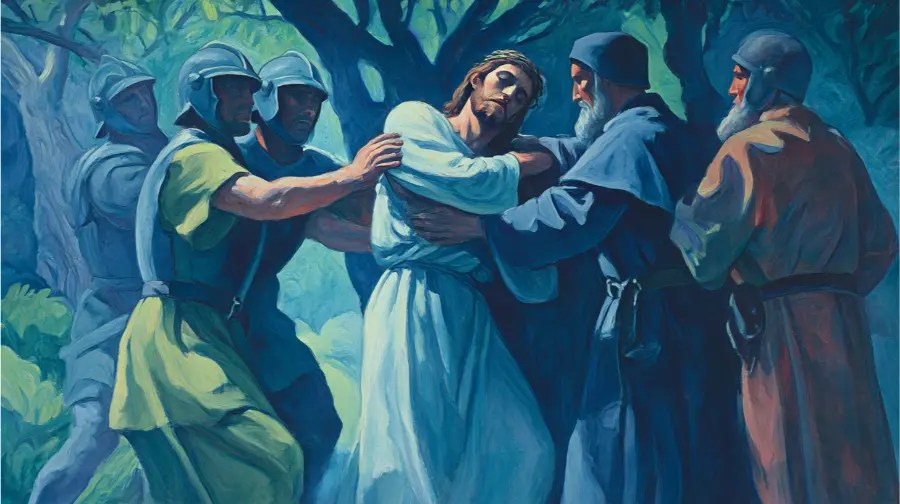
If we come to this question carrying a grief, for a child who was born too soon or lived only a few hours, the churches speak of that child gently. The Catholic Church teaches that “Baptism is necessary for salvation for those to whom the Gospel has been proclaimed and who have had the possibility of asking for this sacrament,” and adds in the same paragraph, “God has bound salvation to the sacrament of Baptism, but he himself is not bound by his sacraments” (paragraph 1257). So it says, “As regards children who have died without Baptism, the Church can only entrust them to the mercy of God, as she does in her funeral rites for them,” and it finds its hope in the arms we met in Mark: “Jesus’ tenderness toward children which caused him to say: ‘Let the children come to me, do not hinder them,’ allow us to hope that there is a way of salvation for children who have died without Baptism” (paragraph 1261). Many of us grew up hearing of limbo, and how it differs from purgatory is set out in Limbo vs Purgatório.
The churches that wait see no danger for the child, since they never thought a baby needed the water. Mennonites hold that little ones “are safe in the care of God,” and Latter-day Saints read in the Book of Mormon that “little children are alive in Christ.” Presbyterians, who do baptize babies, find comfort in the Westminster Confession, which teaches that grace and salvation are not so tied to baptism “as that no person can be regenerated, or saved, without it” (28.5). Whatever our church, we are entrusting that child to the one who took the little children up in his arms.
If I was baptized as a baby, do I need to be baptized again?
If you were baptized as a baby, the churches that baptize babies will not baptize you again, because they give baptism once and count the one you had. Presbyterians have it in the Westminster Confession, which says baptism “is but once to be administered unto any person,” and Lutherans have it from Luther, who wrote that the baptism of infants is valid “and no one should rebaptize them.” The United Church of Christ says it of every church’s baptism: “The United Church of Christ recognizes the validity of all baptisms, therefore there is no need for re-baptism.” The Disciples of Christ, who baptize believers, also recognize “the baptism performed in other churches.”
A Baptist church will answer the other way, because Baptists hold that the New Testament gives baptism to believers. The Second London Confession of 1689 calls those who profess repentance and faith in Christ “the only proper subjects of this ordinance,” and the Baptist Faith and Message says baptism “is prerequisite to the privileges of church membership and to the Lord’s Supper.” So a person christened as a baby who joins a Southern Baptist church can expect to be baptized first, as a believer.
Mark does not tell us what those children understood when they were carried past the disciples. He tells us what Jesus did: “he took them up in his arms, put his hands upon them, and blessed them” (Mark 10:16). Some of us carry our babies to the font because of that verse, and some of us carry them home and wait for the day they walk to the water themselves, and all of us are bringing them to him.
Leitura relacionada
- Compare denominações cristãs: o que 23 igrejas ensinam sobre 55 questões
- Presbiteriano vs Batista: Batismo Infantil, Presbíteros e Congregações Comparados
- Batismo vs. Batizado: Qual é a Diferença?
- Luteranos vs. Batistas: Duas visões sobre o batismo, a comunhão e a fé
- Metodistas vs. Batistas: Batismo, Salvação e Quem Escolhe o Pastor
- 19 Versículos Bíblicos Sobre o Batismo, e Onde os Cristãos os Interpretam de Forma Diferente


Deixe um comentário