
 French
 English
 Chinese
 Dutch
 Arabic
 Spanish
 Portuguese
 Russian
 Italian
 German
 Japanese
On Pentecost Sunday we remember the day the Holy Spirit came upon Jesus’ disciples in Jerusalem. A sound like a rushing wind filled the house where they sat. Then the disciples began to praise God in languages they had never learned, and the people who gathered could hear them in their own native tongues.
That morning Jerusalem was keeping the Jewish Feast of Weeks. Pentecost means “fiftieth” in Greek. On that day Israel brought God the first bread made from the wheat harvest. When John Chrysostom preached on Acts, he asked his listeners to think of the wheat. “What is this Pentecost? The time when the sickle was to be put to the harvest, and the ingathering was made.” Before the day was over, about three thousand people had been baptized.
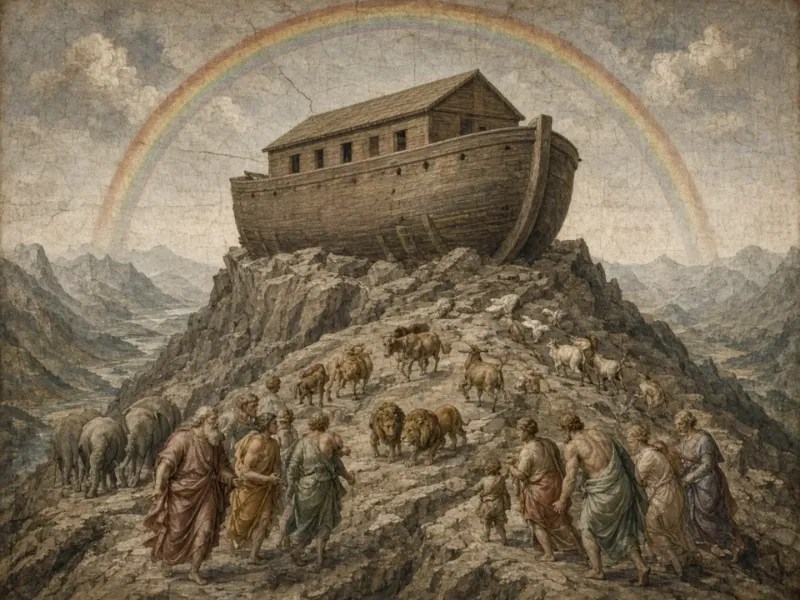
What happened in Jerusalem that morning?
Before his Ascension, Jesus “commanded them that they should not depart from Jerusalem, but wait for the promise of the Father” (Acts 1:4). He had told them how far they would go once the waiting was over. In his words, “ye shall receive power, after that the Holy Ghost is come upon you: and ye shall be witnesses unto me both in Jerusalem, and in all Judaea, and in Samaria, and unto the uttermost part of the earth” (Acts 1:8). For now, they stayed in Jerusalem and prayed.
When I read about Peter standing up to preach, I think of the others who waited with him. They were still sitting together when, as Luke tells it, “there appeared unto them cloven tongues like as of fire, and it sat upon each of them” (Acts 2:3). Then they began to speak, each in the words the Spirit gave them (Acts 2:4).
The sound drew people who had grown up speaking very different languages. Some were devout Jews living in Jerusalem, and Luke specifically mentions visitors from Rome (Acts 2:5–10). He names fifteen peoples and places in all, from Parthia and Media to Crete and Arabia. What could someone from Rome have understood as clearly as someone from Crete? They tell us themselves, “we do hear them speak in our tongues the wonderful works of God” (Acts 2:11).
Some listeners marvelled and others laughed. “These men are full of new wine” (Acts 2:13), they said, which drew a very practical answer from Peter. He stood up with the eleven and pointed out that “these are not drunken, as ye suppose, seeing it is but the third hour of the day” (Acts 2:15). It was still morning. Then he reminded them whose voices the prophet Joel had said they would hear when God gave his Spirit. “I will pour out of my Spirit upon all flesh: and your sons and your daughters shall prophesy, and your young men shall see visions, and your old men shall dream dreams” (Acts 2:17).
Less than two months earlier, Peter had been sitting by a fire in the high priest’s hall. “This man was also with him,” a servant girl had said of him, and Peter had answered, “Woman, I know him not” (Luke 22:56–57). Now the same Peter stood before thousands and told them that God had raised Jesus of Nazareth from the dead. They heard him say, “God hath made the same Jesus, whom ye have crucified, both Lord and Christ” (Acts 2:36). If you’ve ever been afraid to say that you know Christ, remember who gave Peter the courage to speak.
The people “were pricked in their heart, and said unto Peter and to the rest of the apostles, Men and brethren, what shall we do?” Peter had an answer even for those he had just called to account. “Repent, and be baptized every one of you in the name of Jesus Christ for the remission of sins, and ye shall receive the gift of the Holy Ghost” (Acts 2:37–38). They took him at his word, and “the same day there were added unto them about three thousand souls” (Acts 2:41).
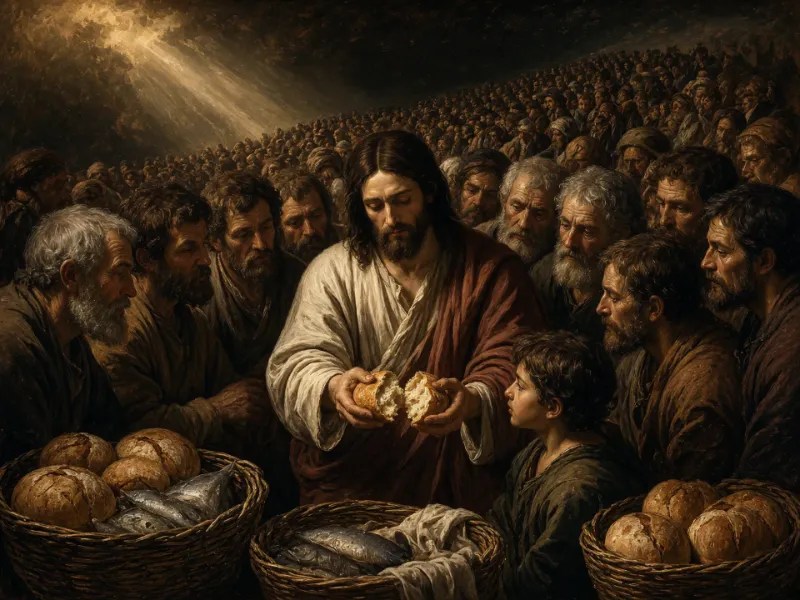
Who received the Holy Spirit, and where were they?
Was Mary there when the Spirit came? The last time Luke names her, she is praying in Jerusalem after the Ascension. The eleven apostles had gone up to “an upper room”, and there they prayed “with the women, and Mary the mother of Jesus, and with his brethren” (Acts 1:13–14). Peter stood up among about a hundred and twenty believers in those days (Acts 1:15). When we come to Pentecost, Luke gives us no new list or count. He says “they were all with one accord in one place” (Acts 2:1).
Did Luke mean the apostles alone? Chrysostom asked much the same question. “Was it upon the twelve that it came? Not so; but upon the hundred and twenty.” He heard Joel’s promise to sons and daughters in that little word toutes. On that reading, Mary received the Spirit alongside her son’s apostles, as did the women who had prayed with her and whose names Luke never gives us.
Luke tells us less about the room. He calls it “the house where they were sitting” (Acts 2:2), which leaves open whether they were still in the same upper room. By the late fourth century, Jerusalem Christians could show a visitor named Egeria the church at Sion, on the spot they remembered as the place “where once, after the Lord’s Passion, the multitude was gathered together with the Apostles”.
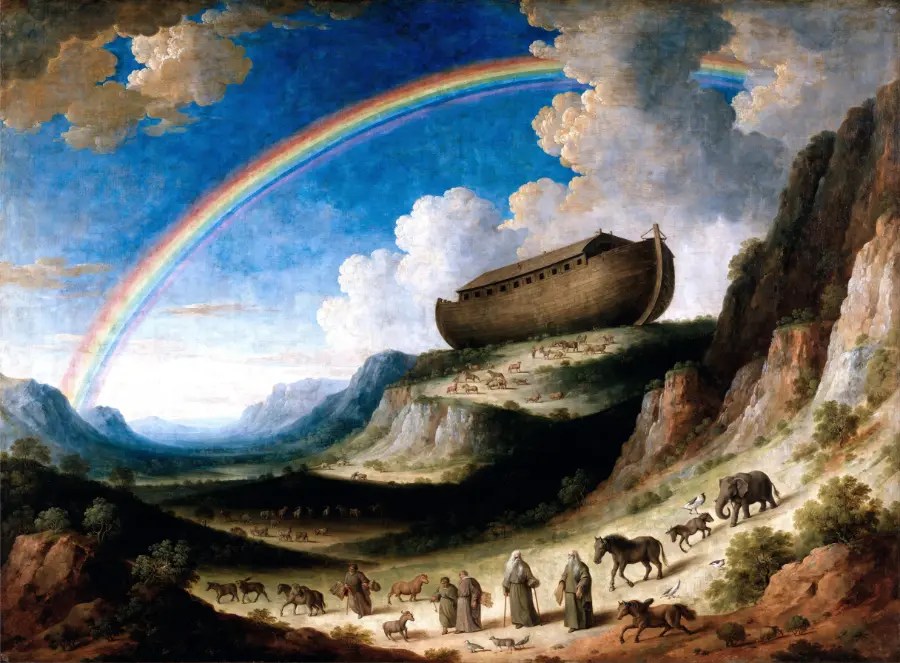
What did Israel bring to the Feast of Weeks?
Israel brought two loaves to the Temple to thank God for the first wheat of the harvest. Moses even told the people how to bake them. “Ye shall bring out of your habitations two wave loaves of two tenth deals; they shall be of fine flour; they shall be baken with leaven; they are the firstfruits unto the Lord” (Leviticus 23:17). The people were to let the dough rise, then bring God the bread they had baked. You can hear what they were giving thanks for in the names of the feast. Exodus calls it “the feast of harvest” and “the feast of weeks, of the firstfruits of wheat harvest” (Exodus 23:16; 34:22). In Numbers it is simply “the day of the firstfruits” (Numbers 28:26).
Why call it the Feast of Weeks? At Passover the people began their count on the day the first sheaf was waved before the Lord. Seven full weeks later, on the fiftieth day, they brought the new offering (Leviticus 23:15–16). You can hear both ways of naming the same feast in the Douay-Rheims Bible. In one verse 2 Maccabees speaks of “the feast of the weeks being at hand”, and in the very next it tells us what happened “after Pentecost” (2 Maccabees 12:31–32).
Moses was just as particular about who should come and rejoice. “And thou shalt rejoice before the Lord thy God, thou, and thy son, and thy daughter, and thy manservant, and thy maidservant, and the Levite that is within thy gates, and the stranger, and the fatherless, and the widow, that are among you” (Deuteronomy 16:11). Read that invitation beside the promise Peter repeated at Pentecost, “your sons and your daughters shall prophesy … And on my servants and on my handmaidens I will pour out in those days of my Spirit” (Acts 2:17–18). Moses named the maidservant among those who had a place at the feast. Centuries later, a woman in service could listen to Peter and hear that God had promised her his Spirit too.
In time Jews also came to remember the giving of the Torah at Sinai on this feast, called Shavuot. “It is the day on which the Torah was given,” Rabbi Elazar says in the Talmud. Exodus gives us the month when Israel came to Sinai. “In the third month” is as closely as it dates their arrival after leaving Egypt (Exodus 19:1). Christians inherited the association with Sinai. The Orthodox Church in America teaches that “Pentecost celebrated God’s gift of the ten commandments to Moses on Mount Sinai.” When Moses went to Sinai, the whole mountain shook as “the Lord descended upon it in fire” (Exodus 19:18). In the house in Jerusalem, Luke takes care to tell us that the tongues like fire came to rest on each person.
Another memory of Sinai comes to mind when we hear how many people were baptized. When Moses came down from the mountain with the Law and found the golden calf, “there fell of the people that day about three thousand men” (Exodus 32:28). Luke never mentions the calf, so we can only say what strikes us when we read these passages together. About three thousand died on that day at Sinai. At Pentecost we hear that number again, this time of people beginning a new life.

Why wind and fire, and why so many languages?
Listen to the little words in Luke’s account. The sound was “as of” a wind and the tongues were “like as of” fire. Chrysostom wanted his hearers to keep that distinction clear. “Observe how it is always, like as; and rightly: that you may have no gross sensible notions of the Spirit.” We’ve heard the wind without knowing where it came from. Jesus asks us to listen to that familiar sound when he speaks of the Spirit. “The wind bloweth where it listeth, and thou hearest the sound thereof, but canst not tell whence it cometh, and whither it goeth: so is every one that is born of the Spirit” (John 3:8).
John the Baptist said of Jesus, “he shall baptize you with the Holy Ghost, and with fire” (Matthew 3:11). Yet John himself saw the Spirit come upon Jesus at the Jordan in the form of a Colombe. Why fire in Jerusalem? Chrysostom asked us to consider who was there on each occasion. In his words, “when the Spirit was to be made known to John, then it came upon the head of Christ as in the form of a dove: but now, when a whole multitude was to be converted, it is like as of fire.” The Catholic Catechism says that “fire symbolizes the transforming energy of the Holy Spirit’s actions,” and we can see something of that change in Peter, the man who once denied Jesus by a fire. It is one of the meanings fire carries in the Bible.
As for the languages, think back to Babel, where the Lord said, “let us go down, and there confound their language, that they may not understand one another’s speech,” and “from thence did the Lord scatter them abroad upon the face of all the earth” (Genesis 11:7–9). Orthodox Christians sing the two stories together at Pentecost. “When the Most High came down and confused the tongues, he divided the nations. But when he distributed the tongues of fire, he called all to unity.” What I love about that hymn is that we can hear what unity sounded like that morning. The people listening asked, “how hear we every man in our own tongue, wherein we were born?” (Acts 2:8). A Parthian could listen to a Galilean praising God and understand him in Parthian.
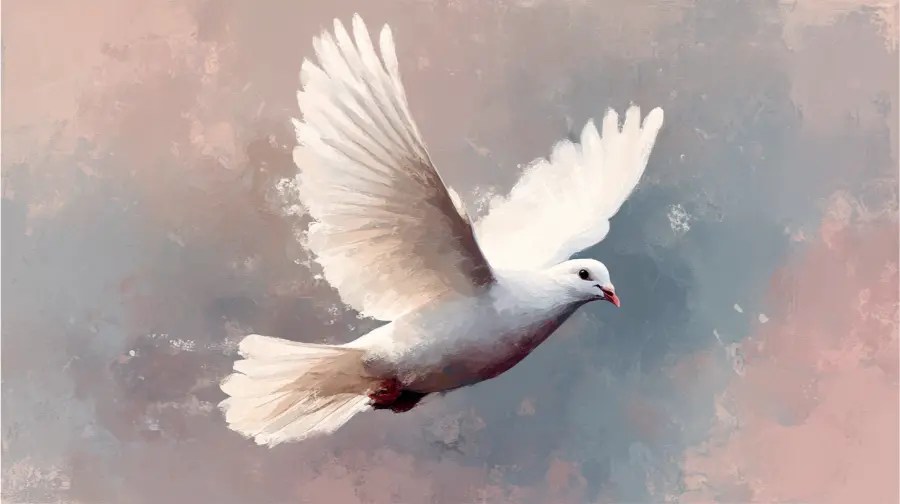
Should every Christian expect to speak in tongues?
If you’ve never spoken in tongues, can you still belong to Christ? Yes. The Assemblies of God teaches that the Holy Spirit already dwells in us when we come to faith. What it asks all believers to seek after conversion is baptism in the Spirit, and it looks to that morning in Jerusalem for the first sign of it. This baptism, it says, “is witnessed by the initial physical sign of speaking with other tongues as the Spirit of God gives them utterance.” Speaking in tongues to a congregation serves a different purpose. The same church teaches that the Spirit gives only some believers words to speak in tongues when the congregation gathers (1 Corinthians 12:8–10, 30).
Augustine, preaching on the First Letter of John, understood those tongues as “signs adapted to the time,” given “to show that the Gospel of God was to run through all tongues over the whole earth. That thing was done for a betokening, and it passed away.” Augustine asked each hearer to look into his own heart. We can ask ourselves the same question today. Do I love my brother? In Augustine’s words, “If he love his brother the Spirit of God dwells in him.” Our churches still differ about the sign of tongues. You can see how two of them read these passages in what Baptists and Pentecostals believe about the Holy Spirit.
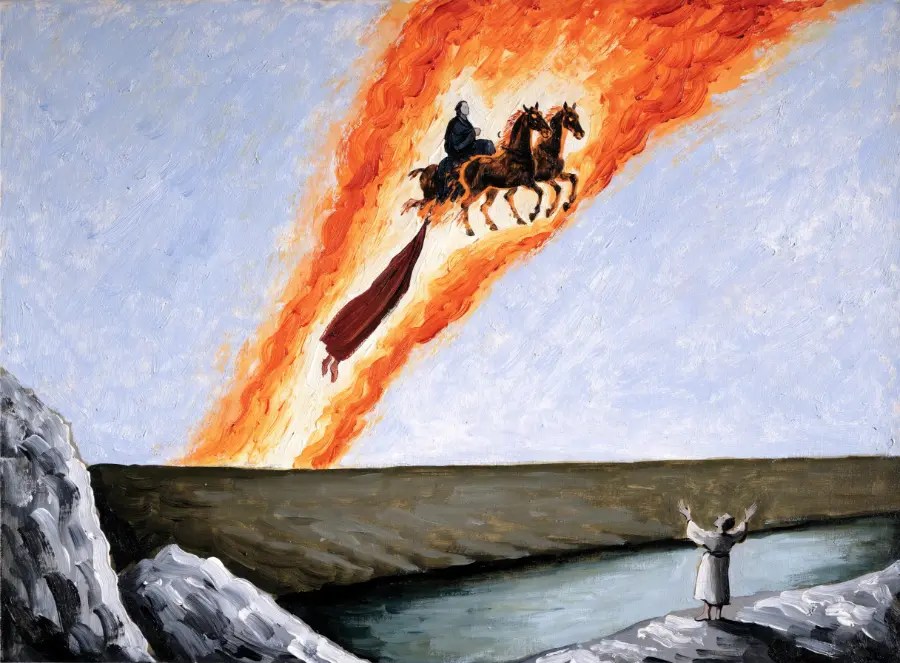
Was the Pentecost in Acts on a Sunday?
Luke tells us which feast brought the crowd to Jerusalem that morning. He leaves us to wonder what day of the week it was when Peter stood up to speak. Even the instruction to count “from the morrow after the sabbath” (Leviticus 23:15) raised a question for Jewish worshippers. Which sabbath did Moses mean? The Boethusians understood it as the weekly Sabbath, so for them Shavuot always fell on Sunday. The rabbis counted from the day after the first day of Passover, whichever weekday that happened to be.
The Orthodox Church in America speaks of “the first sermon of the Christian Church which was preached on the first Sunday of Pentecost.” That’s how Christians have remembered Peter standing up to preach, on the Lord’s Day, the day of the resurrection.
When is Pentecost Sunday?
Count Easter Sunday as day one, and Pentecost falls on the fiftieth day. That’s 49 days after Easter, the seventh Sunday. As the Catholic Catechism says, “On the day of Pentecost when the seven weeks of Easter had come to an end, Christ’s Passover is fulfilled in the outpouring of the Holy Spirit.”
If you worship in a Roman Catholic or Protestant church that keeps the Western date for Easter, use the Gregorian column. Many Orthodox churches use the Julian column. If you’re unsure, your own church’s Easter date will tell you which column to read. In 2027, Easter on 28 March means Pentecost on 16 May, and Easter on 2 May means Pentecost on 20 June. Both columns give Pentecost as it appears on the civil calendar.
| Année | Gregorian Easter reckoning | Julian Easter reckoning |
|---|---|---|
| 2027 | 16 May | 20 June |
| 2028 | 4 June | 4 June |
| 2029 | 20 May | 27 May |
| 2030 | 9 June | 16 June |
| 2031 | 1 June | 1 June |
In 2028 and 2031 the two reckonings give us the same Easter Sunday, so we will keep Pentecost together too.
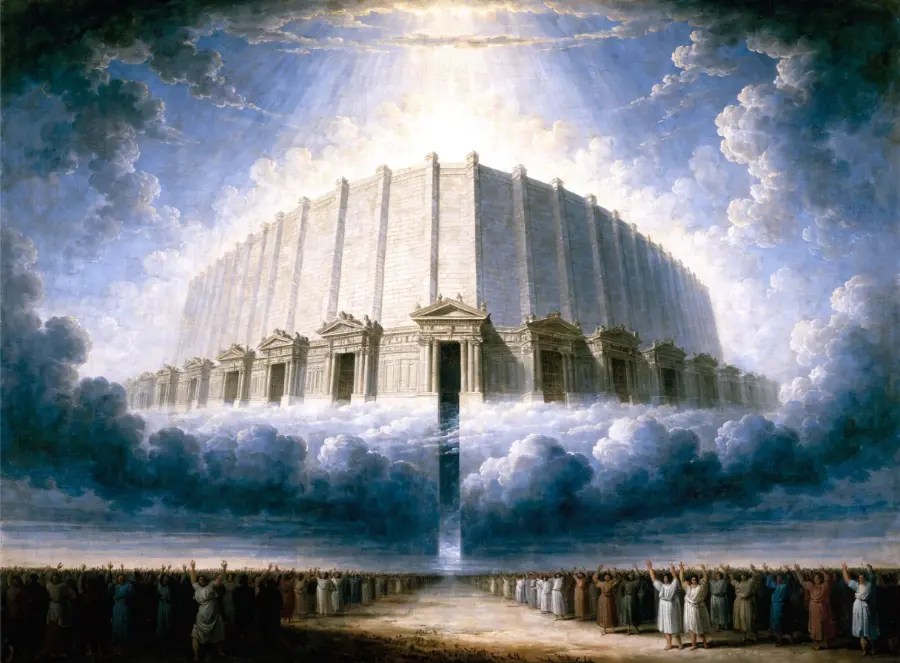
How did the early Church celebrate Pentecost?
When Tertullian of Carthage wrote about Pentecost around the year 200, he used the name for the whole fifty days as well as the feast we keep at their close. He called Pentecost “a most joyous space for conferring baptisms,” the season when “the resurrection of the Lord was repeatedly proved among the disciples.” In 325 the Council of Nicaea asked Christians to stand for prayer “on the Lord’s Day and in the days of Pentecost”. Imagine keeping Easter that way for seven whole weeks, on your feet every time you gathered to pray.
Egeria left us the story of one of those Sundays in Jerusalem. Valerius tells us she came “from the farthest shore of the western sea”. We know how she spent Easter and Pentecost in Jerusalem towards the end of the fourth century because she wrote about it for the “reverend sisters” back home. Her Pentecost lasted from cockcrow until midnight. At the third hour of the morning, the very hour Peter had named, she went with the people to Sion to hear “the passage from the Acts of the Apostles” read where Jerusalem Christians remembered the disciples receiving the Spirit.
So all the people return, each to his house, to rest themselves, and immediately after breakfast they ascend the Mount of Olives, that is, to Eleona, each as he can, so that there is no Christian left in the city who does not go.
Think where Egeria was sitting that afternoon when she heard the Gospel and Acts tell how Jesus went up to heaven. The Christians who had climbed the Mount of Olives with her remembered this very spot as the place where his disciples saw him go. She sang hymns with them there, and after evening prayer at Eleona she walked back down with the bishop.
It is already night when they reach the gate of the city, and about two hundred church candles are provided for the use of the people.
From the gate they walked to the great church with hymns, “very slowly lest the people should be weary from being afoot.” They prayed there, at the tomb and at the Cross before making their way to Sion once more. “Thus very great fatigue is endured on that day,” Egeria wrote. What stays with me is the pace they kept. Egeria says every Christian in Jerusalem made the climb that day, and on the way home they walked slowly enough for the tired ones.
If you know the feast by its old English name, Whitsunday, you’ve been hearing a little of that baptismal history in the name itself. As the 1912 Catholic Encyclopedia explains, the day “is so called from the white garments which were worn by those who were baptised during the vigil.”
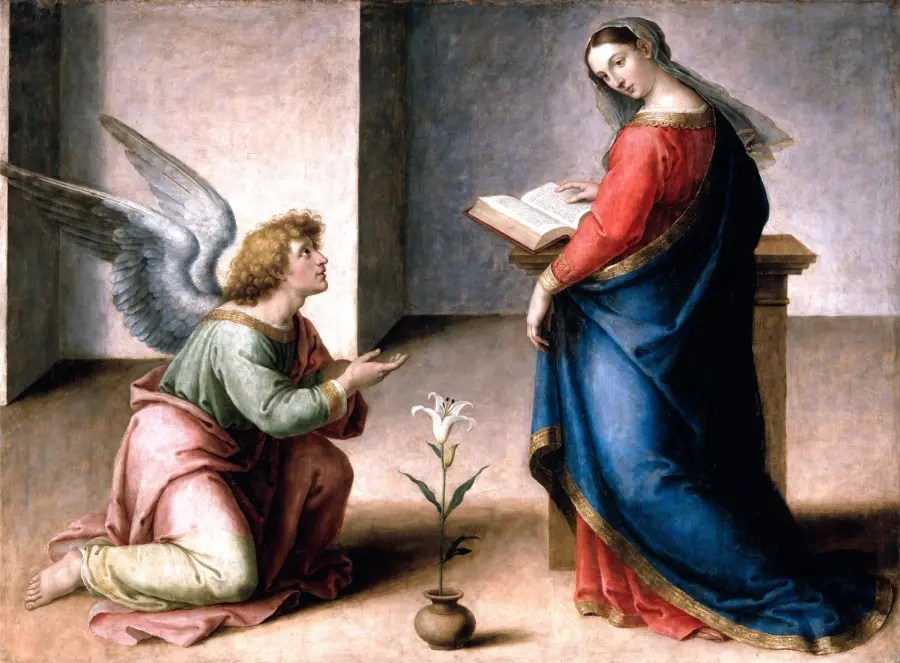
How do churches keep Pentecost now?
If you go to a Roman rite Mass on the Sunday that closes the fifty days of Easter, red is the colour the priest wears for the feast. The Roman Missal names “Pentecost Sunday” alongside the feasts of apostles and martyrs as a day for that colour. Some older customs brought the sound of the wind and the sight of the tongues like fire into church. The 1912 Catholic Encyclopedia recalls rose petals falling from church ceilings in Italy “to recall the miracle of the fiery tongues” and trumpets sounding in France “to recall the sound of the mighty wind”.
In an Orthodox church you may find “flowers and the green leaves of the summer” for the feast. The Orthodox Church in America explains the greenery by recalling a Hebrew word, ruah, which can mean spirit, wind or breath. Those leaves remind worshippers that God breathes life into what he has made. Orthodox Christians also call it Trinity Day because Father, Son and Holy Spirit are all revealed at Pentecost. Come evening, the people kneel at vespers for three long prayers, “for the first time since Easter.” Those three prayers tell us how long the practice of standing through Easter has endured. More than seventeen centuries have passed since Nicaea. Monday’s feast honours the Holy Spirit, and the following Sunday belongs to All Saints, “since the coming of the Holy Spirit is fulfilled in men by their becoming saints.”
If you learned your faith from the Catholic Catechism, you may recognise something the Orthodox sing that day. At Pentecost the Orthodox sing “We have seen the True Light” again for the first time since Easter. The Catholic Catechism closes its teaching on Pentecost with the very words of that hymn. “We have seen the true Light, we have received the heavenly Spirit, we have found the true faith: we adore the indivisible Trinity, who has saved us.”
You may also have heard Christians call Pentecost the Church’s birthday. The Orthodox Church in America says it “has traditionally been called the birthday of the Church.” The Catholic Catechism takes us first to the cross, where it says “the Church was born from the pierced heart of Christ hanging dead on the cross,” and then to the crowd in Jerusalem. At Pentecost “the Church was openly displayed to the crowds and the spread of the Gospel among the nations, through preaching, was begun.” When the people in that crowd asked Peter what they should do, he invited them to come and be baptized.
How did the three thousand live after Pentecost?
Luke stays with the people who heard Peter long enough for us to see them at home. “And they continued stedfastly in the apostles’ doctrine and fellowship, and in breaking of bread, and in prayers” (Acts 2:42). They went to the Temple every day, shared what they had “as every man had need” and broke bread in one another’s homes. There they “did eat their meat with gladness and singleness of heart” (Acts 2:45–46). The feast began with two loaves offered to God in thanksgiving for the wheat. And here is bread again, in the hands of people who have learned to share what they have with whoever needs it.
Even after the feast, Luke says, “the Lord added to the church daily such as should be saved” (Acts 2:47). When Peter spoke that morning, he had a word even for those of us who would hear about it from far away. “For the promise is unto you, and to your children, and to all that are afar off, even as many as the Lord our God shall call” (Acts 2:39).
Lectures connexes
- Qui est le Saint-Esprit ? Dieu, la troisième personne de la Trinité
- Prière au Saint-Esprit : « Viens, Esprit Saint », le Veni Creator et courtes prières
- 19 versets bibliques sur le Saint-Esprit
- 20 versets bibliques sur le parler en langues
- 50 dans la Bible : le Jubilé et la Pentecôte
- Pentecôtistes vs Charismatiques vs Évangéliques : en quoi diffèrent-ils


Laisser un commentaire