
 Japanese
 English
 Chinese
 Dutch
 Arabic
 Spanish
 Portuguese
 Russian
 French
 Italian
 German
The shortest prayer to St. Jude is a single line, printed in a novena booklet in 1929: “St. Jude, help of the hopeless, aid me in my distress.” And we can speak to God himself in words as plain as these: Lord, you are able to do what nobody else can. Look at this trouble, [name it], keep me from falling while I wait, and send help soon. Amen. Below is the whole prayer as that booklet printed it, with its novena and its litany, and after it some short prayers of our own for the troubles people bring to St. Jude most often. The little letter that carries his name in the New Testament ends by praising the God who is “able to keep you from falling” (Jude 24), and in the end every prayer on this page is said to him.
If the hopeless case is an illness or an injury, keep to the doctors’ care and pray alongside it, and in an emergency call the emergency services before anything else. If you have come to the end of hope yourself and are thinking of ending your life, call or text 988 in the US, or call Samaritans free on 116 123 in the UK and Ireland, and there are キリスト教系の相談窓口や危機管理ライン 各国の連絡先が掲載されています。

The St. Jude prayer for hopeless cases
When people ask for the St. Jude prayer, this is usually the one they mean, and we give it here word for word from Life of St. Jude Thaddeus, a 32-page booklet printed for St. Alphonsus Church in New York with the imprimatur of Cardinal Mundelein of Chicago, dated 5 October 1929. Where it says “here make your request,” tell him the case as plainly as you would tell a friend: the diagnosis, the son who will not call, the debt, the name.
Most holy apostle, St. Jude Thaddeus, faithful servant and friend of Jesus, the name of the traitor who delivered thy beloved Master into the hands of his enemies has caused thee to be forgotten by many, but the Church honors and invokes thee universally as the patron of hopeless cases and of things despaired of. Pray for me who am so miserable; make use, I implore thee, of that particular privilege accorded to thee to bring visible and speedy help where help is almost despaired. Come to my assistance in this great need that I may receive the consolations and succor of heaven in all my necessities, tribulations and sufferings, particularly (here make your request) and that I may bless God with thee and all the elect throughout eternity.
I promise thee, O blessed Jude, to be ever mindful of this great favor, and I will never cease to honor thee as my special and powerful patron and to do in all my power to encourage devotion to thee. Amen.
Our Father, Hail Mary, Glory be to the Father, three times.
Life of St. Jude Thaddeus, “Helper in Despaired of Cases”: Devotional Exercises and Novena Prayers (New York: St. Alphonsus Church, 1929), pp. 18–19
Did you notice where the prayer begins? Before it asks for anything at all, it stops to say why this apostle was forgotten, and the reason is his name, which he shared with Judas Iscariot, “the traitor who delivered thy beloved Master into the hands of his enemies.” The same booklet calls him “The Forgotten Saint.” There is a strange mercy in that for anyone praying these words, because the friend we ask to pray for us when everyone else has given up on our case was himself forgotten by many, for a fault that was never his. Many copies printed today leave those words out; the version EWTN gives, for one, goes straight to his patronage and adds a line of its own, “I am so helpless and alone.”
And the 1929 text says nothing about the prayer never failing, or about having to publish it. It asks for help, and it promises gratitude, to be “ever mindful of this great favor” and “to encourage devotion to thee.” The National Shrine of St. Jude in Chicago remembers one way people kept that promise: when a petition was answered, it says, devotees would thank St. Jude in the classified columns of American newspapers.
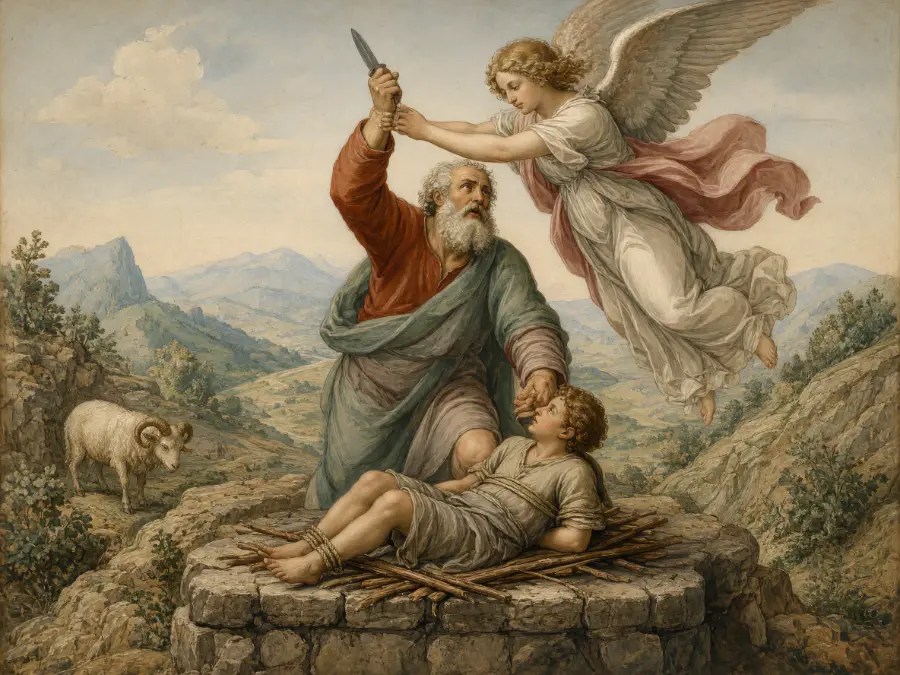
Short prayers for a hopeless case
These are prayers to God for the troubles people most often bring to St. Jude, written for this page in the plain words we would use ourselves. Catholic and Orthodox readers may end any of them by asking St. Jude to pray for them, and a reader who prays to God alone can say them just as they stand. Where you see [name], say the name of the person you are praying for.
When the doctors say there is nothing more they can do
Lord, the doctors have done everything medicine can do for [name], and they are not hopeful. You are able to do what they cannot. Heal [name] if it is your will, ease the pain, keep fear out of the room, and keep us close to you in the days that are left, however many you give. You are “nigh unto them that are of a broken heart” (Psalm 34:18); be near us now. Amen.
For a son or daughter who has walked away from God
Father, [name] has turned away from you, and nothing I say reaches [him or her] any more. Your servant Jude wrote, “And others save with fear, pulling them out of the fire” (Jude 23). Pull my child out of the fire, by whatever road you choose, and keep me loving [him or her] while I wait, without nagging and without giving up. Amen.
For a marriage that is coming apart
Lord, our marriage is breaking, and I cannot hold it together on my own. Soften what has hardened in both of us, show me my own part in the hurt and give me the courage to say so, and lead us to someone who can help us talk. If either of us is in danger, keep us safe first. Your Son promised, “Peace I leave with you, my peace I give unto you” (John 14:27); let that peace come into this house. Amen.
Under debts you cannot pay
Father, I owe more than I can pay, the letters keep coming, and I am ashamed to tell anyone. Give us what we need for this week, lead me to an honest adviser who can show me what to do first, and keep me from lying awake doing sums in the dark. I cast this care on you, because your word says you care for me (1 Peter 5:7). Amen.
When an addiction keeps winning
Lord, [name] has tried to stop and has fallen again, and every time the hope gets smaller. Break the hold this has, bring [name] to people and treatment that can help, and do not let shame keep [him or her] from asking for help. And if the addiction is my own, hear this prayer for me. Your servant Paul was “cast down, but not destroyed” (2 Corinthians 4:9); let it be so for [name]. Amen.
After years of praying for the same thing
Father, I have brought this to you for so long that I hardly know how to ask again. I am tired, but I am still here. Teach me to say what the writer of Lamentations said, “This I recall to my mind, therefore have I hope” (Lamentations 3:21), and give me the strength to ask once more tomorrow. Amen.
When you yourself have stopped hoping
God, I have stopped expecting anything to change, and I am not sure you are listening. I am saying it to you anyway. “Why art thou cast down, O my soul? and why art thou disquieted within me? hope thou in God” (Psalm 42:11). Hold on to me when I cannot hold on to you, and send someone to sit with me today. Amen.
If that prayer is yours tonight, please do not wait until morning to call 988 in the US or Samaritans on 116 123 in the UK and Ireland.
When you cannot find the words
Lord, I no longer know what to ask for. Your Spirit “maketh intercession for us with groanings which cannot be uttered” (Romans 8:26); let him pray in me what I cannot say. Amen.
How to pray the St. Jude novena
A novena is a prayer said on nine days in a row, and we explain where that custom comes from in what a novena is. You can begin it on whatever day the trouble comes: the shrine’s 1954 booklet says a novena may be nine days in a row or nine of some other period in a row, and the 1929 booklet tells of people who kept “nine consecutive weekly Holy Hours” as a novena. The shrine in Chicago has long kept its own in the days before his feast, too, and its 1954 booklet lists the autumn solemn novena as “Preceding Feast of St. Jude, October 28,” so if you would like to pray it alongside others, those are the days. The 1929 booklet gives the St. Jude novena in two forms. The first was written for a priest and congregation to say together, and one person at home can say every part of it alone, in this order:
- The sign of the cross: “In the Name of the Father, and of the Son, and of the Holy Ghost. Amen.”
- The greeting to St. Jude through the Sacred Heart of Jesus, given below.
- Two invocations, each said by the priest and repeated by the people: “Blessed Apostle, with confidence we invoke thee!” and “St. Jude, help of the hopeless, aid me in my distress.”
- Three petitions that begin “Pray for us,” given below.
- The St. Jude prayer above, with your own request where it says to make it.
- The Our Father, the Hail Mary and the Glory Be, three times.
- “St. Jude Thaddeus, pray for us,” answered by “And for all who invoke thy aid.”
O glorious apostle, St. Jude Thaddeus, true relative of Jesus and Mary I salute thee through the most Sacred Heart of Jesus! Through this Heart I praise and thank God for all the graces He has bestowed upon thee. Humbly prostrate before thee, I implore thee through this Heart to look down upon me with compassion. Oh, despise not my poor prayer; let not my trust be confounded! To thee God has granted the privilege of aiding mankind in the most desperate cases. Oh, come to my aid, that I may praise the mercies of God! All my life I will be grateful to thee and will be thy faithful client until I can thank thee in heaven. Amen.
Life of St. Jude Thaddeus (1929), Novena Prayers (First Form), p. 17
Pray for us, that we before death may expiate all our sins by sincere repentance and the worthy reception of the holy sacraments.
Pray for us, that we may appease the Divine Justice and obtain a favorable judgment.
Pray for us, that we may be admitted into the company of the blessed to rejoice in the presence of our God forever.
Life of St. Jude Thaddeus (1929), p. 18
The second form is the litany below, with the prayer that closes it, and either form, said once a day for nine days, makes the novena. But look again at those three petitions. They come from a booklet for people in desperate trouble, and all three ask first for the soul: for repentance, for a favorable judgment, for heaven.
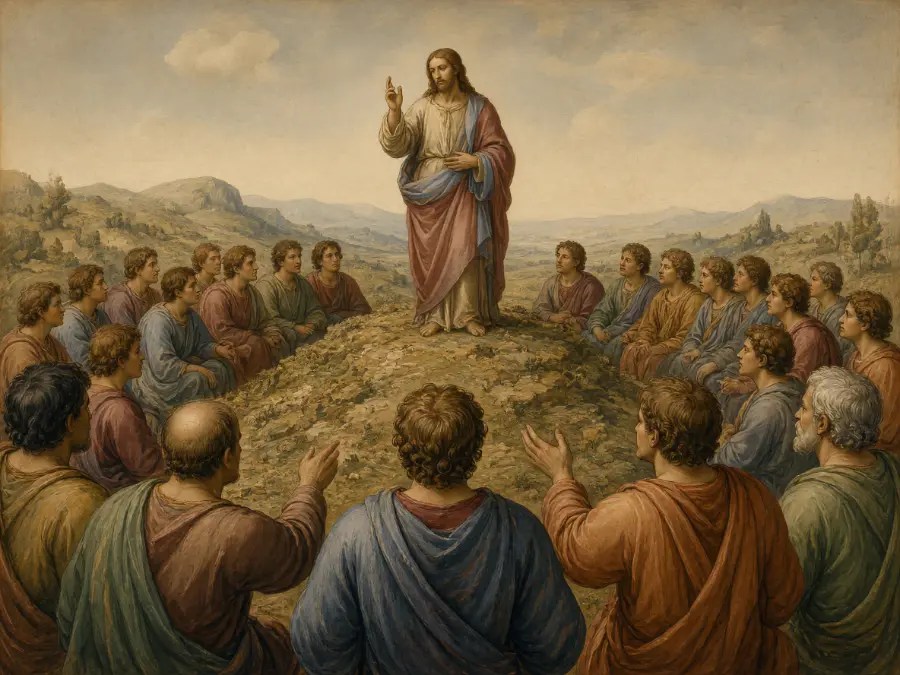
The Litany of St. Jude
The booklet marks this litany “For private use only,” so it is for praying on our own or with our family rather than in the Church’s public services. Its petitions walk with Jude through his life as the tradition of that time told it, from the Last Supper, where he saw his Master humble himself to wash his feet, and Pentecost, to his preaching in Persia and his death, and near the end comes the one line this page began with.
Lord, have mercy on us.
Christ, have mercy on us.
Lord, have mercy on us.
Christ hear us.
Christ graciously hear us.
God the Father of heaven, have mercy on us!
God the Son, Redeemer of the world, have mercy on us!
God the Holy Ghost, have mercy on us!
Holy Trinity, one God, have mercy on us!
St. Jude, relative of Jesus and Mary, pray for us!
St. Jude, while on earth deemed worthy to see Jesus and Mary and to enjoy their company, pray for us!
St. Jude, raised to the dignity of an apostle, pray for us!
St. Jude, who hadst the honor of beholding thy Divine Master humble Himself to wash thy feet, pray for us!
St. Jude, who at the Last Supper didst receive the Holy Eucharist from the hands of Jesus, pray for us!
St. Jude, who, after the profound grief which the death of thy beloved Master caused thee, hadst the consolation of beholding Him risen from the dead, and of assisting at His glorious Ascension, pray for us!
St. Jude, who wast filled with the Holy Ghost on the day of Pentecost, pray for us!
St. Jude, who didst preach the Gospel in Persia, pray for us!
St. Jude, who didst convert many people to the Faith, pray for us!
St. Jude, who didst perform wonderful miracles in the power of the Holy Ghost, pray for us!
St. Jude, who didst restore an idolatrous king to health, both of soul and body, pray for us!
St. Jude, who didst impose silence on demons, and confound their oracles, pray for us!
St. Jude, who didst foretell to a weak prince an honorable peace with his powerful enemy, pray for us!
St. Jude, who didst take from deadly serpents the power of injuring man, pray for us!
St. Jude, who, disregarding the threats of the impious, didst courageously preach the doctrine of Christ, pray for us!
St. Jude, who didst gloriously suffer martyrdom for the love of thy Divine Master, pray for us!
Blessed apostle, with confidence we invoke thee! (three times)
St. Jude, help of the hopeless, aid me in my distress! (three times)
That by thy intercession both priests and people of the Church may obtain an ardent zeal for the Faith of Jesus Christ, we beseech thee, hear us!
That thou wouldst defend our Sovereign Pontiff and obtain peace and unity for the Holy Church, we beseech thee, hear us!
That all heathens and unbelievers may be converted to the true Faith, we beseech thee, hear us!
That faith, hope and charity may increase in our hearts, we beseech thee, hear us!
That we may be delivered from all evil thoughts, and from all the snares of the devil, we beseech thee, hear us!
That thou wouldst vouchsafe to aid and protect all those who honor thee, we beseech thee, hear us!
That thou wouldst preserve us from all sin and from all occasion of sin, we beseech thee, hear us!
That thou wouldst defend us at the hour of death, against the fury of the devil and his evil spirits, we beseech thee, hear us!
Lamb of God, Who takest away the sins of the world, spare us, O Lord.
Lamb of God, Who takest away the sins of the world, graciously hear us, O Lord.
Lamb of God, Who takest away the sins of the world, have mercy on us, O Lord.
Life of St. Jude Thaddeus (1929), Novena Prayers (Second Form), pp. 19–23
The prayer that closes the litany, for the darkest days
If any old prayer was written for the person reading this page, it is this one, because it does not pretend. “My heart is an ocean of bitterness,” it says, and “Faith seems to falter in my heart,” and then it digs in its heels: “I will not depart from thee until thou hast heard me.” Those words sound like Jacob at the ford of Jabbok, wrestling with the man who met him there until the breaking of the day and saying, “I will not let thee go, except thou bless me” (Genesis 32:26).
O St. Jude Thaddeus, thou relative of Jesus Christ, thou glorious apostle and martyr, renowned for thy virtues and miracles, faithful and prompt intercessor of all who honor thee and trust in thee! Thou art a powerful patron and helper in grievous afflictions. I come to thee and entreat thee from the depths of my heart, come to my aid with thy powerful intercession, for thou hast received from God the privilege to assist with thy manifest help, those who almost despair of all hope. Look down upon me; my life is a life of crosses, my days are days of tribulation, and my heart is an ocean of bitterness. All my paths are strewn with thorns and scarcely one moment passes but is witness of my tears and sighs. And withal, my soul is enveloped in darkness; disquietude, discouragement, mistrust, yes, sometimes even a kind of despair preys upon my soul. Divine Providence seems lost to my sight, and Faith seems to falter in my heart. Overwhelmed by these thoughts, I see myself surrounded by a dark cloud. Thou canst not forsake me in this sad plight. I will not depart from thee until thou hast heard me. Oh! hasten to my aid. I will be grateful to thee all my life. I will honor thee as my special patron, I will thank God for the graces bestowed upon thee, and will propagate thy honor according to my power. Amen.
St. Jude Thaddeus, pray for us.
And for all who invoke thy aid.
Life of St. Jude Thaddeus (1929), “Let Us Pray,” pp. 23–24
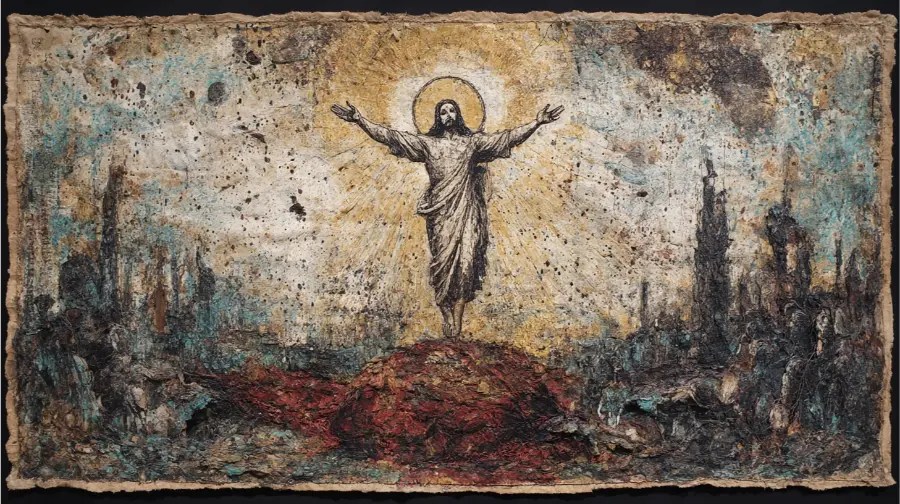
Who was St. Jude?
Luke names him twice among the twelve apostles as “Judas the brother of James” (Luke 6:16; Acts 1:13), and in the same place in their own lists Mark writes “Thaddaeus” (Mark 3:18) and Matthew “Lebbaeus, whose surname was Thaddaeus” (Matthew 10:3). Most Catholic commentators take these for one man, and so Catholics call him Jude Thaddeus: a man with three names in the Gospels, and only one question.
He asked it at the Last Supper, when Jesus had just told the disciples that whoever loves him “shall be loved of my Father, and I will love him, and will manifest myself to him” (John 14:21), and Jude wanted to know how. They are the only words of his that the Gospels keep: “Judas saith unto him, not Iscariot, Lord, how is it that thou wilt manifest thyself unto us, and not unto the world?” (John 14:22). Even John, writing it down, was careful to add “not Iscariot,” just as the prayer of 1929 still had to do. And Jesus answered him with one of the tenderest promises in the Gospels: “If a man love me, he will keep my words: and my Father will love him, and we will come unto him, and make our abode with him” (John 14:23). So the apostle we ask to pray for us in a hopeless case is the very one who asked Jesus how he would show himself to his friends, and the answer he was given is that God comes to make his home with anyone who loves him.
There may be more of him in the Bible than that one question. Near the end of the New Testament stands a short letter that opens, “Jude, the servant of Jesus Christ, and brother of James” (Jude 1), and the Catholic Encyclopedia of 1910 says most Catholic commentators take its writer to be the apostle, a view it calls “most highly probable,” while the Orthodox Church in America counts Jude the apostle as its writer too. If they are right, think what that means for us. The man who asked at the supper table how Jesus would show himself to his friends is the man who later closed his letter by giving glory to the God “that is able to keep you from falling” (Jude 24), so that when we pray those words on a hopeless day, we are praying with him, in his own words.
Outside the Gospels and that letter, each church tells his story in its own way. Catholics and Orthodox both link him with the “brethren” of Jesus whom Matthew names, “James, and Joses, and Simon, and Judas” (Matthew 13:55), but the 1929 booklet makes him a cousin of the Lord, a son of Cleophas and Mary of Cleophas, and the Orthodox Church in America says he was a son of Joseph by his first wife. Western churches keep his feast with the apostle Simon on 28 October, as the 1928 Book of Common Prayer does, and the Orthodox Church remembers him on 19 June. And when we ask how he died, nobody knows for certain, so we have only the stories each church has handed down. The Orthodox Church in America says he was crucified and pierced with arrows near Mount Ararat in Armenia, around the year 80. An old Latin account of the passion of Simon and Jude, which the Catholic Encyclopedia reports, has Simon preaching and dying in Persia, and the litany above sends Jude to preach there too. The 1929 booklet says he was clubbed and then beheaded, and that is why he is shown with a club in his hand, “not that he used it in combat,” it explains, but because it was the thing he was put to death with for Christ.

Why St. Jude is the patron of hopeless cases
The National Shrine of St. Jude wrote in its own booklet of 1954 that the origins of the devotion “are nearly as obscure as details of the life of the great Apostle” and seemed to be “a spontaneous rising of interest among the faithful themselves,” and that is the plain answer: the patronage grew out of the prayers of ordinary Catholics, and Scripture says nothing of it. Twenty-five years before the shrine wrote that, the 1929 booklet was already calling him the “Patron In Cases Despaired Of,” because, it said, “No petition seems too great for him,” and it too began his story with the forgotten name.
In Chicago the Claretian priest Fr. James Tort was pastor of Our Lady of Guadalupe Church, where many of his people depended on work in the nearby steel mills, and St. Jude, the shrine says, was then “relatively unknown to the general Catholic population.” Fr. Tort held the first Solemn Novena on 17 February 1929. The novena that ended on St. Jude’s feast, 28 October 1929, drew so many people that more than 1,000 of them stood outside the church. That Monday was Black Monday on Wall Street, when the Dow Jones Industrial Average fell nearly 13 percent, and on Black Tuesday it fell nearly 12 percent more. So on Black Monday itself, a crowd at a steel-mill parish was standing outside the church to join a novena to the patron of hopeless cases. Word of the devotion spread, the shrine says, from that corner of Chicago to the rest of the country, and through the Great Depression and the Second World War thousands came to its novenas.
If you pray to God alone
Catholics and Orthodox Christians ask the saints to pray for them, in the way we ask a friend to pray for us. The Council of Trent taught in 1563 that it is “good and useful suppliantly to invoke them,” for benefits that come from God through Christ, “who is our alone Redeemer and Saviour,” and the Orthodox hymn for Jude’s feast says to him that “by your intercessions we receive remission of sins.” The Lutheran Augsburg Confession of 1530 answers that “the Scripture teaches not the invocation of saints or to ask help of saints,” because it sets Christ before us as the one Intercessor, and most Protestant churches pray to God alone. If that is your church, you can still remember him on his day, for Anglicans keep his feast, and the collect the 1928 Book of Common Prayer gives for it asks God, not the apostles, for help:
O Almighty God, who hast built thy Church upon the foundation of the Apostles and Prophets, Jesus Christ himself being the head corner-stone; Grant us so to be joined together in unity of spirit by their doctrine, that we may be made an holy temple acceptable unto thee; through the same Jesus Christ our Lord. Amen.
『祈祷書』 (1928), Saint Simon and Saint Jude, Apostles, p. 254
And if you would rather pray in the words of people in Scripture who had run out of hope, the prayers of Jehoshaphat, Hezekiah and Esther are gathered with others in our page of 不可能なことのための祈り.
When the help has come
The booklet gives a prayer for the day a favour is granted, and it speaks to Jesus. It thanks him for “all the graces and privileges Thou hast bestowed upon Thy chosen apostle and intimate friend,” because that is where the booklet believed the help had come from all along.
O most sweet Lord Jesus Christ, in union with the unutterable heavenly praise with which the Most Holy Trinity extols itself and which thence flows upon Thy Sacred Humanity, upon Mary, upon all the angels and saints, I praise, glorify and bless Thee for all the graces and privileges Thou hast bestowed upon Thy chosen apostle and intimate friend, Jude Thaddeus. I pray Thee for the sake of his merits, grant me Thy grace, and through his intercession come to my aid in all my needs, but especially at the hour of my death deign to strengthen me against the rage of my enemies. Amen.
Our Father, Hail Mary, Glory be to the Father, three times.
Life of St. Jude Thaddeus (1929), Prayer of Thanksgiving, p. 25
The prayer at the end of Jude’s letter
Jude’s letter tells us what to do while we wait: “But ye, beloved, building up yourselves on your most holy faith, praying in the Holy Ghost, Keep yourselves in the love of God, looking for the mercy of our Lord Jesus Christ unto eternal life” (Jude 20–21). Then it closes with a prayer that lays the whole weight on God, which is where the weight belongs when our own strength is gone, and Christians of every church can pray it together on the worst of days: “Now unto him that is able to keep you from falling, and to present you faultless before the presence of his glory with exceeding joy, To the only wise God our Saviour, be glory and majesty, dominion and power, both now and ever. Amen” (Jude 24–25).


コメントを残す