
 English
 Chinese
 Dutch
 Arabic
 Spanish
 Portuguese
 Russian
 French
 Italian
 German
 Japanese
Christian worship is giving God the honor that belongs to him alone: bowing before him, thanking him and serving him. Christians worship one God, the Father, the Son and the Holy Spirit. They gather on Sundays to hear the Bible, pray, sing and share the Lord’s Supper, and they offer him the rest of their lives through the week.
Jesus gave the measure of it to a Samaritan woman who raised the old question of where God should be worshipped: “the hour cometh, and now is, when the true worshippers shall worship the Father in spirit and in truth: for the Father seeketh such to worship him” (John 4:23). Before we ever come looking for God, the Father is looking for worshippers. Paul then carried worship out of the meeting and into the whole of life: “present your bodies a living sacrifice, holy, acceptable unto God, which is your reasonable service” (Romans 12:1).

What does worship mean in the Bible?
In the Bible, to worship is first to bow down. The usual Old Testament word, the Hebrew shachah, means to bow low or lie face down before a king or before God. The King James Version translates it “worship” 99 times, and “bow” or “bow down” another 49. Abraham uses it as he leaves his servants behind: “I and the lad will go yonder and worship, and come again to you” (Genesis 22:5). A psalm puts the word and the posture side by side: “O come, let us worship and bow down: let us kneel before the Lord our maker” (Psalm 95:6).
The New Testament has two words for it. Proskyneo also means to kneel or fall down in homage, and the King James translators render it “worship” every one of the 60 times it appears. It is the word in Jesus’ sentence about spirit and truth, and the word for what the women did when the risen Jesus met them: “they came and held him by the feet, and worshipped him” (Matthew 28:9). The second word, latreuo, means to serve, and it was used of priests doing their duties. Both stand in one line when Jesus answers Satan: “Thou shalt worship the Lord thy God, and him only shalt thou serve” (Matthew 4:10). Its noun, latreia, is the “service” in Romans 12:1.
So in Scripture worship is a posture and a service before it is a song. Singing is one way of doing it among several, and the Bible verses about worship keep that order: kneeling, serving and sacrifice come first, and song goes alongside them. Worship begins on our knees.
Who do Christians worship?
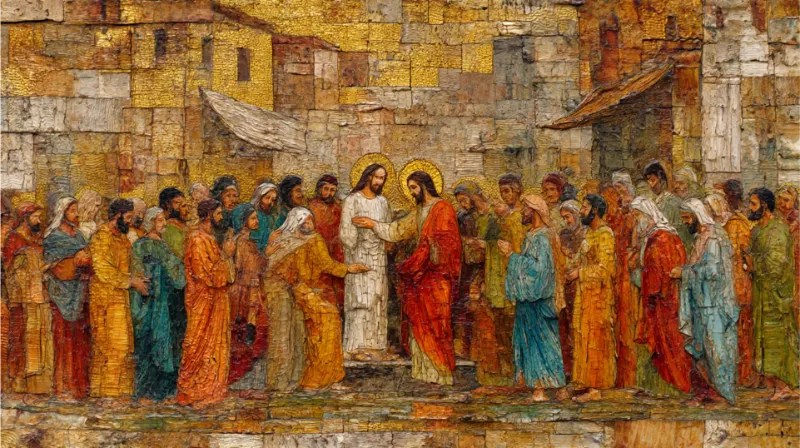
One God, and him only. The Westminster Confession of the Presbyterian churches puts it in one line: “Religious worship is to be given to God, the Father, Son, and Holy Ghost; and to him alone”. The Catechism of the Catholic Church says it in its own words: “To adore God is to acknowledge him as God, as the Creator and Savior, the Lord and Master of everything that exists, as infinite and merciful Love.”
Christians have worshipped Jesus from the beginning. The women who met him after his resurrection took hold of his feet and worshipped him, and a Roman governor’s report written between 111 and 113 says Christians sang “a hymn to Christ as to a god”. They did not think of this as worshipping a second god beside the first. Justin Martyr, writing some forty years later, says that Christians “bless the Maker of all through His Son Jesus Christ, and through the Holy Ghost”: the one God, known as Father, Son and Spirit.
How did the first Christians worship?
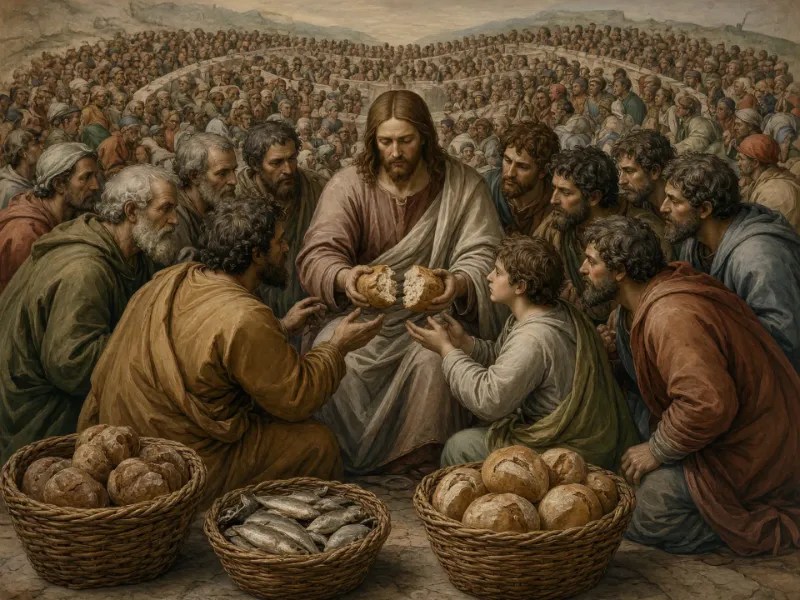
The Book of Acts sums up the life of the church in Jerusalem in one verse: “they continued stedfastly in the apostles’ doctrine and fellowship, and in breaking of bread, and in prayers” (Acts 2:42). Teaching, fellowship, the bread and prayer are still the frame of most Christian services. Paul’s letter to Corinth shows a meeting where many people took part: “when ye come together, every one of you hath a psalm, hath a doctrine, hath a tongue, hath a revelation, hath an interpretation. Let all things be done unto edifying” (1 Corinthians 14:26).
One of the earliest descriptions from outside the church came from a man prosecuting it. Pliny the Younger, Roman governor of Bithynia and Pontus between 111 and 113, wrote to the emperor Trajan about the Christians he had questioned. They told him “they were accustomed to meet on a fixed day before dawn and sing responsively a hymn to Christ as to a god”, and to bind themselves by oath “not to commit fraud, theft, or adultery”. Later in the day they would “assemble again to partake of food–but ordinary and innocent food.” To check their story, Pliny tortured two enslaved women “who were called deaconesses”, and found “nothing else but depraved, excessive superstition.” The first Christians sang before dawn, and some of them suffered for it.
The Didache, a short church manual that scholars date to the late first or early second century, gives the rule for the day: “every Lord’s day gather yourselves together, and break bread, and give thanksgiving after having confessed your transgressions, that your sacrifice may be pure.” Anyone at odds with a neighbor was to stay away until the two were reconciled.
The fullest early account comes from Justin Martyr, a Christian teacher who wrote a defense of the faith to the emperor Antoninus Pius between about 153 and 155. In chapter 67 of his First Apology he walks us through a Sunday morning:
- Everyone, from the city and the countryside, gathers “to one place”.
- “the memoirs of the apostles or the writings of the prophets are read, as long as time permits”.
- The president preaches, urging the people to imitate what they have heard.
- All stand together and pray.
- Bread, wine and water are brought, the president “offers prayers and thanksgivings, according to his ability”, and the people answer “Amen”.
- Everyone receives, and the deacons carry a portion to those who are absent.
- Those who are able give what they choose, and the president uses it for “the orphans and widows”, the sick, prisoners and strangers.
Scripture, sermon, prayer, then the bread and cup. If you go to a Catholic Mass, an Orthodox Divine Liturgy, a Lutheran Divine Service or an Anglican Holy Communion this Sunday, you will meet Justin’s order still.
How do Christians worship today?
When they gather, the churches still do the same few things: read and preach the Bible, pray, sing, baptize, share the bread and cup, and give. They differ over how fixed the order should be and over what the Lord’s Supper is. The main Sunday service in several large traditions looks like this, each in its own terms:
| Church | Main Sunday service | At its center | Order of service |
|---|---|---|---|
| Catholic | The Mass | The Eucharist, “the heart and the summit” of the Church’s life | Set texts: the Word, then the Eucharist |
| Orthodox | The Divine Liturgy | The Eucharist, “the central mystery of the Church” | Set prayers, such as the Liturgy of St John Chrysostom |
| Lutheran | The Divine Service (the Mass of the Augsburg Confession) | God’s Word and Sacraments | Set, in several musical settings |
| Anglican | Holy Communion | Word and Sacrament | Set texts from a national prayer book, such as the Church of England’s Common Worship |
| Reformed and Presbyterian (Westminster Confession) | The worship service | Scripture read and preached, psalms, the sacraments | Only what Scripture prescribes |
| Baptist | The worship service | Preaching; baptism and the Lord’s Supper as ordinances | Each congregation decides |
| Pentecostal (Assemblies of God) | The worship service | Sung praise and the Lord’s Supper, with room for the gifts of the Spirit | Freer, open to the gifts of 1 Corinthians 12 to 14 |
For Catholics the Mass “is made up, as it were, of two parts: the Liturgy of the Word and the Liturgy of the Eucharist”, which “form but one single act of worship”, in the words of the General Instruction of the Roman Missal. The Catechism calls the Eucharist “the heart and the summit of the Church’s life”. The Orthodox speak of the Divine Liturgy in nearly the same words: Fr Alciviadis Calivas, writing for the Greek Orthodox Archdiocese of America, calls it “the central mystery of the Church” and “at once the source and the summit of her life.”
The Lutheran reformers kept the Mass. The Augsburg Confession of 1530 answers the charge that they had abolished it: “the Mass is retained among us, and celebrated with the highest reverence”, with German hymns added “to teach the people”. Lutherans of the Missouri Synod now call it the Divine Service, and their publisher, Concordia Publishing House, explains that “Lutherans believe that worship is an act of receiving God’s gifts” and that the service is “a time during which God comes to us through His Word and Sacraments.” The Church of England describes its main service in the same two movements: “There are basically two parts to the Holy Communion service: the Word and the Sacrament.”
Churches that hold the Westminster Confession, chiefly Reformed and Presbyterian, follow what is called the regulative principle: “the acceptable way of worshiping the true God is instituted by himself”, so he may not be worshipped in “any other way not prescribed in the Holy Scripture”. The Confession lists the ordinary parts: “The reading of the Scriptures with godly fear, the sound preaching and conscionable hearing of the Word”, “singing of psalms with grace in the heart”, and the sacraments.
Baptists put preaching near the center. Their Second London Confession of 1689 lists “The reading of the Scriptures, preaching, and hearing the Word of God”, singing, baptism “and the Lord’s supper” as “all parts of religious worship of God”. Baptist churches differ over what the Supper is. In the 1689 Confession, worthy receivers “spiritually receive, and feed upon Christ crucified”. The Southern Baptist Convention’s Baptist Faith and Message calls it “a symbolic act of obedience” by which members “memorialize the death of the Redeemer and anticipate His second coming.” The same statement makes each church “an autonomous local congregation”, so each one shapes its own service.
The Assemblies of God, a large Pentecostal church, calls the Lord’s Supper “the symbol expressing our sharing the divine nature of our Lord Jesus Christ”, “a memorial of his suffering and death” and “a prophecy of His second coming”. It teaches that the baptism in the Holy Spirit “Adds a necessary dimension to worshipful relationship with God”, and points to Paul’s chapters on spiritual gifts, 1 Corinthians 12 to 14.
The differences between Catholic and Protestant worship run deeper than the order of service, down to what the Lord’s Supper is and who may lead it. The free course Christianity: What Christians Have Believed for 2,000 Years has a lesson on what worship holds in common across the traditions, among eighteen short lessons on what Christians believe and why.

Worship, Lobpreis and Gottesdienst: is worship the same as the singing?
In German-speaking churches, Lobpreis, or the English loanword “Worship”, often means the praise songs: contemporary music with pop arrangements, played by anything from a single guitarist to a full band, which came out of the charismatic Pentecostal churches. The whole service is the Gottesdienst, a shared celebration in honor of God, and the songs are one part of it.
The Bible’s word is wider than the songs. It covers the bowing, the serving and the bread and cup as well as the music, and the songs themselves have teaching to do: “teaching and admonishing one another in psalms and hymns and spiritual songs, singing with grace in your hearts to the Lord” (Colossians 3:16). Protestants in some countries call the Sunday service the culte, a word whose first meaning is the honor given to God. That keeps closer to the Bible’s sense. The whole gathering is the worship.
What does it mean to worship in spirit and in truth?
Jesus’ phrase answers a question about place. The Samaritan woman said, “Our fathers worshipped in this mountain; and ye say, that in Jerusalem is the place where men ought to worship.” He replied that “the hour cometh, when ye shall neither in this mountain, nor yet at Jerusalem, worship the Father” (John 4:20-21), and then: “God is a Spirit: and they that worship him must worship him in spirit and in truth” (John 4:24).
Christians have taken from this that no holy place is required. The Westminster Confession says no part of worship is “tied unto, or made more acceptable by any place in which it is performed”, and that God is to be worshipped “everywhere, in spirit and truth; as, in private families daily, and in secret, each one by himself; so, more solemnly in the public assemblies”. The same chapter shows what the phrase asks of a single prayer: it is to be made “in the name of the Son, by the help of his Spirit, according to his will, with understanding, reverence, humility, fervency, faith, love, and perseverance”. Worship in spirit comes from the heart and is moved by God’s Spirit. Worship in truth matches what God has made known. You can kneel in a cathedral or at a kitchen table.
Why do Christians worship on Sunday?
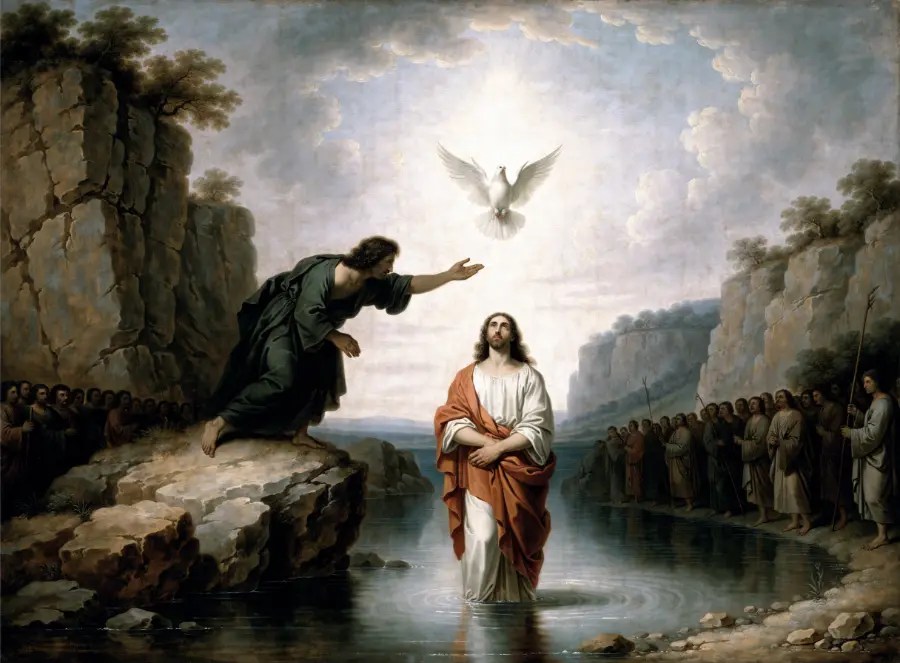
Because Jesus rose on the first day of the week, and the first Christians met on that day. Acts records one such meeting: “upon the first day of the week, when the disciples came together to break bread, Paul preached unto them” (Acts 20:7). Paul told the Corinthians to set their gifts aside “Upon the first day of the week” (1 Corinthians 16:2), and John dates his vision to “the Lord’s day” (Revelation 1:10).
Justin gave both reasons in the 150s: Sunday “is the first day on which God, having wrought a change in the darkness and matter, made the world; and Jesus Christ our Saviour on the same day rose from the dead.” The churches still give them. The Catechism says, “Because it is the ‘first day,’ the day of Christ’s Resurrection recalls the first creation.” The Baptist Faith and Message says the Lord’s Day “commemorates the resurrection of Christ from the dead”. The Westminster Confession calls it “the Christian Sabbath”. Whether the Sabbath itself moved from Saturday is a separate question, taken up in is the Sabbath on Saturday or Sunday?
How do Christians worship in daily life?
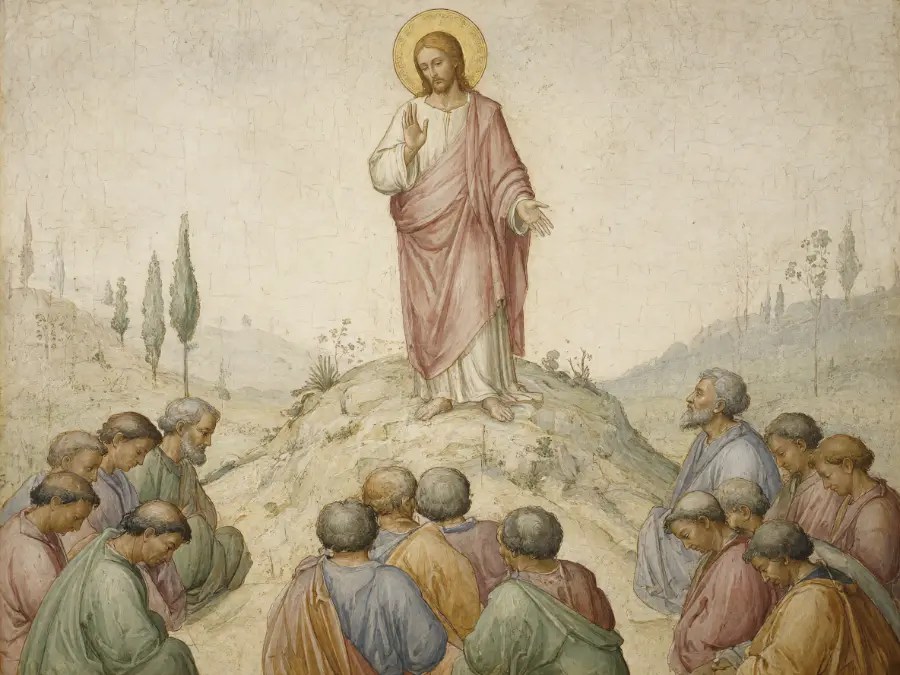
Paul’s “living sacrifice” makes the whole of life the place of worship (Romans 12:1). The letter to the Hebrews names two offerings that please God: “By him therefore let us offer the sacrifice of praise to God continually, that is, the fruit of our lips giving thanks to his name. But to do good and to communicate forget not: for with such sacrifices God is well pleased” (Hebrews 13:15-16). The Greek word behind “communicate” is the one translated “fellowship” in Acts 2:42, and here it means sharing with those in need.
So daily worship is plain and ordinary: prayer at home and alone, reading Scripture, giving thanks, keeping Sunday, and work and kindness done for God. In Justin’s church the collection for widows, orphans, the sick, prisoners and strangers was part of the Sunday service itself; the gift to the poor and the bread at the altar belonged together. And worship does something for the one who bows. In the Catechism’s words, “The worship of the one God sets man free from turning in on himself, from the slavery of sin and the idolatry of the world.”
Related reading
- 18 Bible Verses About Worship, and What the Word Means Before It Means Music
- How Many Times Is Worship Mentioned in the Bible?
- Protestant vs Catholic: How Their Beliefs and Worship Differ
- Byzantine Catholic vs Roman Catholic: One Church, Two Ways of Worship
- Prayers of Praise and Worship: Short Prayers, Psalms and Traditional Words of Praise
- Is the Sabbath Day on Saturday or Sunday?


Leave a Reply