
 English
 Chinese
 Dutch
 Arabic
 Spanish
 Portuguese
 Russian
 French
 Italian
 German
 Japanese
Alice is not in the Bible. It came to English through the Old French Aalis, a worn-down Adelais, itself shortened from the Germanic Adalheidis — adal, noble, and heit, kind or sort. Of the noble kind.
And its most famous bearer never existed, which turns out to be the interesting part.
What does the name Alice mean?
Of noble kind. The Normans brought Aalis to England, where it became one of the commonest names of the Middle Ages, went quiet for a stretch, and returned in the nineteenth century — helped considerably by a mathematics don who told a story to a girl in a boat.
Allison and Alison are its diminutives. Alicia, Alyssa and Adelaide are cousins.
Is Alice in the Bible?
No — in no language and no spelling. Germanic and Old French forms lie centuries beyond the close of Scripture, and there is no Hebrew root beneath the name.
What is worth noticing is how we know the name at all.

The most famous Alice is invented
Ask anyone to name an Alice and they will give us a girl who fell down a rabbit hole. She is fictional, and she is more vivid to most of us than almost any real person from 1865.
Some Christians are uneasy about fiction, as though a made-up story were a kind of lie. Let us settle that here, because Scripture settles it decisively.
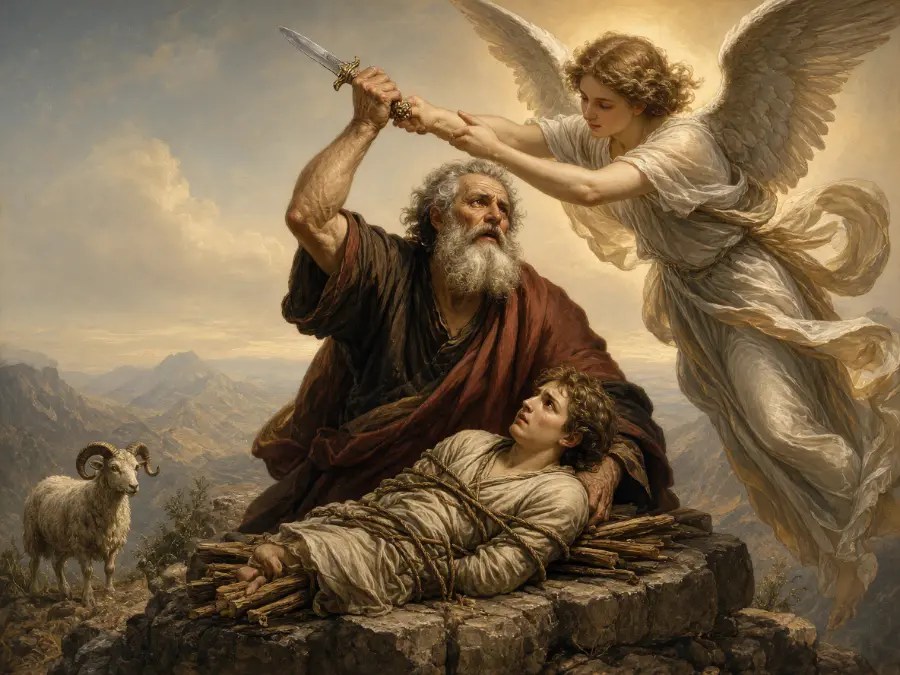
Jesus told stories about people who never existed
There was no Good Samaritan. No traveller was actually beaten on that road, no priest actually walked past, no innkeeper was actually handed two denarii. Our Lord invented all of them on the spot to answer a lawyer’s question.
There was no prodigal son. No father actually ran down a road, and no elder brother actually stood outside a party refusing to come in.
And these people are more real to us than most of the kings in Chronicles. We know exactly what the father looked like running, and nothing about him is historical.
That is not a defect in the teaching. It is the method. A parable gets past our defences precisely because it is not about us — until the last line, when it turns out to be.
Why this matters more than it seems
Because a good deal of Christian nervousness about imagination is misplaced, and it costs us.
Scripture is full of made things: parables, poetry that does not describe the world literally, a whole book of love songs, visions with beasts in them that nobody thinks were photographs. God gave us a book that uses story as a primary instrument, and then gave us minds that respond to it.
Truth and fact are not the same size. The prodigal son is not a fact. He is true.

Of the noble kind
“Of noble kind” sounds like a word for the gentry, and for most of history it was. Peter took the language of rank and gave it to scattered believers in the provinces, household servants among them: “But you are a chosen people, a royal priesthood, a holy nation, a people for God’s own possession, to proclaim the virtues of Him who called you out of darkness into His marvelous light” (1 Peter 2:9). In the Church, the noble kind are the people God has called.

A blessing for Alice
May she be of the noble kind, in the sense Peter meant when he handed that vocabulary to people with no rank at all.
May she keep the imagination she was born with, and never be told it is unspiritual.
And may she meet, in some story or other, the last line that turns out to be about her.
Related reading
- Allison Is Not in the Bible — It Means “Of Noble Kind”
- Is Your Name in the Bible? A Directory of 231 Names
- Daisy Is Not in the Bible: The “Day’s Eye” and Morning in Scripture
A blessing card for Alice
Alice
means of noble kind
Germanic, from Adalheidis
Not in the Bible
But you are a chosen people, a royal priesthood, a holy nation, a people for God’s own possession, to proclaim the virtues of Him who called you out of darkness into His marvelous light.
1 Peter 2:9 Berean Standard Bible
Alice, may the LORD bless you and keep you. Numbers 6:24
The card is on its way
Look for an email from Christian Pure in the next few minutes.


Leave a Reply