
 English
 Chinese
 Dutch
 Arabic
 Spanish
 Portuguese
 Russian
 French
 Italian
 German
 Japanese
Presbyterians and Baptists are Protestants who share most of their beliefs, and many on both sides are Calvinists. They part over baptism and over how a church is governed. Presbyterians baptize believers and their infant children, usually by pouring or sprinkling, and their churches are governed by elders who meet in connected courts. Baptists baptize only people who profess faith, they baptize by immersion, and each congregation governs itself.
The two families stand so near that when the Baptists of the 1689 London Confession set down what they believed, they did not start from a blank sheet. They took the Presbyterians’ Westminster Confession and kept “the very same words” wherever their faith was the same, so the two documents run side by side until they come to the water and to the question of who governs the church.
Both confess the Trinity, the full authority of the Bible and salvation by grace through faith in Christ. Neither name belongs to a single church, though. In the United States the largest Presbyterian bodies are the Presbyterian Church (U.S.A.), or PCUSA, and the Presbyterian Church in America, or PCA, and beside them is the smaller Evangelical Presbyterian Church, or EPC. In the table below, the Presbyterian column follows the Westminster Confession of Faith (1646). That is the doctrinal standard of the PCA, while in the PCUSA it is one of twelve documents in the Book of Confessions, alongside the Nicene and Apostles’ Creeds, the Scots Confession, the Heidelberg Catechism and later statements such as the Confession of 1967. The Baptist column follows the Southern Baptist Convention (SBC) and its Baptist Faith and Message 2000 and, where it says more, the Second London Baptist Confession of 1689. Where the bodies disagree, the table names them.
To see what Baptists teach beside what Presbyterian and Reformed churches teach on 55 questions, open our free tool, Compare Christian Denominations.
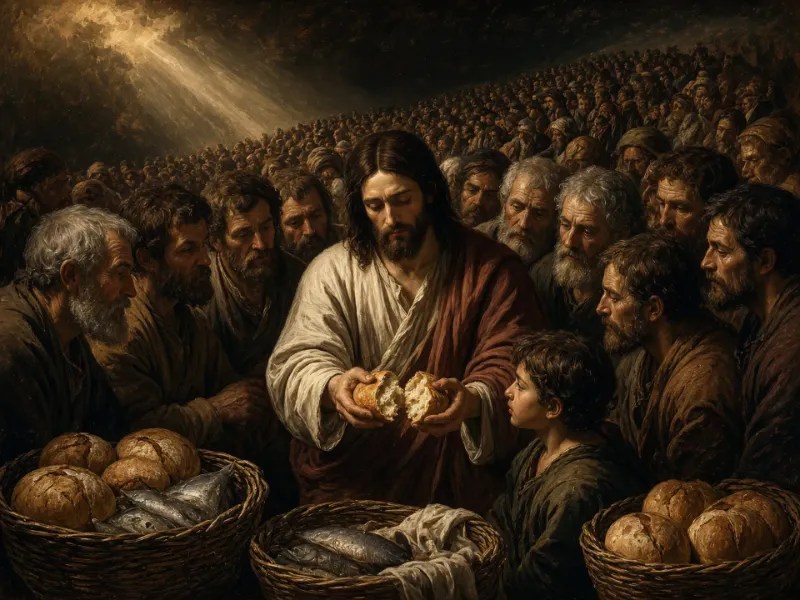
Presbyterian and Baptist beliefs side by side
| Presbyterian | Baptist | |
|---|---|---|
| Began | Calvin’s Geneva; Scotland, 1560 | English exiles in Amsterdam, 1608 or 1609 |
| Largest US bodies | PCUSA (1,019,003 members, 2025); PCA (400,751, 2024) | SBC (12,331,954, 2025); Black Baptist conventions (roughly 15 million Black Baptists); American Baptist Churches USA (5,000+ churches) |
| Statement of faith | PCA: Westminster Confession; PCUSA: Book of Confessions, including Westminster | Baptist Faith and Message 2000; 1689 London Confession |
| Who is baptized | Believers and the infants of believers | Only those who profess faith |
| How | Pouring or sprinkling; immersion allowed | Immersion only |
| Government | Elders, in session, presbytery and General Assembly | Each congregation, by vote of its members |
| Salvation | Calvinist (Reformed) in its confessions | From Calvinist to Arminian, by church |
| Lord’s Supper | A sacrament; Christ spiritually present | An ordinance; a memorial (SBC), or Christ spiritually present (1689) |
| Who may take Communion | PCUSA: all the baptized; PCA: members of evangelical churches | SBC confession: baptized members; in practice most SBC churches invite all believers |
| Women pastors | PCUSA yes; PCA no; EPC left to each presbytery | SBC no; American Baptists yes |
Where Presbyterians and Baptists differ
Each answer is quoted from the church’s own documents or from one of our articles.
Who is saved
Presbyterian and Reformed
Neither are any other redeemed by Christ, effectually called, justified, adopted, sanctified, and saved, but the elect only.
Baptist
Salvation involves the redemption of the whole man, and is offered freely to all who accept Jesus Christ as Lord and Saviour, who by His own blood obtained eternal redemption for the believer. In its broadest sense salvation includes regeneration, justification, sanctification, and glorification. There is no salvation apart from personal faith in Jesus Christ as Lord.
Human nature
Presbyterian and Reformed
Man, by his fall into a state of sin, hath wholly lost all ability of will to any spiritual good accompanying salvation: so as, a natural man, being altogether averse from that good, and dead in sin, is not able, by his own strength, to convert himself, or to prepare himself thereunto.
Baptist
In the beginning man was innocent of sin and was endowed by his Creator with freedom of choice. By his free choice man sinned against God and brought sin into the human race.
From Baptist Faith and Message 2000, article III (Southern Baptist Convention, bfm.sbc.net)
Baptism
Presbyterian and Reformed
Baptism is a sacrament of the new testament, ordained by Jesus Christ, not only for the solemn admission of the party baptized into the visible church; but also, to be unto him a sign and seal of the covenant of grace, of his ingrafting into Christ, of regeneration, of remission of sins, and of his giving up unto God, through Jesus Christ, to walk in newness of life.
Baptist
Christian baptism is the immersion of a believer in water in the name of the Father, the Son, and the Holy Spirit. It is an act of obedience symbolizing the believer’s faith in a crucified, buried, and risen Saviour, the believer’s death to sin, the burial of the old life, and the resurrection to walk in newness of life in Christ Jesus.
How baptism is done
Presbyterian and Reformed
Dipping of the person into the water is not necessary; but baptism is rightly administered by pouring, or sprinkling water upon the person.
Baptist
Christian baptism is the immersion of a believer in water in the name of the Father, the Son, and the Holy Spirit.
Communion
Presbyterian and Reformed
The Lord’s supper is a sacrament, wherein, by giving and receiving bread and wine according to Christ’s appointment, his death is showed forth; and the worthy receivers are, not after a corporal and carnal manner, but by faith, made partakers of his body and blood, with all his benefits, to their spiritual nourishment and growth in grace.
Baptist
The Lord’s Supper is a symbolic act of obedience whereby members of the church, through partaking of the bread and the fruit of the vine, memorialize the death of the Redeemer and anticipate His second coming.
Leadership
Presbyterian and Reformed
This church shall be governed by presbyters, that is, ruling elders and teaching elders (also called ministers of the Word and Sacrament).
Baptist
A New Testament church of the Lord Jesus Christ is an autonomous local congregation of baptized believers, associated by covenant in the faith and fellowship of the gospel; observing the two ordinances of Christ, governed by His laws, exercising the gifts, rights, and privileges invested in them by His Word, and seeking to extend the gospel to the ends of the earth. Each congregation operates under the Lordship of Christ through democratic processes.
Women ministers
Presbyterian and Reformed
Ruling elders and deacons are men and women elected by the congregation from among its members. The nomination and election of ruling elders and deacons shall express the rich diversity of the congregation’s membership and shall guarantee participation and inclusiveness (F-1.0403).
From PC(USA) Book of Order 2025-2027, G-2.0401 (the PCA confines these offices to men)
Baptist
While both men and women are gifted for service in the church, the office of pastor/elder/overseer is limited to men as qualified by Scripture.
From Baptist Faith and Message 2000, article VI (amended 2023)
Alcohol
Presbyterian and Reformed
The grounds for answering this Overture in the negative are that to adopt position of total abstinence would go beyond the requirements of scripture, (Deut. 5:32,33; Col. 2:20-23) and is contrary to the Westminster Confession of Faith, (Chapter 20, subparagraph 2), which forbid the binding of the conscience by the commands of men.
From Presbyterian Church in America, 8th General Assembly (1980), position on beverage use of alcohol
Baptist
That the messengers to the Southern Baptist Convention meeting in Greensboro, North Carolina, June 13-14, 2006, express our total opposition to the manufacturing, advertising, distributing, and consuming of alcoholic beverages
Baptism: the infants of believers, or believers only
Baptism is the difference most people notice first, and several of the others follow from it. The Westminster Confession says: “Not only those that do actually profess faith in and obedience unto Christ, but also the infants of one, or both, believing parents, are to be baptized.” The 1689 London Baptist Confession answers that those who “do actually profess repentance towards God, faith in, and obedience to, our Lord Jesus Christ, are the only proper subjects of this ordinance.”
Presbyterians baptize children because they read the Bible as one covenant of grace, running from Abraham to the church. The Confession calls baptism “a sign and seal of the covenant of grace” and says the visible church consists of all who profess the true religion “and of their children.” Circumcision once marked Abraham’s household as belonging to God’s people, and baptism now marks a believer’s children in the same way. Among the Confession’s proof texts for infant baptism is Peter’s sermon at Pentecost, with its promise:
“For the promise is for you and for your children and for all who are far off, everyone whom the Lord our God calls to himself.” (Acts 2:39)
Baptists read the same chapter and look at what happened after the sermon: “So those who received his word were baptized” (Acts 2:41). In the New Testament, they point out, people are baptized after they believe. The Baptist Faith and Message defines baptism as “the immersion of a believer in water in the name of the Father, the Son, and the Holy Spirit,” an act that pictures the believer’s death to sin, burial and rising to new life, and it cites Romans 6, where Paul writes, “We were buried therefore with him by baptism into death, in order that, just as Christ was raised from the dead by the glory of the Father, we too might walk in newness of life.”
The Westminster Confession and the Baptist Faith and Message both cite Colossians 2:12, “having been buried with him in baptism,” and they draw opposite conclusions from it. Presbyterians read the verse beside the one before it, which speaks of a circumcision “made without hands,” and see baptism taking circumcision’s place. Baptists read the burial as immersion.
How each church baptizes follows from what it believes baptism means. The Westminster Confession says “Dipping of the person into the water is not necessary; but baptism is rightly administered by pouring, or sprinkling water upon the person.” The 1689 Confession says “Immersion, or dipping of the person in water, is necessary to the due administration of this ordinance.” Even the first Baptists took a while to settle the point. John Smyth baptized his Amsterdam congregation by pouring water on their heads, and it was later that Baptists adopted immersion.
For all they disagree about the water, neither side teaches that the water saves. The Westminster Confession says grace and salvation are “not so inseparably annexed” to baptism that no one can be saved without it, or that everyone baptized is born again. For Baptists, baptism is an act of obedience by someone who is already saved.
The authors of the 1689 Confession deliberately followed the Westminster text, “making use of the very same words” wherever their faith was the same. So the chapters where their wording departs, on baptism and on the church, show us exactly where the two traditions divide.

Who governs the church
The word Presbyterian comes from the Greek for elder, and in a Presbyterian church the elders govern. In the Presbyterian Church in America they are of two orders, teaching elders, who preach, and ruling elders, who govern alongside them. The PCA’s Book of Church Order names its courts as “church Sessions, Presbyteries, and the General Assembly,” and the PCUSA’s councils are sessions, presbyteries, synods and the General Assembly. A local session answers to its presbytery, which ordains and installs ministers, and the General Assembly gathers the whole church. The Westminster Confession gives synods and councils power “authoritatively to determine” complaints brought to them.
Baptists place that authority in the local church. The Baptist Faith and Message calls a church “an autonomous local congregation of baptized believers” and says “Each congregation operates under the Lordship of Christ through democratic processes.” The 1689 Confession says a pastor is chosen “by the common suffrage of the church itself,” that is, by the members’ vote. Churches cooperate in associations and conventions, but the 1689 Confession says the messengers who gather from many churches “are not intrusted with any church-power properly so called,” and they may not impose their decisions on any congregation. A convention can decline to cooperate with a church, as the Southern Baptist Convention has done with churches that have women pastors, but it cannot tell that church what to do.
So a Presbyterian church belongs to a denomination and shares its discipline, while a Baptist church chooses whether to join a convention. The conventions run from the conservative Southern Baptists to the American Baptists, who have tended to be more liberal.
Calvinism runs on both sides of the line
The Presbyterian confessions are Calvinist, or Reformed, and the Westminster Confession teaches that God chose those he would save before the world began and that his call brings them to faith.
Baptists, for their part, have never agreed among themselves about Calvinism and Arminianism. From the start, English Baptists were divided into General Baptists, who held that Christ died for all, and Particular Baptists, who held that he died for the elect. The 1689 Confession states predestination in words close to Westminster’s, but it softens one phrase: where Westminster says some are “foreordained to everlasting death,” the Baptist confession says others are “left to act in their sin to their just condemnation.”
The Southern Baptist Convention’s confession stands between the two. It calls election “the gracious purpose of God” and says it “is consistent with the free agency of man,” and it holds, as Presbyterians do, that “All true believers endure to the end.” Free Will Baptists, a much smaller strand that began in colonial America, are Arminian. A Reformed Baptist may therefore agree with a Presbyterian about salvation more than with the Baptist church down the road, and the two will still disagree about baptism.
The Lord’s Supper and who may take it
Presbyterians call the Lord’s Supper a sacrament, and they teach that Christ is present to faith, though not in the bread and wine themselves. In the words of the Westminster Confession, believers “really and indeed, yet not carnally and corporally but spiritually, receive, and feed upon, Christ crucified.” The 1689 Baptist Confession repeats nearly every word and adds that Christ’s body and blood are “spiritually present to the faith of believers.” Many Baptists today hold a plainer view, and the Baptist Faith and Message calls the Supper “a symbolic act of obedience” in which church members “memorialize the death of the Redeemer and anticipate His second coming.”
At the table the question of baptism comes back. The Baptist Faith and Message says baptism “is prerequisite to the privileges of church membership and to the Lord’s Supper,” and it defines baptism as a believer’s immersion, so by the confession’s standard a Presbyterian baptized as an infant has not received Christian baptism. Southern Baptist churches are looser in practice than their confession. In a 2012 Lifeway Research survey of Southern Baptist pastors, 52 percent said their church offers the Lord’s Supper to “anyone who has put their faith in Jesus Christ,” and 35 percent to “anyone who has been baptized as a believer.” Stricter Baptists, the Landmark Baptists among them, practice closed Communion.
Presbyterian churches open the table more widely, and the PCUSA says “The invitation to the Lord’s Supper is extended to all who have been baptized.” The PCA leaves it to each session, which may invite “all those who profess the true religion, and are communicants in good standing in any evangelical church.”
Sunday worship and the altar call
Presbyterians worship in a set pattern, and the PCUSA’s Directory for Worship lays out a Service for the Lord’s Day that includes “confession and pardon” along with prayer, offering and the sacraments. Southern Baptists are generally nonliturgical, and most of their services end with a call to respond. In a 2025 Lifeway Research survey, 74 percent of Southern Baptist pastors said they had given a gospel invitation at every Sunday morning service in the past year, and about two in three ask people to walk forward to speak with someone at the front. The altar call goes back at least to the Separate Baptists of the 18th-century Great Awakening. American Baptists have tended to be more liturgical.
The bodies behind the names
The two largest Presbyterian bodies in the United States divide over women’s ordination and marriage, among other things, and the rest is covered in PCUSA vs PCA. The Presbyterian Church (U.S.A.) was formed in 1983, when branches that had separated around the Civil War came back together. Its predecessor ordained its first woman ruling elder, Sarah Dickson, in 1930 and its first woman minister, Margaret Towner, in 1956. Since 2015 its Book of Order has described marriage as “a unique commitment between two people, traditionally a man and a woman,” and its pastors and congregations may marry same-sex couples. The PCA’s Book of Church Order says “Marriage is only to be between one man and one woman” and allows its ministers to solemnize no other, and of its elders and deacons it says, “In accord with Scripture, these offices are open to men only.” The Evangelical Presbyterian Church treats the question as non-essential and leaves it to each congregation for elders and deacons and to each presbytery for ministers.
Among Baptists the same questions run between the conventions. The Southern Baptist Convention is the largest Baptist body in the country. Black Baptists number roughly 15 million by Christian History magazine’s count, which is at least a quarter of America’s Baptists. Their National Baptist Convention formed in 1895 and later divided into several conventions, including the Progressive National Baptist Convention of 1961. In 2023 the SBC amended its confession to say “the office of pastor/elder/overseer is limited to men as qualified by Scripture.” In June 2026 its messengers voted 74.6% in favor of writing into the convention’s constitution a ban on churches that have women pastors or let women preach on Sunday mornings. The change must pass again the following year to take effect. American Baptist Churches USA ordains women and calls the matter “a settled issue.” The Baptist Faith and Message defines marriage as “the uniting of one man and one woman.”
Which came first?
Presbyterianism came first, by about half a century. It grew from the teaching of reformers such as John Calvin in 16th-century Geneva, and that teaching included church government by presbyteries. John Knox, who had studied with Calvin, came home to Scotland in 1559. In 1560 the Scottish Parliament ratified the Scots Confession, which Knox had helped write, and Scotland’s church was reformed with Calvinist doctrine and government by elders. In 1643 the English Parliament called the Westminster Assembly, which completed the Westminster Confession in 1646, and the Church of Scotland adopted it in 1647. In what became the United States, Presbyterians organized their first presbytery in 1706.
The first Baptist church met in Amsterdam in 1608 or 1609. It was formed by English Separatists under John Smyth and Thomas Helwys, and Helwys later led part of the congregation home and founded the first Baptist church in England in 1611 or 1612.
In America the first Baptist church was gathered at Providence, Rhode Island, in 1638. Roger Williams had founded Providence in 1636, after Massachusetts banished him, and he was not yet a Baptist when he did so. He founded the church two years later and soon withdrew from it, though he remained a Calvinist in his theology.
Can a Baptist and a Presbyterian marry, or change churches?
Nothing in either church’s confession forbids a Baptist and a Presbyterian to marry. The Westminster Confession asks Christians “to marry only in the Lord,” and the Baptist Faith and Message sets no rule about a spouse’s church. The practical question comes when a child is born, because a Presbyterian parent may want an infant baptism that the Baptist parent’s church does not practice.
A Baptist can join a Presbyterian church without being baptized again. The PCUSA “recognizes all baptisms by other Christian churches that are administered with water and performed in the name of the triune God,” and the Westminster Confession says baptism “is but once to be administered unto any person.”
Going the other way usually means being baptized. Because the Baptist Faith and Message makes baptism, meaning a believer’s immersion, a condition of church membership, someone baptized as an infant is normally immersed before joining a Southern Baptist church. Baptists do not count this as a second baptism, since in their view the infant rite was not baptism. Presbyterians hold that the infant baptism was valid and, by their confession, not to be repeated.
At the font the two confessions cannot share their words, but at the table they nearly do. The Baptists of 1689 kept almost every word of Westminster’s sentence on the Supper, that believers “really and indeed, yet not carnally and corporally but spiritually, receive, and feed upon, Christ crucified.”
Related reading
- Baptist vs. Reformed Beliefs
- Calvinism vs Presbyterianism
- Baptist vs Southern Baptist
- Methodists vs Baptists
- Presbyterian vs Catholic
- What Do Baptists Believe? Baptism, the Bible and Local Churches
- What Do Presbyterians Believe? Scripture, Grace and Elders


Leave a Reply