
 English
 Chinese
 Dutch
 Arabic
 Spanish
 Portuguese
 Russian
 French
 Italian
 German
 Japanese
Backsliding in the Bible is turning away from the Lord after belonging to him. Jeremiah charges Judah with forsaking “the fountain of living waters” (Jeremiah 2:13), and Paul names Demas, who deserted him “in love with this present world” (2 Timothy 4:10). The prophets also promise healing for it: “I will heal your faithlessness” (Jeremiah 3:22).
The King James Version’s “backslidings” in Jeremiah 2:19 and 3:22 and “backsliding” in Hosea 11:7 and 14:4 translate the Hebrew noun meshubah, a turning back, which the ESV renders “apostasy,” “faithlessness” or “turning away.” The New Testament passages below use other verbs: fall away, shrink back, desert, wander from the truth.
Israel turning away from the Lord
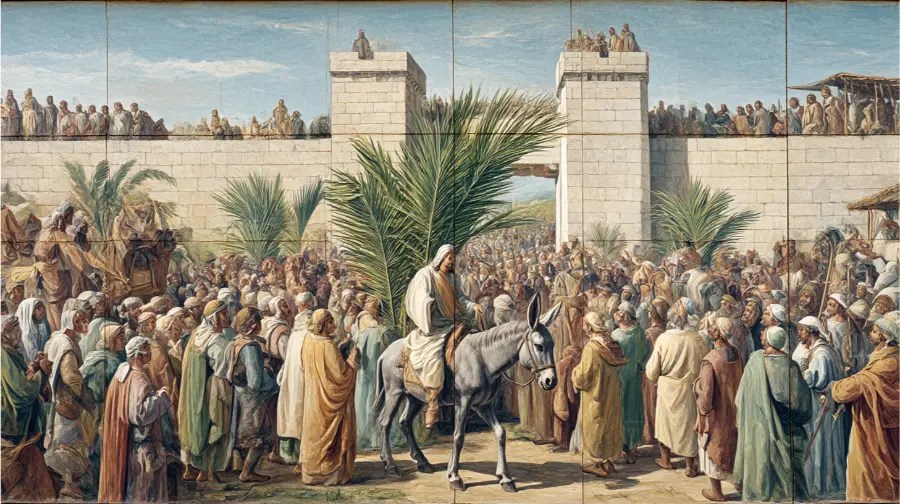
Jeremiah 2:13
“for my people have committed two evils: they have forsaken me, the fountain of living waters, and hewed out cisterns for themselves, broken cisterns that can hold no water.”
Reflection: The Lord, speaking through Jeremiah, calls on the heavens to be appalled (Jeremiah 2:12): no nation has changed its gods, “even though they are no gods,” yet “my people have changed their glory for that which does not profit” (v11). The two evils go together, leaving a spring of living water and hewing out cisterns that are broken and hold nothing.
Jeremiah 2:19
“Your evil will chastise you, and your apostasy will reprove you. Know and see that it is evil and bitter for you to forsake the LORD your God; the fear of me is not in you, declares the Lord GOD of hosts.”
Reflection: In the same chapter the Lord says the turning away carries its own correction: “Your evil will chastise you, and your apostasy will reprove you.” The King James Version reads “thy backslidings shall reprove thee.” The verse ends by naming what is missing: “the fear of me is not in you.”
Hosea 4:16
“Like a stubborn heifer, Israel is stubborn; can the LORD now feed them like a lamb in a broad pasture?”
Reflection: Hosea compares Israel to a stubborn heifer. The King James Version reads “Israel slideth back as a backsliding heifer,” but the Hebrew verb is sarar, to be stubborn or rebellious. The ESV turns the second half into a question, “can the LORD now feed them like a lamb in a broad pasture?”, where the KJV reads it as a statement.
Hosea 11:7
“My people are bent on turning away from me, and though they call out to the Most High, he shall not raise them up at all.”
Reflection: The people are “bent on turning away,” and though they call out to the Most High, he will not raise them up. The verses that follow give God’s side: “How can I give you up, O Ephraim?” and “my compassion grows warm and tender” (Hosea 11:8), and he will not “come in wrath” (v9). The KJV’s “bent to backsliding” translates meshubah, the noun in Jeremiah 2:19.
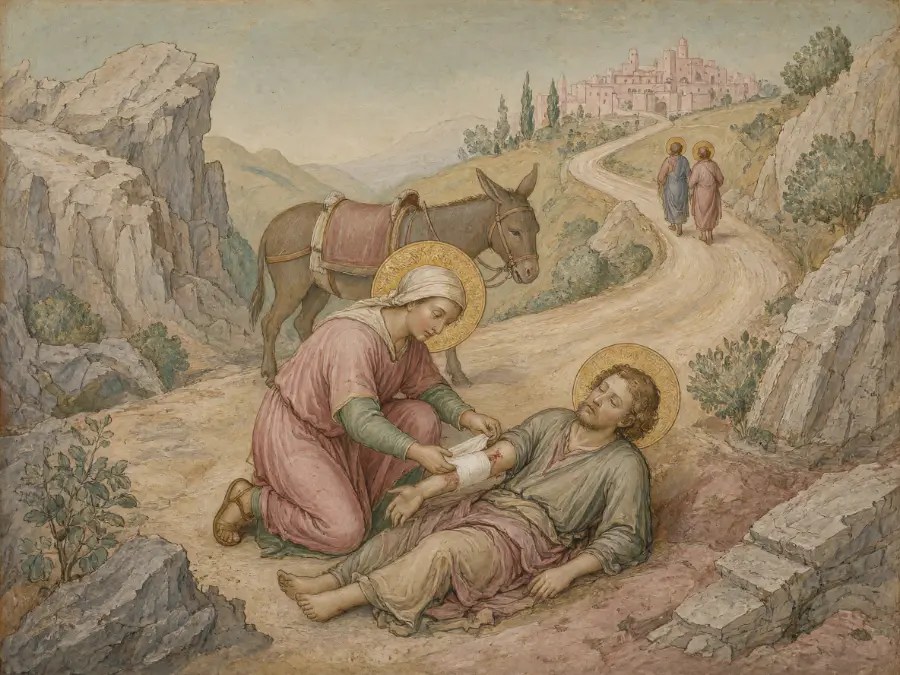
Proverbs 14:14
“The backslider in heart will be filled with the fruit of his ways, and a good man will be filled with the fruit of his ways.”
Reflection: The proverb places backsliding in the heart, and the consequence is the person’s own ways coming back to fill him. In the ESV the second line gives the good man the same outcome in the same words, so each man is filled with what his ways produce. The KJV reads “shall be filled with his own ways.”
Warnings against falling away

Hebrews 3:12
“Take care, brothers, lest there be in any of you an evil, unbelieving heart, leading you to fall away from the living God.”
Reflection: The warning follows the Holy Spirit’s words about the wilderness generation, who “always go astray in their heart” and of whom God swore, “They shall not enter my rest” (Hebrews 3:7-11). Hebrews traces falling away to an “unbelieving heart,” and the next verse gives the remedy: “exhort one another every day, as long as it is called ‘today,’ that none of you may be hardened by the deceitfulness of sin” (Hebrews 3:13).
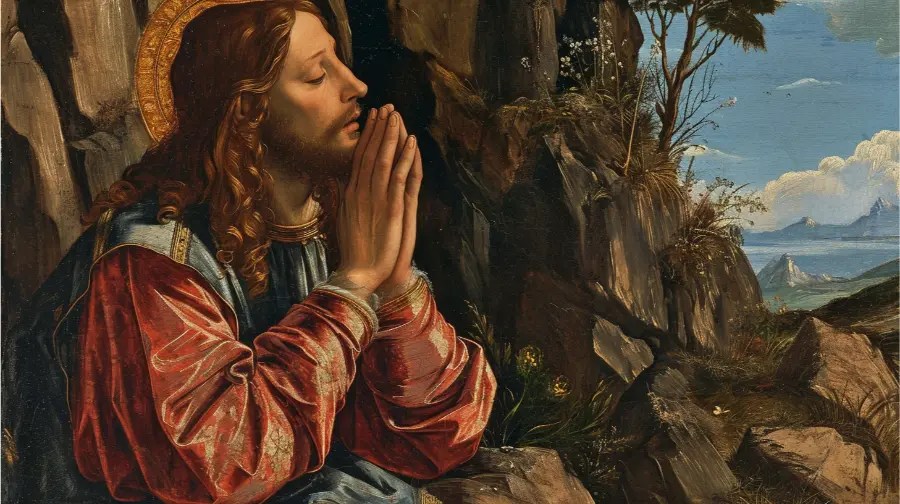
1 Corinthians 10:12
“Therefore let anyone who thinks that he stands take heed lest he fall.”
Reflection: Paul has just listed what Israel shared in the wilderness, all under the cloud, all through the sea, all eating the same spiritual food, and then that God was not pleased with most of them, and that some of them were destroyed for idolatry, sexual immorality, testing Christ and grumbling (1 Corinthians 10:1-10). The warning is aimed at whoever “thinks that he stands.” The next verse adds that God “will not let you be tempted beyond your ability, but with the temptation he will also provide the way of escape.”

Luke 9:62
“Jesus said to him, ‘No one who puts his hand to the plow and looks back is fit for the kingdom of God.’”
Reflection: The man Jesus answers has not yet followed him; he offers to, once he has said farewell to those at home (Luke 9:61). Jesus’ reply pictures someone who has already taken hold of the plow and then looks back.
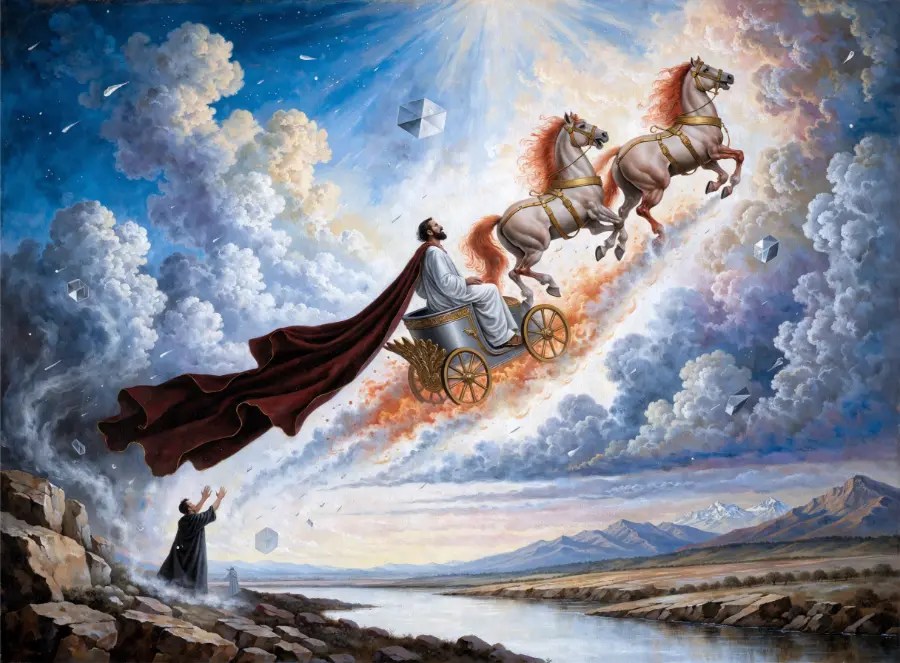
Galatians 5:4
“You are severed from Christ, you who would be justified by the law; you have fallen away from grace.”
Reflection: In Galatians, “fallen away from grace” describes Christians who would accept circumcision in order to be justified by the law (Galatians 5:2-3). Paul says such a person is “severed from Christ,” and the chapter opens with the alternative: “stand firm therefore, and do not submit again to a yoke of slavery” (Galatians 5:1).
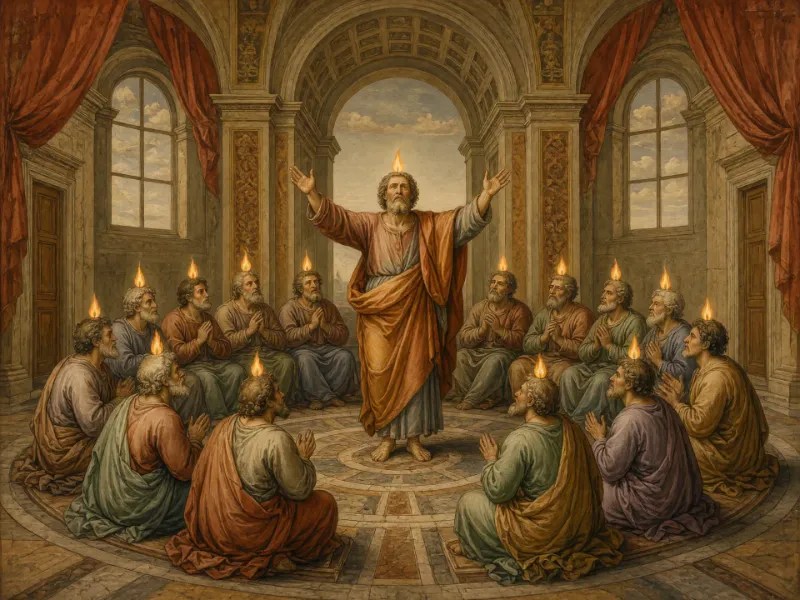
Hebrews 10:26-27
“For if we go on sinning deliberately after receiving the knowledge of the truth, there no longer remains a sacrifice for sins, but a fearful expectation of judgment, and a fury of fire that will consume the adversaries.”
Reflection: The sin in view is continued and deliberate (“if we go on sinning deliberately”), and it comes “after receiving the knowledge of the truth.” Earlier in the chapter Hebrews says that by a “single offering” Christ “has perfected for all time those who are being sanctified,” and that where sins are forgiven “there is no longer any offering for sin” (Hebrews 10:14, 18).

Hebrews 10:38-39
“but my righteous one shall live by faith, and if he shrinks back, my soul has no pleasure in him.” But we are not of those who shrink back and are destroyed, but of those who have faith and preserve their souls.”
Reflection: The readers had once “endured a hard struggle with sufferings” and “joyfully accepted the plundering” of their property (Hebrews 10:32-34). Hebrews tells them not to throw away their confidence, since they “have need of endurance” (vv. 35-36), then quotes a passage built on Habakkuk 2:3-4 in which God takes no pleasure in the one who “shrinks back.” Verse 39 places the readers among “those who have faith and preserve their souls.”
2 Peter 2:20
“For if, after they have escaped the defilements of the world through the knowledge of our Lord and Savior Jesus Christ, they are again entangled in them and overcome, the last state has become worse for them than the first.”
Reflection: Second Peter 2 is about false teachers who “secretly bring in destructive heresies” (2 Peter 2:1). Verse 20 describes people who escaped the world’s defilements through knowing Christ and were then “again entangled in them and overcome.” The next verses say it would have been better never to have known “the way of righteousness” than to turn back from it, and apply the proverb of the dog that returns to its vomit (vv. 21-22; Proverbs 26:11).

2 John 1:8
“Watch yourselves, so that you may not lose what we have worked for, but may win a full reward.”
Reflection: John writes about deceivers “who do not confess the coming of Jesus Christ in the flesh” (2 John 1:7). The loss he warns of is losing “what we have worked for,” and verse 9 says that whoever “goes on ahead and does not abide in the teaching of Christ, does not have God.”
Those who turned back, and one who turned again

2 Timothy 4:10
“For Demas, in love with this present world, has deserted me and gone to Thessalonica.”
Reflection: Demas had earlier sent greetings alongside Luke, and Paul counted him among “my fellow workers” (Colossians 4:14; Philemon 1:24). In 2 Timothy Paul gives the reason Demas left in one phrase: “in love with this present world.” Two verses before, Paul speaks of the crown laid up for “all who have loved his appearing” (2 Timothy 4:8), and he adds that “Luke alone is with me” (v11).

Revelation 2:4-5
“But I have this against you, that you have abandoned the love you had at first. Remember therefore from where you have fallen; repent, and do the works you did at first.”
Reflection: The letter to the church in Ephesus commends its toil, its patient endurance and its testing of false apostles (Revelation 2:2-3) before naming the charge. The remedy has three parts, remember, repent and “do the works you did at first,” and the warning is that its lampstand will be removed “unless you repent.”

Luke 22:31-32
“Simon, Simon, behold, Satan demanded to have you, that he might sift you like wheat, but I have prayed for you that your faith may not fail. And when you have turned again, strengthen your brothers.”
Reflection: Jesus tells Simon that Satan has demanded to sift them all like wheat, and that he has prayed for Peter’s faith not to fail; the ESV notes that the Greek “you” is plural in verse 31 and singular all four times in verse 32. He speaks of Peter’s return before the fall has happened: “when you have turned again.” Before the rooster crowed Peter denied him three times, and when “the Lord turned and looked at Peter,” he “went out and wept bitterly” (Luke 22:34, 60-62).
The call to return
Jeremiah 3:22
“Return, O faithless sons; I will heal your faithlessness.”
Reflection: Earlier in the chapter Jeremiah is sent to proclaim toward the north, “Return, faithless Israel,” with the promise “I will not be angry forever” and one demand: “Only acknowledge your guilt” (Jeremiah 3:12-13). In verse 22 the offer is to heal the faithlessness itself, and the second half of the verse gives the people’s reply: “Behold, we come to you, for you are the LORD our God.” The KJV reads “Return, ye backsliding children, and I will heal your backslidings.”

Hosea 14:4
“I will heal their apostasy; I will love them freely, for my anger has turned from them.”
Reflection: The closing chapter of Hosea gives Israel the words to bring back to God, “Take away all iniquity; accept what is good,” together with a promise to stop relying on Assyria and horses and to stop calling the work of their hands “Our God” (Hosea 14:2-3). Verse 4 is God’s answer. Where the ESV has “apostasy,” the KJV reads “I will heal their backsliding.”

Luke 15:20
“But while he was still a long way off, his father saw him and felt compassion, and ran and embraced him and kissed him.”
Reflection: In Jesus’ parable the son turns home when he “came to himself,” planning to ask to be treated as one of the hired servants (Luke 15:17-19). The father sees him a long way off and runs to embrace him before the son has spoken, and when the son does speak, he stops before the request to be a hired servant (v21). The father’s explanation is “this my son was dead, and is alive again; he was lost, and is found” (v24).

1 John 1:9
“If we confess our sins, he is faithful and just to forgive us our sins and to cleanse us from all unrighteousness.”
Reflection: John writes to believers, “My little children,” so that they may not sin, and adds at once, “But if anyone does sin, we have an advocate with the Father, Jesus Christ the righteous” (1 John 2:1). Verse 9 sits between two warnings against claiming to be without sin (1:8, 1:10), and its promise rests on God being “faithful and just.”

James 5:19-20
“My brothers, if anyone among you wanders from the truth and someone brings him back, let him know that whoever brings back a sinner from his wandering will save his soul from death and will cover a multitude of sins.”
Reflection: James ends his letter with these two verses. The one who wanders is “among you,” and bringing him back is the work of someone else in the church. Whoever does it “will save his soul from death and will cover a multitude of sins.”
Whether a believer can fall away for good
Hebrews 10:26-27 and 2 Peter 2:20 describe people who knew the truth and turned from it, and neither passage names a way back; Luke 15:20, Luke 22:32 and James 5:19-20 speak of people being brought back.
The Westminster Confession of Faith (chapter 17) holds that those God has “effectually called, and sanctified by his Spirit, can neither totally nor finally fall away from the state of grace,” while allowing that they may “fall into grievous sins; and, for a time, continue therein.”
The Church of England’s Article XVI, “Of Sin after Baptism,” addresses whether sin after baptism can be forgiven. It says “the grant of repentance is not to be denied to such as fall into sin after Baptism,” and “we may depart from grace given, and fall into sin, and by the grace of God we may arise again, and amend our lives.” Methodist Article XII, “Of Sin After Justification,” gives the same article with small changes, among them “sin” for “deadly sin” and “justification” for “Baptism.”


Leave a Reply