
 English
 Chinese
 Dutch
 Arabic
 Spanish
 Portuguese
 Russian
 French
 Italian
 German
 Japanese
In the Bible, a boundary is first of all a line on the ground that God protects. The law forbids moving a neighbor’s boundary stone (Deuteronomy 19:14), and God sets a limit the sea cannot pass (Jeremiah 5:22).
Closer to what is now called personal boundaries are the command to guard the heart (Proverbs 4:23), the charge to carry one’s own load (Galatians 6:5), and the steps Jesus gives for confronting a brother or sister who sins (Matthew 18:15-17).
Boundary stones and allotted land

Deuteronomy 19:14
“Do not move your neighbor’s boundary stone set up by your predecessors in the inheritance you receive in the land the Lord your God is giving you to possess.”
Reflection: The command sits among the laws for life in the land, after the cities of refuge (Deuteronomy 19:1-3). The stone marked where one family’s share of the inheritance ended and a neighbor’s began, and the verse ties that share to the land “the Lord your God is giving you to possess.” Deuteronomy 27:17 repeats the law as a curse to which all the people answer “Amen!” The Hebrew word for boundary in both verses is gebul, which also means border or territory.
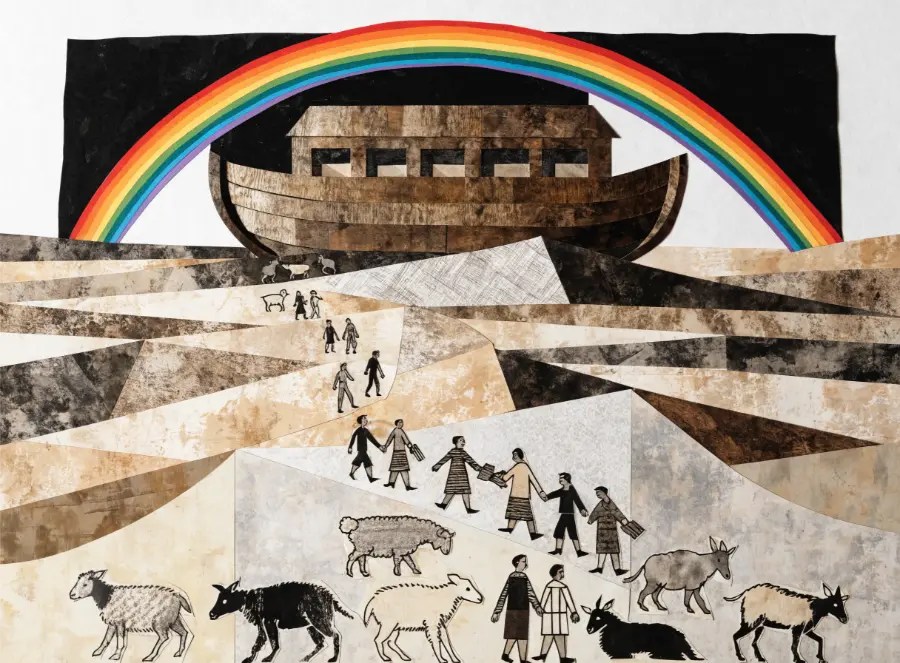
Proverbs 23:10-11
“Do not move an ancient boundary stone or encroach on the fields of the fatherless, for their Defender is strong; he will take up their case against you.”
Reflection: The saying pairs moving an ancient boundary stone with encroaching on the fields of the fatherless, and it names who will object: “their Defender is strong; he will take up their case against you.” Taking an orphan’s land is treated as a case God himself argues. Job 24:2 lists moving boundary stones among the wrongs of the wicked, beside pasturing stolen flocks.

Psalm 16:6
“The boundary lines have fallen for me in pleasant places; surely I have a delightful inheritance.”
Reflection: David uses the language of land allotment. Israel’s tribes received their territory by lot, as when Joshua “cast lots for them in Shiloh” (Joshua 18:10), and boundary lines marked each share. In the verse before, David calls the Lord his “portion” and his “cup”, the one who makes his “lot secure.”
Limits God sets

Jeremiah 5:22
“‘Should you not fear me?’ declares the Lord. ‘Should you not tremble in my presence? I made the sand a boundary for the sea, an everlasting barrier it cannot cross. The waves may roll, but they cannot prevail; they may roar, but they cannot cross it.”
Reflection: God speaks through Jeremiah to Judah, whom he calls “foolish and senseless people, who have eyes but do not see” (Jeremiah 5:21). The sea stays behind the sand God set for it, and the next verse sets the people beside it: “But these people have stubborn and rebellious hearts; they have turned aside and gone away” (5:23). Job 38:8-11 uses the same picture, with God saying to the sea, “This far you may come and no farther.”

Acts 17:26
“From one man he made all the nations, that they should inhabit the whole earth; and he marked out their appointed times in history and the boundaries of their lands.”
Reflection: Paul is speaking to the council of the Areopagus in Athens (Acts 17:22). He says God made every nation from one man and marked out both their times and their lands, and the next verse gives the purpose: “God did this so that they would seek him and perhaps reach out for him and find him.” Deuteronomy 32:8 also has the Most High setting up “boundaries for the peoples.”
Guarding the heart and the word
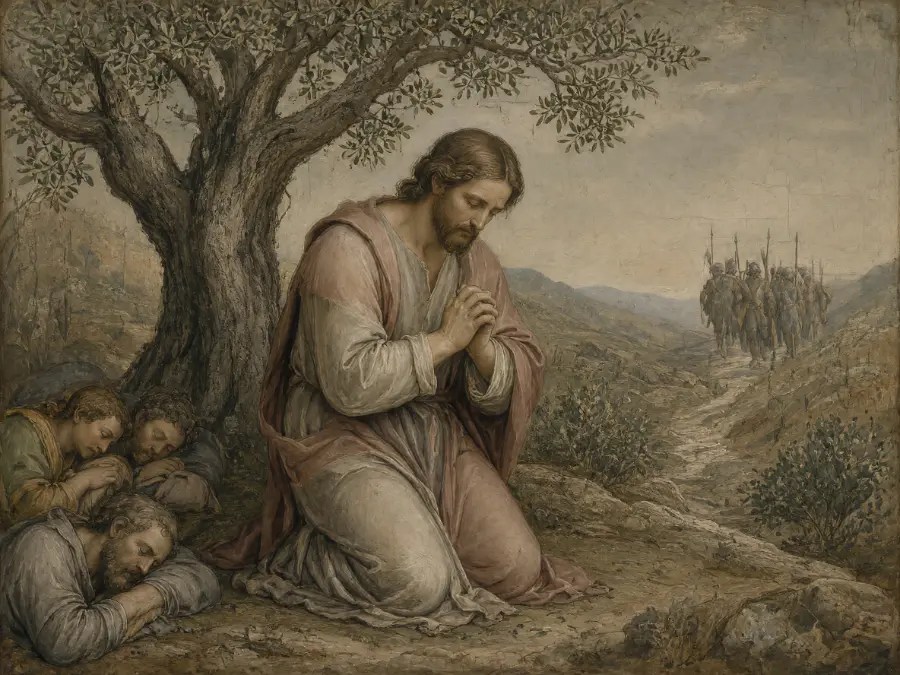
Proverbs 4:23
“Above all else, guard your heart, for everything you do flows from it.”
Reflection: A father is speaking to his son (Proverbs 4:20). After “guard your heart” he names what else to keep watch over: the mouth, kept from perversity; the eyes, fixed straight ahead; and the feet, kept from evil (4:24-27).
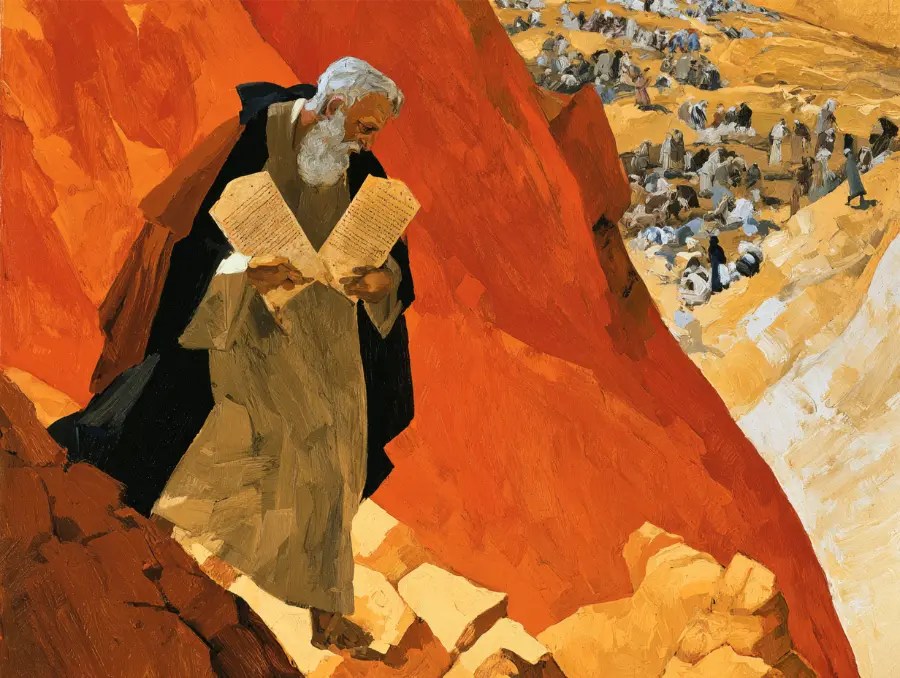
Proverbs 25:28
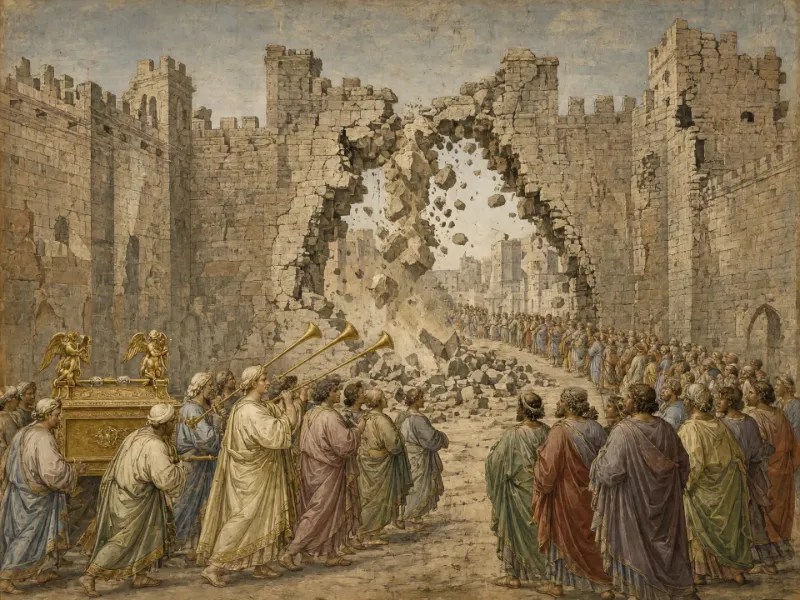
“Like a city whose walls are broken through is a person who lacks self-control.”
Reflection: The comparison is to a city whose walls have been broken through, open to anyone who comes. In this proverb the wall is self-control, a limit a person keeps on himself.

Matthew 5:37
“All you need to say is simply ‘Yes’ or ‘No’; anything beyond this comes from the evil one.”
Reflection: In the Sermon on the Mount, Jesus tells his hearers not to swear at all, whether by heaven, by the earth, by Jerusalem or by their own heads (Matthew 5:34-36). A plain “Yes” or “No” is to be enough, and he adds that “anything beyond this comes from the evil one.”
Limits on time and presence

Proverbs 25:17
“Seldom set foot in your neighbor’s house—too much of you, and they will hate you.”
Reflection: The proverb just before it sets the same limit on honey: “eat just enough— too much of it, and you will vomit” (Proverbs 25:16). Both sayings put a measure on something good, and this one applies it to visiting: a neighbor who sees too much of a guest comes to hate him.
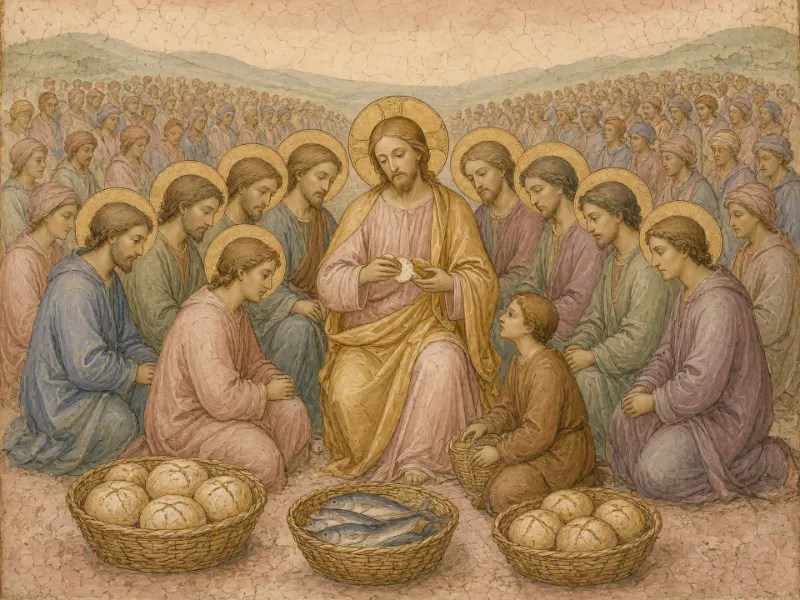
Luke 5:16
“But Jesus often withdrew to lonely places and prayed.”
Reflection: Luke places the verse after Jesus heals a man with leprosy and tells him to tell no one. The news spread anyway, and “crowds of people came to hear him and to be healed” (Luke 5:15). Luke says Jesus “often” withdrew to pray. Mark 1:35-38 records a similar morning: Jesus prays alone before dawn, and when Simon tells him “Everyone is looking for you!” he leaves for the nearby villages to preach there.
Shared burdens and one’s own load
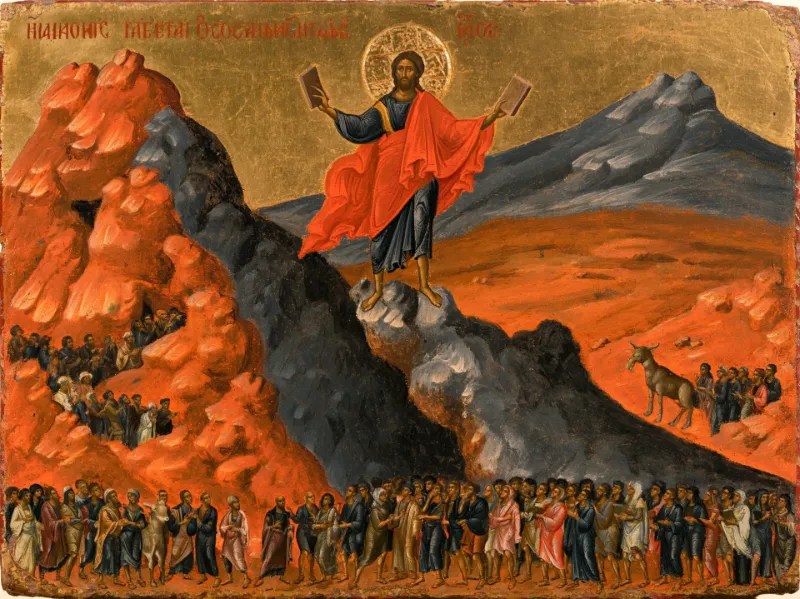
Galatians 6:2
“Carry each other’s burdens, and in this way you will fulfill the law of Christ.”
Reflection: Paul has just told the Galatians to restore gently someone caught in a sin, and to watch themselves while doing it (Galatians 6:1). The Greek word for burdens here is baros, a weight.

Galatians 6:5
“for each one should carry their own load.”
Reflection: Three verses after “carry each other’s burdens,” Paul says each should carry their own load, and the Greek word changes to phortion, a load. The sentence completes verse 4, where each one tests their own actions “without comparing themselves to someone else.”
2 Thessalonians 3:10
“For even when we were with you, we gave you this rule: ‘The one who is unwilling to work shall not eat.’”
Reflection: Paul reminds the Thessalonians that he and his companions worked “night and day” so as not to be a burden to anyone (2 Thessalonians 3:8), and he repeats the rule they gave then. It is aimed at the unwilling: believers who are “idle and disruptive”, “busybodies” (3:11). Even so, the church is to warn such a person “as you would a fellow believer” (3:15).
Choosing company

Proverbs 13:20
“Walk with the wise and become wise, for a companion of fools suffers harm.”
Reflection: In Hebrew the second half pairs ro’eh, companion, with yeroa’, suffers harm, two words that sound alike. The proverb before it describes the fools in question: they “detest turning from evil” (Proverbs 13:19).

Proverbs 22:24-25
“Do not make friends with a hot-tempered person, do not associate with one easily angered, or you may learn their ways and get yourself ensnared.”
Reflection: The danger named is imitation: a hot-tempered friend’s ways can be learned, and they become a snare. The saying that follows (22:26-27) warns against putting up security for another person’s debts, where the cost of the tie is “your very bed.”

2 Corinthians 6:14
“Do not be yoked together with unbelievers. For what do righteousness and wickedness have in common? Or what fellowship can light have with darkness?”
Reflection: The yoke comes from farming; the law forbade plowing “with an ox and a donkey yoked together” (Deuteronomy 22:10). Paul’s questions move from righteousness and wickedness to “the temple of God and idols” (6:16),, and he quotes the Lord’s call to “Come out from them and be separate” (6:17), followed by the promise “I will be a Father to you” (6:18).
Confronting, and leaving
Matthew 18:15
“If your brother or sister sins, go and point out their fault, just between the two of you. If they listen to you, you have won them over.”
Reflection: Jesus sets out steps. The first keeps the matter “just between the two of you”; if that fails, one or two witnesses come along, and then the church (Matthew 18:16-17). If the person refuses to listen even to the church, “treat them as you would a pagan or a tax collector.”

1 Corinthians 5:11
“But now I am writing to you that you must not associate with anyone who claims to be a brother or sister but is sexually immoral or greedy, an idolater or slanderer, a drunkard or swindler. Do not even eat with such people.”
Reflection: Paul corrects a misreading of an earlier letter: he did not mean the immoral “people of this world,” or “you would have to leave this world” (1 Corinthians 5:9-10). The limit applies to someone “who claims to be a brother or sister,” and Paul adds that “God will judge those outside” (5:13).

Titus 3:10-11
“Warn a divisive person once, and then warn them a second time. After that, have nothing to do with them. You may be sure that such people are warped and sinful; they are self-condemned.”
Reflection: Paul writes to Titus, whom he had left in Crete to appoint elders (Titus 1:5). The verse before tells him to avoid “foolish controversies and genealogies and arguments and quarrels about the law” (3:9). The divisive person receives two warnings, and after that Titus is to have nothing to do with them.
Matthew 10:14
“If anyone will not welcome you or listen to your words, leave that home or town and shake the dust off your feet.”
Reflection: Jesus gives this instruction to the Twelve as he sends them to “the lost sheep of Israel” (Matthew 10:5-6). They are to stay with a worthy person and let their peace rest on a home that deserves it; where they are not welcomed or heard, they leave and shake the dust off their feet.


Leave a Reply