
 English
 Chinese
 Dutch
 Arabic
 Spanish
 Portuguese
 Russian
 French
 Italian
 German
 Japanese
The Bible warns against measuring yourself by other people. Paul says that people who “compare themselves with one another” are “without understanding” (2 Corinthians 10:12), and his letters give the alternative: each person tests his own work (Galatians 6:4), and no one has anything he did not receive (1 Corinthians 4:7).
The Bible’s narratives, parables and a psalm show comparison at work: Samuel judging Eliab by his appearance (1 Samuel 16:7), Asaph envying the prosperity of the wicked (Psalm 73:3), vineyard workers grumbling at equal pay (Matthew 20:15), a Pharisee thanking God he is not like a tax collector (Luke 18:11), and Peter asking Jesus about another disciple (John 21:21-22). Envy appears among the works of the flesh in Galatians 5:21.
Paul on measuring yourself by one another

2 Corinthians 10:12
“Not that we dare to classify or compare ourselves with some of those who are commending themselves. But when they measure themselves by one another and compare themselves with one another, they are without understanding.”
Reflection: Paul is answering people at Corinth who were commending themselves. He will not “classify or compare” himself with them, and the two Greek verbs are both built on krino, to judge: egkrino, to count among, and sugkrino, to judge one person alongside another. The chapter closes with the standard Paul sets in place of mutual measuring: “‘Let the one who boasts, boast in the Lord.’ For it is not the one who commends himself who is approved, but the one whom the Lord commends” (10:17-18).
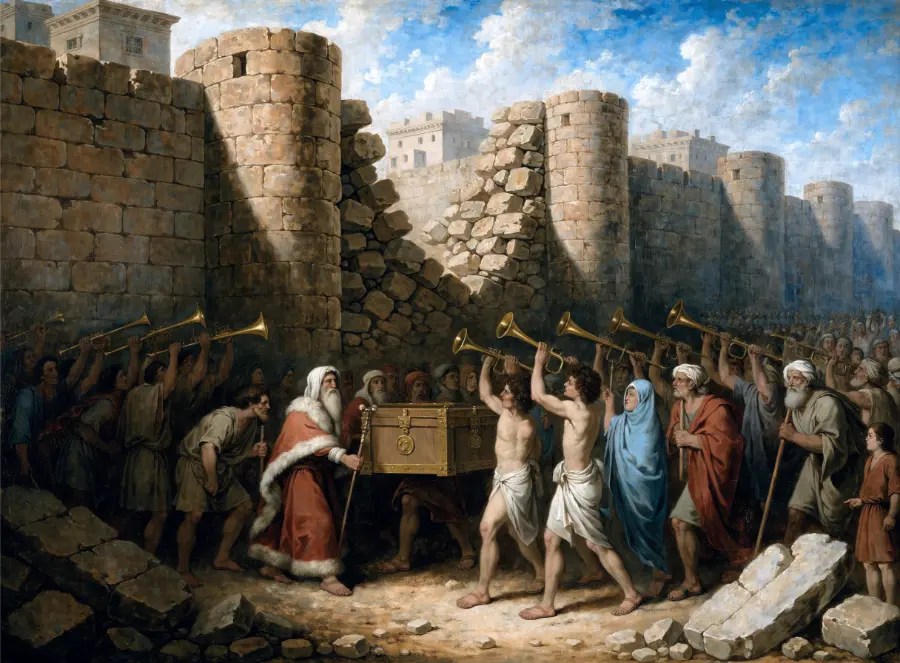
Galatians 6:4
“But let each one test his own work, and then his reason to boast will be in himself alone and not in his neighbor.”
Reflection: The verse comes in Paul’s instructions on restoring a believer caught in sin, just after the warning that “if anyone thinks he is something, when he is nothing, he deceives himself” (6:3). Paul places any reason to boast “in himself alone and not in his neighbor,” and the measure is a person’s own work. The next verse adds, “For each will have to bear his own load.”

1 Corinthians 4:7
“For who sees anything different in you? What do you have that you did not receive? If then you received it, why do you boast as if you did not receive it?”
Reflection: The church at Corinth was divided over its teachers, each member saying “I follow Paul,” or “I follow Apollos” (1 Corinthians 1:12). Paul has applied his argument to himself and Apollos “that none of you may be puffed up in favor of one against another” (4:6). His three questions answer that ranking: whatever makes one person differ from another was received, and he asks why anyone would boast of it “as if you did not receive it.”
Comparisons in the Bible’s narratives, parables and a psalm
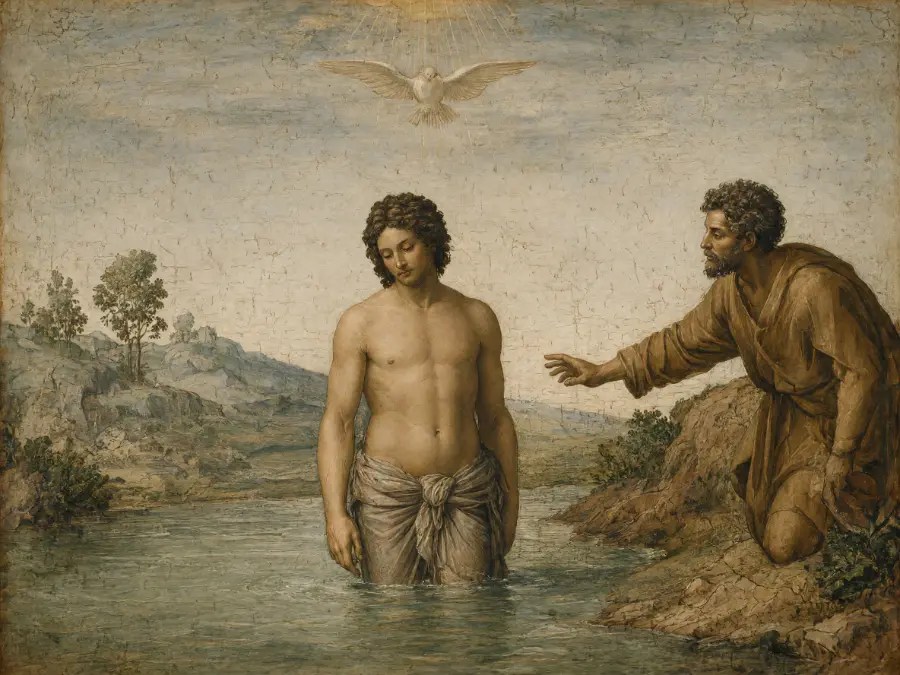
1 Samuel 16:7
“For the LORD sees not as man sees: man looks on the outward appearance, but the LORD looks on the heart.”
Reflection: Sent to anoint one of Jesse’s sons, Samuel looked at Eliab and thought, “Surely the Lord’s anointed is before him” (16:6). The Lord’s reply names what Samuel was judging by, “his appearance” and “the height of his stature.” Jesse made seven of his sons pass before Samuel, none was chosen, and the one anointed was the youngest, who had been left keeping the sheep (16:10-13).

Psalm 73:3
“For I was envious of the arrogant when I saw the prosperity of the wicked.”
Reflection: Asaph, named in the psalm’s heading, says his feet “had almost stumbled” (73:2) when he measured his life against the wicked, who “are not in trouble as others are” (73:5). The comparison led him to say, “All in vain have I kept my heart clean” (73:13). His view changed when he “went into the sanctuary of God; then I discerned their end” (73:17), and he goes on to say to God, “Whom have I in heaven but you? And there is nothing on earth that I desire besides you” (73:25).
Matthew 20:15
“Am I not allowed to do what I choose with what belongs to me? Or do you begrudge my generosity?”
Reflection: In Jesus’ parable, a vineyard owner pays the laborers hired at the eleventh hour the same denarius he had agreed with those hired early in the morning. The first group grumbled, “you have made them equal to us who have borne the burden of the day and the scorching heat” (20:12). The owner answers that he did them no wrong, since they received what they agreed to. Jesus told the parable after Peter asked what the disciples who had left everything would have (19:27), and it ends as the previous chapter does, with the last first and the first last (19:30; 20:16).

Luke 18:11
“The Pharisee, standing by himself, prayed thus: ‘God, I thank you that I am not like other men, extortioners, unjust, adulterers, or even like this tax collector.’”
Reflection: Luke introduces the parable as told “to some who trusted in themselves that they were righteous, and treated others with contempt” (18:9). The Pharisee’s prayer measures him against “other men” and then against “this tax collector” before listing his fasting and tithes. The tax collector’s prayer mentions no one else: “God, be merciful to me, a sinner!” Jesus says that the tax collector, “rather than the other,” went home justified (18:13-14).

John 21:21-22
“When Peter saw him, he said to Jesus, ‘Lord, what about this man?’ Jesus said to him, ‘If it is my will that he remain until I come, what is that to you? You follow me!’”
Reflection: Jesus had just told Peter by what kind of death he would glorify God and said to him, “Follow me” (21:18-19). Peter turned, saw the disciple whom Jesus loved, and asked about him. Jesus gives no information about the other disciple’s future and repeats the command. The next verse records that the saying spread as a promise that this disciple would not die, and corrects it: Jesus had said only, “If it is my will that he remain until I come, what is that to you?” (21:23).
When comparison turns into envy

Ecclesiastes 4:4
“Then I saw that all toil and all skill in work come from a man’s envy of his neighbor. This also is vanity and a striving after wind.”
Reflection: The Preacher traces work itself to rivalry: toil and skill “come from a man’s envy of his neighbor.” He calls it “vanity and a striving after wind,” and two verses later sets out another way: “Better is a handful of quietness than two hands full of toil and a striving after wind” (4:6).

Proverbs 14:30
“A tranquil heart gives life to the flesh, but envy makes the bones rot.”
Reflection: Two inner states are set side by side, and the proverb names what each does to the body: a tranquil heart “gives life to the flesh,” and envy “makes the bones rot.” Proverbs 23:17 names a particular envy to refuse: “Let not your heart envy sinners, but continue in the fear of the Lord all the day.”
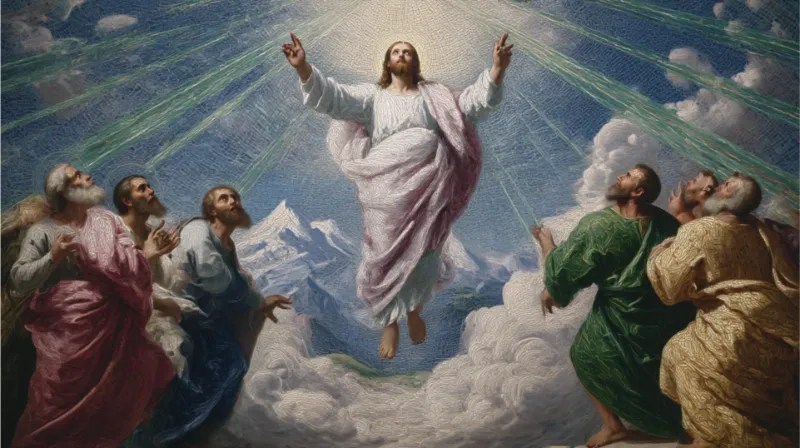
Galatians 5:26
“Let us not become conceited, provoking one another, envying one another.”
Reflection: Galatians 5 ends with this verse, after Paul’s contrast between the works of the flesh, a list that includes “jealousy,” “rivalries” and “envy” (5:20-21), and the fruit of the Spirit. Having said “let us also keep in step with the Spirit” (5:25), he names three ways believers set themselves against one another: conceit, provoking one another, and envying one another.

James 3:16
“For where jealousy and selfish ambition exist, there will be disorder and every vile practice.”
Reflection: James is contrasting two kinds of wisdom. The kind marked by “bitter jealousy and selfish ambition” in the heart is “earthly, unspiritual, demonic” (3:14-15), and this verse names what it produces among people: “disorder and every vile practice.” The wisdom from above, he goes on, is “pure, then peaceable, gentle, open to reason, full of mercy and good fruits, impartial and sincere” (3:17).
Different gifts in one body

Romans 12:3
“For by the grace given to me I say to everyone among you not to think of himself more highly than he ought to think, but to think with sober judgment, each according to the measure of faith that God has assigned.”
Reflection: Paul addresses “everyone among you,” and the sober judgment he asks for is measured “according to the measure of faith that God has assigned” to each. The next verses explain with the picture of a body: “the members do not all have the same function,” and believers have “gifts that differ according to the grace given to us” (12:4-6).

1 Corinthians 12:18-20
“But as it is, God arranged the members in the body, each one of them, as he chose. If all were a single member, where would the body be? As it is, there are many parts, yet one body.”
Reflection: A few verses earlier Paul imagines a foot saying, “Because I am not a hand, I do not belong to the body” (12:15), a member measuring itself against another and deciding it does not count. His answer is that God placed each member “as he chose,” and a body made of a single member would not be a body. In 12:21 the comparison runs the other way: Paul says the eye cannot tell the hand, “I have no need of you.”

1 Corinthians 12:26
“If one member suffers, all suffer together; if one member is honored, all rejoice together.”
Reflection: Here Paul closes his argument that God gave “greater honor to the part that lacked it, that there may be no division in the body” (12:24-25). The second half of the verse addresses the moment another member is honored: “all rejoice together.”

Philippians 2:3-4
“Do nothing from selfish ambition or conceit, but in humility count others more significant than yourselves. Let each of you look not only to his own interests, but also to the interests of others.”
Reflection: Counting others “more significant than yourselves” is set against “selfish ambition or conceit,” and Paul asks each believer to look to “the interests of others” as well as his own. The next verses give Christ as the pattern: he “did not count equality with God a thing to be grasped, but emptied himself” (2:6-7).
When the Bible points to another person as an example
Paul also asks readers to look at other people. He tells the Corinthians, “Be imitators of me, as I am of Christ” (1 Corinthians 11:1), and Hebrews 13:7 tells its readers to consider the outcome of their leaders’ way of life “and imitate their faith.” In 2 Corinthians 8 Paul describes the generosity of the churches of Macedonia in “a severe test of affliction” and “extreme poverty,” and says he mentions it “to prove by the earnestness of others that your love also is genuine” (8:8).
In 1 Corinthians 11:1, Hebrews 13:7 and 2 Corinthians 8:8, another person’s faith or generosity is held up to be imitated. People who commend themselves (2 Corinthians 10:12) or treat others with contempt (Luke 18:9) measure themselves against one another.


Leave a Reply