
 English
 Chinese
 Dutch
 Arabic
 Spanish
 Portuguese
 Russian
 French
 Italian
 German
 Japanese
Christian churches disagree. The Catholic, Orthodox, Lutheran and Methodist churches and the Assemblies of God teach that a believer can fall away from grace and be lost. Reformed and many Baptist churches teach that everyone God has truly saved will persevere to the end. Both sides build on the same passages, above all John 10 and Hebrews 6.

Which Bible passages does each side cite?
Christians who hold that salvation cannot be lost start with the words of Jesus in John 10:27–29: “My sheep hear my voice, and I know them, and they follow me. I give them eternal life, and they will never perish, and no one will snatch them out of my hand. My Father, who has given them to me, is greater than all, and no one is able to snatch them out of the Father’s hand.” They add Paul’s list of things that cannot separate believers “from the love of God in Christ Jesus our Lord” (Romans 8:38–39), his confidence that “he who began a good work in you will bring it to completion at the day of Jesus Christ” (Philippians 1:6), and Jesus’ words that his Father’s will is “that I should lose nothing of all that he has given me” (John 6:39).
Christians who hold that it can be lost point to the warnings. Hebrews 6:4–6 speaks of people “who have once been enlightened, who have tasted the heavenly gift, and have shared in the Holy Spirit,” and says that if they “then have fallen away,” it is impossible “to restore them again to repentance.” Second Peter 2:20–21 says of those who “escaped the defilements of the world through the knowledge of our Lord and Savior Jesus Christ” and were then “again entangled in them” that “it would have been better for them never to have known the way of righteousness.” In the parable of the sower, some “believe for a while, and in time of testing fall away” (Luke 8:13), and Paul names Hymenaeus and Alexander among those who “have made shipwreck of their faith” (1 Timothy 1:19–20).
Each side has a reading of the other’s texts. John Wesley argued in 1751 that John 10 states its own condition: “They are my sheep that hear my voice, that follow me in all holiness.” John Calvin, commenting on Hebrews 6, held that God gives the Spirit of regeneration to the elect alone, but “I cannot admit that all this is any reason why he should not grant the reprobate also some taste of his grace.” The Baptist Faith and Message cites 1 John 2:19 for those who leave the church: “They went out from us, but they were not of us; for if they had been of us, they would have continued with us.”

Which churches teach that you can lose your salvation?
The Catholic Church teaches that mortal sin destroys the life of grace. The Catechism says that “mortal sin destroys charity in the heart of man by a grave violation of God’s law” (1855). A sin is mortal when three conditions are met together: grave matter, full knowledge and deliberate consent (1857). Such sin “results in the loss of charity and the privation of sanctifying grace,” and if it is not redeemed by repentance and God’s forgiveness it “causes exclusion from Christ’s kingdom and the eternal death of hell” (1861). The same paragraph adds that people may judge an act, but “we must entrust judgment of persons to the justice and mercy of God.” A Catholic who has fallen in this way can be restored through the sacrament of Penance, as the Council of Trent taught in 1547.
The Orthodox Church does not speak of a moment after which a person is “already saved.” An answer published by the Orthodox Church in America puts it this way: “For Orthodox Christians, salvation is a process, not a once-and-done event.” The same answer reads Hebrews 6:4–6 as describing baptized people who reject Christ, and notes that since ancient times the Church has received repentant apostates back after a period of penance.
The Lutheran Augsburg Confession of 1530 condemns “the Anabaptists, who deny that those once justified can lose the Holy Ghost” (article 12). The Church of England’s Thirty-Nine Articles say, “After we have received the Holy Ghost, we may depart from grace given, and fall into sin, and by the grace of God we may arise again” (article 16), and the Methodist Articles of Religion repeat it almost word for word (article 12).
John Wesley put the Methodist position plainly in Serious Thoughts upon the Perseverance of the Saints (1751): “I believe a saint may fall away; that one who is holy or righteous in the judgment of God himself may nevertheless so fall from God as to perish everlastingly.” The Church of the Nazarene, a Wesleyan holiness church, states in its Articles of Faith: “We believe that all persons may fall from grace and apostatize and, unless they repent of their sins, be hopelessly and eternally lost.”
The Assemblies of God, a Pentecostal denomination, adopted a paper on the question in 1978. It says the church stands “between the extreme positions of Calvinism and Arminianism,” and that “the believer’s salvation is forfeited by rejecting Christ.” Its bylaws reject “the unconditional security position which holds that it is impossible for a person once saved to be lost.”
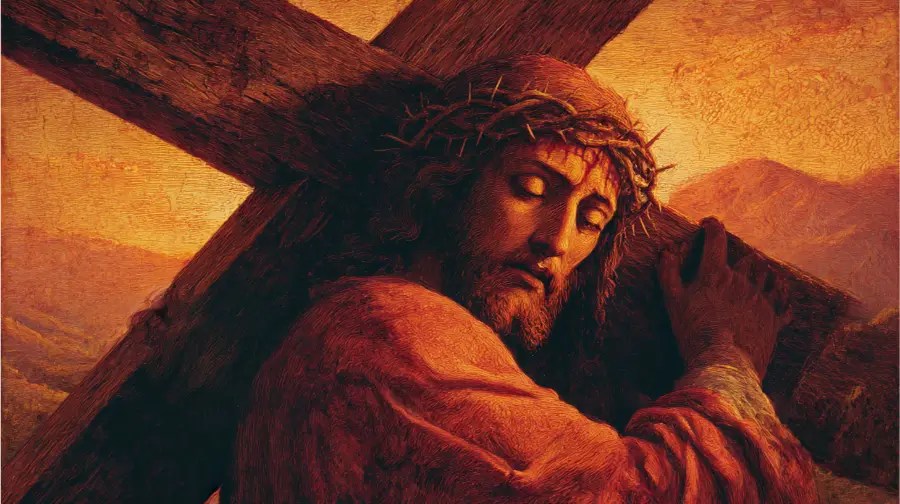
Once saved, always saved: the Reformed and Baptist teaching
The Reformed doctrine is called the perseverance of the saints. The Synod of Dort (1618–19) defined it against the Remonstrants, the followers of Jacobus Arminius. Their Remonstrance of 1610 had left open whether believers could fall away; by the time of the synod they held that they could. The Westminster Confession of 1646, drawn up by an assembly of Puritan clergy at Westminster, states it in chapter 17: “They, whom God hath accepted in his Beloved, effectually called, and sanctified by his Spirit, can neither totally nor finally fall away from the state of grace, but shall certainly persevere therein to the end, and be eternally saved.”
The Confession does not say believers cannot sin. It says they may “fall into grievous sins; and, for a time, continue therein,” grieving the Holy Spirit and bringing “temporal judgments upon themselves” (17.3). It rests their perseverance on God’s election, Christ’s intercession and the abiding of the Spirit, not on “their own free will” (17.2). The Canons of Dort add that God keeps believers through the gospel’s “exhortations, threats, and promises,” so on the Reformed view the warnings of Hebrews are one of the means God uses to keep his people.
The Southern Baptist Convention’s Baptist Faith and Message (2000) teaches the same: “All true believers endure to the end. Those whom God has accepted in Christ, and sanctified by His Spirit, will never fall away from the state of grace, but shall persevere to the end.”

Eternal security and the perseverance of the saints
The phrase “once saved, always saved” covers two different views. In the Reformed and Baptist confessions, a true believer is kept in faith and goes on believing, and someone who leaves for good is taken, on the strength of 1 John 2:19, never to have belonged to Christ. A second view, associated with the Free Grace movement, holds that a person who has once believed is saved even if he later stops believing. Charles Stanley, senior pastor of First Baptist Church in Atlanta from 1971 to 2020, wrote in Eternal Security: Can You Be Sure? (1990): “Even if a believer for all practical purposes becomes an unbeliever, his salvation is not in jeopardy.” The Westminster Confession and the Baptist Faith and Message do not teach this second view.

What happens to someone who leaves the faith?
The answer depends on the tradition. The Assemblies of God teaches that “a believer can be lost if he disregards the continuing checks of the Holy Spirit and reaches the point where he rejects Jesus as his Saviour,” though it leaves judgment of any particular person to God. The Catholic Catechism defines apostasy as “the total repudiation of the Christian faith” and lists it among sins against faith (2089), and the Council of Trent taught that those who have fallen from grace “may be again justified” through Penance. The Orthodox Church likewise receives repentant apostates back. Reformed and Baptist churches read a final departure as evidence that the person never truly belonged to Christ. Free Grace teachers such as Stanley hold that the person remains saved.
The traditions also differ on assurance. The Westminster Confession says that true believers “may, in this life, be certainly assured that they are in the state of grace” (18.1). The Council of Trent taught that no one “ought so far to presume as regards the secret mystery of divine predestination, as to determine for certain that he is assuredly in the number of the predestinate,” for “except by special revelation, it cannot be known whom God hath chosen unto Himself.” Trent and the Canons of Dort both draw on Paul’s command to “work out your own salvation with fear and trembling, for it is God who works in you” (Philippians 2:12–13), and Trent also quotes his warning to anyone who thinks he stands to “take heed lest he fall” (1 Corinthians 10:12).



Leave a Reply