
 English
 Chinese
 Dutch
 Arabic
 Spanish
 Portuguese
 Russian
 French
 Italian
 German
 Japanese
Lutherans and Catholics share the creeds, infant baptism, a liturgy descended from the medieval Mass, and belief that Christ’s body and blood are truly present in the bread and wine. They parted in the 1500s over how a sinner is made right with God, and over where authority lies, in Scripture alone or in Scripture and Tradition as the pope and bishops teach them.
In 1530 Luther’s followers set out their faith in the Augsburg Confession, and on October 31, 1999, in Augsburg itself, Lutherans and Catholics put their names to one declaration on the very question that had divided them. Together they confessed a sentence that begins “By grace alone.” They still kneel at separate altars, but on the question at the centre of the old quarrel they have learned to say some of the same words.
Lutherans are Protestants, and they belong to several church bodies that do not all agree with one another. The Lutheran World Federation, which includes the Evangelical Lutheran Church in America (ELCA), has 153 member churches and over 78 million members. The Lutheran Church–Missouri Synod (LCMS) and the Wisconsin Evangelical Lutheran Synod (WELS) stand outside it and hold stricter positions. The Catholic Church counted just over 1.422 billion members in 2024.
| Topic | Catholic | Lutheran |
|---|---|---|
| Final authority | Scripture and Tradition, interpreted by the pope and bishops | Scripture alone; the Lutheran Confessions explain it |
| How a sinner is justified | By grace, given in Baptism, which forgives sins and makes the person inwardly just | By grace alone, through faith alone, for Christ’s sake |
| The pope | Successor of Peter, with full authority over the whole Church | No authority over other churches by divine right |
| Sacraments | Seven | Two, Baptism and the Lord’s Supper; some count Absolution as a third |
| Communion | Bread and wine become Christ’s body and blood (transubstantiation) | Christ’s body and blood are present in, with and under the bread and wine |
| Who may receive | Catholics, with rare exceptions | ELCA: all baptized; LCMS and WELS: close communion |
| Mary and the saints | Honoured and asked to pray for us | Honoured as examples; not prayed to |
| After death | Purgatory for those not yet fully purified | No purgatory |
| Clergy and marriage | Latin-rite priests normally celibate | Pastors may marry |
| Women ordained | No | ELCA: yes; LCMS and WELS: no |
| Old Testament | 46 books | Shorter canon; the Apocrypha read but not held equal to Scripture |
Where Lutherans and Catholics differ
Each answer is quoted from the church’s own documents or from one of our articles.
Authority
Lutheran
We believe, teach, and confess that the sole rule and standard according to which all dogmas together with [all] teachers should be estimated and judged are the prophetic and apostolic Scriptures of the Old and of the New Testament alone, as it is written Ps. 119:105: Thy Word is a lamp unto my feet and a light unto my path.
From Formula of Concord, Epitome, Comprehensive Summary, Rule and Norm, 1
Catholic
It is clear therefore that, in the supremely wise arrangement of God, sacred Tradition, Sacred Scripture and the Magisterium of the Church are so connected and associated that one of them cannot stand without the others.
Salvation
Lutheran
Also they teach that men cannot be justified before God by their own strength, merits, or works, but are freely justified for Christ’s sake, through faith, when they believe that they are received into favor, and that their sins are forgiven for Christ’s sake, who, by His death, has made satisfaction for our sins.
Catholic
Justification is conferred in Baptism, the sacrament of faith. It conforms us to the righteousness of God, who makes us inwardly just by the power of his mercy.
Communion
Lutheran
We believe, teach, and confess that in the Holy Supper the body and blood of Christ are truly and essentially present, and are truly distributed and received with the bread and wine.
From Formula of Concord, Epitome, Article VII (The Lord's Supper), 1
Catholic
In the most blessed sacrament of the Eucharist "the body and blood, together with the soul and divinity, of our Lord Jesus Christ and, therefore, the whole Christ is truly, really, and substantially contained."
Sacraments
Lutheran
Therefore Baptism, the Lord’s Supper, and Absolution, which is the Sacrament of Repentance, are truly Sacraments. For these rites have God’s command and the promise of grace, which is peculiar to the New Testament.
From Apology of the Augsburg Confession, Article XIII (Of the Number and Use of the Sacraments)
Catholic
Christ instituted the sacraments of the new law. There are seven: Baptism, Confirmation (or Chrismation), the Eucharist, Penance, the Anointing of the Sick, Holy Orders and Matrimony.
Leadership
Lutheran
Each synod elects a bishop to oversee its ministry and administration. Together with the ELCA’s presiding bishop and secretary, these 65 bishops form the Conference of Bishops, offering leadership, counsel and vision for the whole church.
From ELCA, Church Structure: Synods (the LCMS is led by an elected president)
Catholic
The Pope, Bishop of Rome and Peter's successor, "is the perpetual and visible source and foundation of the unity both of the bishops and of the whole company of the faithful."
Praying to saints
Lutheran
But the Scripture teaches not the invocation of saints or to ask help of saints, since it sets before us the one Christ as the Mediator, Propitiation, High Priest, and Intercessor.
From Augsburg Confession, Article XXI (Of the Worship of Saints)
Catholic
In prayer, the pilgrim Church is associated with that of the saints, whose intercession she asks.
Purgatory
Lutheran
Therefore purgatory, and every solemnity, rite, and commerce connected with it, is to be regarded as nothing but a specter of the devil. For it conflicts with the chief article [which teaches] that only Christ, and not the works of men, are to help [set free] souls.
Catholic
All who die in God's grace and friendship, but still imperfectly purified, are indeed assured of their eternal salvation; but after death they undergo purification, so as to achieve the holiness necessary to enter the joy of heaven.
Contraception
Lutheran
Our thesis is that both God’s Word and practical considerations that arise counsel against voluntarily choosing not to conceive a child in marriage. We will not be arguing for this thesis on the grounds that contraception and family planning are in themselves wrong.
Catholic
The regulation of births represents one of the aspects of responsible fatherhood and motherhood. Legitimate intentions on the part of the spouses do not justify recourse to morally unacceptable means (for example, direct sterilization or contraception).
To see what Catholics teach beside what Lutherans teach on 55 questions, open our free tool, Compare Christian Denominations.
Is a Lutheran a Catholic?
A Lutheran is not a Roman Catholic. Yet Lutherans never meant to leave the catholic Church, in the old sense of the universal Church, and they still confess “one holy catholic and apostolic Church” in the Nicene Creed. In the Augsburg Confession of 1530, Luther’s followers closed the statement of their teaching by saying that it contained “nothing that varies from the Scriptures, or from the Church Catholic, or from the Church of Rome as known from its writers.”
In worship and on Communion, Lutherans stand closer to Catholics than most Protestants do. The reformers kept the Mass, and the Augsburg Confession says so plainly: “Falsely are our churches accused of abolishing the Mass,” and “Nearly all the usual ceremonies are also preserved.” On Christ’s presence in Communion, the Formula of Concord sided with “not only the Romish, but also the Greek Church” against Protestants who taught that Christ’s body is “not truly and essentially present here upon earth in the Sacrament.” On justification, authority and the pope, though, they stand with the rest of the Reformation.
How the split happened
On October 31, 1517, Martin Luther, an Augustinian friar and professor of theology, sent his Ninety-five Theses on indulgences to Archbishop Albrecht of Mainz. Pope Leo X excommunicated Luther on January 3, 1521, and the Diet of Worms later that year made him an outlaw. Many princes and towns agreed with him and did not enforce the ban, so the churches that followed his teaching survived.
The Catholic Church gave its answer at the Council of Trent, which met in stages from 1545 to 1563 and defined Catholic teaching on Scripture, justification, the sacraments and purgatory in terms that rejected the Lutheran positions.

Faith alone: the question at the centre
The Augsburg Confession says that people “cannot be justified before God by their own strength, merits, or works, but are freely justified” for Christ’s sake, through faith. Lutherans rest this on Paul, who wrote, “For we hold that one is justified by faith apart from works of the law” (Romans 3:28). Good works still matter to them, as the fruit that faith bears. The same confession says that this faith “is bound to bring forth good fruits” and that we “should not rely on those works to merit justification.”
The Catechism of the Catholic Church, quoting the Council of Trent, teaches that “Justification is not only the remission of sins, but also the sanctification and renewal of the interior man.” In Catholic teaching, then, grace changes a person from within. No one can earn the first grace, the Catechism says, but once grace has begun its work, a Christian moved by the Holy Spirit and by charity can “merit for ourselves and for others the graces needed for our sanctification.” Catholics point as well to the Letter of James: “You see that a person is justified by works and not by faith alone” (James 2:24).
On October 31, 1999, in Augsburg, the Lutheran World Federation and the Catholic Church signed the Joint Declaration on the Doctrine of Justification. In it they confessed together: “By grace alone, in faith in Christ’s saving work and not because of any merit on our part, we are accepted by God and receive the Holy Spirit, who renews our hearts while equipping and calling us to good works.” The declaration found “a consensus in basic truths” and said that the sixteenth-century condemnations on justification do not apply to the teaching it sets out.
The LCMS is not a member of the Lutheran World Federation, and it did not sign. Its FAQ still lists justification, “at the risk of oversimplification,” among “some of the major theological differences,” and says that Rome “still officially holds that faith, in order to save, must be accompanied by (or ‘infused with’) some ‘work’ or ‘love’ active within a Christian.”
Scripture alone, or Scripture and Tradition
The Formula of Concord, one of the Lutheran confessions, receives the Scriptures of the Old and New Testaments as “the only true standard by which all teachers and doctrines are to be judged.” Every other writing, the Lutheran confessions included, is accepted as far as it agrees with Scripture, as one of the “useful expositions and explanations.”
The Catholic Church “does not derive her certainty about all revealed truths from the holy Scriptures alone,” the Catechism says. “Both Scripture and Tradition must be accepted and honoured with equal sentiments of devotion and reverence.” It adds that the task of interpreting both “has been entrusted to the living teaching office of the Church alone,” meaning the pope and the bishops in communion with him.
The Catholic Old Testament has 46 books. Lutherans call the books outside the shorter Hebrew canon the Apocrypha, and they treat them as Luther did: “These books” are “not held equal to the Scriptures, but are useful and good to read.”
The pope
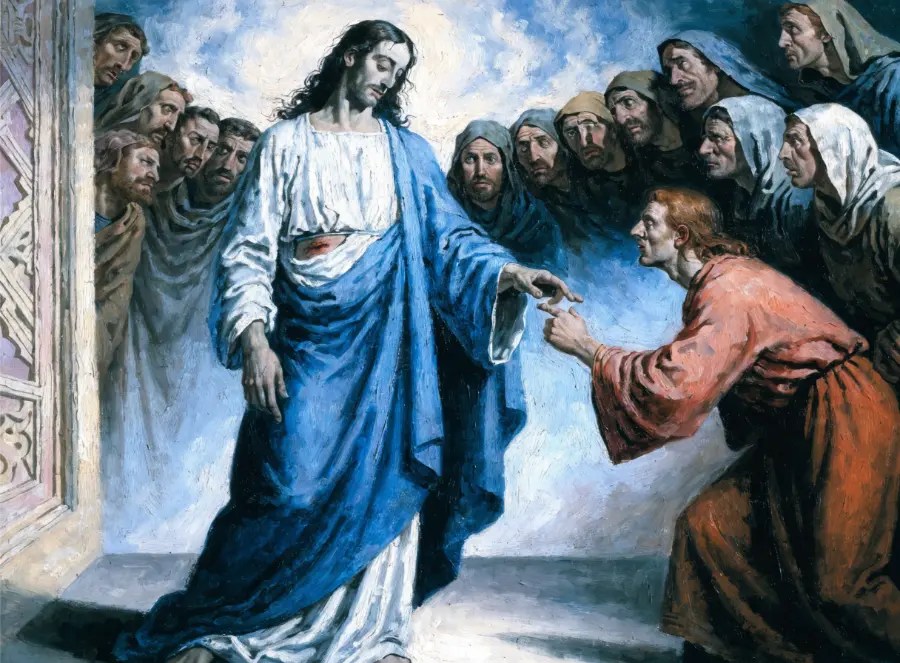
Jesus told Simon, “You are Peter, and on this rock I will build my church” (Matthew 16:18). The Catechism teaches that the pope, as Peter’s successor and “pastor of the entire Church has full, supreme, and universal power over the whole Church, a power which he can always exercise unhindered.” Under strict conditions, when he defines a doctrine of faith or morals for the whole Church, Catholics believe he teaches without error.
Catholics and Lutherans both see Peter’s faith in that rock. The Catechism itself says that “On the rock of this faith confessed by St. Peter, Christ built his Church,” but it also teaches that Christ made “Simon alone” the “rock” of his Church, with an office that continues. The Lutheran reformers took the rock to be Peter’s faith only, and quoted Chrysostom: “For He built His Church not upon man, but upon the faith of Peter.” What divides them, then, is whether an office follows from the verse. Luther went further in the Smalcald Articles and called the pope “the very Antichrist,” because in his view the papacy claimed that Christians could not be saved without submitting to it. The LCMS sets out the Lutheran position in its FAQ: Lutherans “do not believe the office of the papacy as such has any divine authority or that Christians need to submit to the Pope’s authority to be ‘true’ members of the visible church.”
Two sacraments or seven
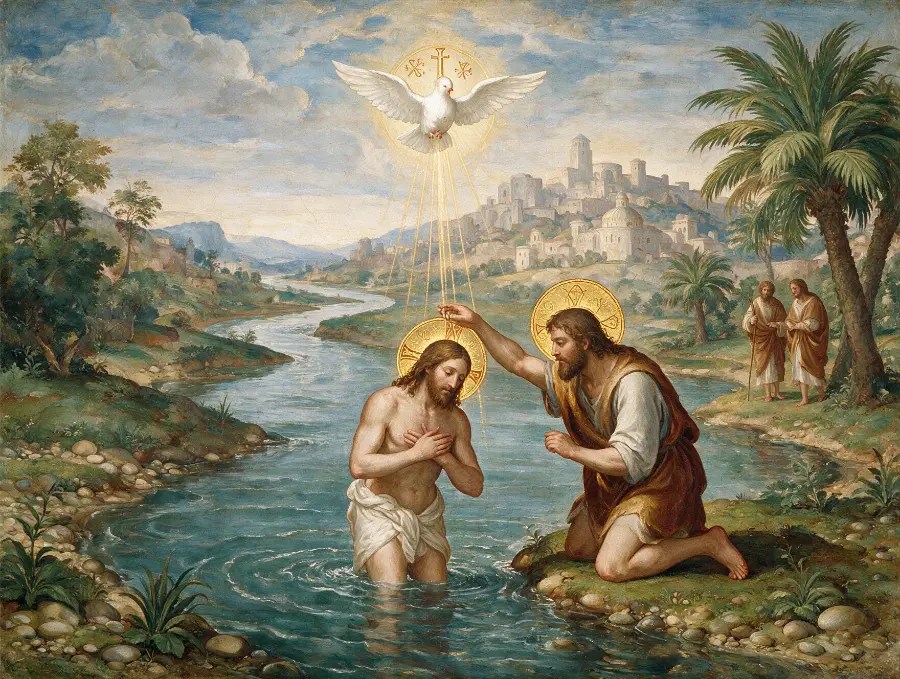
The Catechism names seven sacraments: “Baptism, Confirmation or Chrismation, Eucharist, Penance, Anointing of the Sick, Holy Orders and Matrimony.”
For Lutherans, a rite is a sacrament when God has commanded it and attached a promise of grace to it. By that test the Apology of the Augsburg Confession names three: “Baptism, the Lord’s Supper, and Absolution, which is the Sacrament of repentance, are truly Sacraments.” The LCMS says Lutherans “tend to speak of only two (or three),” Baptism and the Lord’s Supper, with Absolution sometimes counted as the third.
Lutherans did not throw the other four away, for the Apology calls confirmation and the anointing of the sick “rites received from the Fathers,” though God did not command them. It is “not unwilling to call ordination a sacrament” if ordination means the ministry of the Word, and as it says, “no prudent man will strive greatly concerning the number or the term.”
What happens to the bread and wine
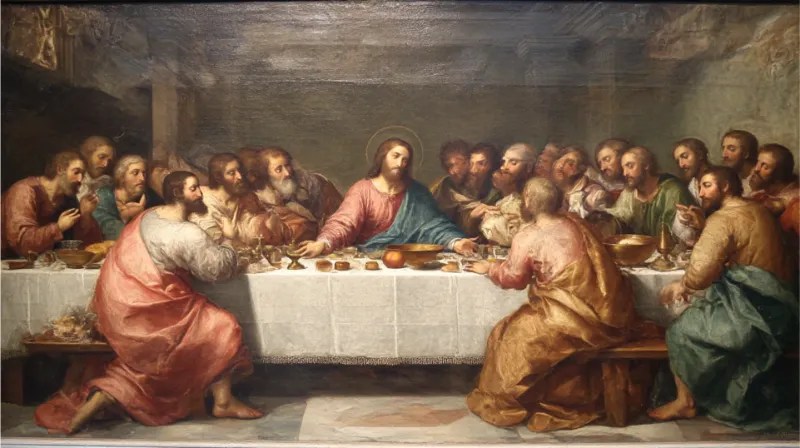
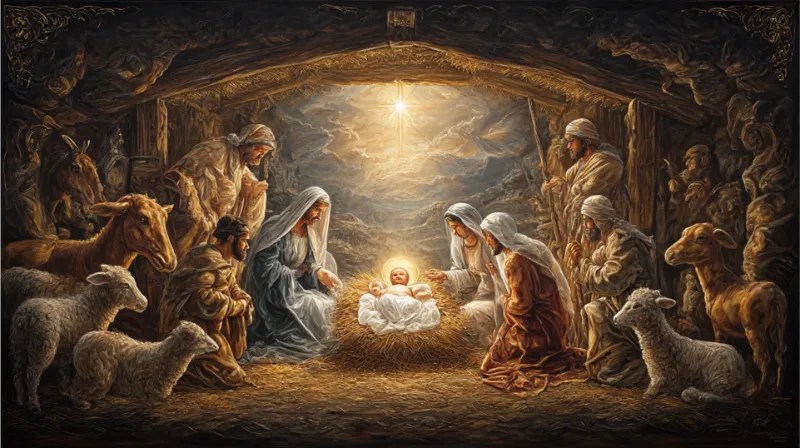
Both churches believe what Jesus said at the Last Supper, “Take, eat; this is my body” (Matthew 26:26), and neither treats Communion as a symbol only.
The Council of Trent, quoted in the Catechism, teaches that “by the consecration of the bread and wine there takes place a change of the whole substance of the bread into the substance of the body of Christ our Lord and of the whole substance of the wine into the substance of his blood.” The Church calls this transubstantiation. Because the change remains, Catholics keep the consecrated hosts in a tabernacle and adore Christ present in them outside Mass as well as during it.
Luther’s Small Catechism says of the Sacrament of the Altar: “It is the true body and blood of our Lord Jesus Christ, under the bread and wine, for us Christians to eat and to drink, instituted by Christ Himself.” The Formula of Concord explains that Lutherans say “in the bread, under the bread, with the bread” to reject transubstantiation and to describe a “sacramental union”: the bread stays bread, and Christ’s body is truly given with it. The LCMS calls transubstantiation “a philosophical explanation for a work of Christ’s almighty Word which we can only believe, not explain.”
The Catholic Church, for its part, does not regard the Lutheran Lord’s Supper as the full Eucharist. The Second Vatican Council said that “the ecclesial Communities which are separated from us” have “not retained the proper reality of the eucharistic mystery in its fullness, especially because of the absence of the sacrament of Orders.” In Rome’s view, Lutheran churches lack validly ordained priests. The same passage notes that these communities, at the Lord’s Supper, “profess that it signifies life in communion with Christ and look forward to His coming in glory.”
Can a Catholic take Communion at a Lutheran church?
The Catholic Church’s own law says no. Canon 844 allows Catholics who cannot reach a Catholic priest to receive Communion only from ministers “in whose Churches these sacraments are valid,” and Rome does not count Lutheran churches among them. So a Catholic may go to a Lutheran service but should not receive Communion there.
Catholics ask the same of Lutherans who come to Mass. The United States bishops’ guidelines, printed in many missalettes, say that members of churches “with whom we are not yet fully united are ordinarily not admitted to Holy Communion.” Canon law allows exceptions only in danger of death or another grave necessity, for a Christian who cannot reach a minister of their own church and who shares the Catholic faith about the sacrament.
What the Lutherans say depends on which church body you ask. The ELCA states: “All baptized persons are welcomed to Communion when they are visiting in the congregations of this church.” The LCMS and WELS practise close communion, generally communing only those who share their confession, and they ask visitors to speak with the pastor first. WELS explains that “all who commune together are expressing unity in the Christian faith.”
Mary and the saints
The Lutheran Confessions speak of Mary in high terms. The Formula of Concord calls her “the most blessed Virgin” and says “she is truly the mother of God, and nevertheless remained a virgin.”
Where the two churches part is over prayer to her and to the saints. The Catholic Church teaches that the saints in heaven “do not cease to intercede with the Father for us,” and Catholics ask Mary and the saints to pray for them. Catholics also believe that Mary was preserved from original sin and was “taken up body and soul into heavenly glory.” The Augsburg Confession grants that the saints’ memory “may be set before us, that we may follow their faith and good works,” but it says that “the Scripture teaches not the invocation of saints,” because it sets before us Christ alone as mediator. The Apology concedes that the saints in heaven pray for the Church in general, but Lutherans do not ask them for help.
Purgatory
The Catechism teaches that “All who die in God’s grace and friendship, but still imperfectly purified, are indeed assured of their eternal salvation; but after death they undergo purification, so as to achieve the holiness necessary to enter the joy of heaven.” It calls this purification purgatory, and Catholics pray and offer Masses for the dead.
Lutherans reject purgatory, and the LCMS gives two reasons: “we can find no scriptural basis for it,” and it conflicts with Scripture’s teaching “that after death the soul goes directly either to heaven (in the case of a Christian) or hell.” They point to Jesus’ promise to the thief on the cross that he would be in paradise that same day (Luke 23:43).

Priests, pastors and marriage
Catholic priests in the Latin Church are normally chosen from men who live a celibate life and intend to remain so “for the sake of the kingdom of heaven.” The Eastern Catholic Churches ordain married men as deacons and priests but choose bishops only from among celibates.
By 1530 Lutheran priests had begun to marry, and the Augsburg Confession defended them, saying that the priests “married wives, and taught that it was lawful for them to contract matrimony.” Lutheran pastors today are free to marry.
The Catholic Church ordains only men: “Only a baptized man (vir) validly receives sacred ordination.” In 1970 two American Lutheran bodies, the Lutheran Church in America and the American Lutheran Church, voted to ordain women. That November Elizabeth Platz became the first woman in North America ordained by a Lutheran church body. The ELCA ordains women today, while the LCMS and WELS do not, citing 1 Corinthians 14 and 1 Timothy 2.
Where the two churches stand now
Lutherans and Catholics have held formal international dialogue since 1967, and in 2013 they published a shared account of the Reformation, From Conflict to Communion. The Joint Declaration names the questions still to be settled, among other topics “the relationship between the Word of God and church doctrine, as well as ecclesiology, ecclesial authority, church unity, ministry, the sacraments, and the relation between justification and social ethics.” Until they are settled, the two churches do not share Communion, and the Catholic Church does not recognize Lutheran ordinations.
For now, then, Lutherans and Catholics go to separate tables, and at both of them the words spoken over the bread are the ones Jesus said at the Last Supper: “Take, eat; this is my body” (Matthew 26:26).
Related reading
- Protestant vs Lutheran: What’s the difference?
- Catholic vs Protestant
- Episcopal vs Roman Catholic
- Which is the Most Conservative Lutheran Synod?
- Calvinism vs Lutheranism
- What Do Catholics Believe? God, the Mass, the Pope and Mary
- What Do Lutherans Believe? Grace, Baptism and the Lord’s Supper


Leave a Reply