
 English
 Chinese
 Dutch
 Arabic
 Spanish
 Portuguese
 Russian
 French
 Italian
 German
 Japanese
Scripture never tells us whether Adam and Eve went to heaven. Genesis follows them through their disobedience, out of Eden and up to Adam’s death at 930 years, and it never mentions Eve’s death at all. Catholic and Orthodox tradition holds that Christ freed them when he went down to the dead, and the Orthodox Church honors them as saints.
The hope starts in Genesis itself. Before God sent our first parents out of the garden, “the Lord God made for Adam and for his wife garments of skins and clothed them” (Genesis 3:21). He corrected them, and he covered them. Christians have read the rest of their story in that light ever since, down to an ancient Holy Saturday homily in which Christ goes looking for Adam “as for a lost sheep.”
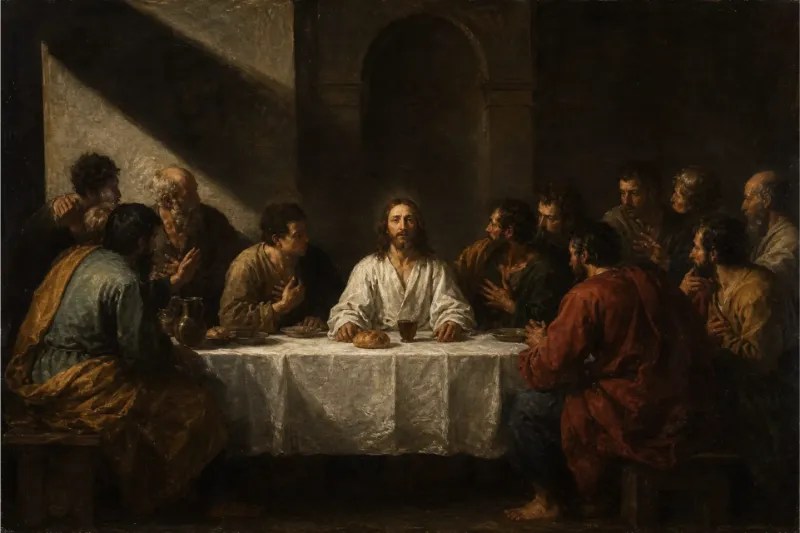
What does Genesis say happened to Adam and Eve?
Genesis 3 tells the story of the first sin and what followed it. When God questioned them, each passed the blame along. Adam said, “The woman whom you gave to be with me, she gave me fruit of the tree, and I ate,” and Eve said, “The serpent deceived me, and I ate” (Genesis 3:12–13). God cursed the serpent (3:14) and the ground (3:17), and told Adam that he would work the ground until he returned to it: “for you are dust, and to dust you shall return” (Genesis 3:19).
The same chapter holds the verses that later Christians read as signs of hope. God promised enmity between the serpent and the woman, and between their offspring: “he shall bruise your head, and you shall bruise his heel” (Genesis 3:15). Adam named his wife Eve “because she was the mother of all living” (3:20), and “the Lord God made for Adam and for his wife garments of skins and clothed them” (3:21). Then God sent them out of Eden and placed “the cherubim and a flaming sword that turned every way to guard the way to the tree of life” (3:24).
Genesis 4 gives Eve two recorded sayings. At Cain’s birth she said, “I have gotten a man with the help of the Lord” (Genesis 4:1), and at Seth’s, “God has appointed for me another offspring instead of Abel, for Cain killed him” (4:25). Genesis 5 closes Adam’s life in one line: “Thus all the days that Adam lived were 930 years, and he died” (Genesis 5:5). Their life between Eden and those deaths is traced in what happened to Adam and Eve after they left Eden.
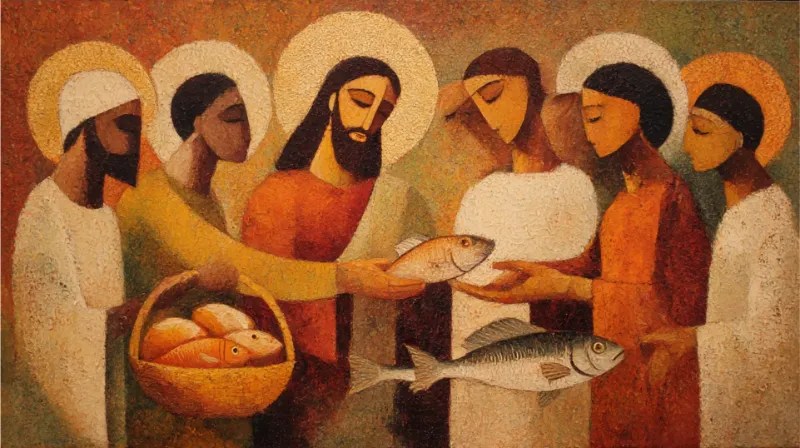
How did Adam and Eve die?
Genesis does not say. It gives Adam’s age at death and no cause, and it does not record Eve’s death at all. In the King James Version her name appears only four times, in Genesis 3:20 and 4:1, 2 Corinthians 11:3 and 1 Timothy 2:13.
A fuller account appears in the Apocalypse of Moses, the Greek version of an apocryphal work known as the Life of Adam and Eve. Many scholars date a lost Jewish original to the first century BC or AD, though some argue the book was Christian from the start; the Latin version is thought to have emerged in the fourth century, and its oldest known manuscripts date from the ninth. In it, Adam “lived nine hundred and thirty years; and he fell sick.” After his death God hands him to the archangel Michael with the words, “Lift him up into Paradise unto the third Heaven, and leave him there until that fearful day of my reckoning.” Eve dies six days later. The Jewish and Christian accounts of their deaths are set side by side in how Adam and Eve died.
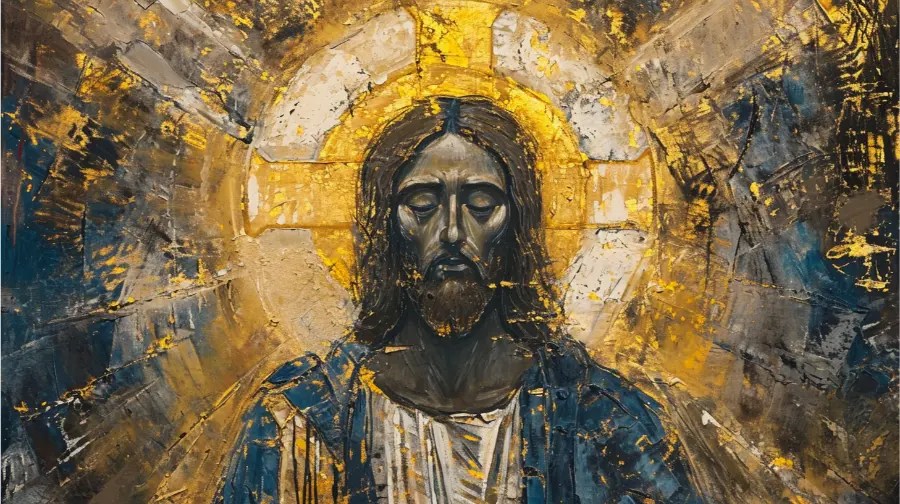
Does the Bible say whether Adam and Eve were saved?
No verse settles it. Genesis does not record their repentance or their forgiveness. Hebrews 11, the New Testament’s roll of people commended for their faith, begins with their son: “By faith Abel offered to God a more acceptable sacrifice than Cain” (Hebrews 11:4). Adam and Eve are not named in it.
The New Testament mentions Adam mainly to explain Christ. Luke’s genealogy of Jesus ends with “the son of Adam, the son of God” (Luke 3:38). Paul writes that “sin came into the world through one man, and death through sin” (Romans 5:12), calls Adam “a type of the one who was to come” (Romans 5:14), and says, “For as in Adam all die, so also in Christ shall all be made alive” (1 Corinthians 15:22). Eve appears as the one the serpent deceived (2 Corinthians 11:3) and as formed after Adam (1 Timothy 2:13). None of these passages says where either of them went after death.
Two other kinds of passage bear on the question. The Book of Wisdom, which Catholic and Orthodox churches hold as Scripture and Protestants do not, says of Adam: “Wisdom protected the first-formed father of the world, when he alone had been created; she delivered him from his transgression, and gave him strength to rule all things” (Wisdom 10:1–2). And three New Testament passages speak of Christ among the dead. He “went and proclaimed to the spirits in prison” (1 Peter 3:19), “the gospel was preached even to those who are dead” (1 Peter 4:6), and he “had also descended into the lower regions, the earth” (Ephesians 4:9). The Catholic Catechism cites all three in its teaching on Christ’s descent into hell.
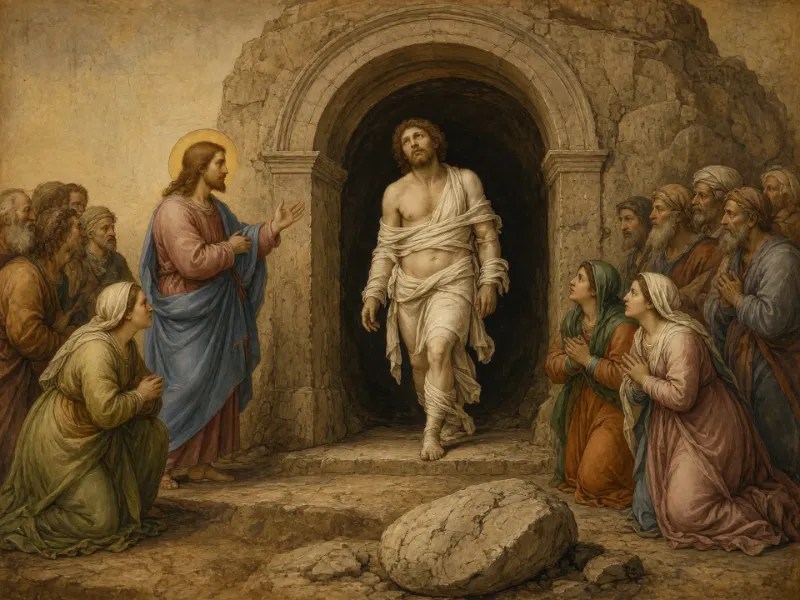
Did the early church believe Adam was saved?
Irenaeus of Lyons, a Greek bishop of the second century, argued the point at length in Against Heresies (3.23). He wrote against Tatian, who denied that Adam could be saved, and held that Christ came to “save that very man who had been created after His image and likeness, that is, Adam.” He observed that God “pronounced no curse against Adam personally, but against the ground,” and he read the girdle of fig leaves as a sign that Adam “showed his repentance by his conduct.” He concluded: “All therefore speak falsely who disallow his (Adam’s) salvation.”
Augustine, answering a question from Bishop Evodius about 1 Peter 3 in AD 414, wrote: “As to the first man, the father of mankind, it is agreed by almost the entire Church that the Lord loosed him from that prison … although the authority of the canonical Scriptures cannot be brought forward as speaking expressly in its support.” He added that the words of the Book of Wisdom bore out this opinion more than any other text (Letter 164).
Are Adam and Eve saints in the Catholic Church?
The Roman Catholic Church does not list Adam and Eve on its calendar of saints. The University of Notre Dame’s saints page notes that they “are not on the calendar of saints in the Roman Catholic Church,” although Christians in the Middle Ages “used December 24 to recall the Genesis story that tells of their fall” as a way to prepare for Christmas.
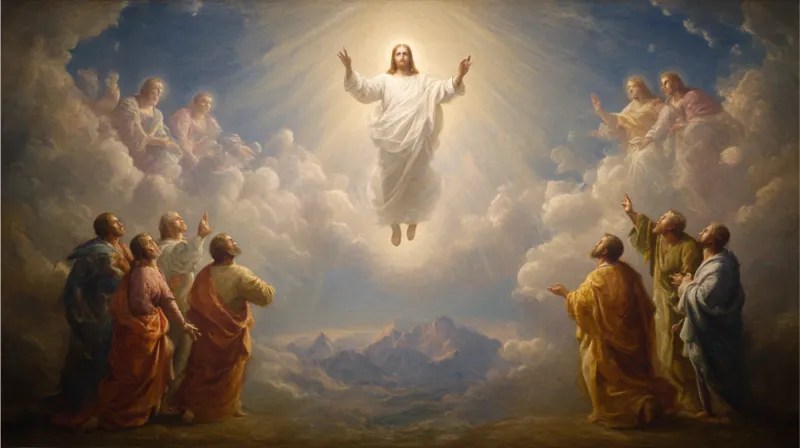
The Catechism of the Catholic Church teaches that the dead Christ went down to the realm of the dead to “free the just who had gone before him,” and that “He opened heaven’s gates for the just who had gone before him” (paragraphs 633 and 637). It then quotes an ancient homily for Holy Saturday: “He has gone to search for Adam, our first father, as for a lost sheep. Greatly desiring to visit those who live in darkness and in the shadow of death, he has gone to free from sorrow Adam in his bonds and Eve, captive with him – He who is both their God and the son of Eve” (paragraph 635).
Do Orthodox Christians honor Adam and Eve as saints?
Yes. The Orthodox Church in America’s calendar for the Sunday before the Nativity begins: “The Sunday before the Nativity of Christ we commemorate Adam and Eve (the first-created), the righteous Abel, son of Adam, the righteous Seth,” and continues through the ancestors of Christ. Notre Dame’s page says the Eastern Orthodox “explicitly honor these two figures as saints because they were redeemed by Christ during his harrowing of hell.”
The belief is painted into the Anastasis, or Resurrection, the primary icon of Pascha, or Easter. Fr. Jeremy McKemy’s explanation of the icon says: “The two figures whom Christ has grasped and is pulling from tombs are Adam and Eve.”
What do Protestants believe about Adam and Eve?
Protestants do not count the Book of Wisdom as Scripture, and Protestant writers who take up the question argue from Genesis. Matthew Henry, a Presbyterian minister who died in 1714, wrote in his commentary that if Adam chose the name Eve himself, “it was an instance of his faith in the word of God.” Of the garments of skins he wrote that God corrected his disobedient children but “does not disinherit them.”
The Westminster Confession of 1646, a Presbyterian creed, does not name Adam and Eve. It teaches that the elect under the Old Testament were built up “in faith in the promised Messiah, by whom they had full remission of sins, and eternal salvation” (7.5).
Christians have long heard the first promise of that Messiah on the very day Adam and Eve lost Eden: “he shall bruise your head, and you shall bruise his heel” (Genesis 3:15). They left the garden with that word in their ears, clothed by the God they had disobeyed.


Leave a Reply