
 English
  Chinese
  Dutch
Dutch  Arabic
  Spanish
  Portuguese
  Russian
  French
  Italian
  German
  Japanese
 The New Testament records the deaths of only two of the Twelve. Judas Iscariot hanged himself, and Herod Agrippa I had James son of Zebedee killed with the sword in AD 44. Early tradition adds that Peter was crucified in Rome under Nero, that most of the others died as martyrs, and that John died old at Ephesus.
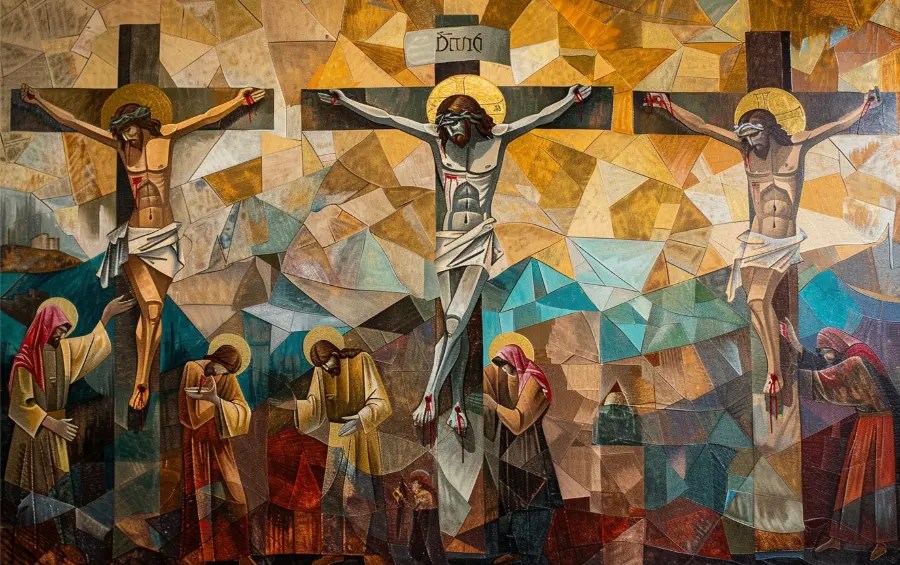
How did each of the apostles die?
The table gives the most common tradition for each of the Twelve, for Matthias, who replaced Judas, and for Paul, and the earliest writing that reports it. Only the entries for Judas and James son of Zebedee come from Scripture.
| Apostle | Where tradition sends him | How he died | Earliest source |
|---|---|---|---|
| Peter | Asia Minor, Rome | Crucified in Rome, head downward | 1 Clement 5 (late 1st century); Acts of Peter (late 2nd century) |
| Andrew | Scythia, Greece | Crucified at Patras | Acts of Andrew (late 2nd century); Origen |
| James son of Zebedee | Jerusalem | Killed with the sword, AD 44 | Acts 12:2 |
| John | Asia Minor (Ephesus) | Old age | Irenaeus (late 2nd century) |
| Philip | Phrygia | Buried at Hierapolis; crucified in later legend | Polycrates (about 190) |
| Bartholomew | India, Armenia | Flayed and beheaded in Armenia | Later tradition |
| Matthew | Judea, “Ethiopia” | Unknown; accounts disagree | Heracleon (2nd century) says he was not martyred |
| Thomas | Parthia, India | Speared by four soldiers | Acts of Thomas (early 3rd century) |
| James son of Alphaeus | Judea, Gaza, Egypt | Crucified in Egypt (Orthodox tradition) | Later tradition |
| Jude (Thaddaeus) | Syria, Mesopotamia, Persia | Martyred in Persia or Armenia | Later tradition |
| Simon the Zealot | Persia, Black Sea | Martyred; sawn apart or crucified | Later tradition |
| Judas Iscariot | None | Hanged himself | Matthew 27:5; Acts 1:18 |
| Matthias | Judea, Black Sea coast | Stoned and beheaded, or crucified | Later tradition |
| Paul | Asia Minor, Greece, Rome | Beheaded in Rome | 1 Clement 5; Tertullian (about 200) |
In what order did the apostles die?
Only a few dates are known, so a complete order cannot be given. What the sources allow is this:
- Judas Iscariot, during the week of the crucifixion. Matthew places his death after Jesus “was condemned” (Matthew 27:3–5).
- James son of Zebedee, in AD 44, the first of the Twelve to be killed for his faith. “And he killed James the brother of John with the sword” (Acts 12:2). Acts calls the king Herod; Eusebius identifies him as Agrippa.
- Peter and Paul, in Rome under Nero. Britannica dates Peter’s death to AD 64, the year Nero’s persecution of Christians began. Dionysius, bishop of Corinth in the second century, wrote that the two “suffered martyrdom at the same time.”
- John, last of all. Irenaeus, writing late in the second century, said John “remained among them until the time of Trajan,” who became emperor in AD 98.
The others died between those points, but no early source gives a year for any of them. Late traditions supply dates, such as AD 63 for Matthias, without earlier evidence behind them.
Were all the apostles martyred?
No. Judas took his own life, and tradition has always held that John died of old age. For several others the evidence is thin or divided. In the second century the Valentinian teacher Heracleon, quoted by Clement of Alexandria (Stromata 4.9), named Matthew, Philip, Thomas and Levi among the saved who had not made a public confession before the authorities and died for it.
Historians rate the traditions very differently. Sean McDowell, who studied the question for his doctorate, concluded that “we can have more confidence in the martyrdoms of apostles such as Peter, Paul and James the brother of John (and probably Thomas and Andrew),” and that the evidence for others, such as Matthias and James son of Alphaeus, “is late and filled with legendary accretion.” Kyle Smith, a historian of early Christian martyrs, is more skeptical: apart from Acts on James, and arguably the early traditions about Peter and Paul, he regards the other stories as late legends.
The question matters to a common Christian argument: the apostles would not have died for a claim they knew was false, so they sincerely believed they had seen Jesus risen. McDowell holds that the argument needs only their willingness to suffer and the absence of any account that one of them recanted. Smith answers that sincere belief does not prove the thing believed.
How did Peter and Paul die?
Peter’s death is hinted at in the Gospel of John. Jesus tells him, “when thou shalt be old, thou shalt stretch forth thy hands, and another shall gird thee, and carry thee whither thou wouldest not,” and the Gospel adds, “This spake he, signifying by what death he should glorify God” (John 21:18–19). Clement of Rome, writing to the Corinthians late in the first century, says Peter “suffered martyrdom,” without saying how or where.
The first account of the crucifixion upside down is in the apocryphal Acts of Peter, from the late second century, where Peter asks his executioners to “crucify me thus, with the head downward and not otherwise.” Origen, as reported by Eusebius, says Peter “was crucified head-downwards; for he had requested that he might suffer in this way.” The reason usually given, that he felt unworthy to die as Jesus died, comes from Jerome in 392. Jerome wrote that Peter asserted “he was unworthy to be crucified in the same manner as his Lord.”
Paul was not one of the Twelve, but he called himself an apostle and is usually counted with them. Clement of Rome says Paul was “seven times thrown into captivity,” was “stoned,” and “suffered martyrdom under the prefects.” Tertullian, around 200, says that in Rome “Paul wins his crown in a death like John’s,” meaning John the Baptist, who was beheaded. Eusebius states it plainly: “Paul was beheaded in Rome itself.”
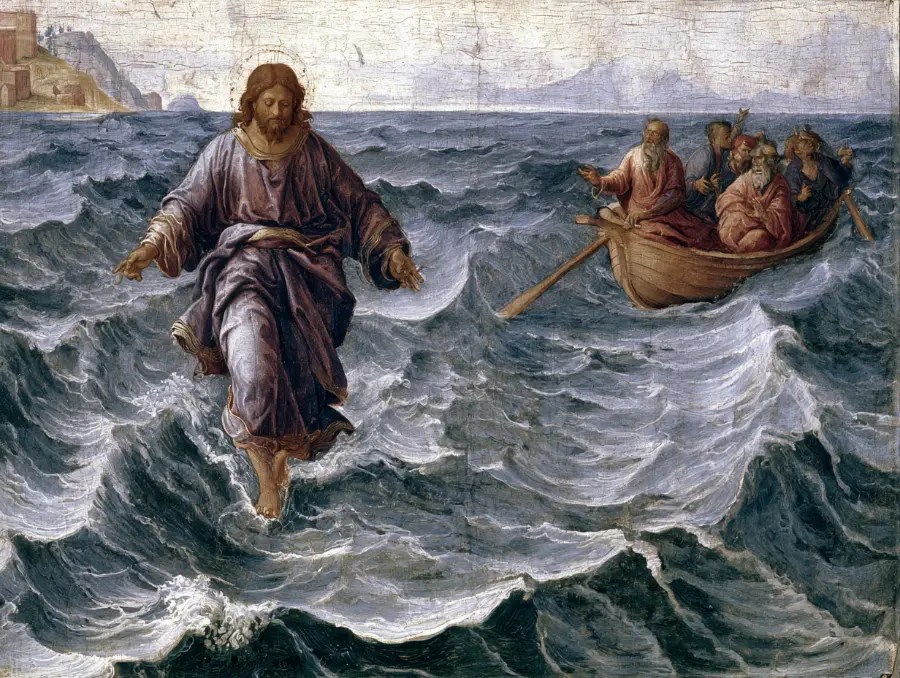
How did James and John, the sons of Zebedee, die?
James son of Zebedee is the only apostle whose martyrdom Scripture records. Clement of Alexandria added a story, preserved by Eusebius: the man who brought James to trial was so moved by his testimony that he confessed he was a Christian too. On the way to execution he asked James to forgive him. James considered a moment, wished him peace and kissed him, “and thus they were both beheaded at the same time.” A later tradition holds that his body was taken to Santiago de Compostela in Spain, though the Catholic Encyclopedia of 1910 says the authenticity of the relic “has been questioned and is still doubted.”
John is the one apostle whom tradition says was not killed. Jesus’s words to Peter about him led to a rumor “that that disciple should not die,” which the Gospel corrects: “yet Jesus said not unto him, He shall not die” (John 21:23). Tertullian says John was “plunged, unhurt, into boiling oil” in Rome and then exiled to an island, which Eusebius identifies as Patmos, before returning to Ephesus. Polycrates, bishop of Ephesus around 190, wrote that John “sleeps at Ephesus.”
How did Andrew, Philip and Bartholomew die?
Andrew, Peter’s brother, was the first of the two to follow Jesus: “He first findeth his own brother Simon, and saith unto him, We have found the Messias” (John 1:41). The Orthodox call him the First-Called. Origen, as quoted by Eusebius, assigns him Scythia, the lands north of the Black Sea. The Acts of Andrew, from the late second century, place his death at Patras in Greece under the proconsul Egeas, and tradition says he was bound rather than nailed to the cross to prolong his suffering. The X-shaped cross that bears his name is a late addition: the Catholic Encyclopedia notes that the evidence for it “seems to be no older than the fourteenth century.”
Philip came from Bethsaida, the town of Peter and Andrew (John 1:44). Polycrates of Ephesus wrote around 190 that “Philip, one of the twelve apostles, … sleeps in Hierapolis,” in Phrygia. Early writers sometimes confused him with Philip the evangelist, one of the seven deacons, who also had prophesying daughters (Acts 21:8–9). The apocryphal Acts of Philip also place his death at Hierapolis. Accounts of how he died, including crucifixion, come from these later legends.
Bartholomew is usually identified with Nathanael (John 1:45–51). Eusebius reports that when the teacher Pantaenus reached India in the late second century, he found that “Bartholomew, one of the apostles, had preached to them.” The Orthodox Church in America says he also preached in Greater Armenia and was seized at Alban, which it identifies with Baku, where he was crucified upside down, then flayed and beheaded.
How did Matthew and Thomas die?
Matthew, the tax collector also called Levi (Mark 2:14), is said by Irenaeus to have preached first among the Jews. Most ancient writers send him to a region they called Ethiopia, which the Catholic Encyclopedia takes to mean a land south of the Caspian Sea, not Ethiopia in Africa. Heracleon’s statement that Matthew was not martyred conflicts with later tradition, and the Catholic Encyclopedia concludes that “it is not known whether he was burned, stoned, or beheaded.” The story that he was stabbed at the altar comes from later legend.
Thomas was assigned Parthia, in what is now Iran, according to Origen. The Acts of Thomas, written in the early third century, open with the apostles dividing the world by lot, with India falling to Thomas. They end with a king handing him to “four soldiers and an officer,” who “pierced him with their spears.” A king named in the story, Gundaphorus, matches Gondophares, who ruled in what is now Afghanistan and Pakistan in the first century, as coins and an inscription show. The Syriac-rite Christians of the Malabar coast of India trace their church to Thomas, and local tradition places his death at Mylapore, now part of Chennai.
Which James was thrown from the temple?
The story of a James thrown from the pinnacle of the temple and beaten to death with a fuller’s club is not about James son of Alphaeus. It comes from Hegesippus, a second-century writer quoted by Eusebius, and it is about “James, the brother of the Lord,” called James the Just, who led the church in Jerusalem. The Jewish historian Josephus also records his death: the high priest Ananus had “the brother of Jesus, the so-called Christ, James by name,” condemned “to be stoned.” Britannica dates it to AD 62.
Whether James the Just was also one of the Twelve is disputed. Catholic tradition identifies him with James son of Alphaeus, reading Paul’s words “other of the apostles saw I none, save James the Lord’s brother” (Galatians 1:19) as making him an apostle. The Orthodox Church treats them as two men. Its tradition says James son of Alphaeus, whom it calls the brother of Matthew, preached in Judea, Edessa and Gaza and was crucified at Ostrakine in Egypt. On either view, nothing early or reliable records how James son of Alphaeus died.
How did Simon the Zealot and Jude die?
Simon is called “the Canaanite” in Matthew 10:4 and “Zelotes” in Luke 6:15. Both names mean “zealous.” The traditions about him vary widely. Western tradition, following the Latin Passion of Simon and Jude, says he and Jude preached and were martyred together in Persia, and his emblem in art is the saw, from the story that his body was sawn apart. The Orthodox say he preached from Britain to the Black Sea and was crucified. The Armenian historian Moses of Chorene placed his death in Iberia, in modern Georgia. His place of burial is unknown.
Jude is the apostle Luke calls “Judas the brother of James” (Luke 6:16) and Matthew calls “Lebbaeus, whose surname was Thaddaeus” (Matthew 10:3). Western tradition joins him to Simon in Persia. The Orthodox say he preached in Judea, Syria and Mesopotamia and was crucified near Mount Ararat in Armenia about AD 80 and pierced with arrows.
Which apostle betrayed Jesus, and who replaced him?
Judas Iscariot betrayed Jesus for thirty pieces of silver. Scripture gives two accounts of his death. Matthew says that when Judas saw Jesus condemned, he returned the money, “and departed, and went and hanged himself” (Matthew 27:5). Acts says that “falling headlong, he burst asunder in the midst, and all his bowels gushed out,” in a field later called Aceldama, “The field of blood” (Acts 1:18–19). Some readers harmonize the two accounts; others, such as the historian Kyle Smith, treat them as contradictory.
After the Ascension, the apostles put forward two men who had been with Jesus from the beginning, Joseph called Barsabas and Matthias, “and the lot fell upon Matthias; and he was numbered with the eleven apostles” (Acts 1:26). Nothing certain is known of his later life. One tradition says he was stoned in Jerusalem and then beheaded, another that he was crucified in Colchis, on the eastern shore of the Black Sea.
Where were the apostles when Jesus died?
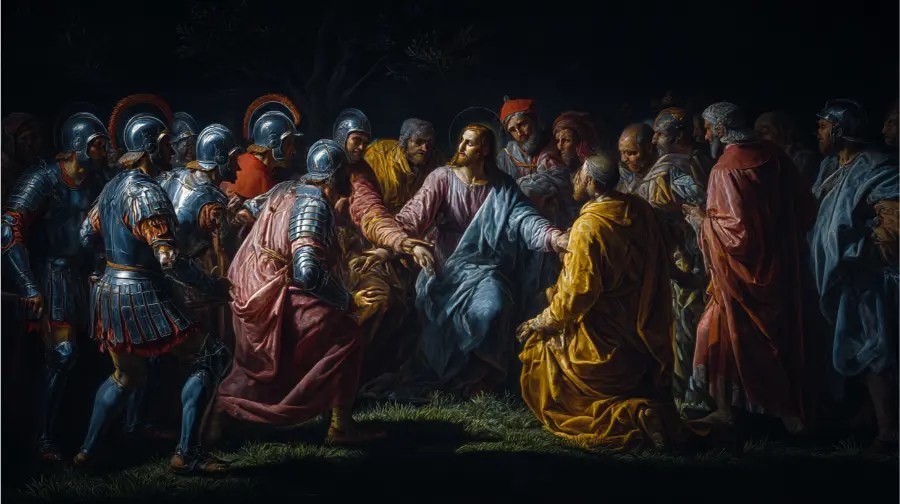
When Jesus was arrested in Gethsemane, “they all forsook him, and fled” (Mark 14:50). Peter followed at a distance and then denied knowing him. The Gospel of John places one disciple at the cross, “the disciple standing by, whom he loved,” to whom Jesus entrusted his mother (John 19:26–27). After the resurrection the eleven stayed in Jerusalem, chose Matthias, and received the Holy Spirit at Pentecost (Acts 1–2). They later spread out from Jerusalem, although Acts follows only Peter and Paul in any detail.
Where are the apostles buried?
The claims about the apostles’ graves range from well attested to doubtful. Early in the third century a Roman Christian named Caius wrote, “if you will go to the Vatican or to the Ostian way, you will find the trophies of those who laid the foundations of this church,” meaning the graves of Peter and Paul. St. Peter’s Basilica now stands on the Vatican site, and the Basilica of St. Paul Outside the Walls on the Ostian Way. In 2009 Pope Benedict XVI reported that bone fragments from the sarcophagus under its altar had been carbon-dated to someone “who had lived between the first and second centuries.”
- John: Ephesus, in modern Turkey, as Polycrates wrote around 190.
- Philip: Hierapolis, according to Polycrates. Relics said to be his, with others said to be those of James son of Alphaeus, are kept in the church of the Holy Apostles in Rome. A 2021 study in Heritage Science radiocarbon-dated the bone venerated as James’s to AD 214–340 and concluded that “this cannot be the bone of St James.”
- Andrew: his relics were taken from Patras to Constantinople about 357, and in the 13th century to Amalfi in Italy, where most remain.
- James son of Zebedee: Santiago de Compostela in Spain, by a tradition whose authenticity has been questioned.
- Matthew: Salerno Cathedral in Italy, which has kept his relics since 954.
- Bartholomew: his relics went to the island of Lipari, then to Benevento in Italy, with part taken to Rome in the 10th century.
- Thomas: Indian tradition places his tomb at Mylapore; relics venerated at Edessa in the fourth century are now at Ortona in Italy.
- Simon: relics are venerated under an altar in St. Peter’s Basilica; his actual burial place is unknown.
- Matthias: part of his relics are said to be at Trier in Germany and part in Rome. The Bollandist scholars doubted that the Rome relics were his rather than those of a second-century bishop of Jerusalem also named Matthias.
- James the Just: Hegesippus says he was buried “on the spot, by the temple,” in Jerusalem.
Did any of the apostles have families?
Peter was married. When Jesus came into Peter’s house, “he saw his wife’s mother laid, and sick of a fever” (Matthew 8:14), and Paul refers to his right to “lead about a sister, a wife, as well as other apostles, and as the brethren of the Lord, and Cephas” (1 Corinthians 9:5). Clement of Alexandria, quoted by Eusebius, wrote that “Peter and Philip begot children,” and that Peter saw his wife led out to die and called to her, “Remember the Lord.”
Paul describes himself as unmarried. He tells the unmarried and widows, “It is good for them if they abide even as I” (1 Corinthians 7:8). Clement of Alexandria read one of Paul’s letters as greeting a wife, but 1 Corinthians 7:8 shows that Paul was unmarried when he wrote it.
Several apostles were brothers: Peter and Andrew, and James and John, the sons of Zebedee. Orthodox tradition makes James son of Alphaeus the brother of Matthew, who is also called a son of Alphaeus (Mark 2:14). Catholic tradition, which identifies James son of Alphaeus with “James the Lord’s brother,” counts him as a relative of Jesus.


Leave a Reply