
 English
 Chinese
 Dutch
 Arabic
 Spanish
 Portuguese
 Russian
 French
 Italian
 German
 Japanese
The hierarchy of angels is the old teaching that the angels stand in nine choirs, three groups of three, with the seraphim at the top and the ones simply called angels at the bottom. It comes to us from the Celestial Hierarchy, a book written about the year 500 under the borrowed name of Dionysius the Areopagite. The Bible itself, as we read it, gives the names and never says which of them stands above which.
The one thing Scripture does settle about rank in heaven is who stands above all of it, and it settles that in the same two lists the nine are counted from. Paul’s first list comes in a sentence about God raising Jesus from the dead, when he “set him at his own right hand in the heavenly places, Far above all principality, and power, and might, and dominion, and every name that is named” (Ephesians 1:20–21). His second, “thrones, or dominions, or principalities, or powers”, runs straight on to “all things were created by him, and for him” (Colossians 1:16). As we read him, the only ranking Paul gives us in either place is the one that puts Christ over all of them.
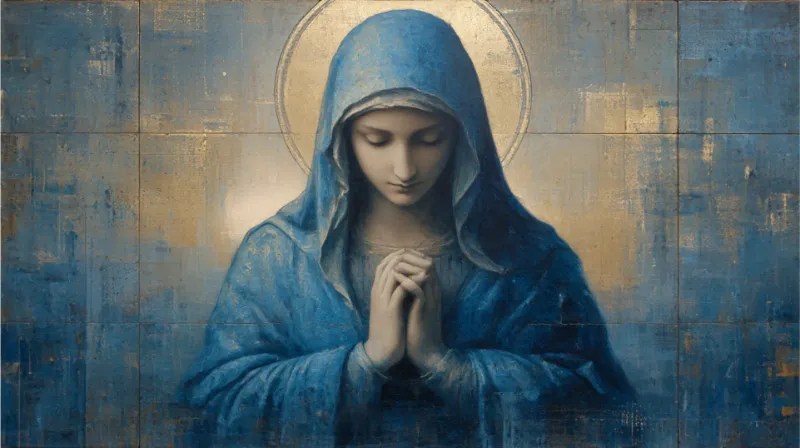
The nine choirs of angels, in order
We call the man who wrote the book Dionysius, because that is the name he put on it. He believed Scripture had given him the nine, and when he reaches them, in his sixth chapter, he begins by telling us how little he can promise. “How many, and of what sort, are the Orders of the supercelestial Beings, and how the Hierarchies are classified amongst themselves, I affirm, the deifying Author of their consecration alone distinctly knows,” he writes, which is a long way of saying that God knows and we do not. Then he promises to set down only what the prophets saw, “as best we can”, and in the very next sentence he gives us the number: “The Word of God has designated the whole Heavenly Beings as nine, by appellations, which shew their functions.”
He sorts the nine into three “threefold Orders”, the first “established immediately around God”, and here they are from the top down, as Aquinas and the Latin church set them out, with the place in the Bible where each name turns up.
| Choir | Group | Where Scripture names it |
|---|---|---|
| Seraphim | First | Isaiah 6:2 |
| Cherubim | First | Genesis 3:24 |
| Thrones | First | Colossians 1:16 |
| Dominions | Second | Colossians 1:16, Ephesians 1:21 |
| Virtues | Second | Ephesians 1:21 in the Douay-Rheims (“virtue”); the King James has “might” |
| Powers | Second | Colossians 1:16, Ephesians 1:21 |
| Principalities | Third | Colossians 1:16, Ephesians 1:21 |
| Archangels | Third | 1 Thessalonians 4:16, Jude 9 |
| Angels | Third | Luke 1:19, Hebrews 1:14, and throughout |
It is easy to see why the whole list gets taken for Scripture, since every name in it is there. The Virtues take some digging, because the King James has “might” in Ephesians where the Douay-Rheims reads “virtue”. Isaiah sees the seraphims above the throne, and of each one he says, “with twain he covered his face” (Isaiah 6:2). The cherubims are set “at the east of the garden of Eden” with “a flaming sword” (Genesis 3:24). But these names come to us scattered, in lists of different lengths and different orders, and Scripture never counts them as nine or gathers them in threes. What they look like is told in what angels look like in the Bible, and whether cherubim are angels at all in cherubs and angels compared.
Inside each group the order and the names shift with the list you are holding. Dionysius’s own sixth chapter names the Thrones first, then “the Authorities, and Lordships, and Powers”, and last “the Order of the Angels and Archangels and Principalities”, and the Catholic Encyclopedia grants that “The grouping of the second triad exhibits some variations.” For that middle group the Latin church says Dominations, Virtues and Powers, and the Orthodox Church in America says Dominions, Powers and Authorities. These appear to be the same three places under different names.
Dionysius passes on what “those who know Hebrew affirm”, that the seraphim are “kindling or burning” and the cherubim “a fulness of knowledge or stream of wisdom”. And when Aquinas comes to those highest three, he reaches for Dionysius’s own picture of where they stand, “as it were, placed in the vestibule of God.” So the burning ones at the very top of the list, with their faces covered, are on this telling still in the entry hall.
Who wrote the Celestial Hierarchy?
The name on it belongs to a man we meet in Acts. When Paul had spoken at Athens, “certain men clave unto him, and believed: among the which was Dionysius the Areopagite, and a woman named Damaris” (Acts 17:34). The earliest people known to quote the book under that name are Severus, Patriarch of Antioch from 512 to 518, and Andreas of Caesarea in Cappadocia, about 520. That puts the book at about the year 500.
About thirteen years later, in 533, there was a debate at Constantinople between seven orthodox speakers and seven Severians, the followers of that same Severus. When the Severians quoted Dionysius, Hypatius, Bishop of Ephesus, “rejected as spurious all these citations”, saying that Cyril of Alexandria had never used them. Hypatius was right, and it would be 1,362 years before anyone could prove it. Within “little more than a century” Catholics had accepted the writings and were using them at the Lateran Council of 649, and after that, the Catholic Encyclopedia says, “neither in the West was a voice raised in challenge down to the first half of the fifteenth century.” The Middle Ages treated these pages as “exceedingly valuable and even as sacred”, and people believed “that St. Paul … spoke through these writings.”
Lorenzo Valla raised the doubt again in his notes on the New Testament, in the fifteenth century, and for some four hundred years Protestants and Catholics argued it back and forth. It ended in 1895, when two men working apart from each other, Hugo Koch and Joseph Stiglmayr, brought out the proof “almost simultaneously”. Another of the author’s books, the Divine Names, had drawn on a treatise by the Neoplatonist philosopher Proclus, with “an astonishing agreement of both works in arrangement, sequence of thought, examples, figures, and expressions.” Proclus lived from 411 to 485, and the man who clave to Paul at Athens did not live to read him.
Stiglmayr went on to write the entry on the author for the Catholic Encyclopedia in 1909, and if anyone could have told us who the man was it would have been him. “Deep obscurity still hovers about the person of the Pseudo-Areopagite,” he says. He can tell us that the author belongs “at the very earliest to the latter half of the fifth century”, that he was probably a native of Syria, and that he knew Plotinus and Proclus well, and there the trail stops. None of that proves the nine wrong, but it does tell us who is speaking when we read them, and it is a Christian of about the year 500 whose name we do not know.
How does Gregory the Great’s list differ?
A century or so after the book appeared, Gregory the Great, pope from 590 to 604, was preaching on the woman in Luke’s Gospel who has ten pieces of silver and loses one. She has ten, he says, because there are nine orders of angels, and man was created the tenth, to complete the number of the elect. That is Gregory’s reading and the parable does not say it. Still, he has the whole company of heaven to count, nine orders of it, and then he puts us in as the tenth, and the tenth is the piece the woman will “light a candle, and sweep the house, and seek diligently till she find it” (Luke 15:8).
He got to nine by adding up what the Bible names. “We know on the authority of Scripture that there are nine orders of angels,” he says, and he counts them out: angels and archangels, which nearly every page tells us of, cherubim and seraphim from the prophets, and five more from Paul, principality, power, virtue and dominion in Ephesians and thrones in Colossians. Read from the top, his nine run Seraphim, Cherubim, Thrones, Dominations, Principalities, Powers, Virtues, Archangels, Angels. Set that beside the table and seven of them stand in the same place, while the Virtues and the Principalities trade positions.
Aquinas had both lists in front of him, and he went looking for the reason in Paul. Ephesians, he says, counts up from the lowest, “above all Principality and Power, and Virtue, and Dominion”, and Colossians down from the highest, “Thrones, or Dominations, or Principalities, or Powers”, and each placing follows one of them, so that “Each of these placings may claim authority from the words of the Apostle.” Then he looks at what the names mean. Dionysius explains them by the “spiritual perfections they signify”, he says, while Gregory “seems to regard more the exterior ministrations”, what each order does, and so Gregory’s Virtues “seem to be the same as ‘Principalities’ of Dionysius”. His conclusion is that “little or no difference exists in reality between the dispositions of the orders according to Dionysius and Gregory.” The two men had put different names on the same door.
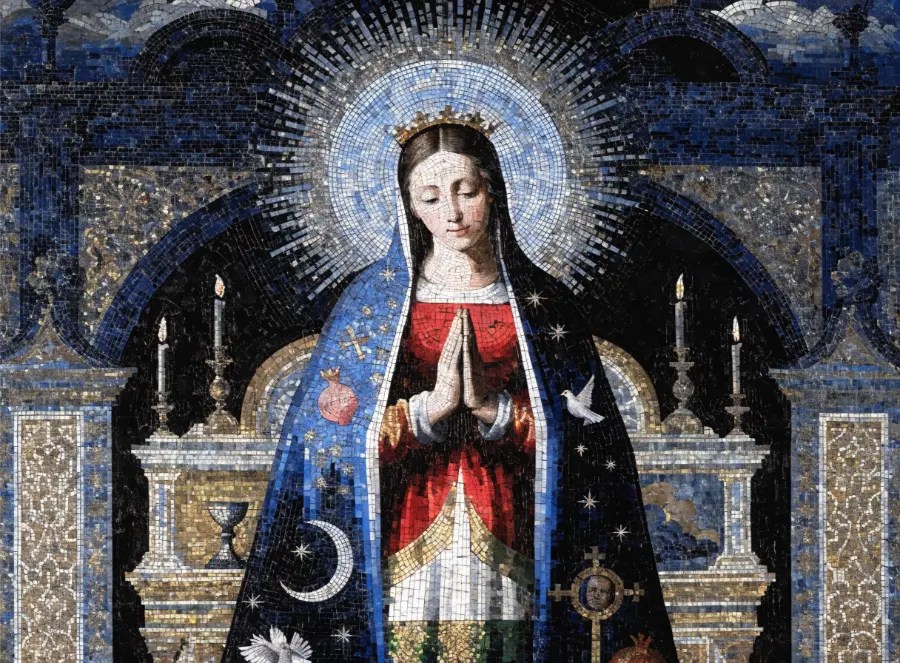
What do the churches teach about the nine choirs?
The Catholic Church teaches that angels exist, and its Catechism stops there on the question of rank. “The existence of the spiritual, non-corporeal beings that Sacred Scripture usually calls ‘angels’ is a truth of faith,” it says (paragraph 328), and its whole section on the angels, paragraphs 328 to 336, sets out no ranks. It does quote Paul’s “thrones or dominions or principalities or authorities” in paragraph 331, and it quotes him to say, “Christ is the centre of the angelic world.” Aquinas followed Dionysius in his Summa, giving a whole question to the three hierarchies of three orders, and the teaching spread so far that the Catholic Encyclopedia of 1907 says it “has been received in the Church with extraordinary unanimity”. The Encyclopedia is a reference work and no ruling of the Church, and that same sentence goes on, “no proposition touching the angelic hierarchies is binding on our faith.” So a Catholic may love the nine, and is not bound to them.
The Orthodox Church in America keeps the nine on its calendar. On 8 November it commemorates the Synaxis of the Archangel Michael and the Other Bodiless Powers, and it says the feast was set in November, “the ninth month after March … since there are Nine Ranks of Angels”, so a month of the year was chosen by counting angels. Its ranks are the same three groups, highest, middle and lowest, with Seraphim, Cherubim and Thrones above, Dominions, Powers and Authorities in the middle, and Principalities, Archangels and Angels below, and it gives Scripture for each name. It also says, as Dionysius does at the head of his fifth chapter, that the word angel belongs to all of them: “All the Ranks of the Heavenly Powers are called angels, although each has its own name and position by virtue of their service.”
Calvin, speaking for himself and not for every Protestant, refused the whole inquiry. His rule in the Institutes is “in obscure matters not to speak or think, or even long to know, more than the Word of God has delivered”, and on the angels he draws the line himself: “we must renounce those vain babblings of idle men, concerning the nature, ranks, and number of angels, without any authority from the Word of God.” He grants the book its cleverness before he sets it aside: “None can deny that Dionysus (whoever he may have been) has many shrewd and subtle disquisitions in his Celestial Hierarchy, but on looking at them more closely, every one must see that they are merely idle talk.” A theologian’s duty, he says, “is not to tickle the ear, but confirm the conscience, by teaching what is true, certain, and useful.” Paul, he points out, “though he was carried to the third heaven”, declared “that it was not lawful for man to speak the secrets which he had seen”. Calvin had no quarrel with the angels themselves, and from there he goes on to “the simple doctrine of Scripture” concerning them.

Where do Michael and Gabriel stand?
Michael is where the nine choirs and the Bible rub against each other. The King James Bible uses the word “archangel” only twice, for “the voice of the archangel” at the Lord’s coming (1 Thessalonians 4:16) and for “Michael the archangel, when contending with the devil he disputed about the body of Moses” (Jude 9). Daniel calls him “one of the chief princes” (Daniel 10:13) and “the great prince which standeth for the children of thy people” (Daniel 12:1), and in Revelation “Michael and his angels fought against the dragon” (Revelation 12:7).
The nine choirs put him a good deal lower. Gregory, in that sermon on the coin, calls him archangel, and the Archangels stand second from the bottom on every one of these lists, “princes as regards the ‘Angels,’ and angels as regards the Principalities,” in Aquinas’s words. Dionysius sets him in the third group too, the one that has charge of human affairs: “the Word of God has assigned our Hierarchy to Angels, by naming Michael as Ruler of the Jewish people, and others over other nations.” So Daniel’s great prince comes out near the bottom of the ladder. The Orthodox Church in America, which also calls him archangel, answers by lifting him over it: “Over all the Nine Ranks, the Lord appointed the Holy Archangel Michael.” There is more on who the archangels are in what archangels are and what they do.
Neither of those two verses calls Gabriel an archangel, but Gregory does, and so does the Orthodox Church in America. Those who carry the smallest messages are called angels, Gregory says, and those who carry the greatest are archangels, and so the one “sent from God unto a city of Galilee, named Nazareth” (Luke 1:26) to speak to Mary was no ordinary angel but the archangel Gabriel. When Gabriel says who he is, rank does not come into it. Zacharias has just told him, “I am an old man, and my wife well stricken in years” (Luke 1:18), and the reply is, “I am Gabriel, that stand in the presence of God; and am sent to speak unto thee, and to shew thee these glad tidings” (Luke 1:19). One who stands in the presence of God has been sent to talk to an old man about a baby. In the Douay-Rheims Raphael speaks of himself in much the same way, “I am the angel Raphael, one of the seven, who stand before the Lord” (Tobit 12:15), and with Michael those are the “only Scriptural names furnished of individual angels”, as the Catholic Encyclopedia puts it.
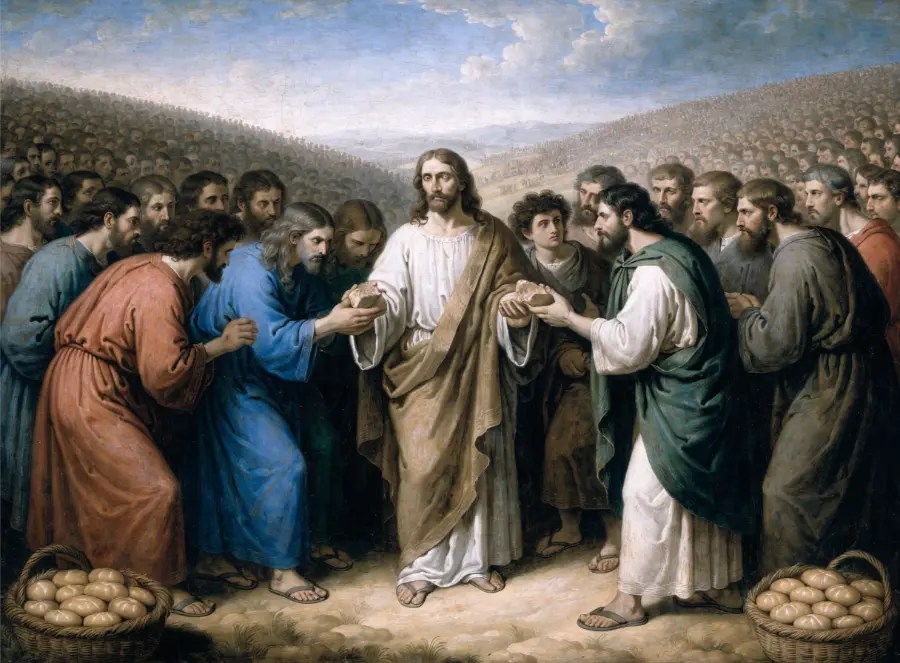
What all nine choirs have in common
We cannot tell you the order of the ranks of heaven, and the man who first wrote them down said only God could. What the letter to the Hebrews gives us instead is one question that takes in the whole company: “Are they not all ministering spirits, sent forth to minister for them who shall be heirs of salvation?” (Hebrews 1:14). That “all” has the burning ones in it, and the ones who stand in the presence of God, and the people they are sent for are us.
At the very end of the Bible John falls down “to worship before the feet of the angel which shewed me these things”, and the angel stops him: “See thou do it not: for I am thy fellowservant, and of thy brethren the prophets, and of them which keep the sayings of this book: worship God” (Revelation 22:8–9). Nobody can tell us which of the nine that angel belonged to. He looked at a man on the ground at his feet and called him fellow servant, and he sent John’s worship on up to God.
When the woman finds that tenth piece of silver, the one Gregory said was us, she calls in “her friends and her neighbours” (Luke 15:9), and Jesus tells us who else is glad, without a word about which of them stands nearest: “Likewise, I say unto you, there is joy in the presence of the angels of God over one sinner that repenteth” (Luke 15:10).


Leave a Reply