
 English
 Chinese
 Dutch
 Arabic
 Spanish
 Portuguese
 Russian
 French
 Italian
 German
 Japanese
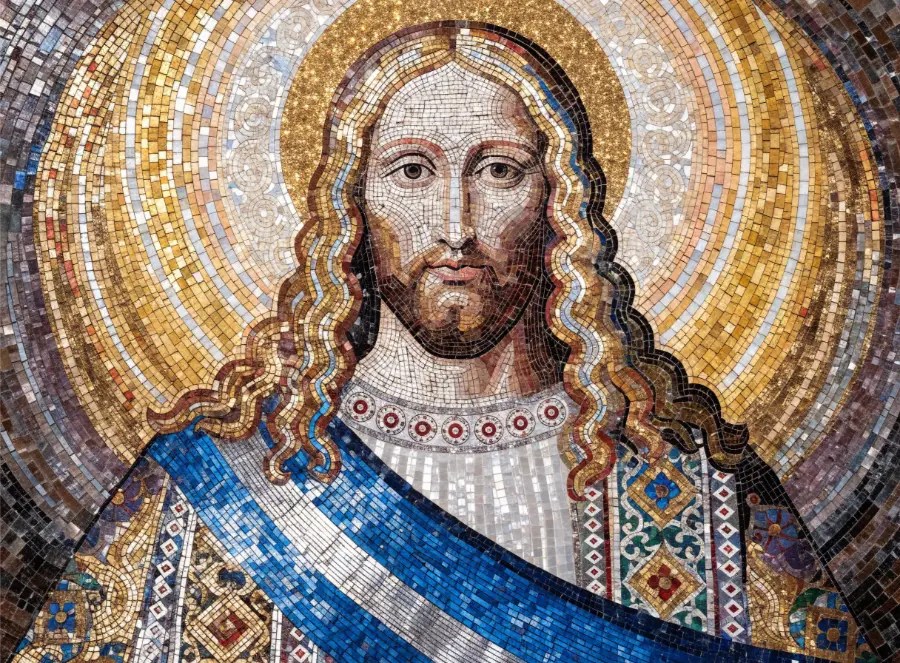
Satan fell through pride. God made him a good angel, and by his own choice he turned against God. Paul warns that a man “lifted up with pride” can fall “into the condemnation of the devil” (1 Timothy 3:6). Scripture gives no date. He had fallen before he tempted Eve.
Jude speaks of angels who “kept not their first estate, but left their own habitation” (Jude 6). He does not name Satan among them, but his words hold the shape of every fall: God had given them a place, and they would not stay in it. A few verses later, in the same short letter, Jude turns to us: “Keep yourselves in the love of God” (Jude 21). Those angels did not keep their place. We are asked to keep ours, and we are not asked to do it alone.
Why did Satan fall?
The verse most often read as naming the cause comes in an unexpected place, a letter about choosing church leaders. A bishop should be “Not a novice, lest being lifted up with pride he fall into the condemnation of the devil” (1 Timothy 3:6). On the usual reading, that is the judgment the devil fell under for his own pride, and Paul warns that a proud man can go the same way. Some read it instead as the judgment the devil brings on us, since the next verse speaks of “the snare of the devil” (1 Timothy 3:7).
The tempter’s own words in Eden point the same direction. He promised Eve, “ye shall be as gods, knowing good and evil” (Genesis 3:5). The Catechism of the Catholic Church sees “a reflection of that rebellion in the tempter’s words” (paragraph 392): he offered our first parents the thing he had reached for himself.
Many Christians also hear Satan’s fall in two prophecies addressed to kings. Isaiah’s king of Babylon says in his heart, “I will ascend into heaven, I will exalt my throne above the stars of God… I will be like the most High” (Isaiah 14:13–14). Ezekiel’s king of Tyre was “perfect in thy ways from the day that thou wast created, till iniquity was found in thee,” and then “Thine heart was lifted up because of thy beauty, thou hast corrupted thy wisdom by reason of thy brightness” (Ezekiel 28:15, 17). Whether these poems speak of the devil as well as the kings is an old question, and Christians answer it differently. How they came to be read that way is told in are Lucifer and Satan the same? Either way, the sin they describe has one shape: a creature who wanted to stand where only God stands.
The great teachers of the Church named it the same way. Augustine, in The City of God, asked why the fallen angels are miserable and answered that “they have forsaken Him who supremely is, and have turned to themselves.” He called that turning by its name: “And this vice, what else is it called than pride?” Thomas Aquinas, eight centuries later, reasoned that “the first sin of the angel can be none other than pride,” which he defined as “not to be subject to a superior when subjection is due.” The angel wanted to be like God, Aquinas wrote, “as of his own, and not of God’s power.”
Was it pride or envy?
Both, in the long Christian reading, with pride first. The Book of Wisdom, which the Catholic Church counts among the books of the Old Testament (Catechism, paragraph 120) and Protestants do not, says, “But by the envy of the devil, death came into the world” (Wisdom 2:24, Douay-Rheims). The Catechism echoes it when it says the seductive voice in Eden made our first parents “fall into death out of envy” (paragraph 391). Aquinas explains the order. First came pride, and “after the sin of pride, there followed the evil of envy in the sinning angel, whereby he grieved over man’s good, and also over the Divine excellence.” He resented God’s goodness to us, and God’s own glory.
John Milton gave that envy a particular object in Paradise Lost (1667). In his telling, Satan was “fraught / With envy against the Son of God,” on the day the Father honoured the Son and proclaimed him King, and “could not bear / Through pride that sight.” Milton’s scene is a poet’s invention, and it holds together the two sins the teachers name, pride and envy.
How could a good angel become evil?
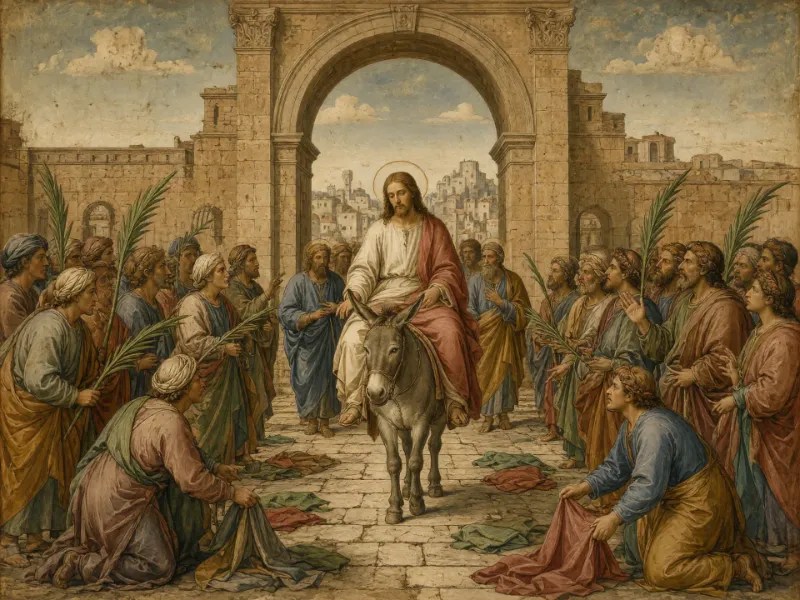
He was not made evil. When God finished his work, “God saw every thing that he had made, and, behold, it was very good” (Genesis 1:31). The churches agree that this includes the angels who fell. The Catechism quotes the Fourth Lateran Council of 1215: “The devil and the other demons were indeed created naturally good by God, but they became evil by their own doing” (paragraph 391). The Belgic Confession, a Reformed statement of 1561, says that some angels “have fallen from the excellence in which God created them into eternal perdition,” and rejects the error of those “who say that the devils originated by themselves, being evil by nature.” John of Damascus, the eighth-century Eastern teacher, wrote that the devil “received from his Creator no trace whatever of evil in himself,” and “of his free choice was changed from what was in harmony to what was at variance with his nature.”
So when John writes that “the devil sinneth from the beginning” (1 John 3:8), he does not mean the devil was created sinning. Augustine answered that reading directly: “if sin be natural, it is not sin at all.” Jesus says the devil “abode not in the truth” (John 8:44), and those words, Augustine wrote, mean “that he was once in the truth, but did not remain in it.”
Why would a creature with everything choose to lose it? Here even Augustine stopped. He searched for what could have made the first evil will evil, and concluded, “What was the efficient cause of their evil will? There is none.” Sin has no good reason behind it. That is part of what makes it sin, and part of why it can never be explained away.
When did Satan fall?
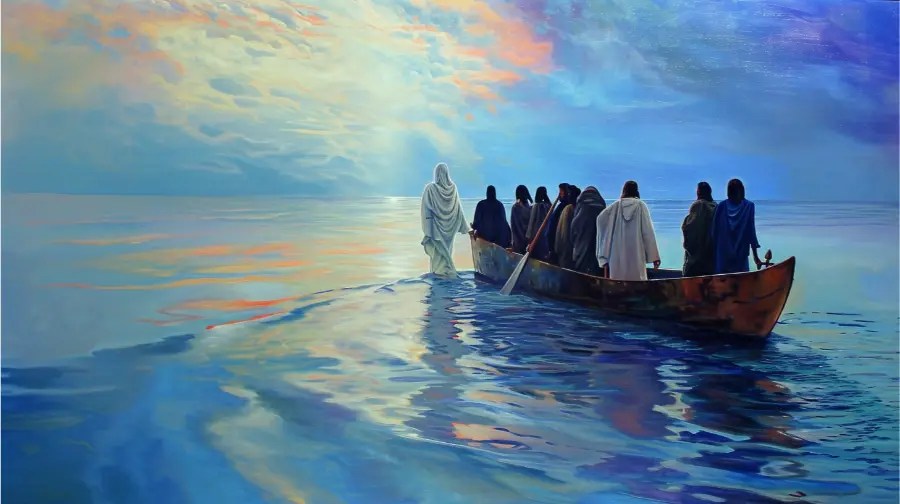
Scripture does not say. It shows only that he had fallen before Genesis 3, when he came to Eve as the tempter. Some readers find the angels already present at creation, when God asks Job, “Where wast thou when I laid the foundations of the earth?… When the morning stars sang together, and all the sons of God shouted for joy?” (Job 38:4, 7). That would place the fall somewhere between the first days and the garden, though the text itself does not say so.
Teachers have reasoned about it in different ways. Augustine held that “the devil sins from the beginning” means “from the beginning of his sin, when by his pride he had once commenced to sin,” and not from the beginning of his existence. Aquinas weighed two opinions and judged the more probable to be “that the devil sinned at once after the first instant of his creation.”
The war in heaven raises its own question of timing. John saw that “Michael and his angels fought against the dragon,” that the dragon “prevailed not; neither was their place found any more in heaven,” and that “he was cast out into the earth, and his angels were cast out with him” (Revelation 12:7–9). The vision does not date the war. Jesus spoke of a casting out in his own hour: “Now is the judgment of this world: now shall the prince of this world be cast out” (John 12:31). And when the seventy came back rejoicing, he told them, “I beheld Satan as lightning fall from heaven” (Luke 10:18). Christians fit these passages together with the first rebellion in different ways. The Catechism ties the casting out to Jesus’ Hour: victory over the prince of this world “was won once for all at the Hour when Jesus freely gave himself up to death to give us his life” (paragraph 2853). Jehovah’s Witnesses place it soon after 1914 (The Watchtower, 15 May 2009).
Did other angels fall with Satan?
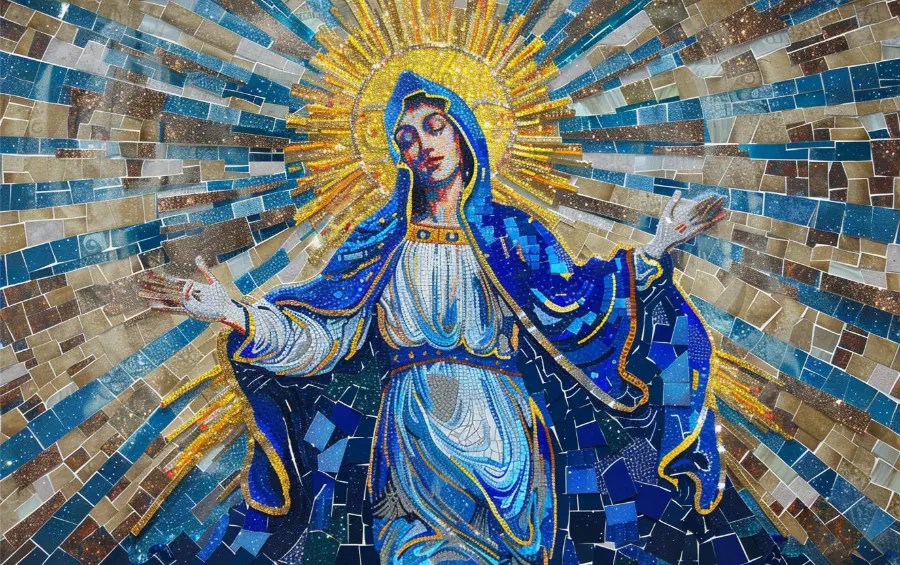
Yes. Revelation says “his angels were cast out with him,” and Jesus speaks of “everlasting fire, prepared for the devil and his angels” (Matthew 25:41). Christians call the angels who follow Satan demons. Scripture does not say how many there were; the familiar “one third” and where it comes from are explained in how many angels fell with Satan.
Peter and Jude speak of other fallen angels who are already held. God “spared not the angels that sinned, but cast them down to hell, and delivered them into chains of darkness” (2 Peter 2:4), and Jude’s angels are kept “in everlasting chains under darkness” (Jude 6). The Catechism cites Peter’s verse for the sin of the angels (paragraph 392, note 269). Because both letters put these angels in chains, and Peter goes straight on to Noah and the flood (2 Peter 2:5), some readers connect them instead with the “sons of God” of Genesis 6:2.
Can Satan repent and be forgiven?
The churches answer no, and they are careful to say why. The fault does not lie in God’s mercy. The Catechism teaches, “It is the irrevocable character of their choice, and not a defect in the infinite divine mercy, that makes the angels’ sin unforgivable” (paragraph 393). It quotes John of Damascus: “There is no repentance for the angels after their fall, just as there is no repentance for men after death.” The Westminster Larger Catechism, the Reformed standard of 1647, says that some angels fell “willfully and irrecoverably.” Aquinas gave the reason: unlike a man, an angel “has an inflexible free-will after once choosing.” More on that question is in can Satan repent?
Do Catholic, Orthodox and Protestant churches agree about the fall?
The Catholic, Orthodox and Reformed texts quoted here agree on the outline. Catholic teaching says that “Satan was at first a good angel, made by God,” and that the fall “consists in the free choice of these created spirits, who radically and irrevocably rejected God and his reign” (Catechism, paragraphs 391–392). The Orthodox Church in America calls the devil “a fallen bodiless spirit, an angel created by God for His service and praise.” Reformed Protestants confess the same in the Belgic Confession and the Westminster Larger Catechism, quoted above.
They differ on details. They read the Isaiah and Ezekiel passages in different ways, as the page on Lucifer and Satan shows, and they date the casting out of heaven in Revelation 12 differently. On the main point the churches quoted here stand together. Evil did not come from God, and it is not as old as God. It began when a creature turned away from him.
How is Satan’s fall shown in art and literature?
Milton tells it near the start of Paradise Lost, about thirty-five lines in. “His pride / Had cast him out from Heaven, with all his host / Of rebel Angels, by whose aid, aspiring / To set himself in glory above his peers, / He trusted to have equalled the Most High.” Those lines are close to Isaiah’s “I will be like the most High,” and the epic that follows imagines much that Scripture does not tell, including Satan’s speeches and his envy of the Son.
Pieter Bruegel the Elder painted The Fall of the Rebel Angels in 1562, and it hangs today in the Royal Museums of Fine Arts of Belgium in Brussels. Michael, in the museum’s words “thin as a rake in his golden armour,” strikes at the seven-headed dragon of Revelation 12, while the rebels come tumbling down out of a halo of light. Bruegel paints them as monsters, “hybrid, deformed beings” put together from shells, fish, butterfly wings and lizard scales.
What does Satan’s fall teach us?
That pride is the oldest danger, and that standing is a gift. “Pride goeth before destruction, and an haughty spirit before a fall” (Proverbs 16:18). Paul draws the warning for us: “Wherefore let him that thinketh he standeth take heed lest he fall” (1 Corinthians 10:12). The angel who fell had more beauty and more strength than any of us will ever have, and he lost it by wanting to hold it as his own.
Yet we are not left to stand by our own strength. Jude asks us to keep ourselves in the love of God, “building up yourselves on your most holy faith, praying in the Holy Ghost” (Jude 20). The angels left their own habitation. Our habitation is that love, and the one who keeps us there does not let go. The letter that told of the angels who fell ends with a blessing on us: “Now unto him that is able to keep you from falling, and to present you faultless before the presence of his glory with exceeding joy” (Jude 24).


Leave a Reply