
 English
 Chinese
 Dutch
 Arabic
 Spanish
 Portuguese
 Russian
 French
 Italian
 German
 Japanese
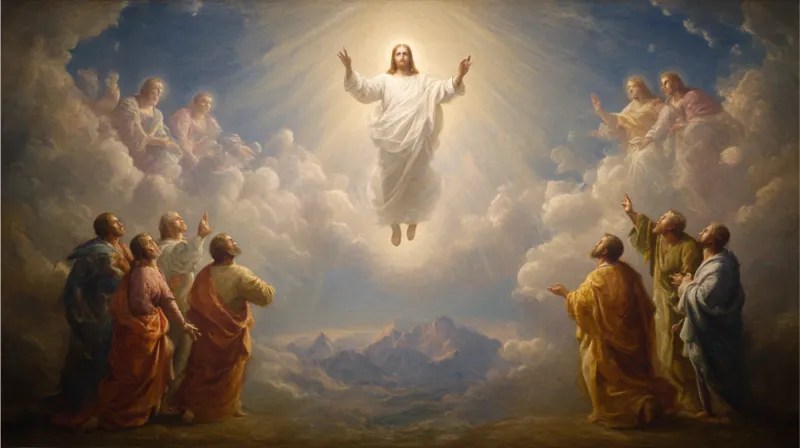
Jesus rose from the dead before dawn on the first day of the week, the Sunday after his crucifixion. No Gospel describes the moment itself. The women who reached the tomb “very early in the morning” found that he had already risen. Nearly all scholars place that Sunday in the spring of AD 30 or AD 33.
John remembers the hour as Mary Magdalene knew it: she came “early, when it was yet dark” (John 20:1), found him gone, and could only say, “we know not where they have laid him” (John 20:2). By then the rising had already happened, in the dark, with no one watching. We keep Sunday because of that hidden hour, and every week the church comes to the empty tomb a little after it, as she did.
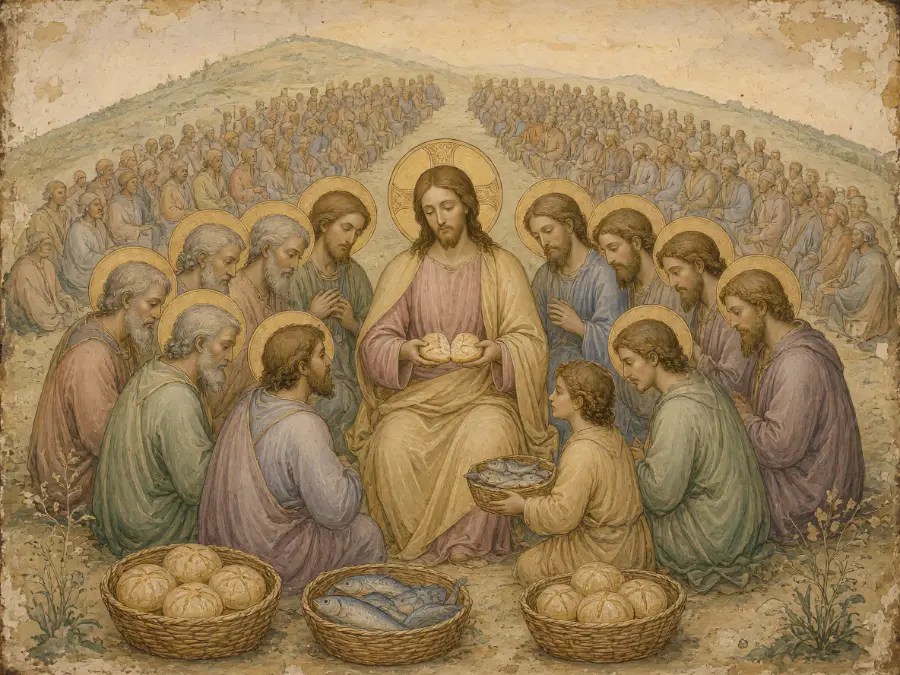
What day did Jesus rise from the dead?
All four Gospels date the empty tomb to “the first day of the week” (Matthew 28:1; Mark 16:2; Luke 24:1; John 20:1), which is Sunday, the day after the Sabbath. Jesus had died on the Friday, which the Gospels call the preparation, “that is, the day before the sabbath” (Mark 15:42). He was buried as “the sabbath drew on” (Luke 23:54), and the women who had watched where he was laid “rested the sabbath day according to the commandment” (Luke 23:56).
Luke and John date the rest of that Sunday as well. Two disciples walking to Emmaus “that same day” told the stranger beside them, “to day is the third day since these things were done” (Luke 24:13, 21). That evening Jesus stood among the disciples behind shut doors, “the same day at evening, being the first day of the week” (John 20:19).
In the next century, about AD 153 to 155, Justin Martyr wrote a defence of the Christians addressed to the Roman emperor Antoninus Pius, and because he was writing for Romans he gave the days the names the Romans used. Of Jesus he wrote: “He was crucified on the day before that of Saturn (Saturday); and on the day after that of Saturn, which is the day of the Sun, having appeared to His apostles and disciples, He taught them these things.”
What time did Jesus rise from the dead?
He rose before dawn, though no one saw it happen. The Gospels tell us when the women came to the tomb, and in every account Jesus was already gone.
| Gospel | When they came (KJV) | Who came |
|---|---|---|
| Matthew 28:1 | “as it began to dawn toward the first day of the week” | Mary Magdalene and “the other Mary” |
| Mark 16:2 | “very early in the morning … at the rising of the sun” | Mary Magdalene, Mary the mother of James, and Salome |
| Luke 24:1 | “very early in the morning” | The women from Galilee, with Mary Magdalene and Joanna (24:10) |
| John 20:1 | “early, when it was yet dark” | Mary Magdalene |
The four accounts cover the same short stretch of morning, from the last of the dark to sunrise. John tells of Mary Magdalene, though her words “we know not where they have laid him” (John 20:2) suggest she did not come alone. Matthew, Mark and Luke tell of several women who came together, and in all three the women hear the same news at the tomb, in Matthew’s words: “He is not here: for he is risen, as he said” (Matthew 28:6).
Easter morning in the four Gospels
Each Gospel names the hour in its own words
Matthew 28:1
After the Sabbath, at dawn on the first day of the week, Mary Magdalene and the other Mary went to see the tomb.
Mark 16:2
Very early on the first day of the week, just after sunrise, they went to the tomb.
Luke 24:1
On the first day of the week, very early in the morning, the women came to the tomb, bringing the spices they had prepared.
John 20:1
Early on the first day of the week, while it was still dark, Mary Magdalene went to the tomb and saw that the stone had been removed from the entrance.
In the KJV, only one Gospel verse ties the rising itself to a time of day, and it opens the longer ending of Mark: “Now when Jesus was risen early the first day of the week, he appeared first to Mary Magdalene” (Mark 16:9). Other translations place the comma so that “early” goes with the appearing; the Catholic New American Bible reads, “When he had risen, early on the first day of the week, he appeared first to Mary Magdalene”. Its notes say this ending “has traditionally been accepted as a canonical part of the gospel and was defined as such by the Council of Trent”, and that it was “composed by the second century” by “someone other than Mark”.
In Jewish reckoning a day begins at sunset, as in Genesis, where “the evening and the morning were the first day” (Genesis 1:5). The Gospels have Jesus buried in haste as evening came, because the next day was the Sabbath (Mark 15:42). The first day of the week therefore began on Saturday evening. If Jesus rose on the third day, as the Gospels and Paul say, he rose somewhere in the night between Saturday’s sunset and Sunday’s dawn. The Gospel of Peter, an apocryphal gospel from the second century that is not in the Bible, does try to narrate the moment, and it sets it “in the night in which the Lord’s day was drawing on”, with soldiers keeping watch at the tomb.
The Catholic Church sings of that night at the Easter Vigil, and its Catechism quotes the vigil’s hymn, the Exsultet, “O truly blessed Night” … “which alone deserved to know the time and the hour when Christ rose from the realm of the dead!” Then it adds: “But no one was an eyewitness to Christ’s Resurrection and no evangelist describes it.”
How many days after his death did Jesus rise?
He rose on the third day, if we count the Friday of his death as the first. In hours it was a short time: from his death at about the ninth hour, the middle of the afternoon, on Friday to the women’s arrival at sunrise on Sunday is less than forty hours.
| Day | What the Gospels record | Verses |
|---|---|---|
| Friday, the preparation | Jesus dies at about the ninth hour and is buried before the Sabbath | Mark 15:34–46; Luke 23:54 |
| Saturday, the Sabbath | The tomb is sealed and guarded; the women rest | Matthew 27:62–66; Luke 23:56 |
| Sunday, the first day | The tomb is found empty, and Jesus appears | Matthew 28:1–6; John 20:1–19 |
Jesus had foretold it in those very terms, saying he would “be killed, and be raised again the third day” (Matthew 16:21), and Mark records the same teaching as “be killed, and after three days rise again” (Mark 8:31). When the chief priests remembered his words as “After three days I will rise again”, they asked Pilate to guard the tomb “until the third day” (Matthew 27:63–64). Those who date the crucifixion to Friday find the same way of counting in the Old Testament, where Esther asked the Jews of Shushan to fast for her “three days, night or day”, and then went in to the king “on the third day” (Esther 4:16; 5:1).
Paul’s summary of the gospel, which he says he had himself received, includes the day: “he rose again the third day according to the scriptures” (1 Corinthians 15:4). He does not say which scriptures he means. The risen Jesus told the disciples, “Thus it is written, and thus it behooved Christ to suffer, and to rise from the dead the third day” (Luke 24:46); he had compared his time in the tomb to Jonah’s in the fish (Matthew 12:40), and Hosea speaks of God raising his people “in the third day” (Hosea 6:2).
Did Jesus rise on Saturday or Sunday?
Most churches hold that he rose on Sunday, and both readings of the Gospels agree that the tomb was already empty when the women came on Sunday morning. They differ over how long it had been empty. Matthew dates the women’s visit “In the end of the sabbath, as it began to dawn toward the first day of the week” (Matthew 28:1), and Jesus said, “as Jonas was three days and three nights in the whale’s belly; so shall the Son of man be three days and three nights in the heart of the earth” (Matthew 12:40).
The United Church of God takes those words as a full three days and three nights. In an article for the church, Allen Stout concludes that Jesus was “crucified and died on Wednesday afternoon, and laid in the tomb just before sunset,” and “rose again three days and three nights later on the evening of the weekly Sabbath just at sunset.” He reads the Sabbath that followed the crucifixion as the annual “high day” of John 19:31, not the weekly one.
Most churches teach that Jesus died on a Friday, and most historians agree. The New Testament scholar Helen Bond notes that Matthew, Mark and Luke agree with John that Jesus ate a last meal “on a Thursday evening, that he was crucified the following day and quickly buried before the approaching Sabbath, and that the tomb was found to be empty on the Sunday morning.” Those who hold to the Friday count “three days and three nights” the way they count “the third day”, from Friday to Sunday. The saying belongs to the sign of Jonah, which Jesus gave to those who asked him for a sign.
What year did Jesus rise from the dead?
The Gospels give no year, but AD 30 or AD 33 is most likely. Historians reach those years from three clues, which Helen Bond set out in the journal New Testament Studies (2013).
The first clue is the day and the feast: Jesus died on a Friday at Passover. Mark places his death on the feast day itself, while John dates it to “the preparation of the passover” (John 19:14), the fourteenth day of the month Nisan, and Bond notes that recent scholars “have tended to give preference to John”. The second clue is the span of years. Luke dates John the Baptist’s preaching to “the fifteenth year of the reign of Tiberius Caesar” (Luke 3:1), which falls in AD 28 or 29, and the dates of Paul’s life set a limit at the other end, so Jesus died between about AD 29 and 34. The third clue is the moon. Jewish months began when the new crescent moon was seen, and an extra month was added every few years, so astronomers can only estimate in which of those years the fourteenth of Nisan fell on a Friday. Drawing on calculations by Colin Humphreys and W. G. Waddington in the journal Nature (1983) and on earlier work, Bond writes that it “appears to have fallen on two possible dates”: Friday 7 April AD 30 or Friday 3 April AD 33.
| AD 30 | AD 33 | |
|---|---|---|
| Crucifixion (Friday) | 7 April | 3 April |
| Resurrection (Sunday) | 9 April | 5 April |
| Who favours it | Most scholars; fits a shorter ministry | A sizeable minority; fits three Passovers in John |
These dates are in the Julian calendar, the Roman calendar of the time. Which year a scholar chooses depends mostly on how long Jesus’ public ministry lasted. Andreas Köstenberger and Justin Taylor reach AD 33 that way: John mentions at least three Passovers, and they argue that three years of ministry cannot fit between Luke’s date and AD 30. They conclude that “Jesus was most likely crucified on April 3, a.d. 33”. Humphreys and Waddington, who also dated a lunar eclipse, favoured the same Friday.
Köstenberger and Taylor grant that “Virtually all scholars believe, for various reasons, that Jesus was crucified in the spring of either a.d. 30 or a.d. 33, with the majority opting for the former.” Bond herself doubts that any exact date can be known: “All we can claim with any degree of historical certainty is that Jesus died some time around Passover (perhaps a week or so before the feast) between 29 and 34 CE.” We look at the dating of the crucifixion itself in when Jesus died.
Why does the date of Easter change every year?
Easter always falls on a Sunday, the day of the week on which Jesus rose, but it has no fixed date. The Catechism of the Catholic Church explains that at the Council of Nicaea in 325 the Churches agreed on “the Sunday following the first full moon (14 Nisan) after the vernal equinox”, so the date moves with the moon. In the West, as the US Naval Observatory puts it, “Easter can never occur before March 22 or later than April 25.” The Antiochian Orthodox Archdiocese explains that its churches “still go by the old Julian calendar in calculating the date of Pascha”, and because that calendar now runs thirteen days behind, Orthodox Easter often falls on a different Sunday.
Why is Sunday called the Lord’s Day?
Sunday is the Lord’s Day because it is the day of the resurrection. The first Christians met “upon the first day of the week” to break bread (Acts 20:7), and John received his vision “on the Lord’s day” (Revelation 1:10). Justin wrote that Sunday was the day of the Christians’ “common assembly” because “Jesus Christ our Saviour on the same day rose from the dead.” The United Church of God, which keeps the seventh day as the Sabbath, does not accept Sunday as the Lord’s Day.
Where did Easter sunrise services come from?
The Moravian Church dates its Easter sunrise service to 1732, “when the first service was held in Herrnhut, Germany on the estate of Count Nicholas Von Zinzendorf”, as Home Moravian Church in Winston-Salem, North Carolina, tells it. Those first Moravians “gathered at the first light of dawn among the graves of their departed brothers and sisters, to hail the resurrection of Jesus Christ from the dead”. In Salem the service ends in God’s Acre, the name Moravians give their graveyards, as the sun rises. The women came in the last of the dark and found the tomb empty, and when we gather at first light among our own dead, we hear the news they heard: “He is not here: for he is risen, as he said” (Matthew 28:6).
Related reading
- Where did Jesus go between his death and resurrection?
- What is Holy Saturday?
- How long did Jesus stay on earth after his resurrection?
- How Catholics celebrate Easter: the Triduum, the Vigil and the fifty days
- Easter Sunday or Resurrection Sunday: what’s the difference?
- Is the Sabbath on Saturday or Sunday?


Leave a Reply