
 English
 Chinese
 Dutch
 Arabic
 Spanish
 Portuguese
 Russian
 French
 Italian
 German
 Japanese
Jezebel was a Phoenician princess who married Ahab, king of Israel, in the ninth century BC. In 1 Kings 16–21 and 2 Kings 9 she promotes the worship of Baal, kills the prophets of the Lord, threatens Elijah, has an innocent man named Naboth stoned for his vineyard, and dies when Jehu has her thrown from a window.
Her name later became an insult for a shameless woman, and the New Testament uses it once, in Revelation 2:20, for a false prophetess in the church at Thyatira. The name itself probably began as a question, “Where is the Prince?”, a cry to Baal when he seemed to have gone away, and her own story gives the answer. On Mount Carmel Baal’s prophets called to him all day and heard nothing, and when Elijah prayed, fire fell and the people cried, “The LORD, he is the God” (1 Kings 18:39).
Where is Jezebel in the Bible?
- 1 Kings 16:31–33: Ahab marries Jezebel and begins to worship Baal.
- 1 Kings 18:4, 13, 19: Jezebel kills the Lord’s prophets and keeps prophets of Baal and Asherah at her table.
- 1 Kings 19:1–3: after the contest on Mount Carmel, she swears to kill Elijah, and he flees.
- 1 Kings 21: she arranges Naboth’s death, and Elijah prophesies her end.
- 2 Kings 9:22, 30–37: Jehu accuses her, and she is killed at Jezreel.
- Revelation 2:18–24: the name is given to a woman teaching in the church at Thyatira.
Who was Jezebel’s husband, and who were her father and children?
Her husband was Ahab, son of Omri, who reigned over Israel from Samaria for 22 years (1 Kings 16:29), about 874–853 BC by Britannica’s dates. The Bible records the marriage in one verse: “he took to wife Jezebel the daughter of Ethbaal king of the Zidonians, and went and served Baal, and worshipped him” (1 Kings 16:31).
The first-century Jewish historian Josephus calls her father “king of the Tyrians and Sidonians,” two Phoenician port cities on the coast of what is now Lebanon. In another work Josephus quotes Menander of Ephesus, who wrote a history of Tyre from its own records, and there Ethbaal appears as Ithobalus, “the priest of Astarte,” who took the throne by killing the king before him. The scholar Cat Quine writes that the marriage probably sealed an alliance between Tyre and Israel and gave Israel the use of Tyre’s trade routes.
Two of Jezebel’s sons became kings of Israel. Ahaziah reigned two years and “walked in the way of his father, and in the way of his mother” (1 Kings 22:52). His brother Jehoram, also called Joram, reigned twelve years (2 Kings 3:1), and Jehu calls Jezebel his mother (2 Kings 9:22). A daughter of Ahab named Athaliah married the king of Judah (2 Kings 8:18, 26), but Ahab had other wives, and the Bible does not say whether Jezebel was her mother.
What does the name Jezebel mean?
The name probably began as a question: “Where is the Prince?” The epigrapher Ryan Byrne explains that names of this type, common in the Semitic languages, express concern about a god’s absence. “Prince” was one of Baal’s titles, and his worshippers called for him when he seemed to have left them. Janet Howe Gaines, who studies the Bible as literature, adds that the Hebrew spelling may have been altered so the name would suggest zebel, “dung,” which recalls the prophecy that her body would lie “as dung upon the face of the field” (2 Kings 9:37).
A seal stone inscribed with the letters YZBL is sometimes called Jezebel’s seal. When Nahman Avigad first published it in 1964, he rejected any link with the queen. In 2006 Marjo Korpel argued that the seal was hers; other epigraphers, including Christopher Rollston and Byrne, dispute her reading and her date.
Why did Jezebel promote Baal worship?
She brought her own religion with her from Tyre, and Britannica identifies her god as the Tyrian Baal-Melkart, a nature god. Baal, whose name means “lord” or “owner,” was worshipped across the region as a god of fertility, rain and storm, with the title “Prince, Lord of the Earth.” Most of what is known about him comes from tablets found from 1929 onward at Ugarit, in northern Syria, which tell of his battles, his palace and his consort Anath.
The Bible credits the building to Ahab: “he reared up an altar for Baal in the house of Baal, which he had built in Samaria. And Ahab made a grove” (1 Kings 16:32–33). The “grove” translates the Hebrew word asherah, a sacred pole linked with the goddess Asherah. The writer blames Jezebel for driving him: “there was none like unto Ahab, which did sell himself to work wickedness in the sight of the LORD, whom Jezebel his wife stirred up” (1 Kings 21:25). At court she kept “the prophets of Baal four hundred and fifty, and the prophets of the groves four hundred, which eat at Jezebel’s table” (1 Kings 18:19). All of this broke the first commandment, “Thou shalt have no other gods before me” (Exodus 20:3).
How did Jezebel treat Elijah and the prophets?
She set about killing them: “Jezebel cut off the prophets of the LORD,” though Obadiah, “the governor of his house,” saved a hundred of them by hiding them “by fifty in a cave” (1 Kings 18:3–4).
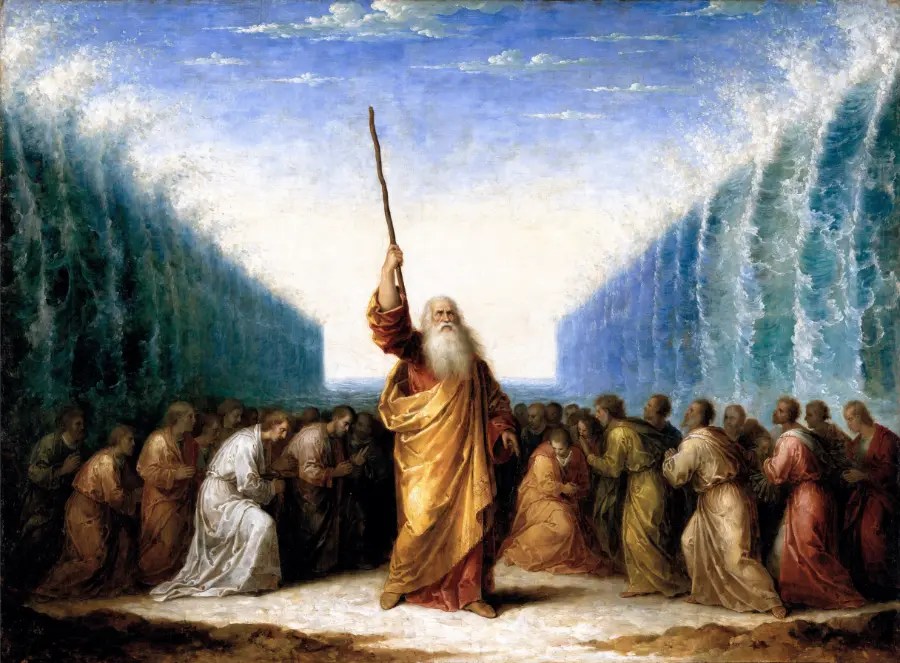
Elijah then challenged the prophets of Baal on Mount Carmel. They called on Baal all day and “cut themselves after their manner with knives and lancets,” with no answer (1 Kings 18:28). When Elijah prayed, “the fire of the LORD fell, and consumed the burnt sacrifice,” the people cried, “The LORD, he is the God,” and Elijah had the prophets of Baal killed at the brook Kishon (1 Kings 18:38–40).
When Ahab told Jezebel, she sent Elijah an oath: “So let the gods do to me, and more also, if I make not thy life as the life of one of them by to morrow about this time” (1 Kings 19:2). The Greek Septuagint begins her message with a taunt: “If thou art Eliu and I am Jezabel.” Elijah “went for his life” to Beersheba and into the wilderness, where an angel fed him, and then walked forty days to “Horeb the mount of God” (1 Kings 19:3–8). The text gives no reason for his flight beyond her threat, but she had already killed other prophets of the Lord.
What happened to Naboth’s vineyard?
Naboth owned a vineyard in Jezreel next to Ahab’s palace. Ahab offered to buy it or trade a better one, and Naboth refused: “The LORD forbid it me, that I should give the inheritance of my fathers unto thee” (1 Kings 21:3). Israel’s law held that family land belonged to God and could not be sold for good: “The land shall not be sold for ever: for the land is mine” (Leviticus 25:23). Ahab went home, lay on his bed and would not eat. Jezebel told him, “Dost thou now govern the kingdom of Israel? … I will give thee the vineyard of Naboth the Jezreelite” (1 Kings 21:7).
| Step | What happened | Passage |
|---|---|---|
| 1 | Jezebel writes letters in Ahab’s name, seals them with his seal and sends them to the elders and nobles of Jezreel. | 1 Kings 21:8 |
| 2 | The letters order a fast and two false witnesses, “sons of Belial,” to swear that Naboth blasphemed God and the king. | 1 Kings 21:9–10 |
| 3 | The elders obey. Naboth is taken outside the city and stoned. | 1 Kings 21:11–14 |
| 4 | His sons are killed too. Jehu later recalls the Lord’s word: “Surely I have seen yesterday the blood of Naboth, and the blood of his sons.” | 2 Kings 9:26 |
| 5 | Jezebel tells Ahab to take the vineyard, and he goes down to claim it. | 1 Kings 21:15–16 |
| 6 | Elijah meets him there: “Hast thou killed, and also taken possession?” | 1 Kings 21:17–19 |
| 7 | Elijah prophesies the end of Ahab’s house and says, “The dogs shall eat Jezebel by the wall of Jezreel.” | 1 Kings 21:21–23 |
The plot kept to the forms of Israel’s law, which punished blasphemy by stoning (Leviticus 24:16) and required “two witnesses, or three witnesses” for a death sentence (Deuteronomy 17:6). Jezebel supplied both the charge and the witnesses, and the elders stoned an innocent man.
How did Jezebel die?
Ahab died first, struck by an arrow in battle against the Syrians, and in Samaria “the dogs licked up his blood” (1 Kings 22:34–38). Jezebel lived on through the reigns of both her sons, about ten years by Britannica’s dates, and died around 843 BC. The Bible does not give her age.
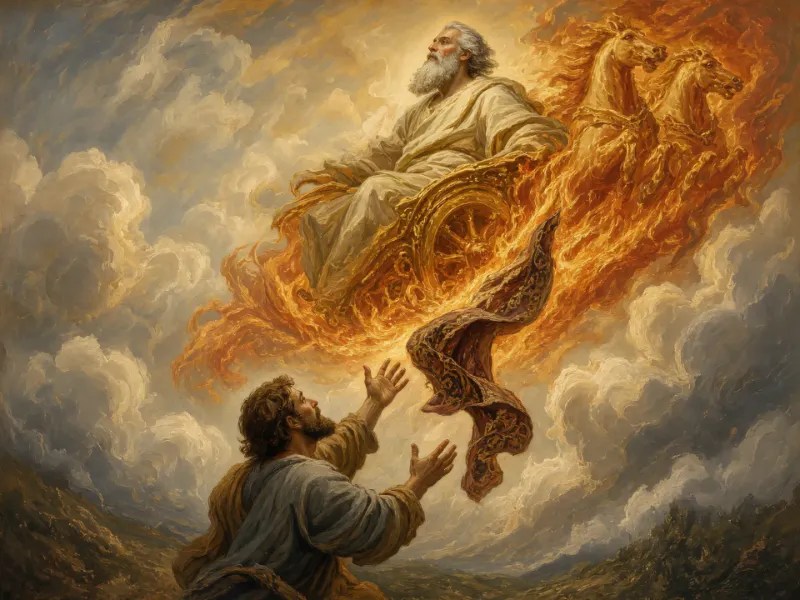
The prophet Elisha sent one of “the children of the prophets” to anoint Jehu, an army commander, as king, with orders to strike down Ahab’s house, “that I may avenge the blood of my servants the prophets … at the hand of Jezebel” (2 Kings 9:1–7). Jehu shot King Joram on Naboth’s land outside Jezreel, had the body thrown there, and then entered the city (2 Kings 9:21–30).
Jezebel knew he was coming, and Kings tells us what she did: “She painted her face, and tired her head, and looked out at a window” (2 Kings 9:30). Modern translations, such as the one Gaines quotes, read “painted her eyes with kohl,” a dark eye paint. The text does not say why she did it. The traditional reading is that she hoped to seduce Jehu, while Gaines reads it as a queen dressing to meet her death. As Jehu came through the gate, she called down, “Had Zimri peace, who slew his master?” Zimri, “captain of half his chariots,” had killed King Elah and reigned only seven days before he died in the burning palace (1 Kings 16:8–18).
Jehu called, “Who is on my side? who?” Two or three eunuchs looked out, and he said, “Throw her down.” Her blood “was sprinkled on the wall, and on the horses,” and “he trode her under foot” (2 Kings 9:32–33). After eating, Jehu ordered her burial, “for she is a king’s daughter,” but his men found “no more of her than the skull, and the feet, and the palms of her hands.” Jehu called it the fulfillment of Elijah’s word (2 Kings 9:34–37), and went on to kill the rest of Ahab’s family and the worshippers of Baal: “Thus Jehu destroyed Baal out of Israel” (2 Kings 10:11–28).
Did God forgive Jezebel?
The Bible records no repentance from her, though it records one from Ahab. After Elijah’s prophecy, Ahab “rent his clothes, and put sackcloth upon his flesh, and fasted,” and God told Elijah, “because he humbleth himself before me, I will not bring the evil in his days: but in his son’s days” (1 Kings 21:27–29). Nothing similar is said of Jezebel. The woman called Jezebel in Revelation is likewise given “space to repent of her fornication; and she repented not” (Revelation 2:21).
Was Jezebel a prostitute or a witch?
Jehu is the only one who accuses her of either. When Joram asked, “Is it peace, Jehu?”, he answered, “What peace, so long as the whoredoms of thy mother Jezebel and her witchcrafts are so many?” (2 Kings 9:22). The prophets used the same word for idolatry: in Hosea, “the land hath committed great whoredom, departing from the LORD” (Hosea 1:2). Gaines points out that the books of Kings give no account of Jezebel being unfaithful to Ahab. Quine notes that the image of Jezebel as a seductress comes from Revelation 2:20–22 and is not found in the Hebrew Bible. Kings charges her with idolatry, the killing of the prophets and the murder of Naboth.

Who is Jezebel in Revelation 2:20?
She is a woman in the church at Thyatira, one of the seven churches “which are in Asia” (Revelation 1:11) and the home city of Lydia, “a seller of purple” (Acts 16:14). She is not Ahab’s wife: Queen Jezebel died in the ninth century BC, and Revelation dates from the late first century AD. The message of “the Son of God” to that church says:
Notwithstanding I have a few things against thee, because thou sufferest that woman Jezebel, which calleth herself a prophetess, to teach and to seduce my servants to commit fornication, and to eat things sacrificed unto idols. And I gave her space to repent of her fornication; and she repented not.
Revelation 2:20–21
Her name ties her to the queen who led Israel into idolatry, though the text does not say whether it was her real name or a label for her teaching. Tertullian, in his treatise On Modesty, called her “an heretical woman, who had taken upon herself to teach what she had learned from the Nicolaitans,” a sect condemned in the same chapter (Revelation 2:6, 15). Christ threatens her followers with “great tribulation, except they repent of their deeds,” and spares those who “have not this doctrine” (Revelation 2:22–24).
What did early Christian writers say about Jezebel?
Early Christian writers held her up as a picture of sin. Ambrose, bishop of Milan in the fourth century, wrote On Naboth, a sermon against the greed of the rich that uses Ahab and Jezebel as its warning. A Coptic sermon in praise of Elijah, once attributed to John Chrysostom, says that when her prophets died “she became mad like an infuriated bear,” and warns rich men not to support wicked wives against the poor. Its translator, E. A. Wallis Budge, notes that Chrysostom cannot have written it, because Chrysostom held that Elijah sinned in fleeing from Jezebel.
What is the “Jezebel spirit”? Is Jezebel a demon?
Jezebel was a human queen, and the Bible never calls her a demon. The phrase “Jezebel spirit” comes from modern popular Christian books, such as Francis Frangipane’s The Three Battlegrounds (1994) and John Paul Jackson’s Unmasking the Jezebel Spirit (2001). These authors describe it as a demon, a spirit or a stronghold behind manipulation, control, sensuality, witchcraft, false teaching and hatred of male authority, especially in churches, and Frangipane treats the fight against it as spiritual warfare.
A 2009 study in the journal Verbum et Ecclesia by Trudie Stark and Hans van Deventer examined these books and concluded, “The Bible mentions Jezebel but does not reveal a ‘Jezebel spirit’ or ‘spirit of Jezebel’.” They found that none of the passages the authors cite names such a spirit, and they judged the idea a misreading of the stories in Kings. Where the phrase means only behavior like Jezebel’s, Scripture has a parallel in John the Baptist, who came “in the spirit and power of Elias” (Luke 1:17): in Elijah’s manner and calling, not with Elijah’s own spirit inside him.
What does “Jezebel” mean today?
In ordinary English, a “jezebel” is, in Merriam-Webster’s words, “an impudent, shameless, or morally unrestrained woman.” In popular culture the name often suggests a seductress, a sense drawn from Revelation rather than from Kings. Gaines points to the 1938 film Jezebel, with Bette Davis as a temptress who leads a man to his death, as evidence of how long that reputation has lasted.
The name was also used in the United States as a racist stereotype. David Pilgrim of the Jim Crow Museum at Ferris State University documents how, from slavery onward, Black women were portrayed as naturally promiscuous “Jezebels,” an image used during slavery to excuse the sexual abuse of enslaved women by white men.
Some scholars read part of the biblical portrait itself as distrust of a powerful foreign woman. Athalya Brenner, in the Shalvi/Hyman Encyclopedia of Jewish Women, attributes the resentment of Jezebel at least partly to the Bible’s general dislike of powerful women. She points out that Jezebel held real power at Ahab’s court: she had her own “table,” her own prophets and the use of the king’s seal.
Kings remembers her for the prophets she killed and for one man who would not sell the land God had given his fathers. “The LORD forbid it me,” Naboth said, “that I should give the inheritance of my fathers unto thee” (1 Kings 21:3). He lost his life for that answer, and his blood was not forgotten. The question in her name had been answered long before she died, on Carmel, in the people’s cry: “The LORD, he is the God.”


Leave a Reply