
 English
 Chinese
 Dutch
 Arabic
 Spanish
 Portuguese
 Russian
 French
 Italian
 German
 Japanese
Nineteen has no symbolic meaning in the Bible. It is one of the plainest numbers in Scripture — it counts things, and that is all it does.
But it appears at one of the darkest moments in the Old Testament, and that is worth knowing.
Where nineteen appears
It turns up a handful of times, always as a count.
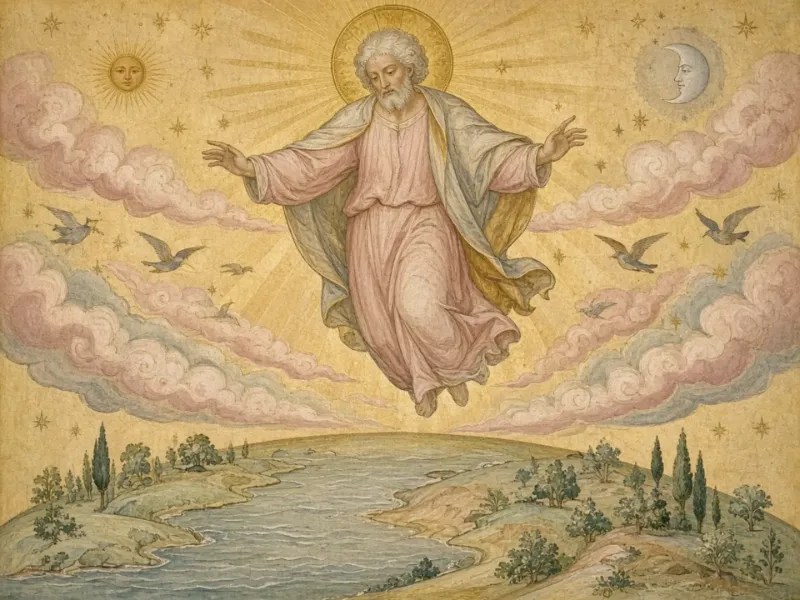
Joshua 19:38 lists nineteen towns in the territory of Naphtali. 2 Samuel 2:30 reports that after a skirmish, nineteen men besides Asahel were found missing from David’s forces. 1 Chronicles records nineteen in a genealogical count.
None of these carries any weight beyond the arithmetic. There is no pattern, no repetition, no prophetic use.
The nineteenth year
There is one exception, and it is not a small one.
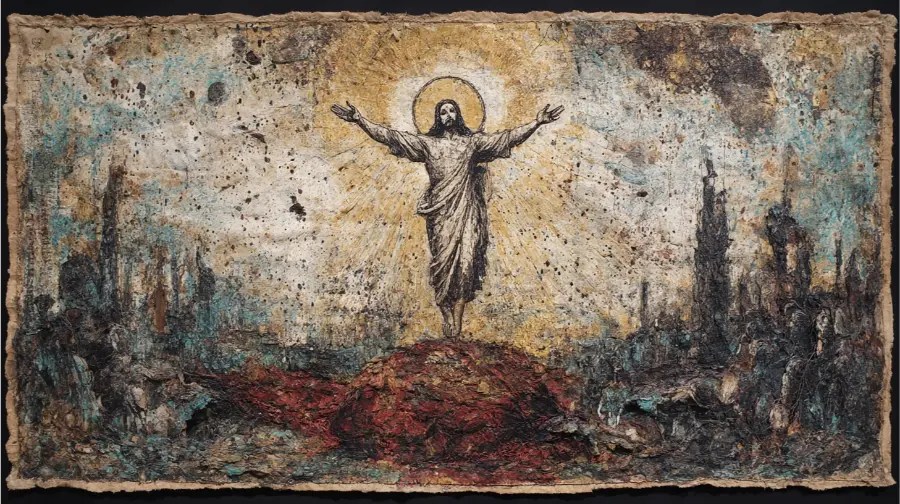
On the seventh day of the fifth month, in the nineteenth year of Nebuchadnezzar king of Babylon, Nebuzaradan commander of the imperial guard, an official of the king of Babylon, came to Jerusalem. He set fire to the temple of the Lord, the royal palace and all the houses of Jerusalem. Every important building he burned down. (2 Kings 25:8-9)
Jeremiah 52:12 records the same date.
That is the fall of Jerusalem and the burning of Solomon’s temple in 586 BC — the end of the kingdom of Judah, the beginning of the exile, and the event the whole prophetic literature is oriented around, either warning of it or answering it.
It is dated by the nineteenth year of a foreign king. Not by a year of Israel’s own, because there was no longer a king of Israel worth counting by. The dating itself is part of the humiliation.
Why there is no “biblical numerology” of nineteen
Some numbers do carry meaning in Scripture, and the meaning is not hidden. Seven runs through creation and the festivals and Revelation. Forty marks periods of testing — the flood, the wilderness, the temptation. Twelve counts the tribes and then the apostles, deliberately. Three appears at the resurrection and in the shape of the divine name.
These are patterns the text itself establishes by repetition and comment. Nineteen has no such pattern. Neither do most numbers.
Systems that assign a meaning to every number — nineteen as faith, or judgment, or divine order — are working from outside the text. Some borrow from Jewish gematria, which is a real and old interpretive practice but a rabbinic one rather than a biblical instruction. Others are simply invented, and repeat each other.
The honest position is that the Bible uses numbers symbolically sometimes and countably most of the time, and that telling the difference requires reading rather than a chart.
Seeing 19 repeatedly
People often come to a question like this because a number has started appearing — on clocks, receipts, door numbers.
There is a well-documented explanation, and it is not a dismissal. Attention works this way: once a thing is noticed, it is noticed again, and the repeats feel significant because we were not counting the hundreds of times we saw other numbers.
Scripture’s counsel is consistent. Do not practise divination or seek omens (Leviticus 19:26). The warning is not about God being silent — it is about us reading messages into noise and then having to obey them.
When God directs someone in the Bible, it is by words, through prophets, in Scripture, and in the person of Christ. It is never by a recurring figure that requires a system to decode.

What to do instead
If a number has been on our minds, something usually sits underneath it — a decision, a fear, a date we are counting towards.
That is worth praying about directly, and Scripture invites exactly that: Do not be anxious about anything, but in every situation, by prayer and petition, with thanksgiving, present your requests to God. (Philippians 4:6)
Present the actual request. It is a shorter route than the number.
Frequently asked
Does the number 19 mean faith in the Bible?
No. Scripture assigns it no meaning. That claim comes from modern numerology systems, not from the text.
How many times does 19 appear in the Bible?
A handful, depending on the translation and on whether ordinal uses are counted. Every one is a plain count — towns, men, years.
Which numbers do carry meaning in Scripture?
Chiefly seven, forty, twelve and three, and in each case the meaning is established by the text’s own repeated use rather than assigned from outside.
What happened in the nineteenth year of Nebuchadnezzar?
Jerusalem fell and the temple was burned (2 Kings 25:8-9; Jeremiah 52:12), in 586 BC.
More from this seriesBiblical NumerologySee all 53 articles

Leave a Reply