
 English
 Chinese
 Dutch
 Arabic
 Spanish
 Portuguese
 Russian
 French
 Italian
 German
 Japanese
Phillips Brooks, the rector of the Church of the Holy Trinity in Philadelphia, wrote “O Little Town of Bethlehem” for his Sunday school to sing at Christmas 1868, and Lewis Redner, the church’s organist, wrote the tune. Three years before, Brooks had spent Christmas Eve in Bethlehem itself, and his carol speaks to the town the way the prophet Micah did: “But thou, Bethlehem Ephratah, though thou be little among the thousands of Judah, yet out of thee shall he come forth unto me that is to be ruler in Israel” (Micah 5:2).
He wrote it for children, and neither he nor Redner expected it to be sung after that one Christmas. It has been printed in some 900 hymnals. You will find it among the other great carols, each with its writer and its date, in our guide to Christmas hymns and carols.
The words of O Little Town of Bethlehem
These are the four verses churches sing, as the hymn scholar Louis F. Benson printed them in 1903 in his Studies of Familiar Hymns, with a note that his text “agrees with the author’s manuscript”:
O little town of Bethlehem,
How still we see thee lie;
Above thy deep and dreamless sleep
The silent stars go by:
Yet in thy dark streets shineth
The everlasting Light;
The hopes and fears of all the years
Are met in thee to-night.For Christ is born of Mary;
And gathered all above,
While mortals sleep, the angels keep
Their watch of wondering love.
O morning stars, together
Proclaim the holy birth;
And praises sing to God the King,
And peace to men on earth.How silently, how silently,
The wondrous gift is given!
So God imparts to human hearts
The blessings of His heaven.
No ear may hear His coming,
But in this world of sin,
Where meek souls will receive Him still,
The dear Christ enters in.O holy Child of Bethlehem,
Descend to us, we pray;
Cast out our sin, and enter in,
Be born in us to-day.
We hear the Christmas angels
The great glad tidings tell;
O come to us, abide with us,
Our Lord Emmanuel.
Brooks first wrote five verses, and the one he later took out is further down this page. The English Hymnal, printed in England in 1906, has all five, with the two halves of the second verse swapped so that it begins “O morning stars, together”, and it sings them to a different tune.
What inspired O Little Town of Bethlehem?
Brooks was thirty in 1865, the year he set out on more than a year of travel abroad, and by December he had reached Jerusalem. On Saturday 30 December he wrote home about the Sunday just gone, which was Christmas Eve. After the morning service in the English church and an early dinner, he and his companions “took our horses and rode to Bethlehem. It was only about two hours when we came to the town, situated on an eastern ridge of a range of hills, surrounded by its terraced gardens.” He thought it “a good-looking town, better built than any other we have seen in Palestine.” The great Church of the Nativity stood out above everything else there, shared, he wrote, by the Greeks, the Latins and the Armenians, and the travellers were given a room in the Greek convent.
Before dark they rode out to the field where, he was told, the shepherds had seen the star, and he wrote that “somewhere in those fields we rode through the shepherds must have been”. As they passed, “the shepherds were still ‘keeping watch over their flocks,’ or leading them home to fold.” Then they went back for the night service, which “began about ten o’clock and lasted until three”, and it ended with an image of the child carried in procession and laid in the manger in the grotto under the church. The long hours tired him out, and what interested him most was “the crowd of pilgrims, with their simple faith and eagerness to share in the ceremonial.”
About eight weeks later, on 19 February 1866, he wrote from Rome to the children of his Sunday schools in Philadelphia. “I remember especially on Christmas Eve,” he told them, “when I was standing in the old church at Bethlehem, close to the spot where Jesus was born, when the whole church was ringing hour after hour with the splendid hymns of praise to God, how again and again it seemed as if I could hear voices that I knew well, telling each other of the ‘Wonderful Night’ of the Saviour’s birth, as I had heard them a year before.” And three Christmases later he gave those same children a carol about the place.
You may read, in John Julian’s Dictionary of Hymnology and on the hymn sites that quote it, that Brooks spent Christmas 1866 in Bethlehem. His own letters are dated December 1865, though, and by September 1866 he was home again.
Who wrote the music for O Little Town of Bethlehem?
Lewis H. Redner (1831–1908) was Holy Trinity’s organist, and he was also superintendent of its Sunday school and taught one of its classes. When Benson was gathering the story for his book, he went to see Redner at his office on Walnut Street in Philadelphia one winter afternoon, and by his own account he stood over him, gently prodding past his modest protests, until Redner wrote down how the tune came to be:
“As Christmas of 1868 approached, Mr. Brooks told me that he had written a simple little carol for the Christmas Sunday-school service, and he asked me to write the tune to it. The simple music was written in great haste and under great pressure. We were to practice it on the following Sunday. Mr. Brooks came to me on Friday, and said, ‘Redner, have you ground out that music yet to “O Little Town of Bethlehem”?’ I replied, ‘No,’ but that he should have it by Sunday. On the Saturday night previous my brain was all confused about the tune. I thought more about my Sunday-school lesson than I did about the music. But I was roused from sleep late in the night hearing an angel-strain whispering in my ear, and seizing a piece of music paper I jotted down the treble of the tune as we now have it, and on Sunday morning before going to church I filled in the harmony. Neither Mr. Brooks nor I ever thought the carol or the music to it would live beyond that Christmas of 1868.”
The children sang it to Redner’s tune at their Christmas service on Sunday 27 December 1868, from the programme where the carol was first printed. A Philadelphia bookseller, Richard McCauley, printed it on leaflets to sell, and in 1870 the words went into a book for the first time, The Sunday School Service and Hymn Book. In 1874 William R. Huntington printed words and tune together in The Church Porch, and it was he who gave the tune the name it still carries, “St. Louis”. By 1892 the carol had a place in the official hymnal of Brooks’s own Episcopal Church.
In Britain it first appeared in W. Garrett Horder’s Treasury of Hymns in 1896, and The English Hymnal of 1906 set it to “Forest Green”, an English folk tune that Ralph Vaughan Williams had taken down in December 1903 from a Mr. Garman at Forest Green, in Surrey.
The verse Brooks left out
Many years later, writing down his memories of Brooks in Philadelphia, Redner said that in the programme of that first Christmas he had found a verse “which was not afterwards published in any of the hymn-books”. Brooks’s biographer printed it from Redner’s account:
Where children pure and happy
Pray to the Blessed Child,
Where misery cries out to Thee,
Son of the Mother mild;
Where Charity stands watching,
And Faith holds wide the door,
The dark night wakes, the glory breaks,
And Christmas comes once more.
It stood fourth, just before “O holy Child of Bethlehem”, and Redner told Benson what became of it. The trouble was in the fourth line of that verse: “The fourth line led to some amusing criticism lest it should smack of the doctrine of the Immaculate Conception,” he wrote. The Immaculate Conception is the Catholic teaching, proclaimed by Pope Pius IX in 1854, that Mary was “preserved immune from all stain of original sin” from the first moment of her own conception, and the critics feared the line might be read that way. So Brooks changed the line, and the verse printed here, as the 1868 programme has it, is the changed one. Even so, Redner went on, “he afterwards decided to omit the fourth verse altogether from the carol.” When the carol went into The Church Porch in 1874 the verse was gone, and most hymnals have done without it ever since, though The English Hymnal brought it back in 1906 with the changed line.
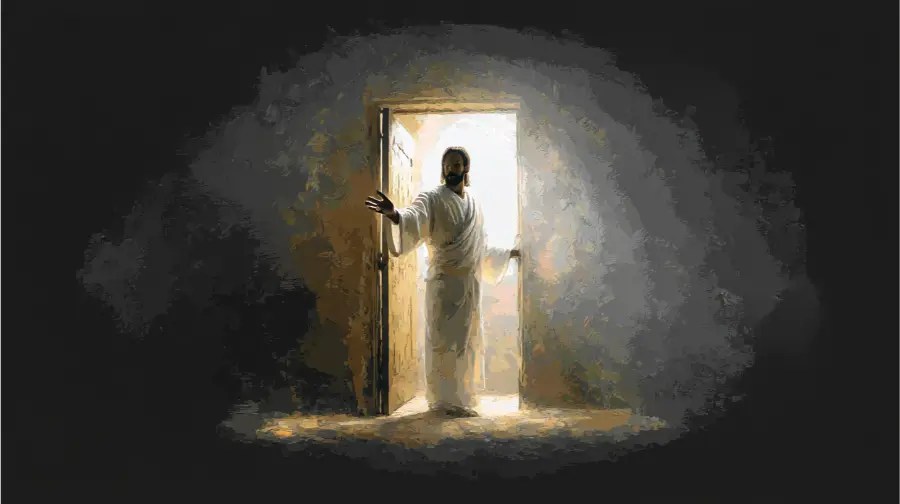
Micah’s little town: the Scripture behind the carol
When the wise men came to Jerusalem asking for the newborn king, Herod called the chief priests and scribes, and they answered him from Micah’s verse: “In Bethlehem of Judaea: for thus it is written by the prophet, And thou Bethlehem, in the land of Juda, art not the least among the princes of Juda: for out of thee shall come a Governor, that shall rule my people Israel” (Matthew 2:5–6). Luke tells us how the child came to be born there, for Joseph went up “unto the city of David, which is called Bethlehem; (because he was of the house and lineage of David:)” (Luke 2:4). We tell that story in full, and why God chose David’s town, in why Jesus was born in Bethlehem.
Brooks rode the 9 or 10 kilometres (5 or 6 miles) from Jerusalem to Bethlehem in about two hours, and in Jesus’ day it was a village of perhaps 300 to 3,000 people. We go through the evidence for those numbers in how big Bethlehem was when Jesus was born.
The rest of the carol is threaded with Scripture too. The “morning stars” asked to proclaim the holy birth come from God’s question to Job, “When the morning stars sang together, and all the sons of God shouted for joy?” (Job 38:7), a line usually taken to mean the angels. The light shining in the dark streets is John’s light: “And the light shineth in darkness; and the darkness comprehended it not” (John 1:5). “Peace to men on earth” is the angels’ song to the shepherds, “on earth peace, good will toward men” (Luke 2:14), and the carol’s last word is the name Matthew gives the child, “Emmanuel, which being interpreted is, God with us” (Matthew 1:23).
Benson, in 1903, asked his readers what they made of “The hopes and fears of all the years Are met in thee to-night”. Micah gives us one answer. The ruler he promised to little Bethlehem is the one “whose goings forth have been from of old, from everlasting”, so on that one night, in that one village, all the centuries of waiting met the child they had waited for.
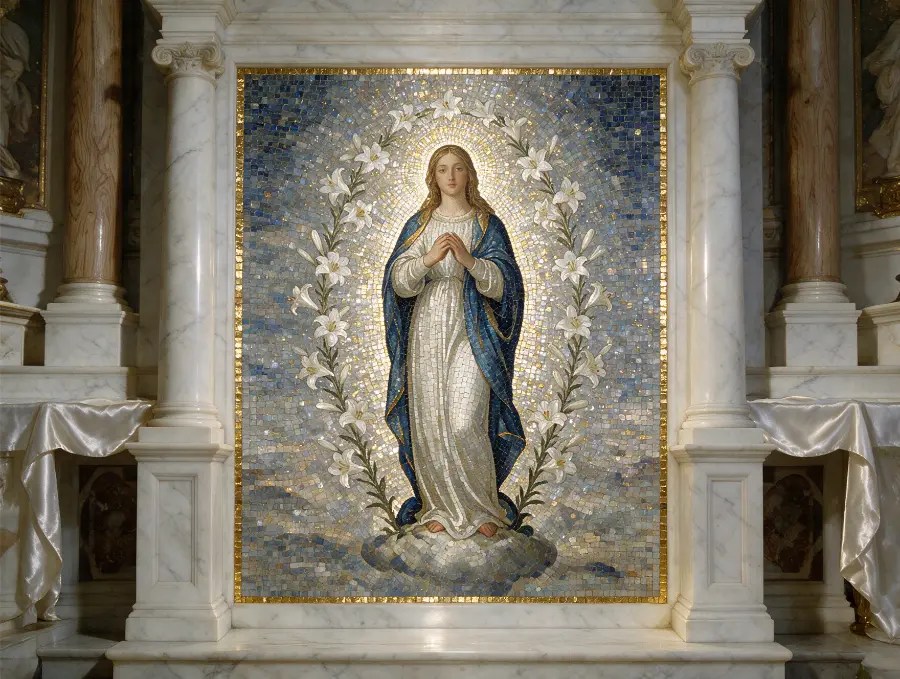
“The dear Christ enters in”
In the third and fourth verses the carol turns from Bethlehem to us. “No ear may hear His coming,” Brooks wrote, and yet wherever meek souls will receive him, he still comes in. Chris Fenner hears a possible echo there of the risen Christ’s words to the church at Laodicea: “Behold, I stand at the door, and knock: if any man hear my voice, and open the door, I will come in to him” (Revelation 3:20). The hymnologist Carl Daw noticed how Brooks rhymed inside the longer lines, “While mortals sleep, the angels keep”, “So God imparts to human hearts”, and took it for care over what children could learn by heart.
The last verse is a prayer a child can pray, that the holy Child of Bethlehem would “Be born in us to-day”. Paul longed for the same when he wrote to the Galatians, his “little children, of whom I travail in birth again until Christ be formed in you” (Galatians 4:19). Brooks gave that prayer to the children whose voices he had heard in his mind in the church at Bethlehem, and we have been singing it with them ever since: “O come to us, abide with us, Our Lord Emmanuel.”
Related reading
- The great Christmas hymns and carols, with their writers and dates
- Why Jesus was born in Bethlehem: Micah’s prophecy and David’s town
- Where Jesus was born: Bethlehem, and why people also say Nazareth
- How big Bethlehem was when Jesus was born
- Who the shepherds of the nativity were
- O Come, O Come, Emmanuel and the seven O Antiphons


Leave a Reply