
 English
 Chinese
 Dutch
 Arabic
 Spanish
 Portuguese
 Russian
 French
 Italian
 German
 Japanese
Psalm 23 is David’s song of trust in God, first as a shepherd who feeds, leads and guards his sheep, then as a host who sets a table for his guest. It says that with the Lord we lack nothing we need, fear nothing in the dark, and have a home with him for ever.
Listen to how the voice changes as the psalm goes on. In the first three verses David talks about God: “he maketh me,” “he leadeth me,” “he restoreth my soul.” Then the path drops into the valley of the shadow of death, and David turns and speaks to him: “for thou art with me.” Through verse 5 he is no longer describing the Shepherd. He is talking to him, and only in the last line does he speak of “the house of the LORD” again. That is what the dark does to faith when the Shepherd is near. Our sentences about God become prayers to him.

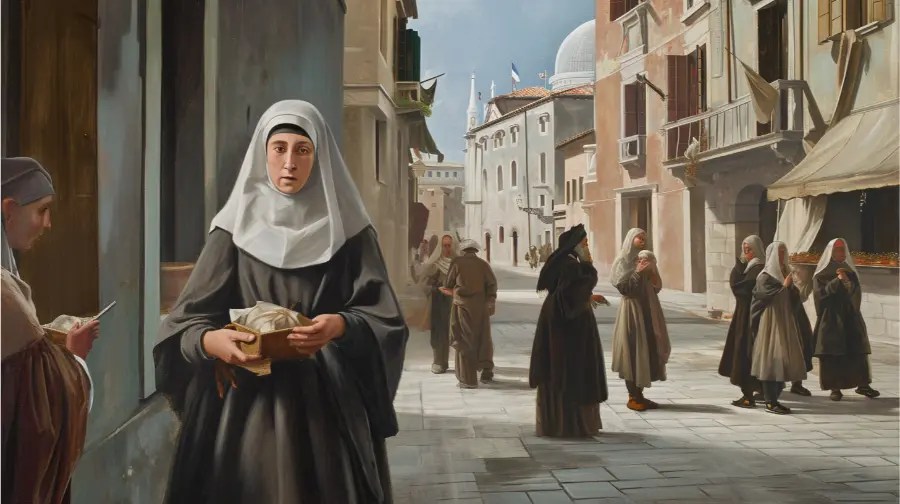
Psalm 23 in the King James Version
1 The LORD is my shepherd; I shall not want.
2 He maketh me to lie down in green pastures: he leadeth me beside the still waters.
3 He restoreth my soul: he leadeth me in the paths of righteousness for his name’s sake.
4 Yea, though I walk through the valley of the shadow of death, I will fear no evil: for thou art with me; thy rod and thy staff they comfort me.
5 Thou preparest a table before me in the presence of mine enemies: thou anointest my head with oil; my cup runneth over.
6 Surely goodness and mercy shall follow me all the days of my life: and I will dwell in the house of the LORD for ever.
Six verses, and two pictures. In verses 1 to 4 we are sheep in the Shepherd’s care. In verses 5 and 6 we are guests in the house of a generous host.
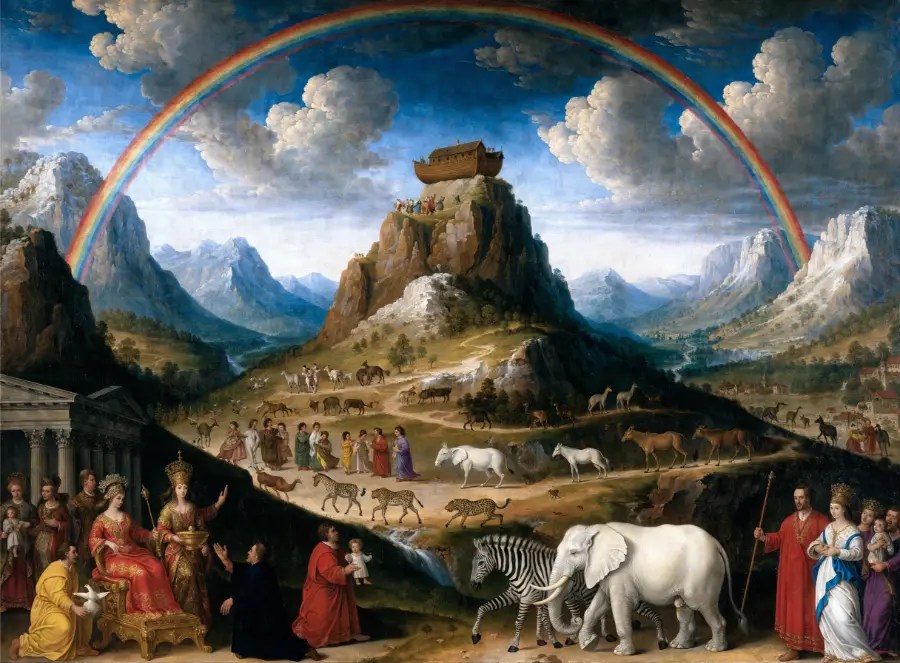
Who wrote Psalm 23, and when?
The heading over the psalm gives it to David. He knew the work from the inside. When Samuel came to Bethlehem to anoint a king, David was the son left out in the fields: “There remaineth yet the youngest, and, behold, he keepeth the sheep” (1 Samuel 16:11). Later he told Saul how a lion and a bear had each taken a lamb, and how he went after them: “I went out after him, and smote him, and delivered it out of his mouth” (1 Samuel 17:35). Another psalm remembers that God “took him from the sheepfolds” to shepherd his people (Psalm 78:70).
The psalm gives no date and names no event, so any setting in David’s life is a guess. Charles Spurgeon, in The Treasury of David, his long commentary on the psalms, pictured David singing it under a tree with his flock around him, and then allowed the other possibility: “if the psalm be the product of his after-years,” his soul had gone back to the pastures of his youth. Either way, a shepherd is singing about his own Shepherd.
In some Bibles you will find it as Psalm 22. The Greek Septuagint and the Latin Vulgate join the Hebrew Psalms 9 and 10 into one, so most of the psalms after them carry a number one lower, and Bibles translated from the Greek or the Latin, such as the Catholic Douay-Rheims, follow that count. The Douay-Rheims opens it, “The Lord ruleth me: and I shall want nothing.”
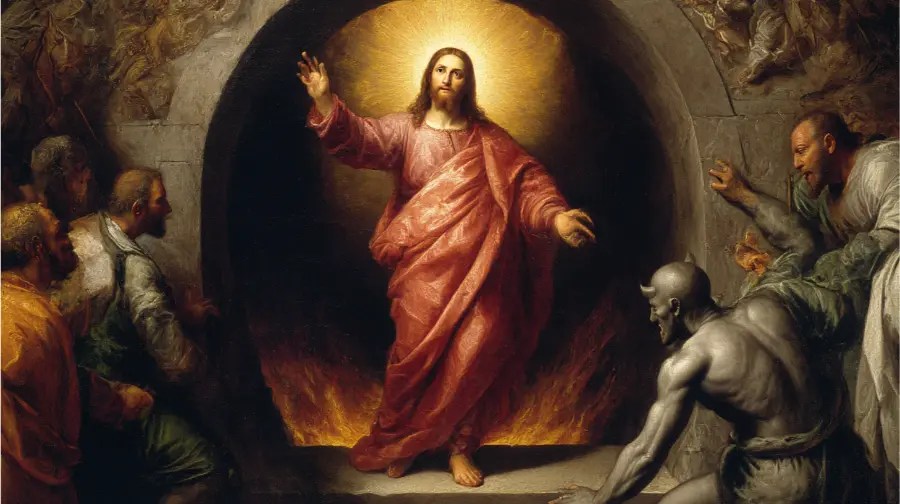
What does “The LORD is my shepherd; I shall not want” mean?
Israel called God a shepherd from its beginnings. Blessing his son Joseph, the aged Jacob named God “the mighty God of Jacob” and “the shepherd, the stone of Israel” (Genesis 49:24), and another psalm prays, “Give ear, O Shepherd of Israel, thou that leadest Joseph like a flock” (Psalm 80:1). What David adds is one small word. The Shepherd of a whole people is “my shepherd.” The God of nations knows one man by name, and he knows us the same way.
“I shall not want” means I shall not lack. It does not promise everything we would like. It promises that a sheep in this Shepherd’s care will not go without what it needs, and the rest of the psalm lists what that is: rest, water, a restored soul, a right path, company in the dark, a table, and a home.
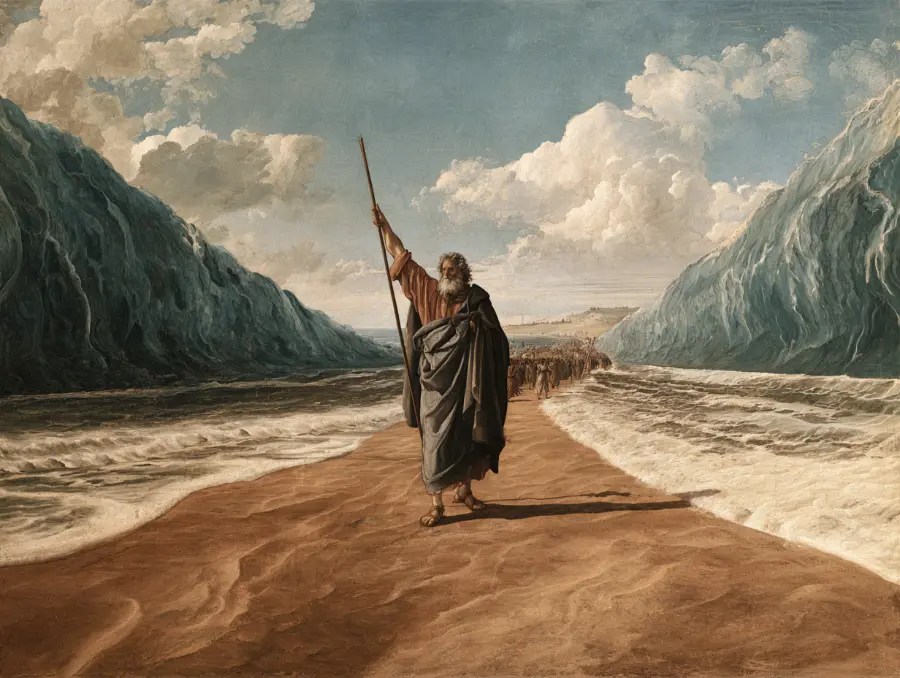
Why does the Shepherd make me lie down in green pastures?
“He maketh me to lie down in green pastures: he leadeth me beside the still waters” (Psalm 23:2). Food and drink, and rest. Notice who does the work. The Shepherd makes the sheep lie down; he leads it to the water. Through the prophet Ezekiel God promises the same thing to a scattered people: “I will feed my flock, and I will cause them to lie down, saith the Lord GOD” (Ezekiel 34:15). Rest is something he gives. On the days when we cannot stop ourselves, we can ask him to stop us.
How does God restore my soul?
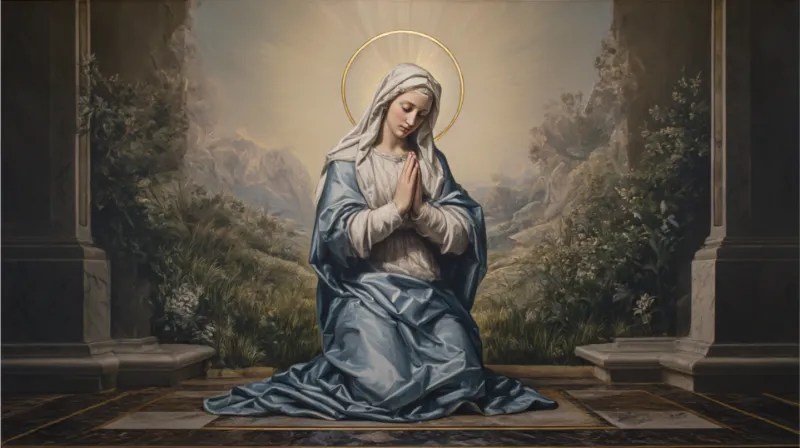
He brings us back. The Douay-Rheims, following the Latin, reads “He hath converted my soul,” that is, turned it round, and the whole Bible tells of sheep that wander. “For ye were as sheep going astray,” Peter writes, “but are now returned unto the Shepherd and Bishop of your souls” (1 Peter 2:25). Jesus told of the shepherd who leaves the ninety-nine to look for one, and “when he hath found it, he layeth it on his shoulders, rejoicing” (Luke 15:5).
Then “he leadeth me in the paths of righteousness for his name’s sake.” The right path is the one that goes somewhere good, and he leads us on it “for his name’s sake,” because of who he is. His faithfulness does not hang on our strength. Of his own sheep Jesus says, “neither shall any man pluck them out of my hand” (John 10:28).
What is the valley of the shadow of death?
The Hebrew word is tsalmaveth, which is usually explained as joining “shadow” and “death.” The Brown-Driver-Briggs lexicon defines it as death-shadow or deep shadow, and says that in this verse it pictures extreme danger. Many scholars read the word instead as “deep darkness,” and the New American Standard Bible most often renders it that way. It covers every deep darkness, and death is the deepest of them. Spurgeon wrote that this verse “has been sung on many a dying bed, and has helped to make the dark valley bright times out of mind.”
Notice the word “through.” We walk through the valley; we are not left in it. And here the psalm makes its turn. “I will fear no evil: for thou art with me.” David does not say the valley is safe. He says he is not alone in it, and in that moment he stops speaking about God and speaks to him. If you are walking through such a place now, the psalm gives you the words: Thou art with me. There is more on this verse in what it means to walk through the valley of the shadow of death.
“Thy rod and thy staff they comfort me.” These are two tools. The rod, shebet, is a club or stick, the kind of thing a shepherd swings at whatever threatens the flock; it is the same word Israel used for a ruler’s sceptre. The staff, mish’enah, is a walking-stick, something to lean on. One fights for the sheep, the other holds them up, and both comfort. The boy who went after a lion with his own hands knew how much a sheep owes to the shepherd’s arm.
What do the table, the oil and the overflowing cup mean?
In verse 5 the picture changes. The Shepherd becomes a host, and the sheep becomes a guest. “Thou preparest a table before me in the presence of mine enemies: thou anointest my head with oil; my cup runneth over.” The enemies have not gone away. They are still there, watching, and the host lays the meal anyway, pours oil on his guest’s head, and fills the cup until it spills. Oil on the head was a host’s welcome; Jesus noticed it was missing at the house of Simon the Pharisee: “My head with oil thou didst not anoint” (Luke 7:46). Our troubles do not have to vanish before God can feed us.
Christians have long seen in this table the Lord’s own table. At Jerusalem in the fourth century, the newly baptised were taught from this verse during Easter week, in lectures handed down under the name of St Cyril, the city’s bishop. “What other does he indicate,” the teacher asked, “but that mystical and spiritual Table, which God has prepared for us,” and he read the oil as the anointing with chrism they received when they were baptised. We can still hear it that way when we come to Communion, and at any table we can remember the God who sets a place for us.
Why does the psalm say goodness and mercy shall follow me?
The Hebrew verb is radaph, which usually means to pursue or chase, most often with hostile intent. Enemies chase. Here the ones who chase David are goodness and mercy. The word for mercy is hesed: kindness, lovingkindness, mercy. With enemies watching at the table, what runs after him all his life long is God’s goodness.
“And I will dwell in the house of the LORD for ever.” The sheep who began in the fields ends up living in the Shepherd’s own house. Christians hear in these words the hope of heaven, and also a promise for now: the guest of God has a place at his table today, and the door does not close.
How does Psalm 23 point to Jesus?
Jesus took the psalm’s picture as his own. “I am the good shepherd: the good shepherd giveth his life for the sheep” (John 10:11). “I am the good shepherd, and know my sheep, and am known of mine” (John 10:14). The letter to the Hebrews calls him “that great shepherd of the sheep,” whom God “brought again from the dead” (Hebrews 13:20).
Spurgeon noticed where the psalm sits. It follows Psalm 22, whose first line Jesus cried from the cross (Matthew 27:46). “It is only after we have read, ‘My God, my God, why hast thou forsaken me?’ that we come to ‘The Lord is my Shepherd.’” The Shepherd who walks with us through the valley of the shadow of death has walked the whole length of it himself, and he rose.
The last book of the Bible ends the picture where Psalm 23 ends, at home. “For the Lamb which is in the midst of the throne shall feed them, and shall lead them unto living fountains of waters: and God shall wipe away all tears from their eyes” (Revelation 7:17). The Lamb is the Shepherd, and the still waters have become living fountains. We are sheep who began in the fields, guests at his table, and one day we will be home. “I will dwell in the house of the LORD for ever.”


Leave a Reply