
 English
 Chinese
 Dutch
 Arabic
 Spanish
 Portuguese
 Russian
 French
 Italian
 German
 Japanese
Usury in the Bible is what we now call interest, any charge at all on a loan, whether the rate is cruel or small. The law of Moses forbade an Israelite to take it from a fellow Israelite, above all from one who had fallen poor, and let him take it from a foreigner (Exodus 22:25; Leviticus 25:35–37; Deuteronomy 23:19–20). The King James Bible never once says “interest”, so “usury” has to do all the work there. Since those translators set it down the word has shrunk, and it has, as the International Standard Bible Encyclopedia puts it, “come to mean an exorbitant or unlawful interest.” So we can read these old laws today and suppose they are only about loan sharks, though the law forbids all “increase” between Israelites, whether the rate is high or low.
“If thou lend money to any of my people that is poor by thee, thou shalt not be to him as an usurer, neither shalt thou lay upon him usury,” God says in Exodus 22:25, and Leviticus tells us why. A man has “waxen poor, and fallen in decay with thee,” and his neighbour is told, “Take thou no usury of him, or increase: but fear thy God; that thy brother may live with thee” (25:35–36).

How many times does the Bible say usury?
The King James Bible says “usury” 24 times in 17 verses, by our own word-by-word count of the Project Gutenberg text, and “usurer” once, in that verse of Exodus. Twenty-two of the 24 are in the Old Testament, and the only two in the New are spoken by the master in Jesus’ parables of the talents and the pounds.
| Book | Times | Verses |
|---|---|---|
| Exodus | 1 | 22:25 |
| Leviticus | 2 | 25:36, 25:37 |
| Deuteronomy | 7 | 23:19 (five), 23:20 (two) |
| Nehemiah | 2 | 5:7, 5:10 |
| Psalms | 1 | 15:5 |
| Proverbs | 1 | 28:8 |
| Isaiah | 2 | 24:2 |
| Jeremiah | 2 | 15:10 |
| Ezekiel | 4 | 18:8, 18:13, 18:17, 22:12 |
| Matthew | 1 | 25:27 |
| Luke | 1 | 19:23 |
Count in another translation and you will get other totals, because its translators chose other words.
What did the law say about lending to the poor?
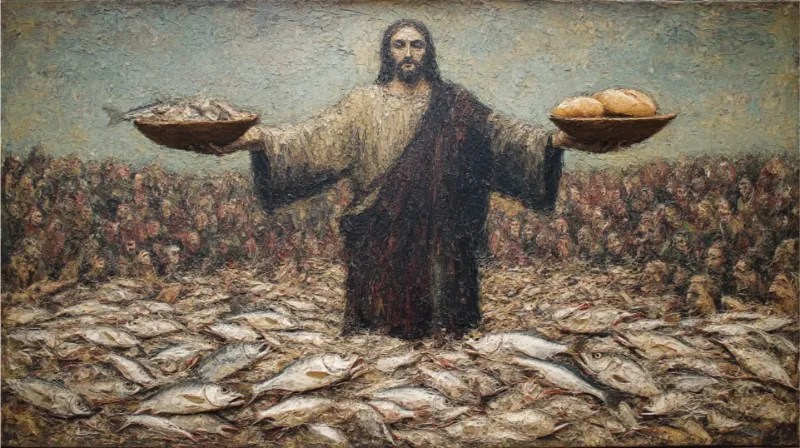
Exodus sets the rule about lending in a row of laws for people with nobody to stand up for them. Just before it comes the widow and the fatherless child, and just after it comes the neighbour’s cloak taken as a pledge, which has to go back to him by sundown, “for that is his covering only, it is his raiment for his skin: wherein shall he sleep?” When that man cries out, God says, “I will hear; for I am gracious” (Exodus 22:22–27). Deuteronomy tells a man to lend to his poor brother in the first place, “thou shalt open thine hand wide unto him, and shalt surely lend him sufficient for his need” (15:8), and eight chapters later it forbids charging a brother “usury of money, usury of victuals, usury of any thing that is lent upon usury” (23:19).
The Hebrew names this charge from both sides of the table. The word for usury, neshek, means literally “a bite,” the Jewish Encyclopedia tells us, from its painfulness to the debtor, and the “increase” of Leviticus 25:36–37 is marbit or tarbit, which names the gain on the lender’s side. The Talmud, reading Ezekiel 18, goes so far as to compare the lender on interest “to the shedder of blood,” and John Calvin, writing on Exodus 22:25, reaches for the same word when he says it can scarcely happen “but that the poor should be entirely drained by the exaction of interest, and that their blood should be almost sucked away.”

Why could an Israelite take interest from a stranger?
“Unto a stranger thou mayest lend upon usury; but unto thy brother thou shalt not lend upon usury: that the Lord thy God may bless thee in all that thou settest thine hand to in the land whither thou goest to possess it” (Deuteronomy 23:20). The verse does not say why the stranger is different, and the King James makes it harder by saying “stranger” here for the man Israel may charge and “stranger” in Leviticus for the man Israel must help, “though he be a stranger, or a sojourner” (25:35). The scholar Thomas Renz points out that the Hebrew keeps two people apart. One is the resident alien, the ger, who is to be treated like a brother, and the other is the nokri, a foreigner living outside the land, and Renz reads this second man as someone seeking a loan for business who has not fallen on hard times at all.
An editor’s note in the Jewish Encyclopedia, published between 1901 and 1906, gives a reason of fairness. Rabbis of its day, it says, held that when the Torah was given Gentiles had no law against usury and took interest from Jews, so that it counted it equitable for Jews to take interest from them, and John Calvin says nearly the same in his commentary on Exodus, that otherwise “a just reciprocity would not have been preserved.” Thomas Aquinas, who taught that “we ought to treat every man as our neighbor and brother,” took the permission for a concession, “not as though it were lawful, but in order to avoid a greater evil,” which was that they would otherwise charge one another.

Nehemiah, the Psalms and the prophets on usury
In a time of famine, in Nehemiah’s day, the cry went up against the people’s own kin, “a great cry of the people and of their wives against their brethren the Jews” (5:1). They had mortgaged their lands, vineyards and houses to buy corn, they had borrowed money for the king’s tribute, and they were handing their sons and daughters into bondage, with some of the daughters gone already. Nehemiah says he was “very angry.” He rebuked the nobles and rulers, “Ye exact usury, every one of his brother,” and when he asked them, “will ye even sell your brethren?” they “found nothing to answer.” Then he told them, “Restore, I pray you, to them, even this day, their lands, their vineyards, their oliveyards, and their houses, also the hundredth part of the money,” which was one per cent a month, and they said, “We will restore them, and will require nothing of them,” and he took their oath before the priests, and “the people did according to this promise” (Nehemiah 5:1–13). The Bible has a good deal more to say about borrowing, and the Bible’s verses about debt gather it in one place.
When the psalmist asks who may dwell on the Lord’s holy hill, one of his answers is the man “that putteth not out his money to usury,” and of such a man he promises, “He that doeth these things shall never be moved” (Psalm 15:5). Proverbs says a fortune made that way does not stay with the one who made it: “He that by usury and unjust gain increaseth his substance, he shall gather it for him that will pity the poor” (28:8). Ezekiel is the hardest of them, setting the man who “hath not given forth upon usury, neither hath taken any increase” among the just (18:8) and saying of the son who “hath given forth upon usury, and hath taken increase” that “he shall surely die; his blood shall be upon him” (18:13). And Jeremiah, calling himself “a man of strife and a man of contention to the whole earth,” protests, “I have neither lent on usury, nor men have lent to me on usury; yet every one of them doth curse me” (15:10).
Did Jesus forbid lending at interest?
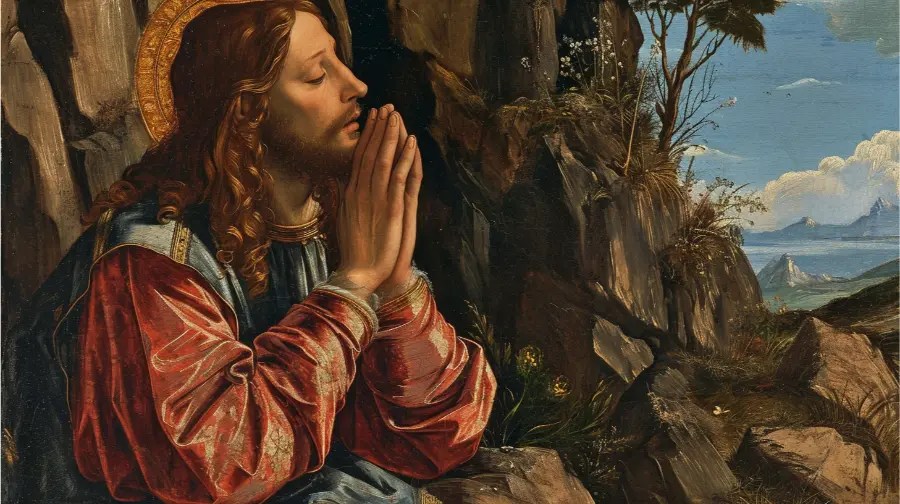
Jesus never says in so many words that lending at interest is forbidden, and in the King James he uses the word “usury” only in those two parables. What he says about lending itself asks more than the law did. “If ye lend to them of whom ye hope to receive, what thank have ye? for sinners also lend to sinners, to receive as much again,” he says in Luke 6, and then, as the King James gives it, “But love ye your enemies, and do good, and lend, hoping for nothing again; and your reward shall be great” (6:34–35). The law had told Israel not to charge a brother, and here Jesus asks his hearers to lend to an enemy and not count on getting the money back at all, and he gives the reason in the next verse, “Be ye therefore merciful, as your Father also is merciful” (6:36).
In the Latin of the Vulgate “hoping for nothing again” is nihil inde sperantes, and the Jewish Encyclopedia says the church built its ban on a mistranslation there, that the Greek really means “lend, never despairing.” It cites T. Reinach for that, while Strong’s dictionary defines the Greek verb as “to hope out, i.e. fully expect,” so we give the line as the King James has it and leave the Greek an open question. John Calvin, in a letter of 1545, took the verse to be about the poor and said Christ “did not mean at the same time to forbid loans to the rich with interest,” where Thomas Aquinas had said a man need not always lend but that “it is a matter of precept not to seek profit by lending.”
The two parables are where the word itself appears. The Greek behind the King James “usury” there is tokos, which means literally “offspring,” interest springing out of the principal, as if money had children. In the parable of the talents the master tells the servant who buried his talent, “Thou oughtest therefore to have put my money to the exchangers, and then at my coming I should have received mine own with usury” (Matthew 25:27), and in the parable of the pounds he says, “Wherefore then gavest not thou my money into the bank, that at my coming I might have required mine own with usury?” (Luke 19:23). Some readers have taken that as a plain word for lending at interest, and Aquinas answered that in this passage “usury must be taken figuratively for the increase of spiritual goods which God exacts from us.”
How did the church’s teaching on usury change?
The Council of Nicaea ruled on usury for the clergy in 325, and the Second Lateran Council in 1139 addressed every Christian. In 1515 the church made room for those who lent to the poor at cost, in 1545 John Calvin argued that Scripture had never wholly condemned usury, and the Catholic documents of 2004 and 2018 still condemn usury while accepting a fair profit. Here they are by date.
| Year | Who spoke | What it said |
|---|---|---|
| 325 | Council of Nicaea, canon 17 | A cleric found to receive usury “shall be deposed from the clergy” |
| 1139 | Second Lateran Council, canon 13 | Condemns “the ferocious greed of usurers” and denies them Christian burial unless they repent |
| 1179 | Third Lateran Council, canon 25 | Notorious usurers kept from communion and Christian burial |
| 1311–1312 | Council of Vienne | Whoever insists usury is not sinful is to be punished as a heretic |
| 1515 | Fifth Lateran Council, session 10 | Charitable lenders to the poor may ask a moderate sum for costs |
| 1545 | John Calvin, letter to a friend | Usury judged by justice and charity, not by one verse |
| 1745 | Pope Benedict XIV, Vix Pervenit | Any gain beyond the sum lent is usurious, but other contracts may bring honest gain |
| 2004 | Compendium of the Social Doctrine | Equitable profit is acceptable; usury is condemned |
| 2018 | Oeconomicae et pecuniariae quaestiones | Excessively high rates beyond what borrowers can bear are ethically illegitimate |
By 1515 magistrates and other Christians in many cities of Italy had set up credit organisations, the montes pietatis, to lend to the poor “lest they be swallowed up by the greed of usurers.” The borrower paid back what he had borrowed and, after a fixed time, “so much per pound in addition to the capital sum,” which went to pay the people who ran the place and to keep it going. Over that small charge the masters of theology and the doctors of civil and canon law fell out, “not without scandal and disquiet for ordinary people.”
Some of them called it usury, because our Lord, “according to Luke the evangelist, has bound us by a clear command that we ought not to expect any addition to the capital sum when we grant a loan,” and they asked why costs that many people ought to bear should be taken only from the poor. They had a long line of rulings behind them. Nicaea in 325 had ordered that clergy who asked “the hundredth of the sum,” the same one per cent a month Nehemiah made the nobles give back, should be “deposed from the clergy.” John Chrysostom, preaching on Matthew, had said that “nothing is baser than the usury of this world.” The Second Lateran Council in 1139 had denied usurers Christian burial unless they repented, the Third in 1179 had kept notorious usurers from communion, and the Council of Vienne in 1311–1312 had ruled that anyone who stubbornly affirmed “that the practice of usury is not sinful” was to be punished as a heretic. Thomas Aquinas had given the reason, that to charge for a loan “is to sell what does not exist,” as if a man lent wine and asked for it back with a price for drinking it as well.
The other masters answered that nothing was being asked for the loan itself. The charge met the wages and the upkeep, on the rule “that the person who experiences benefit ought also to meet the charge,” and five popes from Paul II to Julius II had approved the lenders. On 4 May 1515 the Fifth Lateran Council, under Pope Leo X, praised both sides, “the zeal for justice displayed by the former group, which desires to prevent the opening up of the chasm of usury, as well as the love of piety and truth shown by the latter group, which wishes to aid the poor.” Then it ruled. If these organisations received, in addition to the capital, “a moderate sum for their expenses” and made no profit, “It certainly should not be considered as usurious.” It added that it would be “much more perfect and more holy” if they were free altogether, with givers paying at least half the wages, “with the result that the debt of the poor would be lightened thereby,” and it offered indulgences to Christians who would give the money.
Thirty years later, in 1545, John Calvin wrote to a friend, Claude de Sachin, that “by no testimony of Scripture is usury wholly condemned,” and in the same letter, “It could be wished that all usury and the name itself were first banished from the earth.” When people told him “Money does not beget money,” the same picture as that Greek word for interest, he asked, “What does the sea beget?” and he concluded that usury “must be judged, not by a particular passage of Scripture, but simply by the rules of equity,” and is not wholly forbidden “unless it be repugnant both to Justice and to Charity.” Two hundred years after him, on 1 November 1745, Pope Benedict XIV told the bishops of Italy in Vix Pervenit that “any gain which exceeds the amount he gave is illicit and usurious,” even when it is “moderate or small,” though he allowed, as Aquinas had for partnerships with a merchant or craftsman, that from other kinds of contract “honest gain may be made.”

Jewish and Muslim teaching on interest
Maimonides held that for Jews to charge Gentiles interest was a positive command of the written law, and still he would restrict such lending “within narrow limits, lest the lender should acquire a passion for taking usury.” By his time, the Jewish Encyclopedia says, Jews “had been forced to become traders, brokers, and money-lenders.” The later Shulḥan ‘Aruk declares lending to Gentiles “allowable nowadays in all cases,” and an editor’s note in that encyclopedia, published between 1901 and 1906, says that “the modern Jew is not allowed by the Jewish religion to charge a Gentile a higher rate of interest than that fixed by the law of the land.” Between Jews the prohibition stood, and the same article describes a partnership contract, the sheṭar ‘isḳa, between a person with money and a small trader, in which the trader works for a share and the lender pays him a small wage, as the practice of its own day.
“Usury” in the Qur’an is Pickthall’s English for the Arabic ribā. In his words, “Allah permitteth trading and forbiddeth usury” (2:275), and of those who repent it says, “ye have your principal (without interest)” (2:279). The International Islamic Fiqh Academy, a body of the Organization of the Islamic Conference, resolved in December 1985 that interest charged for extending a debt that has fallen due and “the increase (or interest) on loan at the inception of its agreement are both forms of usury, which are therefore prohibited in Shariah,” and it reads the Qur’an as permitting a lender “to recover only the loan principal, no more and no less, whether it is a large amount or a small one.”

Is charging interest a sin today?
The Catholic Church today does not condemn credit itself, and it still condemns usury. The Compendium of the Social Doctrine, published in 2004, says that “the quest for equitable profit is acceptable in economic and financial activity” and that “recourse to usury is to be morally condemned,” and it quotes the warning that “Those whose usurious and avaricious dealings lead to the hunger and death of their brethren in the human family indirectly commit homicide.” The Vatican’s Oeconomicae et pecuniariae quaestiones of January 2018 speaks of “the irreplaceable social function of credit,” calls “applying excessively high interest rates, really beyond the range of the borrowers of funds,” ethically illegitimate, and encourages “cooperative credit, microcredit” for families and local economies. Neither names a rate. Some Catholic scholars, Thomas Renz reports, hold that the church’s position “has not in fact changed,” because they define usury as gain from a loan sought “without a just title.”
Other Christian writers land nearby. Christianity.com’s editors say that “the Bible does not explicitly forbid the charging of interest” and point to “a caution not to profit off the desperation of the poor,” and Renz writes that “the mere existence of interest rates is not the problem.”
The rule in Leviticus was given for a brother “fallen in decay,” and the reason God gives for it is “that thy brother may live with thee” (25:36).



Leave a Reply