Lillian é um nome com significado bíblico?


  • Lillian is not a biblical name but has spiritual connections through Christian symbolism and tradition.
  • The name Lillian, derived from “lilium,” means lily, symbolizing purity and spiritual significance in Christianity.
  • Lillian does not have Hebrew origins, but it connects with Christian faith through its symbolism and cultural history.
  • No direct biblical characters are named Lillian, but similar names and symbols carry significant meaning in Christian tradition.
This entry is part 59 of 226 in the series Nomes e os Seus Significados Bíblicos

O nome Lillian encontra-se na Bíblia?

Lillian, embora não tenha origem bíblica, é um nome que encontrou um lugar querido em muitas famílias cristãs. A sua ausência nas escrituras permite-nos refletir sobre um aspeto importante da nossa fé: a natureza viva e pulsante da nossa tradição. Assim como o Espírito Santo continua a trabalhar nas nossas vidas e no nosso mundo, também a nossa compreensão e expressão da fé evoluem.

Psychologically it’s fascinating to consider how we relate to names that aren’t explicitly biblical. There’s often a desire among the faithful to connect everything in their lives directly to scripture. But this absence can actually be an opportunity for growth. It challenges us to look beyond the literal text and consider how our faith informs all aspects of our lives, including the names we choose for our children.

The fact that Lillian isn’t in the Bible doesn’t mean it can’t carry deep spiritual significance for those who bear it. In my years of pastoral counseling, I’ve encountered many Lillians who have found powerful connections between their name and their faith journey. This speaks to the power of personal meaning-making in our spiritual lives.

Many names we consider “biblical” today weren’t used in their current form in biblical times. Names evolve, change, and take on new forms across cultures and throughout history. So while Lillian may not be found in the pages of scripture, it’s part of the ongoing story of faith that each generation writes. As we explore the rich tapestry of names, questions often arise about their origins and meanings. For instance, one might wonder, ‘nancy é um nome bíblico? ‘ While Nancy itself does not appear in the biblical texts, discussions about such names can reveal the deep connections between language, culture, and faith across generations. Each name tells a story, contributing to the broader narrative of belief and heritage.

The absence of Lillian from the Bible invites us to broaden our understanding of what makes a name “Christian.” It reminds us that our faith is not confined to the words on the page, but is a living, dynamic relationship with God that encompasses all aspects of our lives – including the names we bear and bestow upon others.

Qual é o significado do nome Lillian?

Lillian is generally understood to be derived from the Latin name “Lilium,” which means “lily.” The lily, as you may know, is a flower rich in symbolism, particularly in our Christian tradition. In fact, the lily is often associated with purity, renewal, and the resurrection of Christ. This connection alone imbues the name Lillian with a powerful spiritual significance.

In the Sermon on the Mount, our Lord Jesus speaks of the lilies of the field, using them as an example of God’s providence and care for His creation. He says, “Consider the lilies of the field, how they grow: they neither toil nor spin, yet I tell you, even Solomon in all his glory was not arrayed like one of these” (Matthew 6:28-29). This passage suggests that those named Lillian might be seen as living reminders of God’s abundant care and the beauty of trusting in Divine Providence.

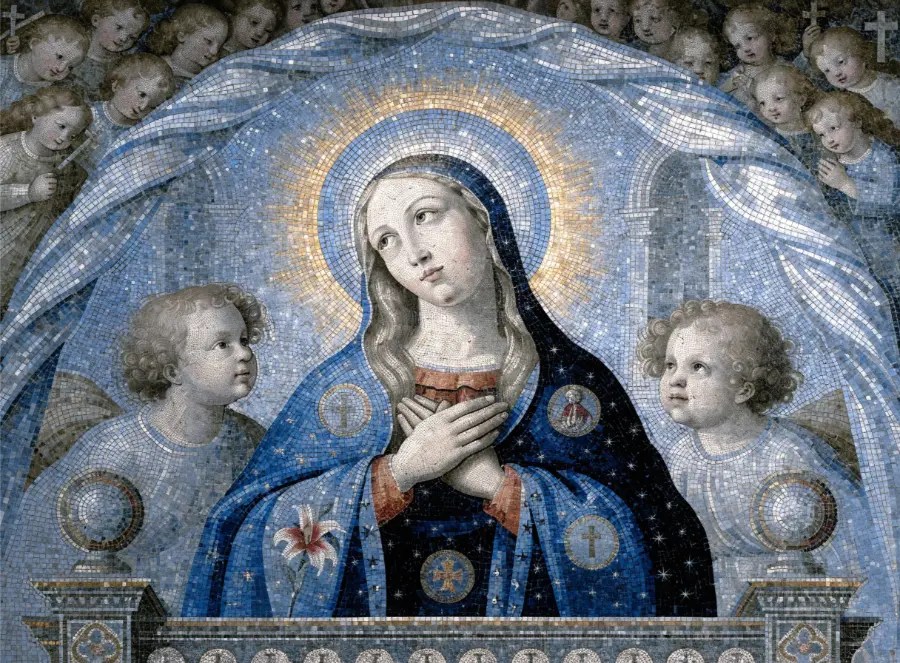
In Christian iconography, the lily is often associated with the Virgin Mary, symbolizing her purity and virtue. The Annunciation, that pivotal moment when the angel Gabriel appeared to Mary, is frequently depicted with Gabriel holding a lily. This association lends the name Lillian connotations of grace, humility, and openness to God’s will – all qualities we strive to emulate in our Christian walk.

Psychologically names can have a powerful impact on one’s sense of identity and self-concept. For a person named Lillian, these rich symbolic associations could serve as a source of inspiration and strength. The idea of being named after a flower praised by Christ himself, associated with the Mother of God, could instill a sense of purpose and a call to embody the virtues these symbols represent.

In some traditions, Lillian is considered a variant of Elizabeth, which means “God is my oath” or “God is abundance.” This connection, while not universally accepted, adds another layer of meaning, suggesting themes of fidelity to God and recognition of His bountiful blessings.

In my pastoral work, I’ve observed how people often grow into the meaning of their names. A Lillian might find herself drawn to qualities of purity, simplicity, and trust in God’s providence. The name could serve as a gentle reminder of the beauty that can flourish when one is rooted in faith.

But it’s important to remember that while names can carry these rich meanings, they don’t determine a person’s character or destiny. Rather, they can serve as an inspiration, a starting point for reflection on one’s place in God’s plan.

The name Lillian, with its connection to the lily, carries connotations of purity, trust in God, and the beauty of a life lived in faith. It’s a name that, while not biblical, resonates deeply with Christian themes and can serve as a lifelong source of spiritual reflection and inspiration for those who bear it.

Lillian tem origens hebraicas?

The name Lillian, as we discussed earlier, is most commonly associated with the Latin word “lilium,” meaning “lily.” This Latin connection points us towards a more Western European linguistic heritage rather than a Semitic one. But this doesn’t mean that the name is devoid of connections to our Judeo-Christian tradition.

It’s important to remember that our Christian faith, while deeply rooted in its Jewish origins, has always been a faith of expansion and inclusion. As the early Church spread beyond its initial Jewish context, it encountered and embraced various cultures and languages. This process of cultural exchange and adaptation is reflected in the names that have become part of our Christian heritage over the centuries.

Psychologically this lack of Hebrew origin for the name Lillian presents an interesting case study in how we relate to our faith heritage. There’s often an assumption, particularly among those new to exploring their faith deeply, that everything in Christian tradition must have a direct line back to biblical Hebrew. But the reality of our faith’s history is much more complex and rich.

The absence of Hebrew origins for Lillian doesn’t diminish its spiritual significance. Rather, it invites us to consider how our faith has grown and adapted over time, incorporating elements from various cultures while maintaining its core truths. This adaptability is, in fact, one of the strengths of our faith, allowing it to speak to people across different times and cultures.

While Lillian may not have Hebrew roots, the symbolism associated with it – particularly the lily – does have major connections to biblical imagery. The lily, as we’ve discussed, features in the teachings of Jesus and in Christian iconography related to the Virgin Mary. These connections provide a bridge between the non-Hebrew name and our biblical tradition.

Many names we consider “Christian” today come from a variety of linguistic backgrounds. Names of Greek, Latin, Germanic, and Celtic origin, among others, have all found their place in our Christian naming traditions. This diversity reflects the universal nature of our faith, which transcends any single cultural or linguistic background.

In my work I’ve observed how people often grapple with questions of authenticity in their faith journey. For someone named Lillian, the realization that their name doesn’t have Hebrew origins might initially be surprising. But this can be an opportunity for deeper reflection on the nature of our faith tradition and how it has grown and evolved over time.

It’s also an invitation to consider how God works through all cultures and languages. The Holy Spirit, as we know, is not confined to any one tongue but speaks to all peoples. The incorporation of non-Hebrew names into our Christian tradition is a beautiful testament to this universal aspect of our faith.

Embora Lillian não tenha origens hebraicas, este facto abre caminhos ricos para a reflexão sobre a natureza da nossa fé, a sua história e a sua capacidade de falar através de fronteiras culturais e linguísticas. Lembra-nos que a nossa identidade cristã não está confinada a uma única herança linguística ou cultural, mas é antes uma tradição viva e crescente que continua a evoluir enquanto permanece enraizada nas suas verdades fundamentais.

Existem personagens bíblicas com nomes semelhantes a Lillian?

Perhaps the closest biblical name in terms of sound is Lilian or Lilith. But it’s crucial to note that Lilith is not actually a character in the canonical Bible, but rather appears in ancient Jewish folklore and some rabbinic literature. The name is sometimes associated with a female demon or a first wife of Adam before Eve, but these stories are not part of our accepted scripture.

In terms of meaning, we might look to names associated with flowers or plants, given Lillian’s connection to the lily. In the Song of Solomon, we find the name “Sharon,” which is often translated as “a rose of Sharon” or “a lily of the valleys” (Song of Solomon 2:1). While not phonetically similar to Lillian, this name carries a similar floral association.

Another name worth considering is Susanna, which comes from the Hebrew name Shoshannah, meaning “lily” or “rose.” Susanna appears in the deuterocanonical book of Daniel (chapter 13 in Catholic and Orthodox Bibles), where she is portrayed as a woman of great virtue and faith. The name Susanna has been embraced throughout history, representing beauty and purity in various cultures. Alongside this, the flower heather also holds rich symbolism, with significado bíblico de heather explicado em termos da sua associação com a solidão e a proteção. Isto sublinha a ligação duradoura entre nomes, natureza e as virtudes que incorporam.

Psychologically this search for biblical parallels to the name Lillian reveals an interesting aspect of human nature – our desire to find connections and to root our identities in tradition. Even when a name isn’t directly biblical, we often seek out these links as a way of connecting our personal stories to the greater narrative of our faith.

Many names we consider “biblical” today weren’t used in their current form in biblical times. Names evolve, change, and take on new forms across cultures and throughout history. For instance, the name Elizabeth, which some consider a distant relative of Lillian, appears in the New Testament as “Elisabet” in Greek, derived from the Hebrew “Elisheva.” Similarly, the name Samantha has garnered attention in modern discussions about biblical names, although it does not appear in the scriptures. However, some explore Samantha’s biblical significance by drawing connections to its meaning, which can be interpreted as “listener” or “told by God. ” This interpretation leads to a broader conversation about how names influence identity and cultural perception across generations. Similarly, other names such as Mary and Joseph also have variations that have changed over time and across regions. The name Natalia, while not explicitly mentioned in the biblical texts, can be explored for its meaning and significance in a broader context, known as “natália no contexto bíblico”, que se refere a temas de nascimento e novos começos prevalecentes nas escrituras. Estas transformações destacam como as interpretações culturais e as mudanças linguísticas influenciam a nossa compreensão dos nomes bíblicos e o seu significado hoje.

In my pastoral work, I’ve encountered many individuals who, upon learning their name isn’t directly biblical, experience a momentary sense of disconnection from their faith heritage. But this can be transformed into an opportunity for deeper reflection on the nature of our Christian identity. Our connection to our faith isn’t determined by the etymological origins of our names, but by our lived relationship with God and our community of faith.

The absence of exact parallels to Lillian in the Bible doesn’t diminish its spiritual significance. As we’ve discussed, the lily imagery associated with the name is rich in biblical and Christian symbolism. In a sense, names like Lillian represent the living, growing nature of our faith tradition – rooted in scripture but continually blossoming in new and beautiful ways.

It’s also important to remember that in the Bible, names often carry deep significance, reflecting a person’s character, destiny, or relationship with God. In this light, we might consider how the meaning of Lillian – purity, trust in God’s providence – aligns with biblical virtues, even if the name itself doesn’t appear in scripture.

Although we don’t find characters with names directly similar to Lillian in the Bible, we can trace connections through meaning and symbolism. This exploration reminds us that our Christian tradition is a living one, constantly in dialogue between the timeless truths of scripture and the ever-evolving expression of faith in our lives and cultures.

Que virtudes ou qualidades cristãs podem ser associadas ao nome Lillian?

Let’s consider the lily, from which Lillian derives its meaning. In Christian tradition, the lily has long been associated with purity and chastity. This connection is perhaps most famously exemplified in artistic depictions of the Annunciation, where the Archangel Gabriel is often shown holding a lily as he delivers his message to the Virgin Mary. This association invites us to contemplate the virtue of purity – not just in the physical sense, but in terms of purity of heart, mind, and intention. As our Lord Jesus taught in the Beatitudes, “Blessed are the pure in heart, for they will see God” (Matthew 5:8).

The lily’s symbolism extends beyond purity to encompass trust and faith in Divine Providence. Recall Jesus’ words in the Sermon on the Mount: “Consider the lilies of the field, how they grow: they neither toil nor spin, yet I tell you, even Solomon in all his glory was not arrayed like one of these” (Matthew 6:28-29). This passage speaks to the Christian virtues of trust in God’s care and freedom from anxiety. A person named Lillian might be inspired by this to cultivate a deep sense of trust in God’s provision and guidance.

Psychologically these associations can have a powerful impact on one’s self-concept and spiritual development. The name can serve as a constant reminder of these virtues, potentially influencing behavior and spiritual growth over time.

Another virtue we might associate with Lillian is humility. The lily, despite its beauty, is a relatively simple flower. It doesn’t boast of its appearance but simply exists in its God-given splendor. This can remind us of the Christian call to humility, to recognize that our gifts and blessings come from God and are to be used in service to others rather than for self-aggrandizement.

The lily’s association with renewal and resurrection in Christian symbolism also connects the name Lillian with the virtues of hope and perseverance. Just as lilies return each spring, bringing beauty after the barrenness of winter, so too are we called to maintain hope in times of difficulty and to persevere in our faith journey.

In some traditions, Lillian is considered a variant of Elizabeth, which means “God is my oath” or “God is abundance.” This connection, if embraced, could inspire virtues of fidelity to God and gratitude for His blessings. It speaks to the Christian call to remain faithful to our baptismal promises and to recognize and give thanks for God’s abundant grace in our lives.

The gentle beauty of the lily might also inspire us to reflect on the virtue of gentleness, one of the fruits of the Holy Spirit mentioned by St. Paul in his letter to the Galatians. This gentleness is not weakness, but rather a strength that comes from being rooted in God’s love.

Lastly, we might consider the virtue of simplicity. The lily, in its unassuming beauty, reminds us of the value of a simple, uncluttered life focused on what truly matters – our relationship with God and our service to others.

In my years of pastoral work, I’ve observed how people often grow into the meaning of their names, finding inspiration and guidance in the virtues associated with them. For someone named Lillian, these rich spiritual associations could serve as a lifelong source of reflection and inspiration.

It’s important to remember, But that while names can carry these beautiful meanings, they don’t determine a person’s character. Rather, they can serve as an invitation – a starting point for reflection on one’s spiritual journey and one’s place in God’s plan.

The name Lillian, through its connection to the lily, can be associated with a bouquet of Christian virtues: purity, trust in God, humility, hope, perseverance, fidelity, gratitude, gentleness, and simplicity. It’s a name that, while not biblical, resonates deeply with Christian themes and can serve as a beautiful reminder of the qualities we are called to cultivate in our walk with Christ.

I understand your desire to explore the meaning and significance of the name Lillian in relation to faith and Christian tradition. While Lillian is not directly mentioned in the Bible, we can still reflect on how this beautiful name can connect to one’s spiritual journey. Let me share some thoughts on your questions with the compassion of a pastor and the insight of a psychologist.

Como pode alguém chamado Lillian relacionar o seu nome com a sua fé?

Just as the lily grows from a humble bulb into a magnificent bloom, your faith too can flourish and radiate God’s love to those around you. Remember how Jesus spoke of the lilies of the field, saying “Consider how the wild flowers grow. They do not labor or spin. Yet I tell you, not even Solomon in all his splendor was dressed like one of these” (Luke 12:27). In this, we see God’s tender care for all creation, including you, my dear Lillian.

Your name can serve as a daily reminder of God’s nurturing presence in your life. Like a lily turning towards the sun, you can orient your heart towards the divine light, growing in faith and virtue. The purity often associated with lilies can inspire you to cultivate a pure heart, as Jesus taught in the Beatitudes: “Blessed are the pure in heart, for they will see God” (Matthew 5:8).

In some traditions, the name Lillian is linked to the meaning “God is my oath” or “pledged to God.” This can be a powerful personal covenant, reminding you of your commitment to live out your faith daily. Each time you hear your name, let it echo as a gentle call to renew your dedication to God’s path.

I encourage you to reflect on how your name shapes your identity and self-perception. Embrace the positive associations of your name – purity, beauty, growth – and let them inspire you in your spiritual and personal development. Your name can be a source of strength and a reminder of your inherent worth as a beloved child of God.

Remember, that while names can carry meaning, it is ultimately our actions and the love we show that define us in God’s eyes. Let your name Lillian be not just a label, but a mission – to grow in faith, to bloom where you are planted, and to spread the fragrance of God’s love to all you encounter.

In your moments of prayer and reflection, consider meditating on the imagery of the lily. Visualize yourself rooted in God’s love, growing towards the light of divine grace, and blossoming into the fullness of who you are called to be. Your name can be a beautiful entry point into deeper communion with God, a constant whisper of His care and your potential to reflect His beauty in the world.

Existem santos ou figuras cristãs importantes chamadas Lillian?

Embora o nome Lillian não seja tão prevalente nos anais da história cristã como outros nomes, existem algumas figuras notáveis que ostentaram este belo nome e deixaram a sua marca na nossa tradição de fé.

Uma dessas figuras é Santa Lillian de Córdova, também conhecida como Santa Liliosa. Embora não seja amplamente conhecida, é venerada como uma mártir que viveu na Espanha do século IX durante a ocupação mourisca. Lillian, juntamente com o seu marido Félix e vários companheiros, foi executada por se recusar a renunciar à sua fé cristã. A sua devoção inabalável face à perseguição serve como um exemplo poderoso de fé e coragem inabaláveis.

In more recent times, we find Lillian Trasher (1887-1961), often referred to as the “Nile Mother.” Though not officially canonized, she is revered by many for her remarkable work in Egypt. Lillian founded an orphanage in Asyut, Egypt, in 1910, which grew to become the largest orphanage in the country. Her life of service, caring for thousands of children and widows, exemplifies the Christian virtues of compassion and self-sacrifice.

Another figure worth mentioning is Lillian Wald (1867-1940). While not specifically recognized she was a nurse, social worker, and humanitarian whose work embodied many Christian values. Lillian founded the Henry Street Settlement in New York City, which provided healthcare and social services to the poor. Her dedication to serving the marginalized reflects the teachings of Christ to care for “the least of these” (Matthew 25:40).

Embora estes exemplos possam não ser tão amplamente reconhecidos como outros santos, lembram-nos que a santidade e as grandes contribuições para a nossa fé podem vir de indivíduos com qualquer nome. A relativa escassez de figuras cristãs proeminentes chamadas Lillian não deve desencorajar-te, meu caro amigo. Pelo contrário, apresenta uma oportunidade para adicionares o teu próprio capítulo a este legado.

Eu encorajá-lo-ia a ver isto como um convite para criar a sua própria narrativa significativa. A sua vida, vivida na fé e no serviço, pode tornar-se uma inspiração para os outros. A aparente ausência de muitas Lillians cristãs bem conhecidas na história não diminui o impacto potencial da sua própria jornada de fé.

Lembra-te, a santidade não está reservada para aqueles cujos nomes estão registados em calendários oficiais. Como São Paulo nos lembra, todos aqueles que têm fé em Cristo são chamados a ser santos (Romanos 1:7). O teu nome, Lillian, pode tornar-se sinónimo de quaisquer virtudes e atos de fé que escolhas incorporar na tua vida.

Esta situação oferece uma bela oportunidade para explorares e talvez desenvolveres uma ligação especial com santos ou figuras santas que ressoam contigo pessoalmente, independentemente dos seus nomes. A comunhão dos santos é vasta e diversa, e és convidado a encontrar parentesco e inspiração entre eles com base em valores, experiências ou aspirações partilhadas, em vez de nomes partilhados.

Nas tuas orações e reflexões, encorajo-te a contemplar como podes contribuir para a tapeçaria da fé que inclui estas Lillians menos conhecidas. Como pode a tua vida refletir a coragem de Lillian de Córdova, a compaixão de Lillian Trasher ou a consciência social de Lillian Wald? Os teus dons e chamamento únicos podem adicionar uma nova e bela dimensão ao legado do teu nome no contexto da nossa fé.

O que significa o nome Lillian em diferentes culturas e línguas?

In English-speaking cultures, Lillian is often associated with the lily flower, symbolizing purity, rebirth, and motherhood. This connection to nature can remind us of God’s creative power and the renewal we find in faith. I see how such positive associations can influence one’s self-perception and inspire growth towards these virtues.

In Latin-based languages, Lillian is sometimes linked to the word “lilium,” meaning lily. This etymology reinforces the flower symbolism and carries connotations of innocence and virtue. In your spiritual journey, you might reflect on how you can cultivate and maintain such qualities in your life, always striving to grow in holiness.

Interestingly, in some interpretations, Lillian is considered a variant of Elizabeth, which in Hebrew means “God is my oath” or “God is abundance.” This connection to a biblical name opens up rich spiritual significance. It can serve as a reminder of God’s covenant love and the abundance of His grace in our lives. As you ponder this meaning, consider how your life might be a testament to God’s faithfulness and generosity.

In Celtic traditions, some associate Lillian with the name Eilian, meaning “bright” or “shining one.” This interpretation aligns beautifully with Jesus’ call for us to be the light of the world (Matthew 5:14). Reflect on how you can let your light shine before others, glorifying our Heavenly Father through your words and actions.

In Germanic languages, Lillian is sometimes linked to the elements “lind” (soft, tender) and “linde” (lime tree). This connection to gentleness and strength can inspire a balanced approach to faith – being tender-hearted towards others while remaining strong in your convictions.

Some Arabic interpretations relate Lillian to the word “layl,” meaning night. While this might seem less positive at remember that it is often in the darkness that stars shine brightest. This can remind us that our faith often grows strongest in challenging times, and that God’s light shines even in our darkest moments.

In Chinese culture, while Lillian is not a traditional name, it is sometimes transliterated as “Li-lian,” which can be interpreted to mean “beautiful lotus.” The lotus, emerging pure and beautiful from muddy waters, is a powerful symbol of spiritual growth and enlightenment.

I find it fascinating how these diverse meanings can shape one’s identity and spiritual journey. The layered nature of your name, Lillian, offers you a rich palette of meanings to draw from in your faith walk. You might choose to embody the purity of the lily, the brightness of a shining light, the gentleness of a tender heart, or the resilience of a lotus – all of these are beautiful expressions of faith.

This diversity of meanings across cultures reminds us of the universal nature of God’s love and the beauty of our global Christian family. It echoes the vision in Revelation of people from every nation, tribe, and language worshipping together (Revelation 7:9).

Nas tuas orações e reflexões, considera meditar sobre estes vários significados. Como pode cada um deles inspirar-te a crescer na tua fé? Como podem ajudar-te a apreciar as diversas formas como Deus trabalha em diferentes culturas? Que o teu nome não seja apenas um rótulo, mas uma fonte de inspiração contínua e conexão com a tapeçaria global da fé.

Como é que a popularidade do nome Lillian mudou ao longo do tempo nas comunidades cristãs?

In the late 19th and early 20th centuries, Lillian enjoyed major popularity in many Christian communities, particularly in English-speaking countries. This period saw a revival of interest in floral names, which aligned well with Victorian ideals of femininity and purity. For many Christian parents, choosing Lillian for their daughters was a way to invoke these virtues and the beauty of God’s creation.

The name’s popularity continued through the early 20th century, often ranking among the top 50 names in countries like the United States. This era saw many Christian families embracing names that reflected traditional values, and Lillian, with its associations of purity and innocence, fit well with this trend.

Mas à medida que avançámos para meados do século XX, vimos um declínio gradual no uso de Lillian em muitas comunidades cristãs. Esta mudança refletiu mudanças culturais mais amplas, incluindo um afastamento dos nomes tradicionais para escolhas mais modernas ou únicas. Alguns pais cristãos podem ter sentido que nomes como Lillian eram demasiado antiquados ou formais para os seus filhos.

Interestingly, in recent years, we’ve witnessed a resurgence of interest in the name Lillian among Christian families. This revival is part of a broader trend of returning to classic names, often seen as timeless and elegant. Many Christian parents are rediscovering the beauty and meaning behind names like Lillian, appreciating their rich history and positive associations.

Em algumas comunidades cristãs, particularmente aquelas com uma forte ênfase em nomes bíblicos, Lillian pode não ter sido tão prevalente. Mas a sua ligação à flor de lírio, frequentemente usada como símbolo na arte e literatura cristãs, manteve-a relevante nas tradições de nomeação cristãs.

A popularidade dos nomes pode variar significativamente entre diferentes denominações cristãs e contextos culturais. Em algumas comunidades cristãs conservadoras, pode haver uma preferência mais forte por nomes diretamente bíblicos, o que poderia afetar a popularidade de nomes como Lillian. Em contraste, em círculos cristãos mais progressistas, a escolha dos nomes pode ser mais influenciada pela preferência pessoal ou tradição familiar do que por considerações religiosas explícitas.

I find it fascinating to consider how these trends in naming reflect broader social and psychological shifts within Christian communities. The choice of a name is often a deeply personal decision that reflects parents’ values, aspirations for their child, and their understanding of their faith.

Para aquelas chamadas Lillian, estas mudanças na popularidade podem ter implicações psicológicas interessantes. Aquelas nascidas durante períodos em que o nome era menos comum podem sentir um sentido de singularidade ou distinção. Inversamente, aquelas de gerações onde Lillian era mais popular podem sentir um sentido mais forte de ligação à sua herança cultural e religiosa.

It’s important to remember, that the value of a name lies not in its popularity, but in the person who bears it and the love with which it was given. Whether Lillian is common or rare in your Christian community, it is your lived faith that gives the name its truest meaning.

In your spiritual reflections, you might consider how the changing popularity of your name reflects broader trends in how faith is expressed in different eras. How might the virtues associated with Lillian – purity, renewal, beauty – be understood and lived out in different historical contexts?

Lembra-te também que, na nossa família cristã global, a popularidade dos nomes pode variar muito entre culturas e regiões. Embora Lillian possa ser menos comum numa área, pode ser acarinhada noutra, lembrando-nos da bela diversidade dentro da nossa fé.

O que ensinaram os primeiros Padres da Igreja sobre o significado dos nomes na vida cristã?

The early Church Fathers, in their wisdom and deep spiritual insight, recognized the powerful significance of names in Christian life. Their teachings on this subject offer us rich material for reflection on how our names can shape our faith journey and our understanding of our place in God’s plan.

Many of the Church Fathers emphasized the theological importance of names, drawing inspiration from Scripture. They often pointed to instances in the Bible where God changed someone’s name to signify a new spiritual reality or mission. Think of Abram becoming Abraham, Sarai becoming Sarah, or Simon becoming Peter. St. John Chrysostom, for instance, wrote extensively on the significance of these name changes, seeing them as signs of God’s transformative power and the individual’s new identity in faith.

The Fathers also taught that names could serve as a constant reminder of one’s calling or spiritual identity. St. Augustine, in his “Confessions,” reflects deeply on the meaning of his own name, which means “great” or “venerable.” He sees this not as a source of pride, but as a challenge to live up to the greatness of God’s calling. This teaches us, my dear Lillian, that our names can serve as daily invitations to grow in faith and virtue.

Muitos Padres da Igreja também enfatizaram a importância de escolher nomes cristãos para as crianças. São João Crisóstomo, por exemplo, encorajou os pais a darem aos seus filhos nomes de santos ou figuras bíblicas virtuosas, acreditando que estes nomes poderiam inspirar as crianças a emular as virtudes dos seus homónimos. Embora Lillian possa não ser diretamente bíblico, as suas associações com a pureza e a renovação alinham-se bem com as virtudes cristãs.

Curiosamente, alguns Padres, como Orígenes, exploraram o significado místico dos nomes, acreditando que continham verdades espirituais ocultas. Embora possamos não adotar tal abordagem literalmente hoje, isso lembra-nos da profundidade potencial de significado nos nossos nomes.

Os Padres também ensinaram sobre o poder do nome de Jesus. Santo Inácio de Antioquia escreveu belamente sobre como o nome de Jesus deve estar constantemente nos nossos lábios e nos nossos corações. Isto ensina-nos que, embora os nossos próprios nomes sejam importantes, o nome acima de todos os nomes é o do nosso Senhor.

Psychologically these teachings of the Church Fathers reveal a deep understanding of how names can shape identity and behavior. They recognized that a name is not just a label, but can be a powerful influence on one’s self-concept and life direction.

Bibliografia:

Baloyi, M. (2022). Sinonímia como estrutura semântica para a desambiguação de significado na tradução do inglês para o Xitsonga. South African Journal of Afr


Descubra mais da Christian Pure

Subscreva agora para continuar a ler e ter acesso ao arquivo completo.

Continuar a ler

Partilhar em...