
 Spanish
 English
 Chinese
 Dutch
 Arabic
 Portuguese
 Russian
 French
 Italian
 German
 Japanese
The Catholic Church counts seven sacraments: baptism, confirmation, the Eucharist, penance, the anointing of the sick, holy orders and matrimony. The Eastern Orthodox and Coptic Orthodox churches keep the same seven, and the Orthodox call them the holy mysteries. Most Protestants count two, baptism and the Lord’s Supper, and Lutherans have sometimes counted absolution as a third. Baptists and the Assemblies of God keep the same two and call them ordinances, a few churches add the washing of feet, and Quakers and the Salvation Army keep no outward sacraments at all.
Ask the churches that use the word what a sacrament is, though, and their answers come out close together. Most of them mean a sign we can see, a grace we cannot, and a command of Christ that joins the two. What they part over is which of the church’s rites Christ himself gave us, and each number above is one church’s answer to that question.
| Iglesia | Cuántos | En sus propias palabras |
|---|---|---|
| Católica | siete | “There are seven” (Catechism, 1210) |
| Ortodoxa oriental | Usually seven, though counting them is not ancient | “Usually seven sacraments are counted” |
| Ortodoxa copta | siete | “The seven Sacraments of the Church” |
| Luterana | Two, or three with absolution | Baptism, the Supper and Absolution “are truly Sacraments” (Apology, XIII) |
| Anglicana y Episcopal | Two of the Gospel, five other rites | “There are two Sacraments ordained of Christ” (Article XXV) |
| Methodist, Nazarene | two | Methodist Articles of Religion: “There are two Sacraments ordained of Christ” |
| Presbyterian, Reformed, United Church of Christ, Disciples of Christ | two | Westminster Confession: “There be only two sacraments” |
| Baptist, Assemblies of God | Two, called ordinances | Baptist Faith and Message: “the two ordinances of Christ” |
| Many nondenominational churches | No shared count; baptism and the Supper | Lausanne’s Seoul Statement: “in Baptism and the Lord’s Supper” |
| Free Will Baptist, Oneness Pentecostal, Adventist, Amish, some Mennonites | Foot washing kept beside baptism and the Supper | Free Will Baptists: “a sacred ordinance” |
| Iglesias de Cristo | Do not use the word | Christian Courier: the New Testament “never isolates” acts as sacraments |
| Quakers (Friends) | None outward | Not “necessary for the operation of God’s grace” |
| Ejército de Salvación | None observed as rituals | “Sanctification without formal sacraments” |
| Santos de los Últimos Días | Ordinances, five of them “of salvation and exaltation” | “Ordinances that are necessary for salvation” |
| testigos de Jehová | Ninguna | The Lord’s Evening Meal “is not a sacrament” |
Nuestra herramienta gratuita, Comparar denominaciones cristianas, sets any two of 23 churches side by side on the sacraments and 54 other questions.
What is a sacrament?
Our word comes from the Latin sacramentum, which to Latin writers meant something sacred, such as the oath a soldier took, and the Catholic Encyclopedia of 1912 adds that “where the Latins use sacramentum the Greeks use mysterion (mystery).” We can see the two words meet in one verse of Paul, where he has been speaking of a husband and wife becoming one flesh. The King James Bible gives his next line as “This is a great mystery: but I speak concerning Christ and the church” (Ephesians 5:32), and the Douay-Rheims, which follows the Latin, gives it as “This is a great sacrament; but I speak in Christ and in the church.” The Orthodox kept the Greek word, which is why their sacraments are still called the holy mysteries.
When the churches come to define the word, they sound much alike. The Catechism of the Catholic Church says, “The sacraments are efficacious signs of grace, instituted by Christ and entrusted to the Church, by which divine life is dispensed to us.” The Episcopal Church’s prayer book of 1979 calls them “outward and visible signs of inward and spiritual grace, given by Christ as sure and certain means by which we receive that grace.” The Lutherans, in the Apology of the Augsburg Confession, borrow Augustine’s saying “that a Sacrament is a visible word.”
¿Cuáles son los siete sacramentos?
The Catechism of the Catholic Church gives the list in two sentences: “Christ instituted the sacraments of the new law. There are seven: Baptism, Confirmation (or Chrismation), the Eucharist, Penance, the Anointing of the Sick, Holy Orders and Matrimony.” It says that “the seven sacraments touch all the stages and all the important moments of Christian life,” and it orders them the way a life runs, from “the three sacraments of Christian initiation” through “the sacraments of healing” to “the sacraments at the service of communion and the mission of the faithful.” At the center of them all it puts the Eucharist, the “Sacrament of sacraments,” for “all the other sacraments are ordered to it as to their end.” Each of the seven has its own page in our Bible study of the seven sacraments.
Catholics and Protestants share baptism and the Supper, so the argument is really about the other five, and each of those five has a passage that Catholics read it from. When Peter and John came down to the new believers in Samaria, “Then laid they their hands on them, and they received the Holy Ghost” (Acts 8:17), and Catholics see confirmation there. James tells the sick to “call for the elders of the church; and let them pray over him, anointing him with oil in the name of the Lord” (James 5:14). On the evening of the resurrection Jesus breathed on the disciples and gave them power to forgive sins and to retain them (John 20:22–23), and we follow how each church reads that evening in which churches confess to a priest. Paul reminds Timothy of the gift “given thee by prophecy, with the laying on of the hands of the presbytery” (1 Timothy 4:14). And from Paul’s great mystery of husband and wife the Catechism concludes, “Since it signifies and communicates grace, marriage between baptized persons is a true sacrament of the New Covenant.”
The Orthodox Church in America teaches in its book La Fe Ortodoxa that “The sacraments in the Orthodox Church are officially called the ‘holy mysteries.’ Usually seven sacraments are counted: baptism, chrismation (or confirmation), holy eucharist, penance, matrimony, holy orders and the unction of the sick.” The same book explains that word “usually” when it says that “The practice of counting the sacraments was adopted in the Orthodox Church from the Roman Catholics. It is not an ancient practice of the Church,” and that “The more ancient and traditional practice of the Orthodox Church is to consider everything which is in and of the Church as sacramental or mystical.” When readers write in to ask, the OCA answers that “traditionally the Orthodox never counted the sacraments.” The Coptic Orthodox Church keeps the seven as well, and Bishop Mettaous begins his book Ritos sacramentales en la Iglesia Ortodoxa Copta with the words “The seven Sacraments of the Church are the channels by which we receive the graces and blessings of the Holy Spirit.”
When did the church settle on seven?
The number came a good way into the church’s history, for, as the Catholic Encyclopedia says, “For many centuries all signs of sacred things were called sacraments, and the enumeration of these signs was somewhat arbitrary.” The list of seven most likely comes from Peter Lombard, a theologian who died in 1164, who defined a sacrament in the fourth book of his Sentences and then named the seven. The same seven were listed at the Council of Lyons in 1274 and again in the Council of Florence’s decree for the Armenians in 1439.
Then, in 1520, Martin Luther wrote The Babylonian Captivity of the Church. In it he says, “I must deny that there are seven sacraments, and hold for the present to but three — baptism, penance and the bread.” Further on in the same book he came down to two: “Hence there are, strictly speaking, but two sacraments in the Church of God — baptism and bread; for only in these two do we find both the divinely instituted sign and the promise of forgiveness of sins.” The Catholic bishops answered at the Council of Trent in 1547, and their first canon on the sacraments condemns anyone who says they “are more, or less, than seven.” The whole decree is in our page on the Council of Trent’s seventh session.
About 1576 the Lutherans of Wittenberg sent a Greek translation of the Augsburg Confession to Jeremias, the Patriarch of Constantinople, and the Catholic Encyclopedia records his reply, that the mysteries of the Orthodox “are seven in number — just seven and no more.” So a patriarch once answered with a firm number, and Orthodox teachers today say their church never really counted.

Why do Protestants have only two sacraments?
Because they look for two things joined to a sign, a command from the Lord and a promise from him, and they find them together in two places. At the end of Matthew’s Gospel Jesus sends the apostles out with the words “Go ye therefore, and teach all nations, baptizing them in the name of the Father, and of the Son, and of the Holy Ghost” (Matthew 28:19). On the night he was betrayed he “took bread: And when he had given thanks, he brake it, and said, Take, eat: this is my body, which is broken for you: this do in remembrance of me” (1 Corinthians 11:23–24). There is the water, and there are the bread and the cup, and over each of them Christ’s own word to do this.
The Church of England’s Thirty-nine Articles say in Article XXV, “There are two Sacraments ordained of Christ our Lord in the Gospel, that is to say, Baptism, and the Supper of the Lord.” The same article takes the other five, “Confirmation, Penance, Orders, Matrimony, and extreme Unction,” and says they “are not to be counted for Sacraments of the Gospel,” since some “have grown partly of the corrupt following of the Apostles” and others are “states of life allowed in the Scriptures,” and none of them has “any visible sign or ceremony ordained of God.” The Episcopal Church keeps the two and gives the rest a name of their own. Its catechism of 1979 says that “The two great sacraments given by Christ to his Church are Holy Baptism and the Holy Eucharist,” and that confirmation, ordination, holy matrimony, reconciliation of a penitent and unction are other sacramental rites, which, “Although they are means of grace, they are not necessary for all persons in the same way that Baptism and the Eucharist are.”
The Methodists took the Anglican article over nearly word for word. The Articles of Religion of the Methodist Church, which the United Methodist Church keeps, say, “There are two Sacraments ordained of Christ our Lord in the Gospel; that is to say, Baptism and the Supper of the Lord.” They call sacraments “certain signs of grace, and God’s good will toward us, by which he doth work invisibly in us.” The Church of the Nazarene uses the same word. Its Manual teaches that baptism and the Lord’s Supper are each “a sacrament,” calls the Supper “a means of grace in which Christ is present by the Spirit,” and tells its pastors to “Administer the sacraments of the Lord’s Supper and Baptism.”
Presbyterians and the other Reformed churches keep the same two, and so do the United Church of Christ and the Disciples of Christ. The Westminster Confession, which Presbyterians and other Reformed Christians hold, says, “There be only two sacraments ordained by Christ our Lord in the Gospel; that is to say, baptism, and the Supper of the Lord.” The United Church of Christ “recognizes two sacraments: Baptism and the Lord’s Supper or Holy Communion.” The Disciples of Christ put it in a report of their Commission on Theology, which the General Assembly issued for study. There they “regard the celebration of the sacraments of baptism and the Lord’s Supper as practices by which the life of the church is conformed to the gracious life of God.”
Nondenominational and evangelical churches have no shared confession that sets a number. Still, the Lausanne Movement’s Seoul Statement of 2024 names the same two when it says that Jesus invites us “to see, feel and taste his grace, in Baptism and the Lord’s Supper (Acts 2:42).”
Do Lutherans have two sacraments or three?
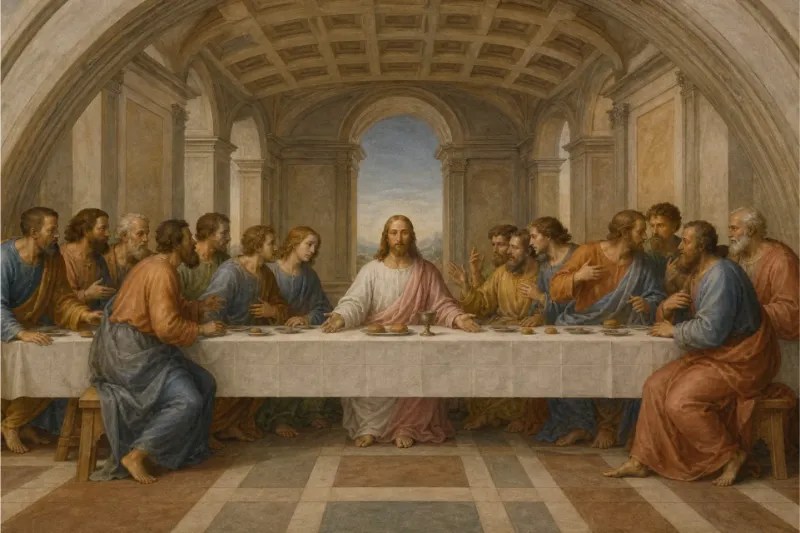
They have counted both ways, and their own confession tells them not to fight about it. The Apology of the Augsburg Confession sets a test: “If we call Sacraments rites which have the command of God, and to which the promise of grace has been added, it is easy to decide what are properly Sacraments.” By that test, the Lutherans’ Apology says, “Baptism, the Lord’s Supper, and Absolution, which is the Sacrament of Repentance, are truly Sacraments.” Confirmation and extreme unction fail it, for they “do not have God’s command.” The article even wonders why prayer should not be added, “which most truly can be called a sacrament,” and then it lets the whole matter rest: “For no prudent man will strive greatly concerning the number or the term, if only those objects still be retained which have God’s command and promises.”
What is the difference between a sacrament and an ordinance?
An ordinance is something the Lord ordered, and the churches that prefer the word want to say first that we do these things because Christ told us to. The Baptist Faith and Message, the statement of the Southern Baptist Convention, describes a church as a congregation of baptized believers “observing the two ordinances of Christ.” It calls baptism “an act of obedience symbolizing the believer’s faith in a crucified, buried, and risen Saviour,” and the Lord’s Supper “a symbolic act of obedience whereby members of the church, through partaking of the bread and the fruit of the vine, memorialize the death of the Redeemer and anticipate His second coming.” Those words “obedience” and “symbolic” carry the Baptist meaning, where the churches that say sacrament speak of grace given through the sign.
The Assemblies of God sets out the same two under the heading “Ordinances of the Church,” baptism in water and Holy Communion, and it teaches that “The ordinance of baptism by immersion is commanded by the Scriptures”; its statement gives no number and does not use the word sacrament. The Churches of Christ have no denominational creed, and Christian Courier, a teaching site in those churches, explains why they leave the word aside: “The New Testament never isolates certain acts of obedience from others by designating them as sacraments.” The line between the two words does not fall neatly between the families of churches, though. The Church of the Nazarene, as we saw, calls baptism and the Supper sacraments, and the United Pentecostal Church International speaks of Communion as “the sacrament.”
Is foot washing a sacrament or an ordinance?
For a number of churches it is an ordinance as truly as baptism is, and they take it from the Upper Room. When Jesus had washed the disciples’ feet he said, “If I then, your Lord and Master, have washed your feet; ye also ought to wash one another’s feet. For I have given you an example, that ye should do as I have done to you” (John 13:14–15). We tell more of that evening in por qué Jesús lavó los pies de sus discípulos.
The National Association of Free Will Baptists lists three ordinances in its Treatise, baptism, the Lord’s Supper and the washing of the saints’ feet, and of the third it says, “This is a sacred ordinance, which teaches humility and reminds the believer of the necessity of a daily cleansing from all sin.” The United Pentecostal Church International, a Oneness Pentecostal church, says of foot washing, “This first example was given by our Lord, and it is a divine institution. It is well to follow His example and wash one another’s feet; thus manifesting the spirit of humility.” Seventh-day Adventists wash one another’s feet before they take the bread and cup, and their Church Manual says, “The communion service customarily is celebrated once per quarter. The service includes the ordinance of foot-washing followed by the Lord’s Supper”; the Manual describes what Adventists keep at the table and gives no count of sacraments.
The Anabaptist confessions name foot washing too. The Dordrecht Confession of 1632, which the Amish hold, confesses “a washing of the saints’ feet, as the Lord Christ not only instituted, enjoined and commanded it.” The Mennonite Confession of Faith of 1963 names eight, more than anyone else: “The Lord Jesus and His apostles instituted ordinances for the church to observe permanently as symbols of Christian truths. The apostolic church literally observed them. Among these are baptism with water, the communion of the Lord’s Supper, the washing of the saints’ feet, the holy kiss, the laying-on of hands in ordination, the veiling of Christian women, the anointing of the sick with oil, and the institution of Christian marriage.” Mennonite Church USA keeps foot washing in its Confession of Faith, “We believe that Jesus Christ calls us to serve one another in love as he did,” and says that “Among our congregations, some practice foot washing, while others have discontinued the practice or have never observed it.”
Which churches have no sacraments?
The Quakers and the Salvation Army keep none as outward rites, and both of them speak of it as something they carry for the rest of the church. Britain Yearly Meeting’s Fe y práctica cuáquera keeps these words from London Yearly Meeting in 1986: “However valid and vital outward sacraments are for others, they are not, in our experience, necessary for the operation of God’s grace. We believe we hold this witness in trust for the whole church.” It goes back to the beginning for the reason: “To Fox and the early Friends the whole of life seemed sacramental, and they refused to mark off any one particular practice or observance as more sacred than others.”
The Salvation Army Handbook of Doctrine says, “The Salvation Army is a permanent witness to the Church as to the possibility, and practicability, of sanctification without formal sacraments,” and it tells how that came about: “Early in our history, The Salvation Army was led of God not to observe specific sacraments, that is baptism and the Lord’s Supper, or Holy Communion, as prescribed rituals.” Yet the Handbook calls Salvationists “a sacramental community because our life, our work, and our celebrations centre on Christ, the one true Sacrament,” and it confesses “one sacramental meal, not administered ritually, but presided over by Christ himself at any table where he is received and honoured.” Listen to the Friends and the Salvationists, who keep no rites, and then to the Orthodox, who keep seven, and we hear something close to the same words: all of life, everything in the Church, sacramental.
Jehovah’s Witnesses keep the Lord’s Evening Meal, and they teach on jw.org that “The observance is not a sacrament, or a religious practice that imparts merit such as grace or the forgiveness of sins.” Its purpose, they say, “is to remember Jesus, showing our gratitude for his sacrifice in our behalf.”
Do Latter-day Saints have sacraments?
The Church of Jesus Christ of Latter-day Saints speaks of ordinances, and it keeps the word sacrament for one of them. The Church’s General Handbook teaches that “The priesthood includes the authority to administer gospel ordinances that are necessary for salvation and exaltation. People make sacred covenants with God as they receive these ordinances.” It lists five such ordinances: baptism, confirmation and the gift of the Holy Ghost, the conferral of the Melchizedek Priesthood with ordination to an office for men, the temple endowment and the temple sealing. What Latter-day Saints call the sacrament is the bread and water blessed and passed in every ward on the Sabbath. “During this ordinance, they partake of the bread and water to remember the Savior’s sacrifice of His flesh and blood and to renew their sacred covenants,” the Handbook says, and it adds that “Generally, bread must be broken as part of the sacrament ordinance.”
Whatever number they give, most of these churches still come to a table. Paul told the Corinthians that he was handing on what he had “received of the Lord,” and he gave them the reason for it in one line: “For as often as ye eat this bread, and drink this cup, ye do shew the Lord’s death till he come” (1 Corinthians 11:26).
Lecturas relacionadas
- Compare denominaciones cristianas: lo que enseñan 23 iglesias sobre 55 preguntas
- Protestante vs. católico: en qué se diferencian sus creencias y su culto
- Luteranos frente a católicos: comparación sobre la sola fe, el Papa y la comunión
- Anglicanos frente a católicos: por qué la Iglesia de Inglaterra no es católica romana
- The Salvation Army vs Catholic beliefs
- Do Quakers believe in Jesus? Quaker beliefs compared


Deja una respuesta