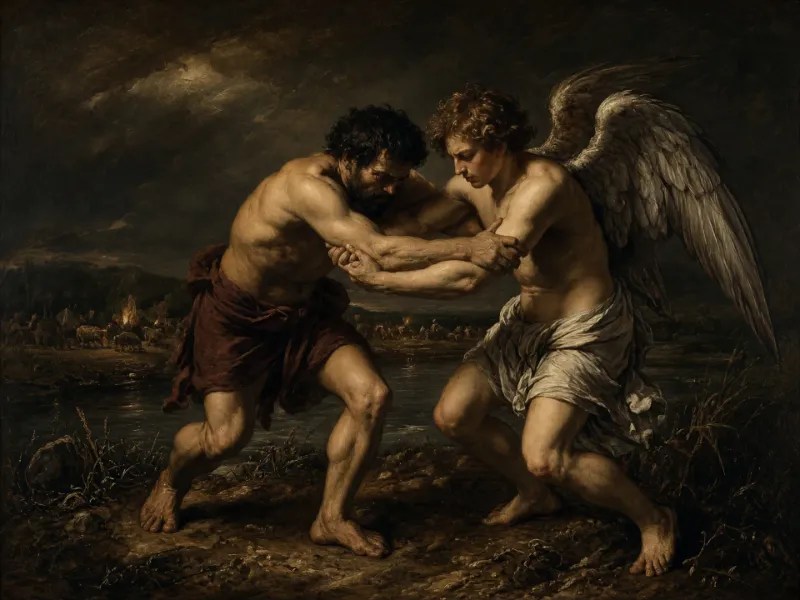
Let’s explore the intriguing question of Lilith and her place in biblical and cultural narratives. Many wonder: What is the story of Lilith in the Bible? Is she the rebellious first wife of Adam, as some folklore suggests, or is her role misunderstood? Questions like “Were Eve and Lilith the same person?”, “Is Lilith Lucifer’s wife?”, and “Is Lilith a fallen angel?” spark curiosity among Christians and scholars alike. While Lilith in the Bible is often tied to a single, debated verse in Isaiah 34:14, her story stretches from ancient Mesopotamian demonology to medieval Jewish folklore and modern feminist interpretations.

Is Lilith Actually Mentioned in the Bible? (Exploring Isaiah 34:14)
Let’s look at a question many Christians have: Does Lilith appear in the Bible? The answer lies in one verse—Isaiah 34:14. This is the only place where the name “Lilith” might be found in some translations its meaning is debated among scholars.
Isaiah 34 is a prophecy about God’s judgment on Edom, a nation hostile to Israel. The chapter describes a land left desolate, unfit for humans but home to wild creatures. Verse 14 says, “Wildcats shall meet with hyenas, goat-demons shall call to each other; there too the lilith shall repose, and find a place to rest” (NRSV). The Hebrew word here is lilit.
One interpretation suggests lilit refers to a female night demon known in the ancient Near East, like in Mesopotamia. Isaiah may have used a figure his audience knew—a spirit tied to night, desolate places, and danger. Placing lilit in Edom’s ruins would show the land’s cursed state. Some ancient Jewish traditions support this, and translations like the NRSV, ISV, and JPS Tanakh use “Lilith.” The Bible notes spirit beings can be male or female, and since demons are rarely named—like “Legion” in Jesus’ encounter—this single mention fits the pattern.
Another view argues lilit is not a demon but a nocturnal animal, perhaps a screech owl or night creature, listed among wildcats, hyenas, and owls in the passage. This keeps the focus on natural inhabitants of a ruined land, avoiding pagan mythology. The Hebrew word laylah, meaning “night,” supports this idea. Translations like the King James Version, NIV, and ESV use “screech owl” or “night creature.” Since lilit is a hapax legomenon—appearing only once in the Hebrew Bible—its exact meaning is hard to pin down.
Scholars don’t fully agree. Some favor the demon interpretation based on the ancient cultural context, while others prefer the night creature view, focusing on the text itself or theological reasons. For Christians, the key is that Lilith, or lilit, appears possibly once in Isaiah 34:14, and its meaning is unclear, either a demon or a creature. This single reference is Lilith’s only connection to Scripture.
The Bible’s ambiguity about lilit left room for later legends. With no story or definition provided, just a name among desolate creatures, later storytellers, especially in medieval Jewish folklore, used “Lilith” for Adam’s supposed first wife, linking it to Genesis’ creation accounts. They built their narrative on this undefined biblical word.
Translation choices reflect different perspectives. Those using “screech owl” or “night creature,” like the King James Version, may aim to avoid pagan influences, shaping how English-speaking Christians understood this for centuries. Others using “Lilith” emphasize historical and cultural ties to ancient demonology. Translation is an act of interpretation, guided by history, language, and theology.
Whether lilit is a demon or a night creature, Isaiah 34:14 invites us to study God’s Word and seek His truth.

Where Did the Story of Lilith Come From Originally? (Mesopotamia to Folklore)
Let’s explore the origins of Lilith, a name that sparks curiosity. While her place in the Bible is debated, her story stretches back to ancient Mesopotamia, long before our time.
In Mesopotamian cultures—Sumerian, Akkadian, Assyrian, Babylonian—people believed in spirits and demons. Among them were Lilu (male), Lilitu (female), and Ardat Lili (female). These were often seen as wind or storm demons, linked to disease, death, and dangers during childbirth and infancy. Lilitu was said to dwell in desolate places, while Ardat Lili might target young men. Some texts and artifacts show these figures with wings. There’s also a connection to Lamashtu, a demoness known for harming mothers and babies.
These beliefs weren’t limited to Mesopotamia. They spread across the ancient Near East, influencing Hittites, Egyptians, Canaanites, Israelites, and Greeks. Ancient amulets and incantation bowls from these regions, designed to protect mothers and newborns from Lilith-like demons, show this.
Over time, these ideas were woven into Jewish folklore. By the time the Babylonian Talmud was compiled around 500-600 CE, Lilith appears as a winged, long-haired female demon, dangerous to men sleeping alone and harmful to children. She’s listed among harmful spirits called shedim or mazikim.
Lilith’s legends grew in the Middle Ages, from the 5th to 15th centuries, especially in Jewish mystical texts like the Kabbalah and the Zohar, compiled in the 13th century, and in the Alphabet of Ben Sira, written between 700-1000 CE. It’s in these medieval sources, particularly the Alphabet, that Lilith as Adam’s first wife takes shape.
Lilith’s story didn’t start in the Bible. It traces back to ancient pagan demonology, which influenced Jewish traditions over centuries. Her character was fully shaped in medieval Jewish folklore, long after the biblical texts.
This shows syncretism—blending beliefs from different cultures. Fearsome female spirits from Mesopotamia were absorbed into Jewish folk belief, given Hebrew names like lilit, and tied to biblical stories, though these narratives stayed outside the official canon.
Lilith’s focus as a threat to infants and mothers likely reflects ancient fears. High infant mortality and dangerous childbirth led people to blame a figure like Lilith. This gave them a way to understand loss and seek control through amulets and rituals. Lilith became a symbol of the dangers families faced.

Table: Lilith in Biblical and Folkloric Contexts
| Aspetto | Riferimento biblico | Jewish Folklore | Christian Perspective |
|---|---|---|---|
| Mention in Texts | Only in Isaiah 34:14 come lîlîṯ (night creature). | Appears in Alphabet of Ben Sira, Talmud, Zohar, and incantation bowls as a demon or Adam’s first wife. | Not a significant figure; viewed as Jewish mythology, not part of Christian doctrine. |
| Ruolo | Likely a type of creature or demon, not a named person. | Adam’s first wife, later a demon who seduces men and harms infants. | No role in Christian theology; mentioned only in literary or cultural contexts. |
| Relation to Adam | No mention of any connection to Adam. | Created from dust, equal to Adam, leaves Eden due to refusal to submit. | Eve is Adam’s only wife in the Bible; Lilith stories are non-canonical. |
| Relation to Lucifer | No connection in the Bible. | Sometimes linked to Samael (possibly Satan) in mystical texts, not consistently as his wife. | No biblical or theological link to Lucifer; popular culture associations are fictional. |
| Status as Fallen Angel | Not an angel; no mention of angelic status. | Human or demon, not an angel; created from earth like Adam. | Not considered a fallen angel; fallen angels are distinct in Christian theology. |

What is the Famous Story About Lilith Being Adam’s First Wife? (The Alphabet of Ben Sira)
The well-known story of Lilith as Adam’s first wife comes from the Alphabet of Ben Sira, a medieval Jewish text written between the 8th and 10th centuries CE. This text isn’t part of the Bible or considered sacred in mainstream Judaism or Christianity. It’s Jewish folklore, known as Aggadah, and many scholars see it as satirical, with humorous, irreverent, or even heretical stories meant to entertain rather than teach theology. The Lilith story is one part of this collection.
In the story, King Nebuchadnezzar’s son is sick, and Ben Sira is called to heal him. Ben Sira makes an amulet with the names of three angels—Senoy, Sansenoy, and Semangelof—to ward off spirits like Lilith. He then tells this tale:
Creation: God created Lilith from the earth at the same time as Adam.
Conflict: Adam and Lilith argued over equality, especially during sexual relations. Lilith demanded equal position, since they were both made from earth Adam insisted on dominance.
Departure: Lilith spoke God’s sacred Name, gained the power to fly, and left Adam and Eden, settling near the Red Sea, a place tied to demons.
Angelic Pursuit: Adam told God, who sent the three angels to bring Lilith back, by force if needed.
Refusal and Bargain: The angels found Lilith by the Red Sea, with many demon children (lilim). She refused to return, saying she was made to harm infants. God declared 100 of her offspring would die daily if she didn’t return. To avoid drowning by the angels, Lilith swore she’d have no power over infants protected by an amulet with her name or the angels’ names. She could harm male infants until the eighth day (circumcision) and female infants until the twelfth or twentieth day.
Scholars see this story as an attempt to explain the two creation accounts in Genesis. Genesis 1:27 says God created male and female together, while Genesis 2 describes Eve made later from Adam. The Alphabet makes Lilith the female in Genesis 1, with Eve as the second woman.
The story of Lilith as Adam’s defiant first wife comes from the Alphabet of Ben Sira, a non-canonical, possibly satirical text, not the Bible. It blends demon folklore with an effort to harmonize Genesis.
Despite its origins, the story shaped Jewish beliefs, especially around childbirth. By giving Lilith a backstory tied to Adam and explaining her harm to infants as revenge, it connected with fears about infant mortality. The mention of amulets with the angels’ names offered protection, leading to lasting customs in some Jewish communities.
The story also reflects medieval views on gender. Lilith’s demand for equality is shown negatively, leading to her demonic role. In that patriarchal time, her rebellion was likely seen as a threat to divine and social order, reinforcing traditional gender roles by portraying female autonomy as chaotic.

Are Eve and Lilith the Same Person, or Does the Bible Mention Two First Women? (Genesis 1 vs. 2 Explained)
Let’s look at the question of whether Eve and Lilith are the same person. In folklore, they’re distinct: Lilith is Adam’s first wife who left, and Eve is the second wife created later. But the Bible speaks of only one first woman: Eve. The idea of Lilith as a separate, earlier wife comes from Jewish folklore, developed long after the Bible to address differences between the two creation accounts in Genesis.
Here’s what the Bible says:
- Genesis 1 (Genesis 1:1-2:3): This account, often linked to the Priestly source from around the 6th century BCE, describes creation over six days. On the sixth day, after plants and animals, God (Elohim) creates humankind (‘adam) in His image, saying “male and female He created them” (Genesis 1:27). This marks the peak of creation week.
- Genesis 2 (Genesis 2:4-25): Attributed to the Yahwist source, possibly from the 10th or 9th century BCE, this account has a different flow. God (Yahweh Elohim, LORD God) forms the man (‘adam) from dust before creating the Garden of Eden and certain animals (Genesis 2:7, 19). After Adam names the animals, God says it’s not good for man to be alone and creates the woman (ishshah, later Eve) from Adam’s rib/side (Genesis 2:18-24). This focuses on the relationship between God, man, and woman.
Some, especially in medieval times, saw contradictions in these accounts, like the order of creation (animals before or after man?) or the timing of the woman’s creation (with man or later from his side?). The Alphabet of Ben Sira, a medieval Jewish text, offered a solution: Lilith was the female created with Adam in Genesis 1. After she rebelled and left, God made Eve in Genesis 2. Some rabbinic texts even mentioned a “First Eve” who was unsatisfactory before the Eve of Genesis 2.
But Christian theology, along with many Jewish interpreters, sees Genesis 1 and 2 as complementary, not contradictory. They reflect different perspectives from ancient traditions (P and J) combined in Genesis. Genesis 1 gives a broad, chronological view of creation week, with God (Elohim) as the transcendent Creator. Genesis 2 zooms in on the sixth day, using LORD God (Yahweh Elohim) to focus on Adam and Eve’s creation, their relationship, and their place in the Garden. Genesis 1:27 (“male and female He created them”) summarizes humanity’s creation, while Genesis 2 details how Adam and Eve were formed and united.
The Lilith story shows how religious traditions use storytelling, called midrash in Judaism, to address textual questions. Medieval Jewish interpreters created the Lilith narrative to harmonize Genesis 1 and 2 the Alphabet of Ben Sira, the source of the Lilith-as-first-wife story, is considered non-authoritative and satirical.
The need for Lilith assumes Genesis 1 and 2 are a single, chronological account with contradictions. But if they’re complementary theological accounts, as most Christian and many Jewish scholars believe, there’s no contradiction. Genesis 1 overviews creation, and Genesis 2 elaborates on Day Six. In this view, there’s no gap requiring Lilith. The Bible presents Eve as the only first woman, Adam’s partner.
So, the Bible mentions only Eve as the first woman. Lilith is a later folkloric figure, created centuries after the Bible to explain the Genesis accounts. Christian teaching, seeing the accounts as complementary, finds no biblical basis for Lilith as Adam’s first wife.

Is Lilith Considered a Demon or a Fallen Angel?
Let’s consider whether Lilith is a demon or a fallen angel, a question that touches on the nature of evil spiritual beings. Based on her origins and traditions, Lilith is consistently seen as a demon, not a fallen angel.
Her roots trace to ancient Mesopotamian mythology, where figures like Lilitu were harmful spirits or demons. This carried into Jewish folklore, where the Babylonian Talmud and later texts describe her as a demoness tied to night, seduction, and harm, especially to children and men alone, with wings and a home in desolate places. In the Alphabet of Ben Sira, where she’s Adam’s wife, her rebellion turns her into a demonic figure who joins demons and bears demonic offspring. Jewish mystical texts, like the Kabbalah, cement her as a powerful demon, sometimes queen of the demonic realm (sitra ahra) and partner to the demon Samael.
In Christian theology, a “fallen angel” is an angel created good by God, serving in heaven, who rebelled under Satan (often Lucifer) and was cast out. This is a different story from Lilith’s. Neither the Bible nor mainstream Jewish or Christian tradition describes her as a fallen angel. She’s either rooted in pagan demonology or, in folklore, a human woman who became demonic through rebellion and evil spirits. She was never an angel in heaven who fell.
Confusion sometimes comes from Lilith’s link in Kabbalah to Samael, often seen as a fallen angel or Satan. Popular culture also blurs demons and fallen angels, using the terms interchangeably. Some Jewish texts, like the Book of Enoch, call demons the spirits of Nephilim (offspring of fallen angels and human women in Genesis 6), but this is separate from Lilith’s story.
So, Lilith is a demon, rooted in ancient Near Eastern myth and Jewish folklore, not a fallen angel as understood in Christian theology. This distinction shows how traditions categorize evil beings. Lilith comes from pagan mythology or folklore as a demon or human-turned-demon, not a celestial being who rebelled. Her pairing with Samael in Kabbalistic texts, as demonic rulers opposing holiness, likely fueled confusion. Samael, a complex figure often seen as the angel of death or Satan, is linked closely to Lilith, which may lead some to mistakenly see her as a fallen angel in folklore, occultism, or popular culture.

Is Lilith Lucifer’s Wife? (Tracing the Origins of the Idea)
Let’s explore the idea that Lilith is the wife of Lucifer, a concept popular in modern fiction and occult circles not found in the Bible or early Christian or Jewish traditions.
The Bible doesn’t mention this connection. Lilith may appear once in Isaiah 34:14, a debated verse, with no link to Adam or Lucifer/Satan. The Bible also never describes Satan or Lucifer as having a wife.
The idea of Lilith paired with a chief demonic figure began in medieval Jewish mysticism, specifically Kabbalah, from the 13th century. In these texts, Lilith’s partner is Samael, not Lucifer. Samael rules the sitra ahra, the realm of evil, with Lilith as his queen. This reflects a Kabbalistic view where Samael and Lilith are dark opposites to God and His Divine Presence (Shekhinah). Samael is often equated with Satan or the angel of death in Jewish lore the texts name him, not Lucifer, as Lilith’s partner. The name “Lucifer” comes from a Latin translation of Isaiah 14:12, referring to the King of Babylon, only later applied to Satan.
How did Lilith become linked to Lucifer/Satan? Over time, in European folklore, occult writings, and modern popular culture, names for the chief evil figure—Satan, Devil, Lucifer, Samael, Belial, Beelzebub—blurred together. As Samael was increasingly seen as Satan or Lucifer, Lilith’s association as his consort shifted to these more recognized names in popular thought.
Today, Lilith as Lucifer’s wife appears in fiction, horror movies, TV shows like Supernatural or Hazbin Hotel, video games, and occult beliefs. This reinforces the idea in public awareness, despite its lack of biblical or early traditional support.
Lilith as Lucifer’s wife stems from medieval Kabbalah, where she was paired with Samael, and grew through the blending of demonic figures in folklore, occultism, and modern culture. It’s not in the Bible or early Christian teaching. Lilith’s story evolved—from leaving Adam for independence, bearing demon children, partnering with Samael in Kabbalah, to being linked with Lucifer/Satan—showing how folklore often creates structures and relationships, even in evil realms, mirroring human or divine ones. Pairing Lilith with Samael gave her a role in a mystical demonic hierarchy.
This shift was helped by the historical merging of names for the ultimate evil figure. The Bible uses terms like Satan and Devil, while later traditions added Lucifer, Belial, and Samael. As these names became interchangeable in popular thought and occult traditions, Lilith’s Kabbalistic link to Samael easily became a broader connection to Lucifer or Satan, creating a new mythological idea not in the original sources.

What Did the Early Church Fathers Say About Lilith?
Let’s look at what the early Church Fathers, Christian writers from the 1st to 8th centuries, said about Lilith. The answer is they said almost nothing, especially about her as Adam’s first wife. Their writings show a major silence on this figure.
Several reasons explain this. The story of Lilith as Adam’s first wife comes from the medieval Alphabet of Ben Sira, written long after the Church Fathers’ time. The Fathers dealt with the Bible and earlier Jewish traditions, where Lilith was at most a minor demonic figure in the Talmud or on magic bowls, not yet the first wife in a popular narrative.
The Fathers focused on interpreting Scripture, defining doctrines like the Trinity and Christ’s Incarnation, fighting heresies like Gnosticism, and defending Christianity against paganism. Minor figures from Jewish folklore, not in Scripture, weren’t a priority in these theological efforts.
The Fathers used the Septuagint (Greek Old Testament) and later Jerome’s Latin Vulgate. Their understanding of Isaiah 34:14 depended on these translations.
One key point involves St. Jerome, who, around 400 CE, translated the Bible into the Vulgate. He rendered the Hebrew word lilit in Isaiah 34:14 as Lamia, a monstrous female spirit in Greek and Roman mythology known for devouring children. Jerome saw lilit as a dangerous, nocturnal female demon, using a term familiar to his Greco-Roman audience. Later Fathers commenting on the Vulgate might mention Lamia in this context, affirming belief in such demons in desolate places this wasn’t about the Jewish Lilith folklore, her tie to Adam, or her equality dispute. It stayed linked to classical mythology.
Beyond this, the Fathers wrote extensively about demons, Satan, evil spirits, their origins (often tied to fallen angels), their temptations, and Christ’s power over them. They also explored the Genesis creation accounts, discussing Adam, Eve, humanity in God’s image, marriage, and the Fall. But they always treated Eve as the only first woman, with no mention of a “first wife” like Lilith.
Scholarly resources confirm the lack of discussion about Lilith as a named figure from Jewish folklore in Patristic literature. The Fathers didn’t engage with the Lilith-as-first-wife story because it developed later in a different tradition. Jerome’s translation of lilit as Lamia shows he understood it as a female night-demon the specific Lilith folklore wasn’t part of early Christian theology.
This silence matters. It shows the early Church distinguished between authoritative Scriptures and peripheral folklore. The Fathers focused on apostolic teaching and accepted biblical texts, and their lack of mention suggests the Lilith story wasn’t part of the tradition they considered relevant to Christian faith.
Jerome’s choice to use Lamia likely influenced how Western Christianity understood Isaiah 34:14 for centuries. By tying lilit to a classical mythological figure, the Vulgate steered commentary away from the Jewish Lilith tradition, possibly keeping her largely unknown in mainstream Christian thought until modern times, when scholars began studying Hebrew sources and Jewish folklore more closely.

Why Do People Talk About Lilith Today, and How Should Christians Understand Her Story? (Modern Views vs. Biblical Focus)
Let’s consider why Lilith is so popular today, despite her unclear biblical roots and origins in ancient demonology and medieval folklore. Her presence in modern culture raises questions for Christians about her significance.
One reason for her popularity is her role in modern folklore, fiction, and popular culture. Her story as a rebellious, possibly demonic figure fits well in fantasy, horror, and occult genres. She appears in novels (like C.S. Lewis’s works, where she’s an ancestor of the White Witch, or Dan Brown’s), TV shows (like Supernatural or Hazbin Hotel), movies, comics, and video games, often as Adam’s first wife, Lucifer’s consort, or a powerful demoness. These portrayals, while not always true to the original folklore, keep her name and story in the public eye.
Another key factor is her adoption by some feminist movements since the 1960s and 1970s. They focus on her rebellion in the Alphabet of Ben Sira, seeing her as a symbol of female independence and strength, rejecting male dominance. Her demand for equality is celebrated, and her demonization is viewed as a patriarchal reaction to a non-compliant woman. This led to the naming of the Jewish feminist magazine Lilith and the Lilith Fair music festival.
How should Christians approach Lilith given these varied portrayals? The key is to separate the sources of information:
- The Bible (Canonical Scripture): The Bible mentions lilit only once, debatably, in Isaiah 34:14. It clearly presents Eve, created from Adam in Genesis 2, as the first woman and mother of all living. The Bible is the foundation for Christian understanding of creation, humanity, sin, and redemption.
- Jewish Folklore and Mysticism: Texts like the Alphabet of Ben Sira, Talmud, and Zohar, written centuries after the Bible, tell Lilith’s stories. These offer insight into Jewish thought and folk beliefs but aren’t inspired scripture or authoritative for Christian doctrine. They often portray Lilith negatively, as a demon or rebel.
- Modern Interpretations and Fiction: Today’s portrayals in media, feminist discourse, or occultism often reshape Lilith for modern purposes. These can stray far from the Bible and original folklore, sometimes wrongly presenting her as a biblical figure.
For a biblically grounded perspective, Christians can:
- Prioritize Scripture: Base understanding of human origins, male-female relationships, sin, and spiritual warfare on the Bible, especially Genesis 1-3. The account of Adam and Eve provides the framework.
- Esercita il discernimento: Approach Lilith stories in popular culture or non-biblical sources with critical thinking. Recognize they often come from folklore, satire, fiction, or modern ideologies, not biblical truth.
- Avoid Substituting Myths for Truth: Be cautious of myths that distract from or contradict Christian faith, as warned in 2 Timothy 4:3-4.
- Understand, Don’t Adopt: Studying Lilith’s folklore can be interesting for historical or cultural reasons, showing ancient fears, myth evolution, and shifting views on gender. But understanding a legend isn’t the same as accepting it as theological truth.
The feminist reclamation of Lilith shows how myths can be reinterpreted. Where folklore saw a dangerous demon, some modern views see a heroine resisting oppression. This shows myths aren’t fixed; their meaning can change with new cultural values.
Confusion about Lilith’s biblical status, often fueled by popular culture, highlights a challenge in religious literacy. Many encounter Lilith through fiction or secondary sources and assume she’s biblical, leading to misunderstandings. This shows why Christians need to be grounded in Scripture and have reliable resources to clarify the Bible, folklore, and modern adaptations.
Lilith’s popularity comes from her narrative appeal in fiction and her symbolic role in feminism. Christians should recognize her non-biblical origins in ancient demonology and medieval Jewish folklore. While her history is informative, the Bible is the authoritative source for Christian faith, clearly presenting Adam and Eve without Lilith as the first wife. Focus on biblical truth and discernment with extra-biblical stories is essential.

How Does the Concept of Motherhood in the Bible Relate to the Story of Lilith?
The story of Lilith offers a unique perspective on understanding motherhood in biblical context. While traditional narratives often celebrate maternal figures like Mary, Lilith represents the complexities of female autonomy and creation. This juxtaposes contrasting views on motherhood, highlighting the struggle between nurturing and independence within biblical interpretations.

Conclusion: Finding Clarity Amidst the Myths
Exploring Lilith takes us from ancient Mesopotamian demons to medieval Jewish folklore and modern cultural interpretations. For Christians navigating information online, key points stand out:
- Lilith non è una figura biblica in alcun modo sostanziale: Her name appears once in Isaiah 34:14, with debated meaning (“Lilith” demon or “night creature”/owl). The Bible doesn’t tell her story or link her to Adam or Lucifer.
- The “First Wife” Story is Medieval Folklore: L'idea di Lilith come prima moglie ribelle di Adamo deriva dall'Alfabeto di Ben Sira, un testo non canonico, probabilmente satirico, scritto secoli dopo la Bibbia. Non è una scrittura ispirata.
- Eva è la prima donna nella Bibbia: La Genesi presenta Eva come la prima donna, creata come compagna di Adamo. Genesi 1 e 2 sono prospettive complementari, non contraddizioni che necessitano di Lilith per essere risolte.
- Le origini di Lilith sono demoniache, non angeliche: Lilith deriva dall'antica demonologia del Vicino Oriente (Lilitu) ed è diventata una demonessa nel folklore ebraico. Non è un angelo caduto secondo la comprensione cristiana o ebraica tradizionale.
- The Lucifer Connection is Late and Non-Biblical: Lilith as Lucifer’s wife developed later, from the conflation of Samael (her Kabbalistic partner) with Satan/Lucifer in popular and occult thought. It’s not biblical.
- Early Church Tradition is Silent: The Church Fathers didn’t discuss Lilith folklore, focusing on canonical Scripture and core doctrines.
These distinctions matter. Lilith’s story, while culturally interesting, shouldn’t be confused with or used to reinterpret the biblical account of human origins in Genesis. Modern views casting Lilith as a feminist heroine differ greatly from her folkloric role and biblical teaching.
For Christians seeking truth, the Bible is the ultimate guide. It offers a trustworthy account of God’s creation, humanity’s purpose, sin, spiritual conflict, and redemption through Jesus Christ. Exploring folklore and cultural history can be useful approach such stories with discernment, grounding beliefs in Scripture’s clear teachings. By separating myth and folklore from biblical revelation, Christians can discuss figures like Lilith with clarity and confidence.