
 English
 Chinese
 Dutch
 Arabic
 Spanish
 Portuguese
 Russian
 French
 Italian
 German
 Japanese
In Scripture a blessing begins as a spoken word, from God or from someone speaking in his name, and what it promises is mostly presence, peace and provision for real needs.
The Hebrew verb, barak, is used in both directions: God blesses people, and people bless God, as in “Bless the Lord, O my soul” (Psalm 103:1 in the ESV). Strong’s concordance defines it as “to kneel.” The eighteen verses below cover what the word means, what the blessing on Abraham was for, the two passages about a tree by water, what is actually promised, the blessings that are not possessions, and the blessing believers are told to give.
What the word means
Numbers 6:24-26
“The Lord bless you and keep you; the Lord make his face shine on you and be gracious to you; the Lord turn his face toward you and give you peace.”
Reflection: In Hebrew the three lines grow longer: three words, then five, then seven. God tells Aaron and his sons to say this over the Israelites, and adds, “So they will put my name on the Israelites, and I will bless them” (6:27).
Ephesians 1:3
“Praise be to the God and Father of our Lord Jesus Christ, who has blessed us in the heavenly realms with every spiritual blessing in Christ.”
Reflection: The word runs both ways in one sentence: Paul blesses God, who has blessed us. The verb is in the past tense, so the blessing described has already been given.
Genesis 12:2
“I will make you into a great nation, and I will bless you; I will make your name great, and you will be a blessing.”
Reflection: Abram is told he will be a blessing, and the next verse widens it: “all peoples on earth will be blessed through you” (12:3).
What a blessing was originally for

Galatians 3:14
“He redeemed us in order that the blessing given to Abraham might come to the Gentiles through Christ Jesus.”
Reflection: Paul reads the promise to Abraham as meant for the Gentiles from the start, reaching them through Christ.
Deuteronomy 28:2
“All these blessings will come on you and accompany you if you obey the Lord your God.”
Reflection: This is a covenant clause with conditions. The chapter gives fourteen verses to the blessings (28:1-14) and fifty-four to the curses (28:15-68).

Proverbs 10:22
“The blessing of the Lord brings wealth, without painful toil for it.”
Reflection: Proverbs elsewhere praises hard work: “diligent hands bring wealth” (10:4). The contrast in this verse is with painful toil.
The two tree passages
Psalm 1:1-3
“Blessed is the one who does not walk in step with the wicked or stand in the way that sinners take or sit in the company of mockers, but whose delight is in the law of the Lord, and who meditates on his law day and night. That person is like a tree planted by streams of water, which yields its fruit in season.”
Reflection: The tree yields its fruit “in season,” at the right time, and its leaf does not wither. The psalm describes a person rooted in God’s law.

Jeremiah 17:7-8
“But blessed is the one who trusts in the Lord, whose confidence is in him. They will be like a tree planted by the water that sends out its roots by the stream. It does not fear when heat comes; its leaves are always green. It has no worries in a year of drought.”
Reflection: Jeremiah uses the same image as Psalm 1 and adds heat and drought. The tree still bears fruit because its roots reach the stream.
What is actually promised

Psalm 84:11
“For the Lord God is a sun and shield; the Lord bestows favor and honor; no good thing does he withhold from those whose walk is blameless.”
Reflection: The promise is that no good thing is withheld from those whose walk is blameless. It leaves the judgment of what is good with God.

Matthew 6:33
“But seek first his kingdom and his righteousness, and all these things will be given to you as well.”
Reflection: “All these things” refers to what Jesus has just been discussing: food, drink and clothing (6:25-32).

Philippians 4:19
“And my God will meet all your needs according to the riches of his glory in Christ Jesus.”
Reflection: Paul writes this to a church that had just sent him gifts while he was in prison (4:18). The promise answers their generosity.
Romans 8:32
“He who did not spare his own Son, but gave him up for us all—how will he not also, along with him, graciously give us all things?”
Reflection: The argument runs from the greater gift to the lesser. If God gave his Son, he will not hold back what else is needed.

2 Corinthians 9:8
“And God is able to bless you abundantly, so that in all things at all times, having all that you need, you will abound in every good work.”
Reflection: The verse comes in Paul’s appeal for the collection for Jerusalem, and the abundance has a purpose: “so that… you will abound in every good work.”
The blessings that are not objects
John 14:27
“Peace I leave with you; my peace I give you. I do not give to you as the world gives.”
Reflection: Jesus says this on the night before his death, and he contrasts his giving with the world’s.
Isaiah 26:3
“You will keep in perfect peace those whose minds are steadfast, because they trust in you.”
Reflection: Perfect peace translates a doubled word, shalom shalom. Hebrew often intensifies a word by repeating it.

Psalm 29:11
“The Lord gives strength to his people; the Lord blesses his people with peace.”
Reflection: The psalm before this verse describes a thunderstorm, the Lord’s voice breaking cedars and shaking the desert (29:5, 8). It ends with strength and peace for his people.
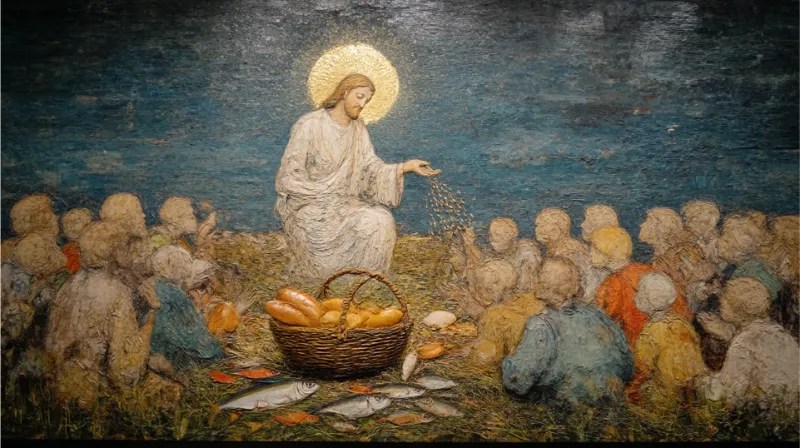
John 1:16
“Out of his fullness we have all received grace in place of grace already given.”
Reflection: The Greek reads charin anti charitos, grace in place of grace: one gift following another.
The one we hand out ourselves
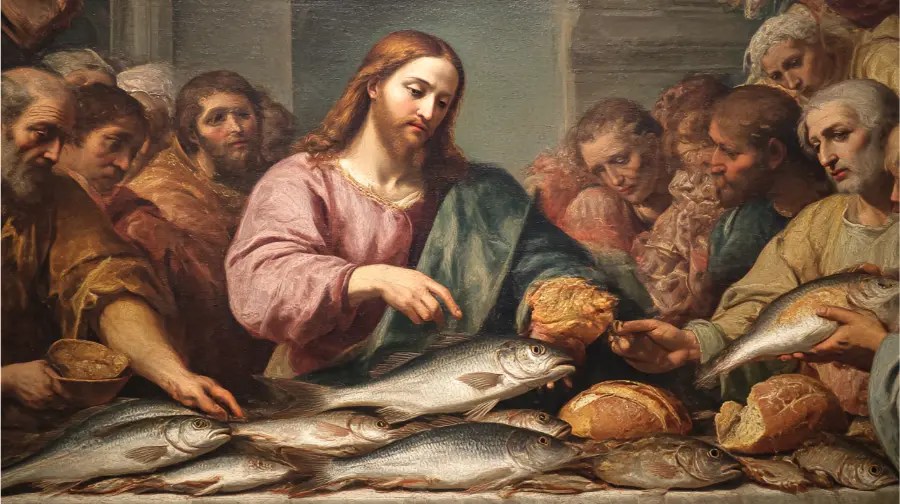
1 Peter 3:9
“Do not repay evil with evil or insult with insult. On the contrary, repay evil with blessing, because to this you were called so that you may inherit a blessing.”
Reflection: The Greek verb for bless means to speak well of someone. Peter asks for it in return for insults, and the next verses quote Psalm 34 (3:10-12).
What we are actually asking for
Much of what Scripture calls blessing is spoken. The priests said it over Israel, Abram was told he would be one, and Peter tells believers to say it over people who insult them. The promises are specific: food and clothing, fruit in season, no good thing withheld from the blameless, and abundance given so that it can be shared.
The same verb runs back toward God, so blessing in Scripture is something received and also something said in return. For more verses, see Bible verses about blessings.


Leave a Reply