
 English
 Chinese
 Dutch
 Arabic
 Spanish
 Portuguese
 Russian
 French
 Italian
 German
 Japanese
The Bible permits hunting for food and sets rules for it. Genesis 9:3 gives animals to Noah’s family as food, Leviticus 17:13 tells a hunter to drain the blood of game, and Deuteronomy 22:6-7 says to let a nesting mother bird go.
Two hunters are named in Genesis, Nimrod (Genesis 10:9) and Esau (Genesis 25:27), and the hunt of Esau’s game in Genesis 27 sets up the story of Jacob taking his brother’s blessing. Elsewhere the hunter, the net and the fowler’s snare are pictures of danger, as in Psalm 124:7 and Micah 7:2.
Rule over the animals and animals as food
Genesis 1:26
“Then God said, ‘Let us make mankind in our image, in our likeness, so that they may rule over the fish in the sea and the birds in the sky, over the livestock and all the wild animals, and over all the creatures that move along the ground.’”
Reflection: God gives the first humans rule over the fish, the birds, the livestock and “all the wild animals.” The same chapter names their food a few verses later: “I give you every seed-bearing plant on the face of the whole earth and every tree that has fruit with seed in it. They will be yours for food” (Genesis 1:29). Rule over the animals and permission to eat them come at different points in Genesis.
Genesis 9:3
“Everything that lives and moves about will be food for you. Just as I gave you the green plants, I now give you everything.”
Reflection: After the flood God blesses Noah and his sons and widens the grant of Genesis 1:29 in so many words: “Just as I gave you the green plants, I now give you everything.” The verse before says “the fear and dread of you will fall on all the beasts of the earth.” The permission comes with a condition in the next verse: “you must not eat meat that has its lifeblood still in it” (Genesis 9:4).
Deuteronomy 14:4-5
“These are the animals you may eat: the ox, the sheep, the goat, the deer, the gazelle, the roe deer, the wild goat, the ibex, the antelope and the mountain sheep.”
Reflection: Moses lists the land animals Israel may eat, and seven of the ten are wild game: deer, gazelle, roe deer, wild goat, ibex, antelope and mountain sheep. Verse 6 gives the test for the whole list: “You may eat any animal that has a divided hoof and that chews the cud.” Deuteronomy 12:15 uses the same game as the standard for ordinary meat, telling Israel to eat its own slaughtered animals “as if it were gazelle or deer.”
Psalm 50:10-11
“For every animal of the forest is mine, and the cattle on a thousand hills. I know every bird in the mountains, and the insects in the fields are mine.”
Reflection: In this psalm of Asaph, God tells Israel he has no need of a bull from their stalls or goats from their pens, because the animals of the forest and the birds of the mountains already belong to him. Verse 12 goes on: “If I were hungry I would not tell you, for the world is mine, and all that is in it.”
Rules and limits for the hunter
Leviticus 17:13
“Any Israelite or any foreigner residing among you who hunts any animal or bird that may be eaten must drain out the blood and cover it with earth.”
Reflection: The law applies to “any Israelite or any foreigner residing among you” who hunts an animal or bird that may be eaten. The reason follows in verse 14: “the life of every creature is its blood.” Verse 11 ties the same blood to the altar, where it “makes atonement for one’s life,” and Deuteronomy 12:16 gives the hunter’s rule for slaughtered animals too: “pour it out on the ground like water.”
Deuteronomy 22:6-7
“If you come across a bird’s nest beside the road, either in a tree or on the ground, and the mother is sitting on the young or on the eggs, do not take the mother with the young. You may take the young, but be sure to let the mother go, so that it may go well with you and you may have a long life.”
Reflection: A person who comes on a nest “beside the road, either in a tree or on the ground” may take the eggs or the young but must let the mother bird go. The law ends with a promise: “so that it may go well with you and you may have a long life.”
Hunters in Genesis and Proverbs
Genesis 10:9
“He was a mighty hunter before the LORD; that is why it is said, ‘Like Nimrod, a mighty hunter before the LORD.’”
Reflection: Nimrod, a son of Cush in the table of nations, is called “a mighty warrior on the earth” in verse 8 and a mighty hunter in verse 9, and his reputation became a saying. Verse 10 names the first centers of his kingdom: Babylon, Uruk, Akkad and Kalneh, in Shinar. Genesis does not explain what “before the Lord” means here.
Genesis 25:27
“The boys grew up, and Esau became a skillful hunter, a man of the open country, while Jacob was content to stay at home among the tents.”
Reflection: Esau and Jacob are twins with different lives: Esau “a skillful hunter, a man of the open country,” Jacob “content to stay at home among the tents.” The next verse says Isaac “had a taste for wild game” and loved Esau for it. A few verses later Esau comes in from the open country famished and sells his birthright to Jacob for stew (Genesis 25:29-34).
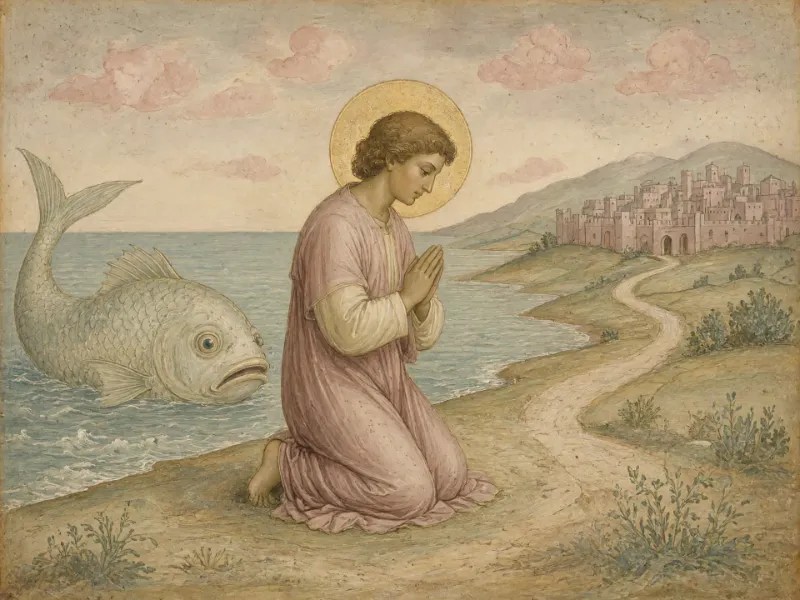
Genesis 27:3
“Now then, get your equipment—your quiver and bow—and go out to the open country to hunt some wild game for me.”
Reflection: The old and nearly blind Isaac sends Esau out with quiver and bow so that he can eat the game and bless him before he dies. Rebekah overhears and has Jacob bring two young goats from the flock instead, prepared “just the way he likes it” (Genesis 27:9). When Esau comes in from hunting, Isaac trembles and asks, “Who was it, then, that hunted game and brought it to me?” (Genesis 27:33).
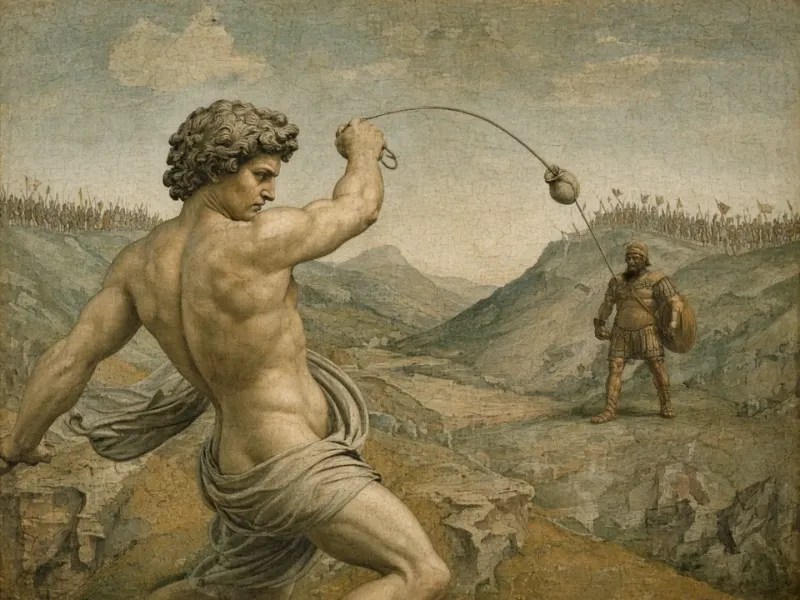
Proverbs 12:27
“The lazy do not roast any game, but the diligent feed on the riches of the hunt.”
Reflection: The proverb sets the lazy hunter, who has no game to roast, against the diligent one, who eats “the riches of the hunt.” Hunting here is ordinary work that rewards effort, set among other sayings in Proverbs 12 that contrast the diligent and the lazy.
The hunter and the snare as a picture of danger
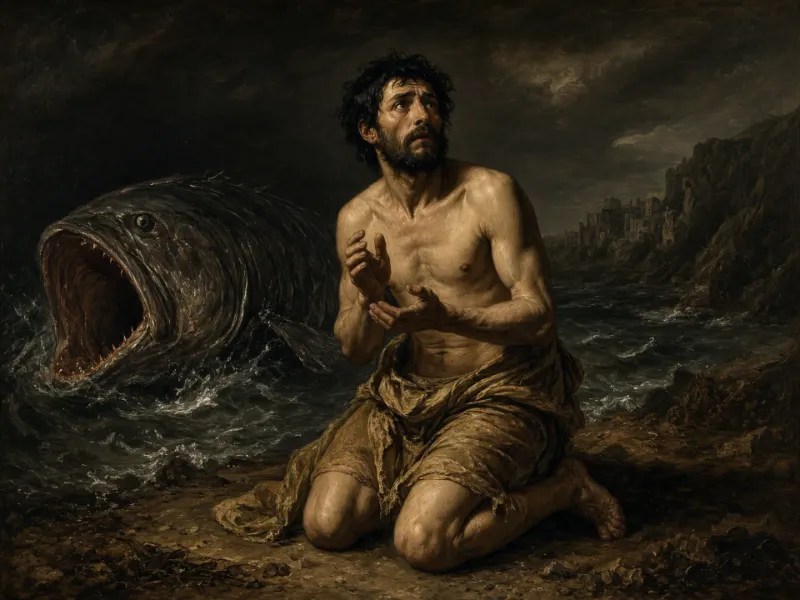
Proverbs 6:5
“Free yourself, like a gazelle from the hand of the hunter, like a bird from the snare of the fowler.”
Reflection: A father warns his son who has “put up security for your neighbor” that he has been “trapped by what you said, ensnared by the words of your mouth” (Proverbs 6:1-2). The way out is urgent: go to the neighbor and give him no rest, and get free the way a gazelle escapes a hunter or a bird a fowler.
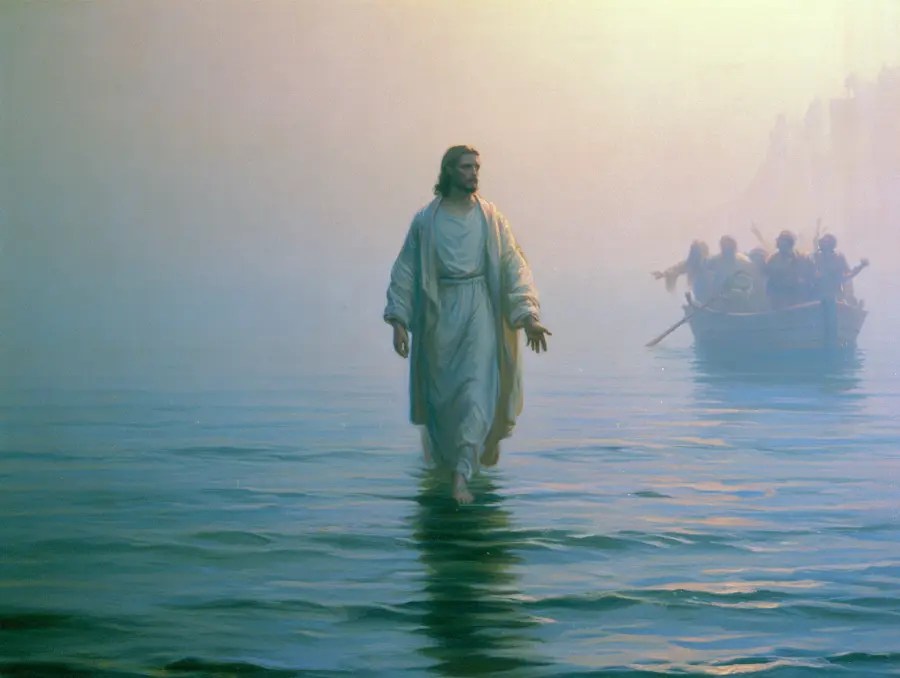
Psalm 124:7
“We have escaped like a bird from the fowler’s snare; the snare has been broken, and we have escaped.”
Reflection: Psalm 124, a song of ascents headed “Of David,” begins “If the Lord had not been on our side” and says Israel’s attackers would have swallowed them alive. Verse 7 pictures the rescue as a trapped bird going free because the snare has broken. The next verse names who broke it: “Our help is in the name of the Lord, the Maker of heaven and earth.”
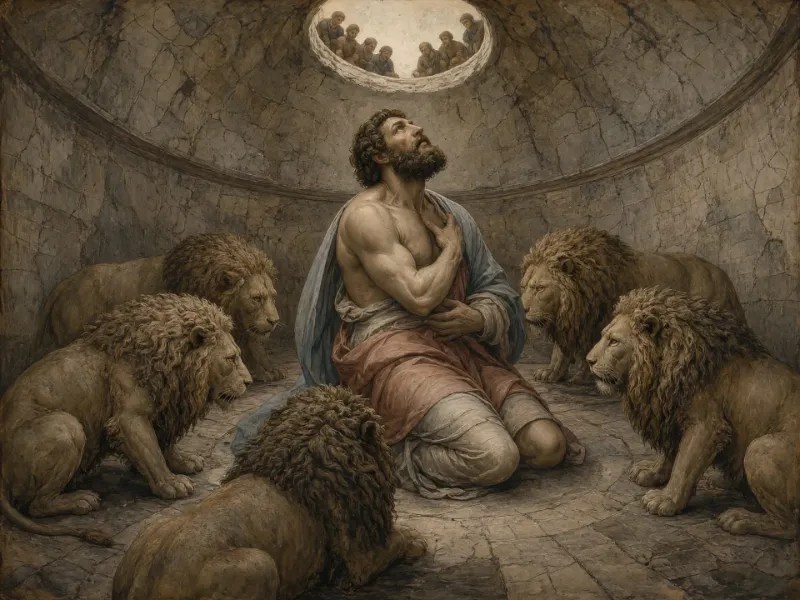
Proverbs 1:17
“How useless to spread a net where every bird can see it!”
Reflection: The father is warning his son against men who say, “let’s lie in wait for innocent blood” and promise to share the loot (Proverbs 1:11-14). A bird that sees the net will not fly into it, and verse 18 turns the picture on the gang: “These men lie in wait for their own blood; they ambush only themselves!”
Micah 7:2
“The faithful have been swept from the land; not one upright person remains. Everyone lies in wait to shed blood; they hunt each other with nets.”
Reflection: The prophet compares himself to someone gleaning a vineyard after the harvest and finding no grapes, and the missing fruit is the upright person. In their place are people who hunt one another with nets, and verse 3 names them: “the ruler demands gifts, the judge accepts bribes.”
Jeremiah 16:16
“But now I will send for many fishermen,” declares the LORD, “and they will catch them. After that I will send for many hunters, and they will hunt them down on every mountain and hill and from the crevices of the rocks.”
Reflection: The Lord says he will send fishermen and then hunters, who will search “every mountain and hill” and “the crevices of the rocks.” The verse comes straight after a promise to bring Israel back from the land of the north (Jeremiah 16:15), and the verses after it speak of judgment: “I will repay them double for their wickedness and their sin” (Jeremiah 16:18).


Leave a Reply