
 English
 Chinese
 Dutch
 Arabic
 Spanish
 Portuguese
 Russian
 French
 Italian
 German
 Japanese
The Bible tells God’s people not to worry and not to be afraid, and gives a reason with the command: God knows what they need and is with them. Matthew 6:25-34 and Philippians 4:6-7 deal with worry over daily needs; the “do not fear” of Joshua 1:9 and Isaiah 41:10 is spoken to people facing enemies.
The Psalms add the voice of the frightened person. David, according to the headings of Psalm 34 and Psalm 56, wrote out of real danger in Gath, and Psalm 55 and Psalm 94 name fear and anxiety plainly before they turn to trust. In the New Testament, John 14:27, 2 Timothy 1:7 and 1 John 4:18 set peace, the Spirit and love against fear.
Jesus and the apostles on worry

Matthew 6:25-27
“Therefore I tell you, do not worry about your life, what you will eat or drink; or about your body, what you will wear. Is not life more than food, and the body more than clothes? Look at the birds of the air; they do not sow or reap or store away in barns, and yet your heavenly Father feeds them. Are you not much more valuable than they? Can any one of you by worrying add a single hour to your life?”
Reflection: Jesus is teaching his disciples on the mountainside, with the crowds listening (Matthew 5:1-2; 7:28), and the “Therefore” ties this passage to the verse before it: “You cannot serve both God and money.” He points to birds and then to wild flowers, and says the Father “knows that you need them” (6:32). The passage ends with a practical limit: “do not worry about tomorrow, for tomorrow will worry about itself. Each day has enough trouble of its own” (6:34).
Philippians 4:6-7
“Do not be anxious about anything, but in every situation, by prayer and petition, with thanksgiving, present your requests to God. And the peace of God, which transcends all understanding, will guard your hearts and your minds in Christ Jesus.”
Reflection: Paul writes this letter in chains (Philippians 1:13), and he gives no instruction to stop feeling anxious without saying what to do instead: bring every request to God in prayer, with thanksgiving. The promise that follows is that God’s peace will guard the heart and mind; the passage does not say the requests will be granted as asked. The verse before it says “The Lord is near,” and the verses after it turn the mind to “whatever is true, whatever is noble” (4:8).

1 Peter 5:7
“Cast all your anxiety on him because he cares for you.”
Reflection: The instruction comes straight after “Humble yourselves, therefore, under God’s mighty hand” (5:6), so handing anxiety to God is part of that humility. Peter’s readers were suffering, and he reminds them in 5:9 that “the family of believers throughout the world is undergoing the same kind of sufferings.” The wording is close to Psalm 55:22, “Cast your cares on the Lord.”
Fear and anxiety prayed in the Psalms
Psalm 55:22
“Cast your cares on the Lord and he will sustain you; he will never let the righteous be shaken.”
Reflection: David does not reach this line calmly. Earlier in the psalm he says “Fear and trembling have beset me; horror has overwhelmed me” (55:5) and wishes he had “the wings of a dove” to fly away (55:6). The trouble comes from a companion who broke his word: “His talk is smooth as butter, yet war is in his heart” (55:21). The psalm closes with “But as for me, I trust in you” (55:23).

Psalm 56:3-4
“When I am afraid, I put my trust in you. In God, whose word I praise—in God I trust and am not afraid. What can mere mortals do to me?”
Reflection: The heading places the psalm “when the Philistines had seized him in Gath,” and 1 Samuel 21:12 says David “was very much afraid of Achish king of Gath.” He does not deny the fear; he says what he does when it comes: “When I am afraid, I put my trust in you.” The line “in God I trust and am not afraid” returns as a refrain in 56:10-11.
Psalm 34:4
“I sought the Lord, and he answered me; he delivered me from all my fears.”
Reflection: The heading places the psalm when David “pretended to be insane before Abimelek.” 1 Samuel 21:10-15 tells of David pretending to be insane before the king of Gath, whom it names Achish. David looks back on a rescue that has already happened: “I sought the Lord, and he answered me.” Verse 6 tells it again in the third person: “This poor man called, and the Lord heard him.”

Psalm 94:19
“When anxiety was great within me, your consolation brought me joy.”
Reflection: The psalm is a complaint against corrupt rulers who “condemn the innocent to death” (94:21). Just before this verse, the psalmist says, “When I said, ‘My foot is slipping,’ your unfailing love, Lord, supported me” (94:18). Anxiety and consolation sit in the same line, and the psalmist credits the consolation to God.
Psalm 23:4
“Even though I walk through the darkest valley, I will fear no evil, for you are with me; your rod and your staff, they comfort me.”
Reflection: In the first three verses David speaks about the Lord as “he”; in this verse he turns and speaks to him as “you”: “for you are with me.” The shepherd’s rod and staff are what comfort him in the darkest valley. The psalm goes on to a table laid “in the presence of my enemies” (23:5), so the danger has not gone away.
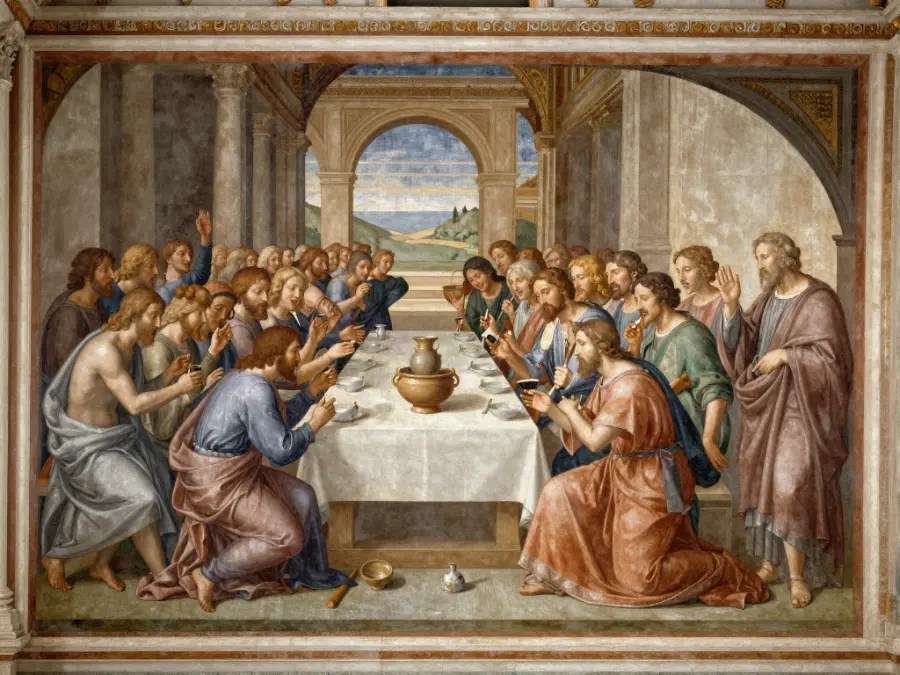
Psalm 91:1-2
“Whoever dwells in the shelter of the Most High will rest in the shadow of the Almighty. I will say of the Lord, ‘He is my refuge and my fortress, my God, in whom I trust.’”
Reflection: The psalm opens with the person who lives in God’s shelter and then speaks the promise that follows: “You will not fear the terror of night, nor the arrow that flies by day” (91:5). It ends with God himself speaking: “I will be with him in trouble, I will deliver him” (91:15).
“Do not fear”: God speaking to his people

Joshua 1:9
“Have I not commanded you? Be strong and courageous. Do not be afraid; do not be discouraged, for the Lord your God will be with you wherever you go.”
Reflection: Moses has died, and Joshua must lead Israel across the Jordan. God tells him to be strong and courageous three times in this speech (1:6, 1:7 and 1:9), and the reason given in 1:9 is God’s presence “wherever you go.” In 1:18 the people say the same words back to Joshua: “Only be strong and courageous!”
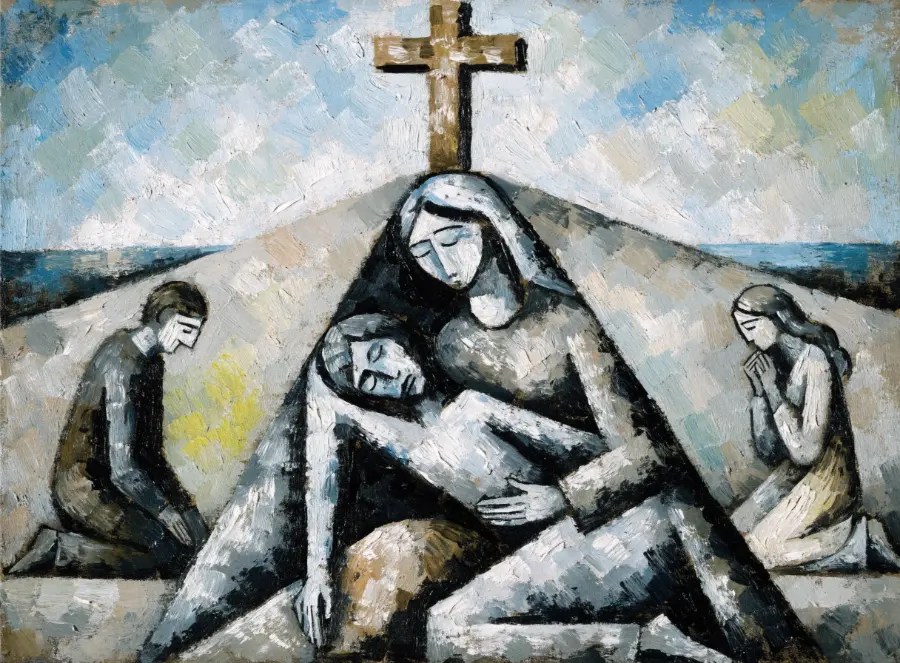
Isaiah 41:10
“So do not fear, for I am with you; do not be dismayed, for I am your God. I will strengthen you and help you; I will uphold you with my righteous right hand.”
Reflection: God addresses Israel as “my servant, Jacob, whom I have chosen” (41:8), and the command not to fear rests on “I am with you” and “I am your God.” The chapter goes on to name Israel’s enemies, who “will be as nothing” (41:12). The command is repeated in 41:13-14: “Do not fear; I will help you.”

Isaiah 43:1
“But now, this is what the Lord says—he who created you, Jacob, he who formed you, Israel: ‘Do not fear, for I have redeemed you; I have summoned you by name; you are mine.’”
Reflection: God gives as the reason not to fear his own past acts: he created, formed, redeemed and called Israel by name. The next verse speaks of God’s presence inside danger: “When you pass through the waters, I will be with you… When you walk through the fire, you will not be burned” (43:2).

Zephaniah 3:17
“The Lord your God is with you, the Mighty Warrior who saves. He will take great delight in you; in his love he will no longer rebuke you, but will rejoice over you with singing.”
Reflection: The verse is part of a song addressed to Jerusalem after judgment. The line before it says, “Do not fear, Zion; do not let your hands hang limp” (3:16), and 3:15 gives the reason: “The Lord, the King of Israel, is with you; never again will you fear any harm.” In this verse God does the singing, rejoicing over his people.
Peace, the Spirit and love set against fear
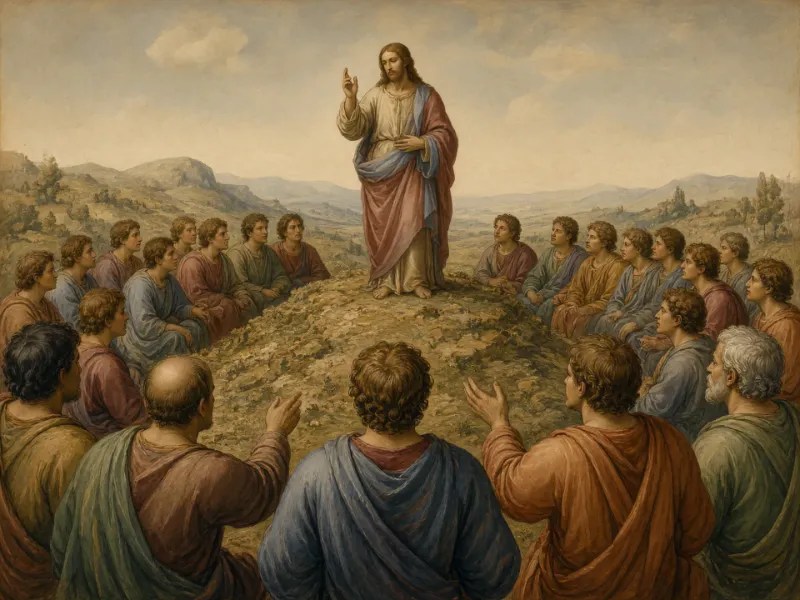
John 14:27
“Peace I leave with you; my peace I give you. I do not give to you as the world gives. Do not let your hearts be troubled and do not be afraid.”
Reflection: Jesus says this at the evening meal before the Passover (John 13:1-2), as he tells his disciples he is going away (14:28). The chapter opens with the same words, “Do not let your hearts be troubled” (14:1). The peace he leaves comes with the promise of “the Advocate, the Holy Spirit” in the verse before (14:26).
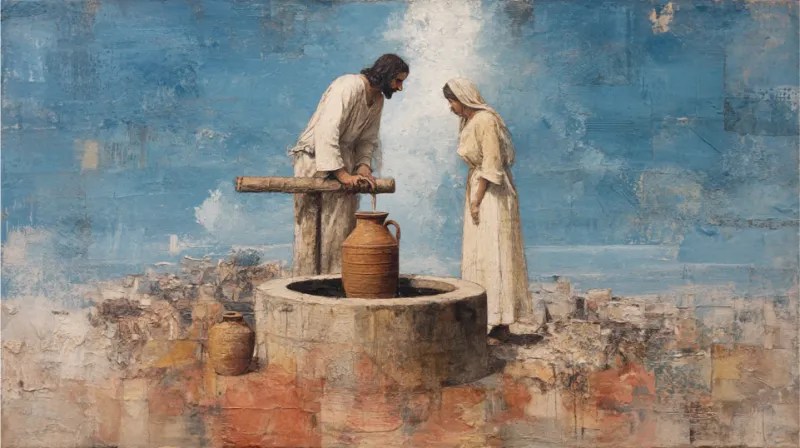
Isaiah 26:3
“You will keep in perfect peace those whose minds are steadfast, because they trust in you.”
Reflection: The verse belongs to a song “sung in the land of Judah” about a strong city whose walls are salvation (26:1). Peace here depends on where the mind is fixed: on the God who is “the Rock eternal” (26:4). The next verse turns the promise into a command: “Trust in the Lord forever.”
2 Timothy 1:7
“For the Spirit God gave us does not make us timid, but gives us power, love and self-discipline.”
Reflection: Paul, calling himself the Lord’s prisoner (1:8), reminds Timothy of the gift of God received “through the laying on of my hands” (1:6). The Spirit God gave does not make his people timid. The verse leads straight into a charge: “So do not be ashamed of the testimony about our Lord or of me his prisoner. Rather, join with me in suffering for the gospel, by the power of God.”

1 John 4:18
“There is no fear in love. But perfect love drives out fear, because fear has to do with punishment. The one who fears is not made perfect in love.”
Reflection: John names the fear he means: “fear has to do with punishment.” The verses before it speak of relying on “the love God has for us” (4:16) and of love made complete “so that we will have confidence on the day of judgment” (4:17). The next verse gives its source: “We love because he first loved us” (4:19).
Fear and anxiety brought to God in prayer
Psalm 56:3, Psalm 94:19 and Psalm 23:4 are addressed to God, and Psalm 56:3 can be prayed as written: “When I am afraid, I put my trust in you.” Psalm 55:22 and 1 Peter 5:7 are instructions to others, telling them to hand their cares and anxiety to God. Philippians 4:6 asks for every request to be brought to God with prayer, petition and thanksgiving together.


Leave a Reply