
 English
 Chinese
 Dutch
 Arabic
 Spanish
 Portuguese
 Russian
 French
 Italian
 German
 Japanese
The Bible speaks of fighting between people, in war, against evil and within oneself. James traces quarrels to desires “that battle within you” (James 4:1). Before a battle, Israel’s priest was to promise the army that the Lord goes with them “to fight for you against your enemies” (Deuteronomy 20:4).
Paul describes a struggle against “the spiritual forces of evil” (Ephesians 6:12) and calls it “the good fight of the faith” (1 Timothy 6:12). When Jesus was arrested, he ordered a disciple to put his sword away (Matthew 26:52), and the next morning he told Pilate that his servants would fight if his kingdom were of this world (John 18:28, 36).
Quarrels, enemies and self-control

James 4:1
“What causes fights and quarrels among you? Don’t they come from your desires that battle within you?”
Reflection: James asks the question and answers it himself: the fights among his readers come from desires “that battle within you.” The next verse traces the same line further: “You desire but do not have, so you kill. You covet but you cannot get what you want, so you quarrel and fight.” Later in the chapter he calls the same readers to submit to God and resist the devil (James 4:7).

Proverbs 16:32
“Better a patient person than a warrior, one with self-control than one who takes a city.”
Reflection: The proverb ranks self-control above military success: a patient person is better than a warrior, and one who masters himself better than one who captures a city. Proverbs 20:3 makes a related point about quarrels: “It is to one’s honor to avoid strife, but every fool is quick to quarrel.”
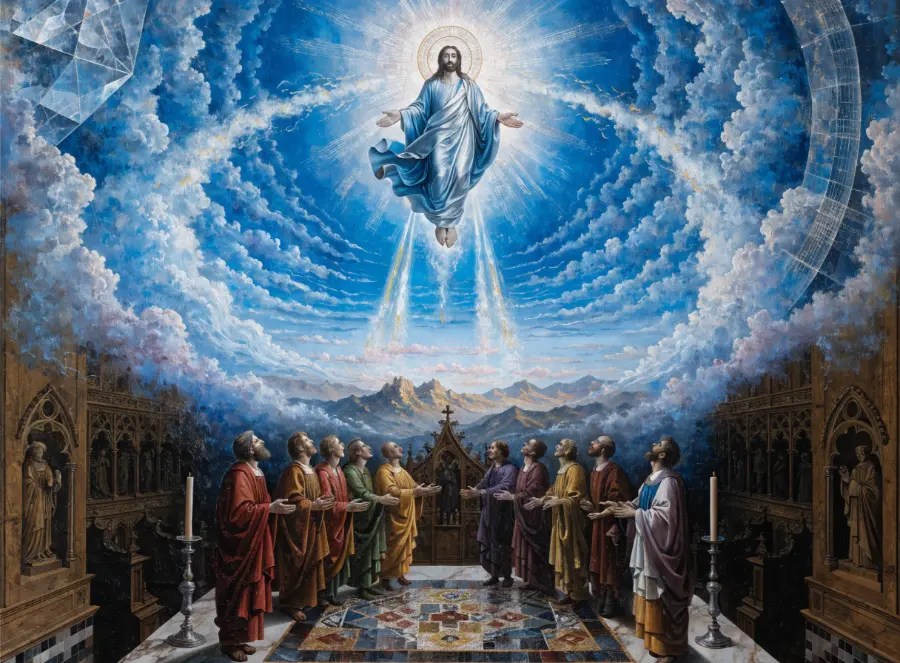
Romans 12:21
“Do not be overcome by evil, but overcome evil with good.”
Reflection: The verse closes a run of instructions about enemies. Paul has just told the church in Rome not to repay evil for evil, to live at peace with everyone “as far as it depends on you,” and to leave vengeance to God, and he quotes Proverbs 25:21-22 on giving a hungry enemy food and a thirsty one water. Overcoming evil with good, in this setting, means answering an enemy with kindness instead of revenge.
When Jesus stopped his disciples from fighting
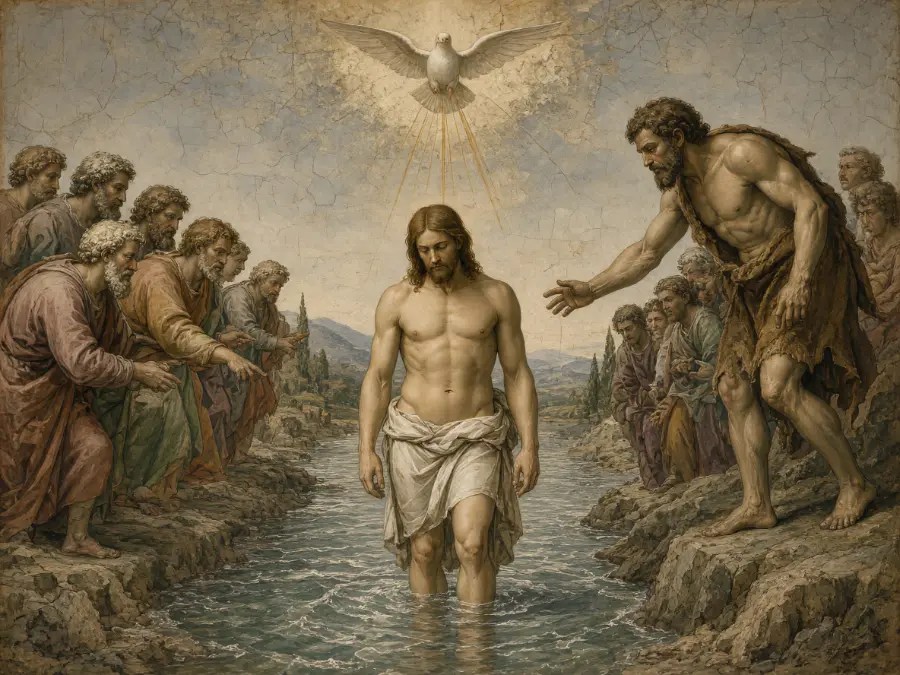
Matthew 26:52
“‘Put your sword back in its place,’ Jesus said to him, ‘for all who draw the sword will die by the sword.’”
Reflection: At Jesus’ arrest in Gethsemane, one of his companions drew a sword and cut off the ear of the high priest’s servant. Jesus ordered the sword put back, and in the next verse said he could call on his Father for “more than twelve legions of angels.” John’s account names the swordsman as Simon Peter and the servant as Malchus (John 18:10).
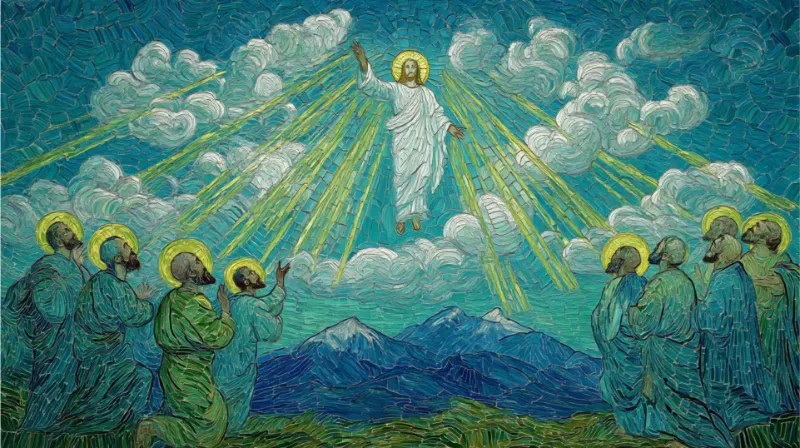
John 18:36
“Jesus said, ‘My kingdom is not of this world. If it were, my servants would fight to prevent my arrest by the Jewish leaders. But now my kingdom is from another place.’”
Reflection: Pilate has asked Jesus whether he is the king of the Jews, and John places the exchange in the early morning after the arrest (18:28). Jesus’ answer links the absence of fighting to the kind of kingdom he has: if it were of this world, his servants would have fought to prevent his arrest.
When the Lord fights for his people
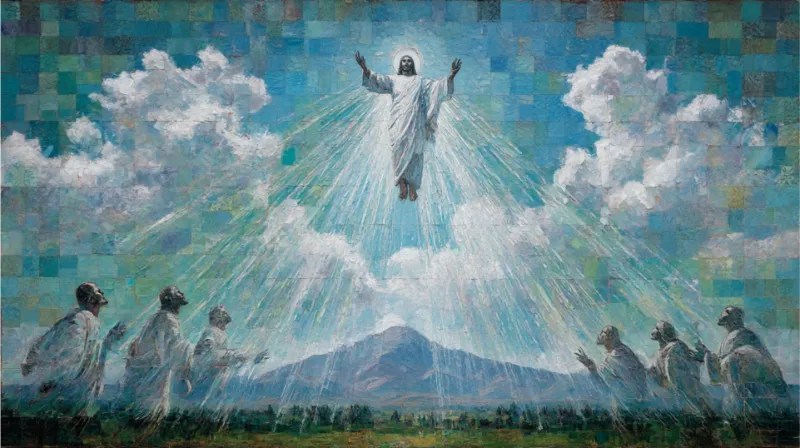
Exodus 14:14
“The LORD will fight for you; you need only to be still.”
Reflection: Moses speaks these words beside the sea, with Pharaoh’s army marching up behind the Israelites and the people telling him it would have been better to go on serving the Egyptians. He tells them not to be afraid, to stand firm and to watch the deliverance the Lord will bring. In this chapter Israel does no fighting at all.
Deuteronomy 20:4
“For the LORD your God is the one who goes with you to fight for you against your enemies to give you victory.”
Reflection: Deuteronomy gives these words to the priest, who is to address Israel’s army before a battle against an enemy with more horses, more chariots and a larger army. Unlike Exodus 14, the soldiers here still go into battle; the promise is that the Lord goes with them and fights for them.
2 Chronicles 20:17
“You will not have to fight this battle. Take up your positions; stand firm and see the deliverance the LORD will give you, Judah and Jerusalem. Do not be afraid; do not be discouraged. Go out to face them tomorrow, and the LORD will be with you.”
Reflection: A Levite named Jahaziel speaks these words to King Jehoshaphat when Moabites, Ammonites and Meunites come to wage war against Judah. The people are still told to march out and take their positions. According to verse 22, the Lord set ambushes against the invaders as Judah’s singers began to praise, and the invaders were defeated.
Nehemiah 4:14
“After I looked things over, I stood up and said to the nobles, the officials and the rest of the people, ‘Don’t be afraid of them. Remember the Lord, who is great and awesome, and fight for your families, your sons and your daughters, your wives and your homes.’”
Reflection: The people rebuilding Jerusalem’s wall learn that Sanballat, Tobiah and their allies are plotting to attack. Nehemiah posts them by families with swords, spears and bows, and tells them to remember the Lord and fight for their families and homes. Verse 9 records that they prayed as well as keeping watch: “we prayed to our God and posted a guard day and night to meet this threat.”
The struggle against evil powers

Ephesians 6:12
“For our struggle is not against flesh and blood, but against the rulers, against the authorities, against the powers of this dark world and against the spiritual forces of evil in the heavenly realms.”
Reflection: Paul writes this between two commands to put on “the full armor of God” (verses 11 and 13). The opponents he lists are not flesh and blood, and the armor that follows is truth, righteousness, the gospel of peace, faith, salvation and “the sword of the Spirit, which is the word of God” (verses 14-17).

2 Corinthians 10:3-4
“For though we live in the world, we do not wage war as the world does. The weapons we fight with are not the weapons of the world. On the contrary, they have divine power to demolish strongholds.”
Reflection: Paul is answering people in Corinth who think he lives “by the standards of this world.” The next verse says what the strongholds are: “arguments and every pretension that sets itself up against the knowledge of God,” and he adds that he takes “every thought” captive to make it obedient to Christ.

1 Peter 5:8-9
“Be alert and of sober mind. Your enemy the devil prowls around like a roaring lion looking for someone to devour. Resist him, standing firm in the faith, because you know that the family of believers throughout the world is undergoing the same kind of sufferings.”
Reflection: Peter’s picture of the devil as a roaring lion comes right after the instruction to cast all anxiety on God (5:7). The response he asks for is watchfulness and resistance, “standing firm in the faith,” and he tells his readers that believers throughout the world face the same sufferings. Verse 10 promises that God will restore them “after you have suffered a little while.”
James 4:7
“Submit yourselves, then, to God. Resist the devil, and he will flee from you.”
Reflection: The command comes in the chapter that opened with fights and quarrels (4:1). Resisting the devil is paired with submitting to God, and verse 6 gives the ground for both: “God opposes the proud but shows favor to the humble.” Verse 8 continues, “Come near to God and he will come near to you.”
The fight inside a person

Galatians 5:17
“For the flesh desires what is contrary to the Spirit, and the Spirit what is contrary to the flesh. They are in conflict with each other, so that you are not to do whatever you want.”
Reflection: Paul describes two sets of desires in conflict, the flesh against the Spirit. The sentence before it gives the instruction for living with that conflict: “walk by the Spirit, and you will not gratify the desires of the flesh” (5:16).
1 Corinthians 9:26-27
“Therefore I do not run like someone running aimlessly; I do not fight like a boxer beating the air. No, I strike a blow to my body and make it my slave so that after I have preached to others, I myself will not be disqualified for the prize.”
Reflection: Paul borrows from the athletic games: a runner who knows where the finish is and a boxer who does not waste blows on the air. The opponent he strikes is his own body, which he trains so that after preaching to others he is not “disqualified for the prize.” Verse 25 sets the athlete’s crown “that will not last” against one “that will last forever.”
The good fight of the faith

1 Timothy 6:12
“Fight the good fight of the faith. Take hold of the eternal life to which you were called when you made your good confession in the presence of many witnesses.”
Reflection: Paul gives this charge to Timothy, whom he addresses as “man of God” (6:11). The fight stands beside a list of things to pursue, “righteousness, godliness, faith, love, endurance and gentleness,” and it is tied to the confession Timothy made “in the presence of many witnesses.”

2 Timothy 4:7
“I have fought the good fight, I have finished the race, I have kept the faith.”
Reflection: Paul writes this expecting his death: “the time for my departure is near” (4:6). The three clauses look back on his life, and the next verse looks forward to “the crown of righteousness,” which he says the Lord will award “not only to me, but also to all who have longed for his appearing.”
Fighting and war: where Christians differ
Christians disagree on whether a follower of Jesus may take part in war. The Mennonite Confession of Faith, in its article on peace, justice and nonresistance, states: “As disciples of Christ, we do not prepare for war, or participate in war or military service.”
The Catechism of the Catholic Church holds that “governments cannot be denied the right of lawful self-defense, once all peace efforts have failed,” and says the conditions for defense by military force “require rigorous consideration” (paragraphs 2308 and 2309).


Leave a Reply