
 English
 Chinese
 Dutch
 Arabic
 Spanish
 Portuguese
 Russian
 French
 Italian
 German
 Japanese
The Bible warns against gluttony and also counts eating and drinking as a gift from God. The glutton appears in Deuteronomy 21:20, Proverbs 23:20-21 and the charge made against Jesus in Matthew 11:19; Philippians 3:19 describes people whose “god is their belly,” and Ecclesiastes 2:24 says that eating and drinking are “from the hand of God.”
The Hebrew word translated glutton in Deuteronomy 21:20 and Proverbs 23:20-21 and 28:7 is zalal (Strong’s 2151), which also means to be worthless or light; Jeremiah 15:19 uses it for “what is worthless.” In Matthew 11:19 the Greek word is phagos, an eater or glutton (Strong’s 5314).
Where the Bible calls someone a glutton

Deuteronomy 21:20
“…and they shall say to the elders of his city, ‘This our son is stubborn and rebellious; he will not obey our voice; he is a glutton and a drunkard.’”
Reflection: This law covers a son who will not obey his father or his mother even after they discipline him (21:18). Both parents bring him to the elders at the city gate, and gluttony and drunkenness are part of the charge they make there. Verse 21 sets the penalty as stoning, “so you shall purge the evil from your midst, and all Israel shall hear, and fear.” The Hebrew word for glutton here, zalal, is the one Proverbs uses in 23:20-21 and 28:7.

Proverbs 23:20-21
“Be not among drunkards or among gluttonous eaters of meat, for the drunkard and the glutton will come to poverty, and slumber will clothe them with rags.”
Reflection: A father’s instruction opens with “Hear, my son, and be wise, and direct your heart in the way” (23:19). The warning covers company as well as conduct: the son is not to be “among” drunkards and gluttonous eaters of meat. The reasons given are poverty and the slumber that ends in rags.

Proverbs 28:7
“The one who keeps the law is a son with understanding, but a companion of gluttons shames his father.”
Reflection: Keeping the law is set against keeping company with gluttons, and in both halves of the proverb the person is a son. The cost of the wrong company falls on the father, who is shamed. Deuteronomy 21:18-21 brings together the same three things: a son, his parents and gluttony.
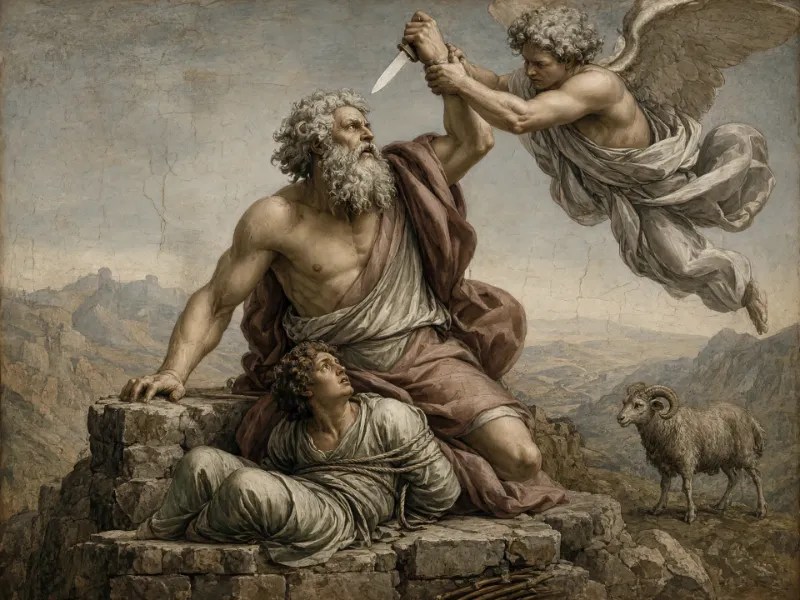
Matthew 11:19
“The Son of Man came eating and drinking, and they say, ‘Look at him! A glutton and a drunkard, a friend of tax collectors and sinners!’ Yet wisdom is justified by her deeds.”
Reflection: Jesus is speaking to the crowds about John the Baptist (11:7). John came “neither eating nor drinking” and was said to have a demon; Jesus came “eating and drinking” and was called a glutton and a drunkard, the pair Deuteronomy 21:20 and Proverbs 23:21 use. The Greek word for glutton, phagos, appears in this saying and in its parallel in Luke 7:34. He answers what was said of John and of himself with one line: “Yet wisdom is justified by her deeds.”

Titus 1:12-13
“One of the Cretans, a prophet of their own, said, ‘Cretans are always liars, evil beasts, lazy gluttons.’ This testimony is true. Therefore rebuke them sharply, that they may be sound in the faith.”
Reflection: Paul had left Titus in Crete to appoint elders (1:5), and these verses concern teachers there who are “upsetting whole families by teaching for shameful gain” (1:11). He quotes a Cretan, “a prophet of their own,” whose line includes “lazy gluttons,” and says, “This testimony is true.” The instruction that follows is to rebuke them sharply “that they may be sound in the faith.”
Eating only enough
Proverbs 23:1-3
“When you sit down to eat with a ruler, observe carefully what is before you, and put a knife to your throat if you are given to appetite. Do not desire his delicacies, for they are deceptive food.”
Reflection: The setting is a meal at a ruler’s table, where the guest is told to “observe carefully what is before you.” The command to put a knife to one’s throat is aimed at the guest who is “given to appetite.” The proverb calls the ruler’s delicacies “deceptive food” without saying how they deceive; verses 6-8 give a parallel warning about a stingy host who says “Eat and drink!” while “his heart is not with you.”

Proverbs 25:16
“If you have found honey, eat only enough for you, lest you have your fill of it and vomit it.”
Reflection: The proverb allows the honey and sets the limit at “only enough for you,” without naming an amount. Going past that limit ends in vomiting. Later in the same chapter honey returns beside a different excess: “It is not good to eat much honey, nor is it glorious to seek one’s own glory” (25:27).
When appetite is set against God
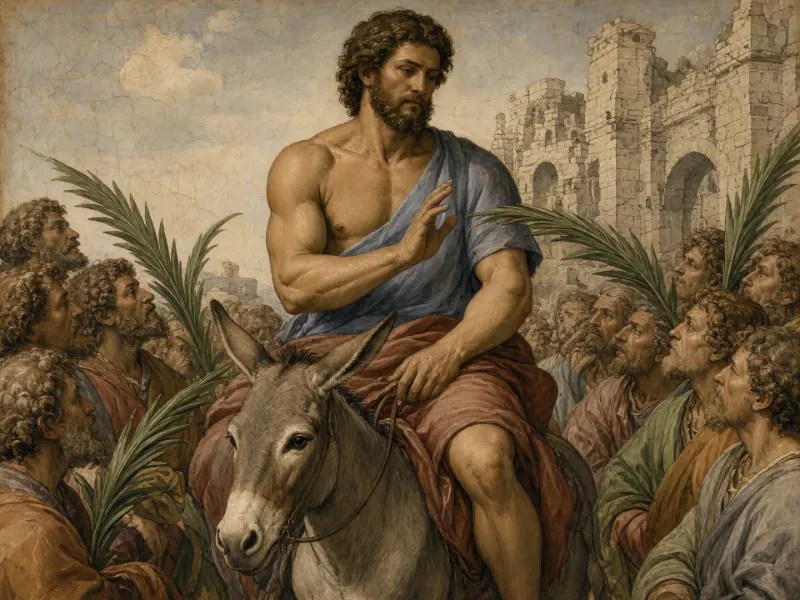
Psalm 78:18, 29-31
“They tested God in their heart by demanding the food they craved… And they ate and were well filled, for he gave them what they craved. But before they had satisfied their craving, while the food was still in their mouths, the anger of God rose against them…”
Reflection: Psalm 78 retells Israel’s time in the wilderness, and here the people test God “by demanding the food they craved” and ask, “Can God spread a table in the wilderness?” (78:19). Verse 22 gives the reason for the wrath of verse 21: “they did not believe in God and did not trust his saving power.” He sent the meat, and the judgment fell while “the food was still in their mouths.” Numbers 11:31-34 tells of the quail and records the name given to the place, Kibroth-hattaavah, “because there they buried the people who had the craving.”
Isaiah 22:13
“…and behold, joy and gladness, killing oxen and slaughtering sheep, eating flesh and drinking wine: ‘Let us eat and drink, for tomorrow we die.’”
Reflection: The oracle “concerning the valley of vision” is addressed to Jerusalem, which in 22:9-11 counts its houses and strengthens its walls but does “not look to him who did it.” When the Lord called for weeping and sackcloth (22:12), the city feasted. The saying “Let us eat and drink, for tomorrow we die” is answered in 22:14: “Surely this iniquity will not be atoned for you until you die.” Paul quotes the same saying in 1 Corinthians 15:32 as what would follow “if the dead are not raised.”

Ezekiel 16:49
“Behold, this was the guilt of your sister Sodom: she and her daughters had pride, excess of food, and prosperous ease, but did not aid the poor and needy.”
Reflection: Ezekiel 16 is addressed to Jerusalem (16:2), and here the Lord compares the city with its “sister Sodom.” The guilt listed is pride, excess of food and prosperous ease, together with the failure to “aid the poor and needy.” Verse 50 adds that Sodom’s people were haughty “and did an abomination before me.”

Philippians 3:19
“Their end is destruction, their god is their belly, and they glory in their shame, with minds set on earthly things.”
Reflection: Paul writes “with tears” of many who “walk as enemies of the cross of Christ” (3:18), and the belly is one of the marks he names. “Their god is their belly” stands next to “minds set on earthly things.” The next verse opens with the contrast, “But our citizenship is in heaven,” and 3:21 looks for Christ to “transform our lowly body.”
Self-control over the body
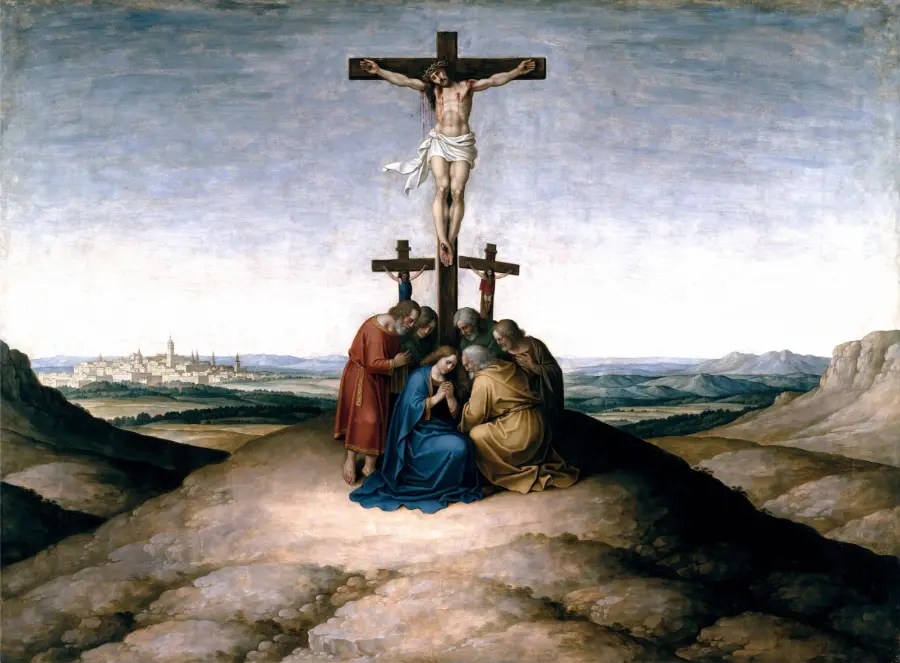
1 Corinthians 6:12-13
“‘All things are lawful for me,’ but not all things are helpful. ‘All things are lawful for me,’ but I will not be dominated by anything. ‘Food is meant for the stomach and the stomach for food’—and God will destroy both one and the other. The body is not meant for sexual immorality, but for the Lord, and the Lord for the body.”
Reflection: The ESV prints “All things are lawful for me” and “Food is meant for the stomach and the stomach for food” in quotation marks, as sayings Paul is answering. To the first he replies, “I will not be dominated by anything”; to the second, that God will destroy both stomach and food. The food saying comes inside a passage on sexual immorality (6:12-20), which continues, “The body is not meant for sexual immorality, but for the Lord, and the Lord for the body” (6:13), and ends, “So glorify God in your body” (6:20).
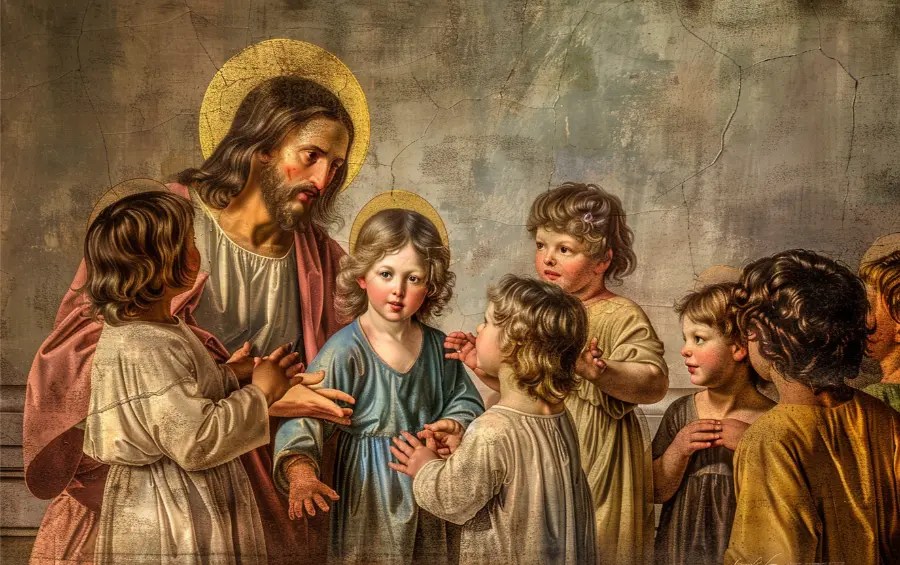
Galatians 5:22-24
“But the fruit of the Spirit is love, joy, peace, patience, kindness, goodness, faithfulness, gentleness, self-control; against such things there is no law. And those who belong to Christ Jesus have crucified the flesh with its passions and desires.”
Reflection: Self-control comes last in Paul’s list of the fruit of the Spirit. Just before it, the works of the flesh include “drunkenness, orgies, and things like these,” with the warning that those who do such things “will not inherit the kingdom of God” (5:21). Verse 24 says that those who belong to Christ “have crucified the flesh with its passions and desires.”
Food received from God
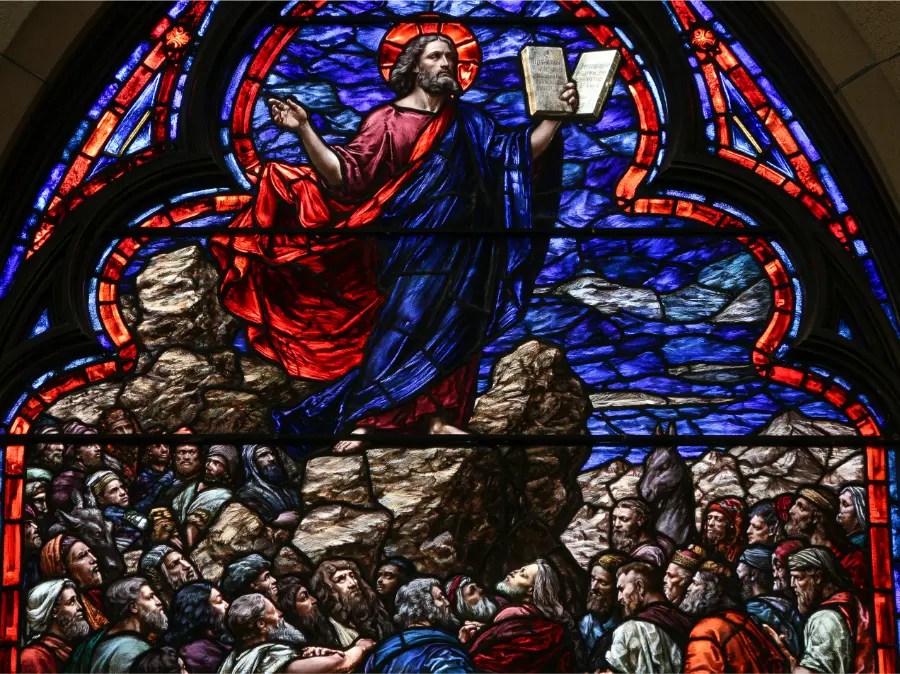
Ecclesiastes 2:24
“There is nothing better for a person than that he should eat and drink and find enjoyment in his toil. This also, I saw, is from the hand of God.”
Reflection: The Preacher concludes that eating, drinking and finding enjoyment in one’s toil are “from the hand of God.” Verse 25 asks, “apart from him who can eat or who can have enjoyment?” He reaches the same verdict in 5:18, calling it “good and fitting” to eat and drink and find enjoyment during “the few days of his life that God has given him.”
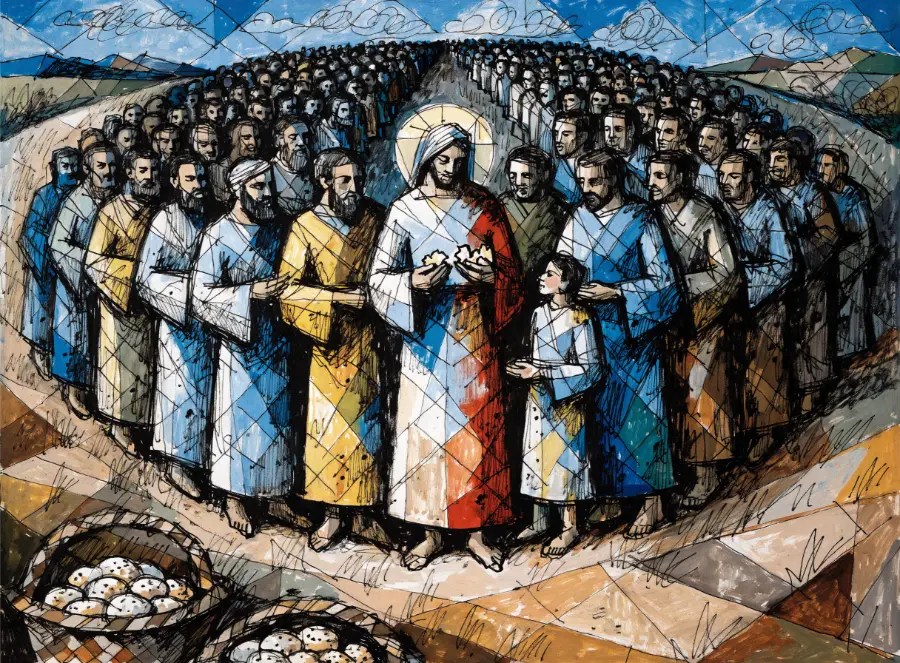
1 Corinthians 10:31
“So, whether you eat or drink, or whatever you do, do all to the glory of God.”
Reflection: The verse comes in Paul’s discussion of meat that may have been offered to idols: believers may eat what the market sells and what an unbeliever serves, unless someone points out that it was “offered in sacrifice” (10:25-28). Just before it he asks, “If I partake with thankfulness, why am I denounced because of that for which I give thanks?” Eating and drinking are named first among the things to be done “to the glory of God.”
Gluttony among the capital sins
The list that names gluttony as one of seven capital sins comes from Christian teaching after the Bible. The Catechism of the Catholic Church (paragraph 1866) says these sins were distinguished “following St. John Cassian and St. Gregory the Great,” and names them as “pride, avarice, envy, wrath, lust, gluttony, and sloth or acedia.” They are called capital “because they engender other sins, other vices.” Paul’s list of the works of the flesh in Galatians 5:19-21 names drunkenness and orgies and does not name gluttony.


Leave a Reply