
 English
 Chinese
 Dutch
 Arabic
 Spanish
 Portuguese
 Russian
 French
 Italian
 German
 Japanese
The Christmas tree is not in the Bible, and no verse forbids it. Jeremiah 10:1–5, the passage most often quoted against it, describes something else: a tree cut down and worked by a craftsman into an idol, plated with silver and gold, nailed so it will not fall over, and carried because it cannot walk.
The prophets put the whole difference between an idol and the living God into one picture. The idol has to be carried, and the Lord carries his people. Jeremiah ends his description with it: “they must needs be borne, because they cannot go” (Jeremiah 10:5). Isaiah sees two gods, Bel and Nebo, loaded on animals, “a burden to the weary beast,” and then hears the Lord turn the same words around for Israel: “even to hoar hairs will I carry you: I have made, and I will bear; even I will carry, and will deliver you” (Isaiah 46:1–4). Jeremiah 10 is built on that difference.
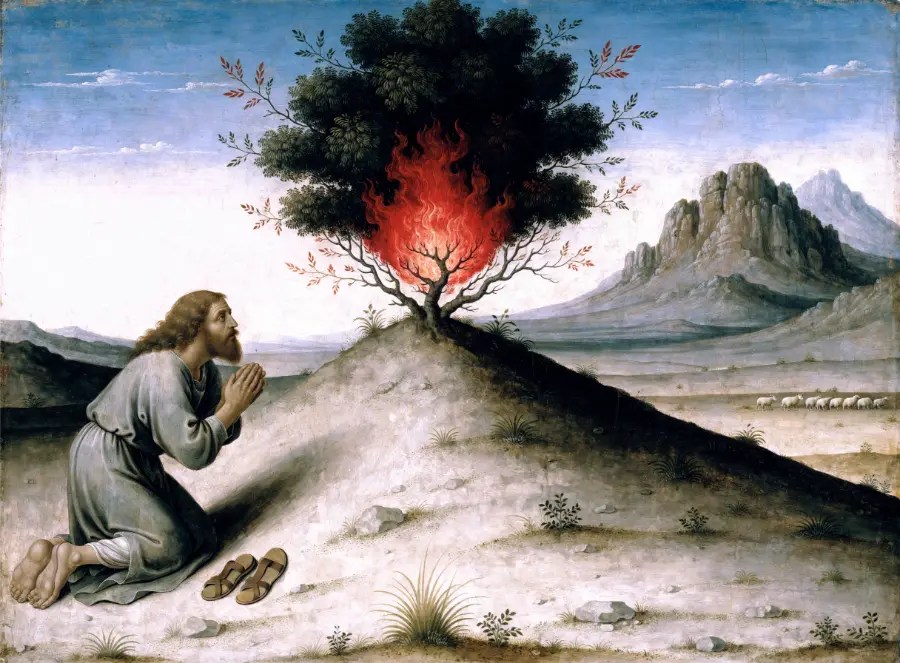
Is the Christmas tree mentioned in the Bible?
Scripture is full of trees, from the two in the middle of the garden of Eden to the tree of life beside the river in its last chapter. The Christmas tree could not be among them. Christians in German-speaking towns began to write about trees at Christmas in the 1500s, well over a thousand years after the last book of the New Testament was finished, and how the custom grew from there is told in the history and meaning of the Christmas tree. What the Bible does give us is a prophet laughing at a god made from a tree, and that is where the worry about our own trees begins.
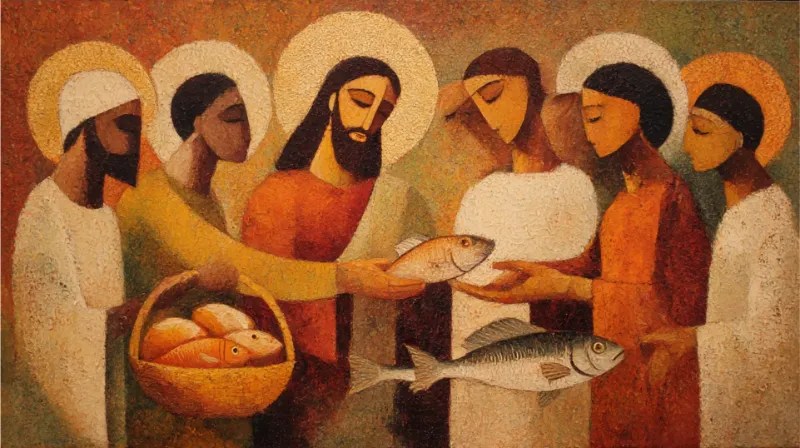
Jeremiah 10 and the tree from the forest
Here are the verses in the King James Version:
“Hear ye the word which the Lord speaketh unto you, O house of Israel: Thus saith the Lord, Learn not the way of the heathen, and be not dismayed at the signs of heaven; for the heathen are dismayed at them. For the customs of the people are vain: for one cutteth a tree out of the forest, the work of the hands of the workman, with the axe. They deck it with silver and with gold; they fasten it with nails and with hammers, that it move not. They are upright as the palm tree, but speak not: they must needs be borne, because they cannot go. Be not afraid of them; for they cannot do evil, neither also is it in them to do good.” (Jeremiah 10:1–5)
Read quickly, it can sound like a living room in December: a tree from the forest, silver and gold, nails to keep it standing. Many Christians have noticed the likeness, and some read the passage as a ban. The rest of the chapter shows what Jeremiah was looking at.
Keep reading and the tree stops being a tree. The workman takes his axe to it, and what comes back from his shop is a god, covered with “silver spread into plates” from Tarshish and “gold from Uphaz,” then robed like a king: “blue and purple is their clothing: they are all the work of cunning men” (verse 9). Jeremiah is mocking it. Here is a god that has to be nailed down so that it will not topple, that stands “upright as the palm tree,” or, as the English Standard Version renders it, “like scarecrows in a cucumber field,” and still cannot take a step. “There is no breath in them,” he says (verse 14). Then he lifts his eyes from the workshop to the Lord: “he is the living God, and an everlasting king” (verse 10). The prophet sets the scarecrow beside the King and lets his people look from one to the other.
Is Jeremiah 10 about Christmas trees?
Jeremiah was looking at a statue made to be worshipped, a god his hearers were tempted to fear, and that is why he tells them, “Be not afraid of them; for they cannot do evil, neither also is it in them to do good.” The “way of the heathen” he warns against in verse 2 is the worship of carved gods, and of the stars as well, the “signs of heaven” that frightened the nations.
He preached in the last years of the kingdom of Judah, from the days of King Josiah “unto the carrying away of Jerusalem captive” (Jeremiah 1:3), with idols of wood and metal in front of him, and he mocked them so that his people would stop trembling before them. The custom people now read into his verses would not be recorded for many centuries. His mockery still serves us. Whatever our own hands have made, however much gold is on it, stands where his scarecrow stood: it cannot hurt us, and it cannot save us.
Are there Bible verses about Christmas trees?
Isaiah’s carver and the shrines of Deuteronomy are the passages people most often set beside Jeremiah, and every one of them is about the same thing he is: wood made into something to worship. None names the Christmas tree, and none forbids decorating one.
| Passage | What the wood becomes | What God condemns |
|---|---|---|
| Jeremiah 10:3–5 | An image plated and nailed in place | A god that “cannot go” |
| Isaiah 44:14–17 | Firewood, and a carved god from the rest | Praying “Deliver me” to it |
| Isaiah 41:7 | An image nailed “that it should not be moved” | The idol and its makers |
| Deuteronomy 16:21 | A “grove”: a wooden pole for worship | Setting it by the Lord’s altar |
| Deuteronomy 12:2–3 | “Groves” and carved images at shrines | Serving gods “under every green tree” |
Isaiah tells the idol-maker’s day as a story, and it is almost comic. A man cuts down a cedar or an oak, burns half of it to bake his bread and warm his hands, “And the residue thereof he maketh a god, even his graven image: he falleth down unto it, and worshippeth it, and prayeth unto it, and saith, Deliver me; for thou art my god” (Isaiah 44:17). The question he never asks himself, Isaiah asks for him: “shall I fall down to the stock of a tree?” (Isaiah 44:19). Part of the log cooked his supper, and he prays to the rest.
The “grove” of Deuteronomy 16:21 in the King James Version was a wooden pole, not a stand of trees: the Hebrew word is asherah, which the Jewish Encyclopedia describes as “a wooden post or pole planted near the altars of various gods.” In Deuteronomy 12 the green trees are only the places where the shrines stood, and what Israel had to break down were the altars, the pillars and “the graven images of their gods” (verse 3). In every one of these passages, what God forbids is the bowing down, and nobody kneels to the tree we hang our lights on.
What does the Christmas tree mean according to the Bible?
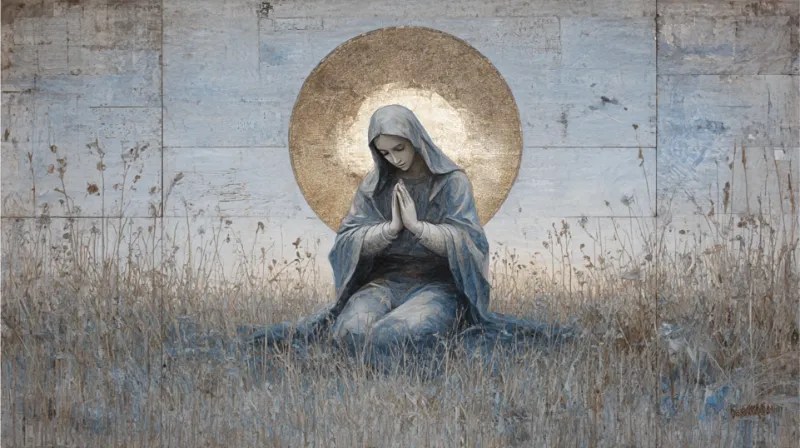
The Bible gives the Christmas tree no meaning of its own, since it never mentions it. Yet when Christians bring a tree indoors, they have long thought of the trees Scripture does honour, and every one of those trees is alive.
The Bible opens and closes with a tree. God made the tree of life to grow in Eden (Genesis 2:9), and in the last chapter it stands again “on either side of the river,” bearing “twelve manner of fruits” and yielding “her fruit every month” (Revelation 22:2), a tree with no barren season at all. In between, the psalm promises that the one who delights in God’s law “shall be like a tree planted by the rivers of water, that bringeth forth his fruit in his season; his leaf also shall not wither” (Psalm 1:3). Isaiah sees evergreens carried into God’s house, “the fir tree, the pine tree, and the box together, to beautify the place of my sanctuary” (Isaiah 60:13), and the psalmist hears whole forests sing when the Lord comes: “then shall all the trees of the wood rejoice Before the Lord: for he cometh” (Psalm 96:12–13). The idol-maker’s tree had to be nailed down to stand up. These trees grow, bear fruit and sing.
One verse holds the idol and the evergreen side by side. At the end of Hosea, Ephraim asks, “What have I to do any more with idols?” The verse does not mark who speaks next, but in the usual reading it is the Lord who answers: “I have heard him, and observed him: I am like a green fir tree. From me is thy fruit found” (Hosea 14:8). None of these verses speaks of a Christmas tree, and we do them no honour by pretending they do. What they give us is a way to look at one: life that God plants and waters and keeps green.
Is the Christmas tree a sin?
Scripture asks what we bow down to, and a fir in the corner of the room asks nobody to bow, so no verse calls it a sin. The early Church argued over holy days and food, and in Romans 14 Paul made room both for the believer who kept the day and for the believer who did not, as long as each did it for the Lord. That wider question is weighed in is it a sin to celebrate Christmas?
Jeremiah’s warning still stands against any god we make with our own hands and carry where we please. A fir with lights on its branches is not that god, and his word to Israel holds for us too: we need not be afraid of it.
Is the Christmas tree pagan?
Jeremiah’s quarrel was with idols, and no record anyone has found joins our tree to a pagan rite either. The winter greenery of the Roman New Year is far older than the Christmas tree, and it is a custom of its own; the charge is weighed in full in are Christmas trees pagan?
The God who carries
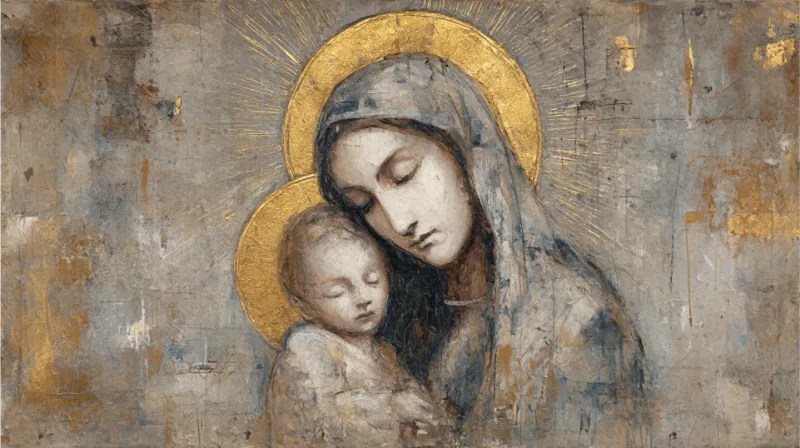
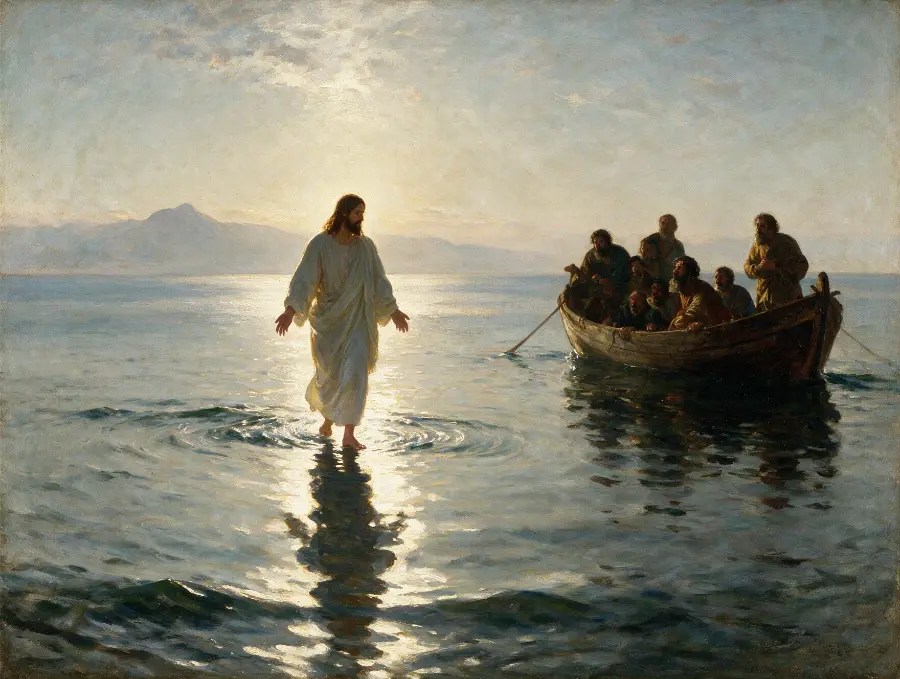
So when we set a tree by the window this December, we are not carrying a god into the house. Our God came to be carried. When Mary and Joseph brought the child Jesus into the temple, Simeon took him up in his arms, “and blessed God” (Luke 2:28). The Child in his arms was the Lord who had said to Israel, “I have made, and I will bear.” He is bearing us still.
Related reading
- What does the Christmas tree symbolize? Its meaning and origin
- Are Christmas trees pagan?
- Is it a sin to celebrate Christmas?
- Is holly in the Bible?
- 21 Bible verses about idolatry


Leave a Reply