
 English
 Chinese
 Dutch
 Arabic
 Spanish
 Portuguese
 Russian
 French
 Italian
 German
 Japanese
Caleb was one of the twelve spies sent to search the promised land, and with Joshua the only one who told the people they could take it. God said he “had another spirit with him, and hath followed me fully” (Numbers 14:24). Forty-five years later, at eighty-five, Caleb asked for the hill country where the giants lived.
That word “fully” stays with Caleb for the rest of his life. God says it at Kadesh. Moses repeats it twice before Israel crosses the Jordan: Caleb “wholly followed the LORD” (Numbers 32:12; Deuteronomy 1:36). Caleb says it of himself as an old man, “my brethren that went up with me made the heart of the people melt: but I wholly followed the LORD my God,” and he remembers the oath Moses swore him that day, “because thou hast wholly followed the LORD my God” (Joshua 14:8-9). And the book of Joshua writes it over his land like a deed: Hebron became his “because that he wholly followed the LORD God of Israel” (Joshua 14:14). Six times Scripture says it of him. It is the shortest true account of a long life.
What happened when the twelve spies searched Canaan?
From the wilderness of Paran, Moses sent one man from each tribe, “every one a ruler among them” (Numbers 13:2). For Judah he sent “Caleb the son of Jephunneh” (Numbers 13:6), and for Ephraim a man named Oshea, whom Moses renamed Jehoshua, the Joshua who would one day lead Israel in. It was “the time of the firstripe grapes” (Numbers 13:20). They went up as far as Hebron, where they saw three sons of Anak, “Ahiman, Sheshai, and Talmai” (Numbers 13:22). At the brook of Eshcol they cut a single cluster of grapes so heavy that “they bare it between two upon a staff” (Numbers 13:23).
After forty days they came back to Kadesh and showed the fruit. Every one of them agreed about the land: “surely it floweth with milk and honey; and this is the fruit of it” (Numbers 13:27). Then came the word that changed the day. “Nevertheless the people be strong that dwell in the land, and the cities are walled, and very great” (Numbers 13:28).
Caleb spoke up. He “stilled the people before Moses, and said, Let us go up at once, and possess it; for we are well able to overcome it” (Numbers 13:30). The others answered him, “We be not able to go up against the people; for they are stronger than we” (Numbers 13:31). They called it “a land that eateth up the inhabitants thereof,” and they said of the giants, “we were in our own sight as grasshoppers, and so we were in their sight” (Numbers 13:32-33).
Twelve men saw the same grapes, the same walls and the same giants. Only one of them stood up that day and said Israel could go.
What did Caleb and Joshua say to the people?
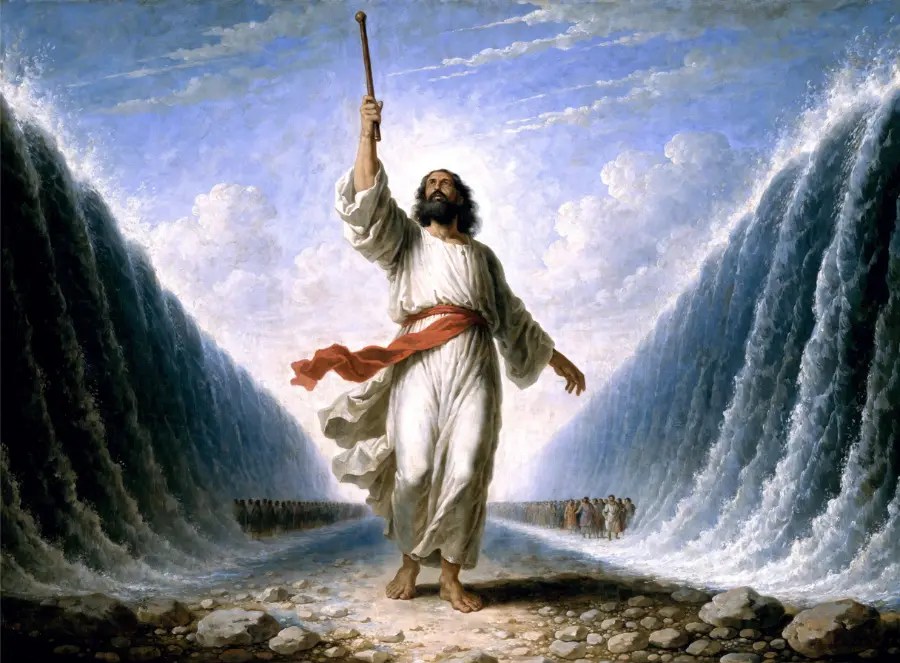
The people “wept that night” (Numbers 14:1), and by morning they were saying to one another, “Let us make a captain, and let us return into Egypt” (Numbers 14:4). Joshua and Caleb tore their clothes and pleaded with them: “The land, which we passed through to search it, is an exceeding good land. If the LORD delight in us, then he will bring us into this land, and give it us” (Numbers 14:7-8). And then the line every frightened believer can carry: “neither fear ye the people of the land; for they are bread for us: their defence is departed from them, and the LORD is with us: fear them not” (Numbers 14:9).
The answer was stones. “All the congregation bade stone them with stones. And the glory of the LORD appeared in the tabernacle of the congregation before all the children of Israel” (Numbers 14:10). God stepped in before a hand was raised.
What happened to the other ten spies?
The ten “that did bring up the evil report upon the land, died by the plague before the LORD. But Joshua the son of Nun, and Caleb the son of Jephunneh, which were of the men that went to search the land, lived still” (Numbers 14:37-38).
The whole generation bore the cost. Everyone counted “from twenty years old and upward” would die in the wilderness, and Israel would wander one year for every day the spies had walked the land: “even forty days, each day for a year, shall ye bear your iniquities, even forty years” (Numbers 14:29, 34). The children their parents had feared for were the ones God brought in (Numbers 14:31). When Moses counted Israel again on the plains of Moab, “there was not left a man of them, save Caleb the son of Jephunneh, and Joshua the son of Nun” (Numbers 26:65).
The first count in the wilderness had numbered 603,550 men able to go to war (Numbers 1:46). Caleb’s tribe was the largest of them, 74,600 men, with Dan next at 62,700 (Numbers 1:27, 39). Of all those men, two walked into the land. Hebrews draws the lesson from the ones who fell: “they could not enter in because of unbelief” (Hebrews 3:19). Moses himself did not enter either, for a different reason.
How old was Caleb when he asked for Hebron?
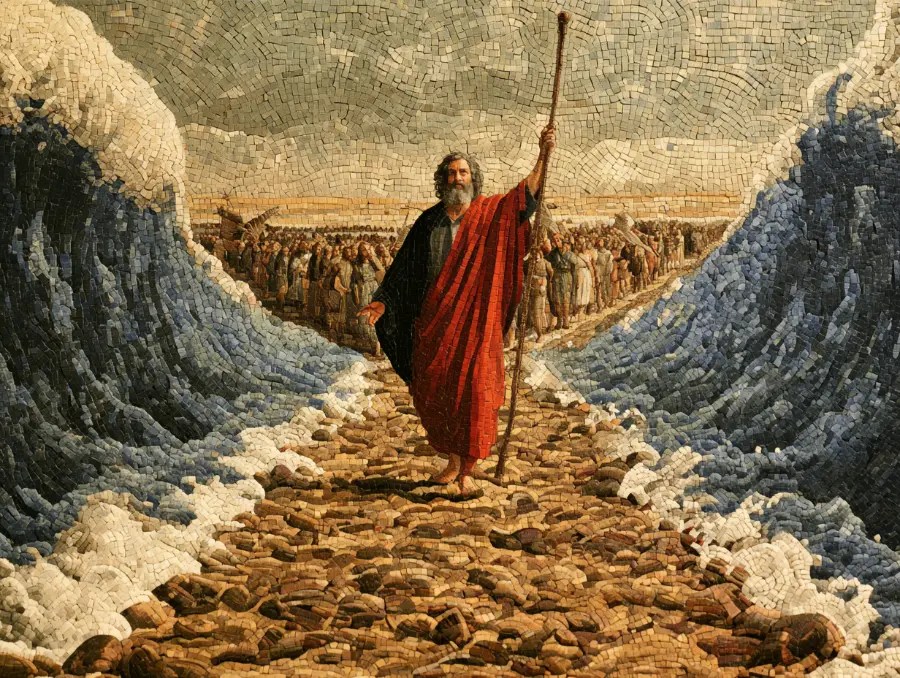
He was forty when Moses sent him and eighty-five when he came to Joshua at Gilgal. He tells us both numbers himself: “Forty years old was I when Moses the servant of the LORD sent me from Kadeshbarnea to espy out the land,” and “the LORD hath kept me alive, as he said, these forty and five years … and now, lo, I am this day fourscore and five years old” (Joshua 14:7, 10).
Then he asked for the hardest ground in Canaan. “As yet I am as strong this day as I was in the day that Moses sent me,” he said. “Now therefore give me this mountain, whereof the LORD spake in that day; for thou heardest in that day how the Anakims were there, and that the cities were great and fenced: if so be the LORD will be with me, then I shall be able to drive them out” (Joshua 14:11-12). It was the place that had frightened a nation. Caleb wanted it.
Joshua blessed him and gave him Hebron (Joshua 14:13). “And Caleb drove thence the three sons of Anak, Sheshai, and Ahiman, and Talmai” (Joshua 15:14), the same three men the spies had seen there forty-five years before. Judges tells the same victory as the work of Judah, Caleb’s tribe (Judges 1:10). The city of Hebron itself was later given to the priests, “but the fields of the city, and the villages thereof, gave they to Caleb the son of Jephunneh for his possession” (Joshua 21:12). He was also one of the men named to divide the land among the tribes (Numbers 34:19).
Who was Caleb’s daughter Achsah?
When Caleb went up against the city of Debir, whose old name was Kirjathsepher (Joshua 15:15), he promised, “He that smiteth Kirjathsepher, and taketh it, to him will I give Achsah my daughter to wife” (Joshua 15:16). The man who took it was “Othniel the son of Kenaz, Caleb’s younger brother” (Judges 1:13). The Hebrew can be read of Othniel or of his father Kenaz, and the Hebrew lexicon of Brown, Driver and Briggs reads it of Kenaz, which would make Othniel Caleb’s nephew. Othniel became the first deliverer named in the book of Judges, and under him “the land had rest forty years” (Judges 3:9-11).
Achsah’s own moment is small and lovely. Caleb had given her land in the dry south. “She lighted off her ass; and Caleb said unto her, What wouldest thou?” She answered, “Give me a blessing; for thou hast given me a south land; give me also springs of water. And he gave her the upper springs, and the nether springs” (Joshua 15:18-19). She asked plainly for what the gift needed, and her father gave both.
Was Caleb an Israelite?
He belonged to Judah, but his family may have come from outside Israel. Three times Scripture calls him “Caleb the son of Jephunneh the Kenezite” (Numbers 32:12; Joshua 14:6, 14). The Kenizzites appear in God’s promise to Abram as one of the peoples already living in the land (Genesis 15:19), and a man named Kenaz is a grandson of Esau (Genesis 36:11). The Catholic Encyclopedia of 1908 concludes that Caleb “seems not to have been an Israelite by birth, but to have become a member of the Chosen People by adoption into the Tribe of Juda.”
Whatever his family’s road, Scripture never treats him as a guest. He is Judah’s man among the spies (Numbers 13:6), his sons stand in Judah’s genealogy (1 Chronicles 4:15), and God calls him “my servant Caleb” (Numbers 14:24). The man whose family may once have been strangers to the promise was one of only two of his generation to receive it.
What does the name Caleb mean?
In Hebrew the name is Kalev, and it is spelled like kelev, the ordinary word for a dog. Strong’s concordance says the name is “perhaps a form of keleb,” or else comes “from the same root in the sense of forcible,” so it is not certain. The Catholic Encyclopedia warns against building too much on it: the theory that the name marks a clan with a dog as its emblem rests on “the questionable etymological connection of Caleb with Kéléb.” You may also read that Caleb means “whole heart,” from kol and lev. It is a pleasing thought, but the standard Hebrew dictionaries do not give it. The Bible’s own description of him, “wholly followed,” does not need the name to carry it.
Other men in Scripture bear the name. The Chronicler lists a Caleb son of Hezron in Judah’s family tree (1 Chronicles 2:18). “Many identify this Caleb with the son of Jephone,” the Catholic Encyclopedia notes, because both had a daughter named Achsah, though the encyclopedia itself doubts it. It also notes a third Caleb in 1 Chronicles 4:11, where the Hebrew spells it Kelub. Caleb’s own clan lived on in the south. Nabal, Abigail’s husband, “was of the house of Caleb” (1 Samuel 25:3), and a stretch of the Negeb, the dry south country of Judah, was still called “the south of Caleb” in David’s time (1 Samuel 30:14).
Where else does the Bible remember Caleb?
Sirach and 1 Maccabees, books the Catholic and Orthodox Churches receive as Scripture, both praise him. Protestant Bibles leave them out or print them apart as the Apocrypha; the Orthodox Church in America calls them the “longer canon” and says they are “accepted by Orthodox Christianity as canonical scripture.” Sirach remembers that Joshua and Caleb were “delivered out of the danger from among the number of six hundred thousand men on foot,” and adds, “the Lord gave strength also to Caleb, and his strength continued even to his old age, so that he went up to the high places of the land” (Sirach 46:10-11, Douay-Rheims). On his deathbed the priest Mattathias names him among the faithful his sons should remember: “Caleb, for bearing witness before the congregation, received an inheritance” (1 Maccabees 2:56).
Caleb did not get his reward early, and he did not get an easy one. He waited forty-five years among people who had wanted to stone him, and then asked for the giants’ hill. We are not promised that our giants will be gone. We are promised what Caleb was promised: the LORD with us, and strength for each day he gives. At the end of his chapter the book of Joshua lays down one quiet line: “And the land had rest from war” (Joshua 14:15).
Related reading
- Facts & Statistics about Joshua in the Bible
- What Does “A Land Flowing With Milk and Honey” Mean? God’s Promise of Canaan
- Why was Moses not allowed to enter the Promised Land?
- Are Jesus and Joshua the Same Name? Yes, Yehoshua in Hebrew
- 20 Bible Verses About Mentorship, from Moses and Joshua to Paul and Timothy


Leave a Reply