
 English
 Chinese
 Dutch
 Arabic
 Spanish
 Portuguese
 Russian
 French
 Italian
 German
 Japanese
Jennifer is not in the Bible, and its real meaning is stranger than the one usually given. It is not “fair one” or “white wave.” It is, as nearly as scholars can tell, white phantom.
The name is the Cornish form of the Welsh Gwenhwyfar — the name we know in English as Guinevere.
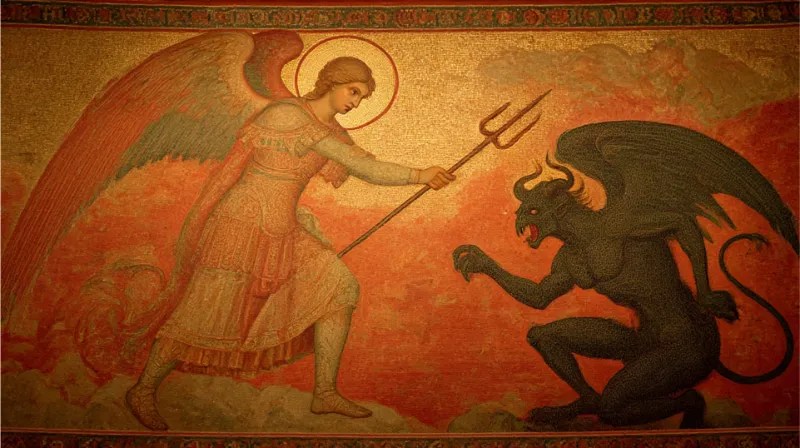
What does the name Jennifer mean?
The Celtic roots behind Gwenhwyfar are windos, white, which survives in modern Welsh as gwen, and sēbros, meaning phantom or magical being. White phantom. White ghost, if we are blunt about it.
It is an old and frankly eerie name, belonging to the oldest layer of British legend, and it travelled to us through Cornwall and then, in the twentieth century, through Hollywood. For a long stretch it was the most common name given to girls in the English-speaking world.
Almost none of those parents were thinking of ghosts. They were thinking it sounded lovely, which it does.

Is Jennifer in the Bible?
No — not in any language or spelling. Welsh and Cornish are Celtic tongues spoken at the far western edge of the world Scripture knew nothing about. There is no Hebrew form, and a page offering one has invented it.
But a name meaning white phantom raises a question Scripture does answer, and it is not the one we expect.
The Bible and ghosts
Let us take it seriously rather than waving it away.
Scripture knows perfectly well that people are frightened of the dead. When the disciples see someone walking on the lake at night, they do not reason about it — they scream, thinking it is a ghost. And our Lord’s first words are not a lecture. Take courage! It is I. Don’t be afraid.
Later, risen, he meets the same fear in a locked room and deals with it in the most physical way imaginable. Look at my hands. Touch me. A ghost does not have flesh and bones, as you see I have. And then, in Luke’s account, he asks for something to eat — which no spectre in any story has ever done.
The whole Christian claim rests on this refusal. Not a spirit that survived. A body that was raised.
The white that is not a ghost
And the other half of the name is better still.
White in Scripture is not pallor or absence. It is the colour of things that have been made clean — though your sins are like scarlet, they shall be as white as snow — and the colour worn by those who have come through.
John sees a great multitude that no one could count, from every nation, tribe, people and language, standing before the throne in white robes. He is told who they are: those who have come out of the great tribulation, and who washed their robes and made them white in the blood of the Lamb.
White, in the end, belongs to survivors. Not to phantoms — to people, with faces, who are recognised.
For everyone who carries the name
Jennifer: white phantom, out of the oldest stories the islands remember.
It is a beautiful name with a strange shadow in it, which is true of most beautiful things and most of us.
May we never be a ghost of ourselves — going through the motions, present without being present, haunting our own life rather than living it.
And may the white we end up wearing be the other kind: washed, embodied, recognised, and hungry enough to sit down and eat.
Related reading
- Is Your Name in the Bible? A Directory of 231 Names
- Daisy Is Not in the Bible: The “Day’s Eye” and Morning in Scripture
- Dreaming of Snow: The Bible Gives It No Meaning — but Snow Means Something


Leave a Reply