
 English
  Chinese
  Dutch
Dutch  Arabic
  Spanish
  Portuguese
  Russian
  French
  Italian
  German
  Japanese
 Lucifer in Hebrew is helel (הֵילֵל), shining one. Isaiah gives the king of Babylon the title helel ben shahar, “shining one, son of the dawn”, the morning star thrown down from the sky (Isaiah 14:12). The Hebrew Bible never says Lucifer. That is the Latin Bible’s word for helel, and it became a name for the devil only later.
Isaiah’s song is mockery, and the picture is sharp. A king had said in his heart, “I will ascend into heaven, I will exalt my throne above the stars of God” (Isaiah 14:13). So the prophet calls him a star, the brightest one, and shows him falling. The lexicons, the rabbis and the long road to Satan all grow from that one picture of pride brought down.
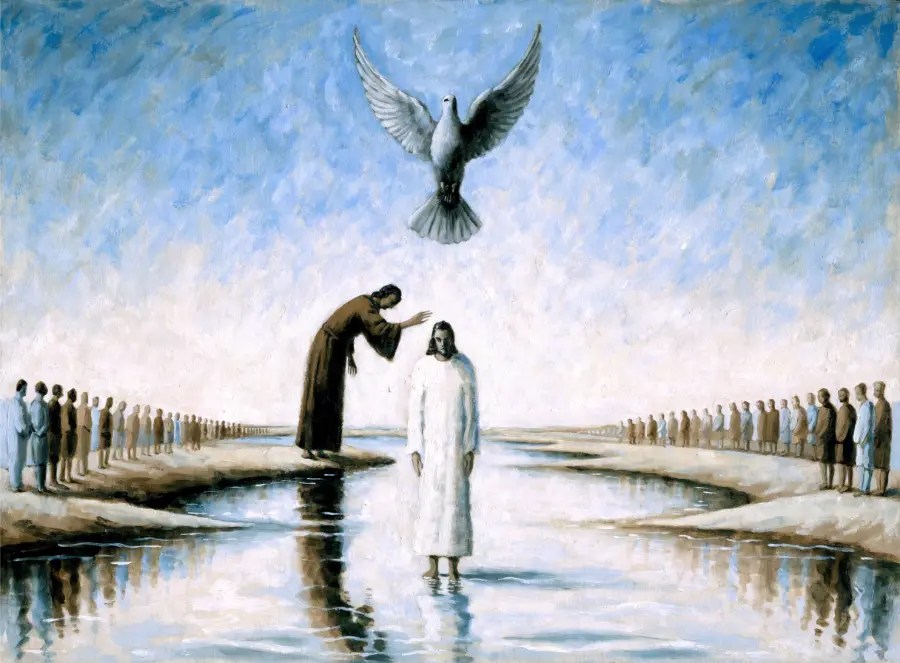
What does helel ben shahar mean?
It is three plain words. Helel is a noun found only here, and the Brown-Driver-Briggs lexicon defines it as “shining one, epithet of king of Babylon”. Ben is the everyday word for son. Shahar, which you may also see spelled shachar, is dawn, the word Genesis uses when “the morning arose” over Sodom (Genesis 19:15). Put them together and the shining one who is the son of the dawn is the morning star, or as the same lexicon has it, “star of the morning”.
| Hebrew | Pronounced | Meaning | King James Version |
|---|---|---|---|
| הֵילֵל | helel | shining one | Lucifer |
| בֶּן | ben | son of | son of |
| שָׁחַר | shahar | dawn | the morning |
In Hebrew the whole verse reads:
אֵיךְ נָפַלְתָּ מִשָּׁמַיִם, הֵילֵל בֶּן-שָׁחַר; נִגְדַּעְתָּ לָאָרֶץ, חוֹלֵשׁ עַל-גּוֹיִם.
The King James Version of 1611 keeps the Latin word: “How art thou fallen from heaven, O Lucifer, son of the morning! how art thou cut down to the ground, which didst weaken the nations!” The Jewish Publication Society’s translation of 1917 has “How art thou fallen from heaven, O day-star, son of the morning!” The NET Bible, a modern translation, gives the Hebrew word its plain sense: “Look how you have fallen from the sky, O shining one, son of the dawn!” Lucifer, day-star, shining one: each names the same light in the morning sky.
And the song has a named target. Two verses earlier the prophet tells Israel to “take up this proverb against the king of Babylon” (Isaiah 14:4). It mocks a ruler who wanted a throne above the stars, and who went down to the grave like any man.
How is Lucifer written and pronounced in Hebrew?
You write it הֵילֵל, four letters read from right to left: he (ה), yod (י), lamed (ל) and lamed again. The small dots and dashes under them are vowel signs. Strong’s concordance gives the pronunciation as “hay-lale”, with the stress on the second syllable, and scholars transliterate it hêlēl. The full title is written הֵילֵל בֶּן-שָׁחַר.
If you look for Lucifer in the Hebrew Bible, you will not find it; the word there is always helel. Bibles in other languages that translate the Hebrew, rather than borrow the Latin, leave Lucifer out too. Where the King James Version has Lucifer, Luther’s German Bible has “du schöner Morgenstern”, you beautiful morning star. Most modern English Bibles also choose a word for the morning star, as in the New International Version’s “morning star, son of the dawn”.
Where does the word helel come from?
From a root that means to shine. Brown-Driver-Briggs and Strong’s both trace it to halal. Brown-Driver-Briggs gives that root’s first meaning as to shine, and its later ones as to praise and to boast; Strong’s says helel comes from it “in the sense of brightness”. Shining, praising, boasting: the king of this song went the whole way down that list. The Jewish commentators Rashi and Abraham ibn Ezra agree on what the word means, though not on its root. Rashi explains helel as “derived from יהל, to shed light”. Ibn Ezra says the morning star bears the name because “of all the host of heaven there is no star that shines with such brilliancy as this”.
The same Hebrew form can also mean “howl!”. In Zechariah 11:2 the identical word, הֵילֵל, opens the line “Howl, fir tree; for the cedar is fallen”, and Brown-Driver-Briggs lists it there as the command form of yalal, to howl. Some ancient translators heard Isaiah 14:12 that way. According to the Catholic Encyclopedia of 1910, the Syriac version and Aquila’s Greek translation took helel from yalal, to lament, and Jerome agreed with them in his commentary on Isaiah. There he made Lucifer the chief of the fallen angels, who must lament the loss of a glory once as bright as the morning star. So Jerome kept both senses. In his Bible he gave the word the star’s Latin name, Lucifer, and in his commentary he heard in it the lament of the one who fell. Brown-Driver-Briggs and the modern translations quoted above keep the shining star, which fits the next words, son of the dawn. Shine or howl: the whole fall sits inside one Hebrew word.
Who is Helel son of Shahar?
In the Bible he is the king of Babylon, given a star’s title to mock his pride. The song says so at its start, and later calls him “the man that made the earth to tremble” (Isaiah 14:16). A man, for all his shining.
Scholars think the picture itself may come from an older story. The NET Bible’s notes observe that verses 12 to 15 “contain several titles and motifs that resemble those of Canaanite mythology”: Helel son of Shachar, the stars of El, the mountain of assembly, the recesses of Zaphon and the title Most High. “Apparently these verses allude to a mythological story about a minor god (Helel son of Shachar) who tried to take over Zaphon, the mountain of the gods.” The notes of the Catholic New American Bible say that son of the dawn “may reflect the name of a pagan deity”, and identify Zaphon as “the sacred mountain of Baal”, a peak north of the ancient city of Ugarit. Kaufmann Kohler, writing in the Jewish Encyclopedia (1901–1906), judged that the prophet “borrowed the idea from a popular legend connected with the morning star”, and he compared that story with the Greek legend of Phaethon.
On this view Isaiah takes a story the nations knew, a bright star that tried to climb above the gods and was thrown down, and turns it on a king who thought himself divine. Scripture itself names no god Helel. The title appears once, and it belongs to the king.
How do Jewish interpreters read Isaiah 14:12?
As a verse about the king of Babylon, told in the language of the stars. The Targum, the ancient Aramaic translation of the Prophets, spells the comparison out: “How art thou cast down from on high, who wast shining among the sons of men as the star Venus among the stars”. In the next verse, where the Hebrew has the king set his throne above the stars of God, the Targum has him set it “above the people of God”.
Rashi reads it the same way, and he names the king: “You, Nebuchadnezzar”. The stars of God, for him, are Israel. He also sees a second figure in the verse, in heaven: it is “the lamentation over the heavenly prince of Babylon, who will fall from heaven”. A heavenly prince is the angel set over a nation, the kind Daniel hears of when an angel tells him that “the prince of the kingdom of Persia withstood me” (Daniel 10:13). So for Rashi the one who falls is Babylon’s angel. None of these commentators reads the verse as Satan’s fall.

How did helel become Lucifer and a name for Satan?
First through translation, then through reading it beside the Gospels. The Greek Septuagint rendered helel as heosphoros, dawn-bringer, and Jerome’s Latin Vulgate, translated from the Hebrew, as Lucifer, light-bearer. Both were ordinary names for the morning star, and the name Lucifer comes from the Latin. Then Christian writers such as Tertullian and Origen set the fallen star beside the words of Jesus, “I beheld Satan as lightning fall from heaven” (Luke 10:18), and Lucifer became a name for the devil before his fall. Not every Christian reader accepts that link; the NET Bible’s notes say it “seems contextually unwarranted”.
Kohler thought the step was older than Christianity. He wrote that “the Lucifer myth was transferred to Satan in the pre-Christian century”, pointing to the Life of Adam and Eve and the Slavonic Book of Enoch, where Satan is cast down for trying to set his throne above the clouds. That dating is now disputed. Encyclopaedia Britannica says that all surviving stories about Adam and Eve of this kind “are Christian works”, and Marinus de Jonge argued in 2000 for the Christian origin of the Greek Life of Adam and Eve. Whoever first told it, the story keeps one shape: a light that wanted a throne above the stars, and fell.


Leave a Reply