
 English
  Chinese
  Dutch
Dutch  Arabic
  Spanish
  Portuguese
  Russian
  French
  Italian
  German
  Japanese
 Lucifer is called the morning star because lucifer is the Latin name for the morning star, the planet Venus seen before sunrise. The Latin Bible used it in Isaiah 14:12 for the Hebrew helel ben shachar, “shining one, son of the dawn,” a taunt against the king of Babylon. Christians later read the verse as Satan’s fall.
What does Isaiah 14:12 say?
In the King James Version the verse reads:
How art thou fallen from heaven, O Lucifer, son of the morning! how art thou cut down to the ground, which didst weaken the nations! (Isaiah 14:12)
The chapter names its target. Israel is told to “take up this proverb against the king of Babylon” (Isaiah 14:4), and the song mocks a ruler who said in his heart, “I will ascend into heaven, I will exalt my throne above the stars of God,” and “I will be like the most High.” The next verse answers him: “Yet thou shalt be brought down to hell, to the sides of the pit” (Isaiah 14:13–15).
The Hebrew word behind “Lucifer” is helel, and it occurs only here in the Old Testament. The Brown-Driver-Briggs lexicon defines it as “shining one, epithet of king of Babylon,” and explains the phrase as “star of the morning.” It also compares an Assyrian title of Venus as the morning star. The second half of the name, ben shachar, means “son of dawn”; shachar is the ordinary Hebrew word for dawn. The king is pictured as the morning star, the brightest light before sunrise, thrown down out of the sky.
Where does the name Lucifer come from?
It comes from the Latin translation. The Greek Septuagint had rendered helel as Heosphoros, “dawn-bringer”: “Πῶς ἐξέπεσεν ἐκ τοῦ οὐρανοῦ ὁ Ἑωσφόρος ὁ πρωὶ ἀνατέλλων,” which Lancelot Brenton translated as “How has Lucifer, that rose in the morning, fallen from heaven!” Jerome’s Latin Vulgate gave the verse as “Quomodo cecidisti de caelo, Lucifer, qui mane oriebaris?”, “How have you fallen from heaven, Lucifer, who used to rise in the morning?”
In Latin, lucifer is an adjective meaning “light-bringing,” from lux, light, and ferre, to carry. Used as a noun it meant the morning star. Lewis and Short’s Latin Dictionary defines it as “the morning-star, the planet Venus,” and cites Cicero, who wrote in On the Nature of the Gods (2.20) that the star of Venus is called Phosphoros in Greek and Lucifer in Latin when it rises before the sun, and Hesperos when it follows the sun. Roman poets also made Lucifer a person, the son of Aurora, the dawn.
The King James Version of 1611 kept Jerome’s word instead of translating it, so English readers met “Lucifer” as if it were a name. The Online Etymology Dictionary traces the belief that it is Satan’s proper name to this verse.
Why is Venus called the morning star?
Merriam-Webster defines a morning star as “a bright planet (such as Venus) seen in the eastern sky before or at sunrise.” Venus is the brightest object in the night sky after the Moon. Because its orbit lies inside the Earth’s, it never appears far from the sun, so it is seen either shortly before sunrise or shortly after sunset. NASA notes that ancient observers, including the Egyptians and the Greeks, thought it was two objects, a morning star and an evening star. The Greeks named the morning appearance Phosphoros and the evening one Hesperos, which is why Cicero gave Venus two names.
How did the verse come to mean Satan?
Christian readers connected the fallen star of Isaiah 14 with the words of Jesus in Luke 10:18: “I beheld Satan as lightning fall from heaven.” A ruler who falls from heaven after trying to set his throne “above the stars of God” looked to them like the devil.
Tertullian, in his work Against Marcion, applied Isaiah 14:13–14 to the devil twice. In Book 5, chapter 11, he calls the devil the one “who once said, as the prophet describes him: I will be like the Most High,” and in chapter 17 he says of the same words, “This must mean the devil.” Origen of Alexandria made the link with the morning star itself. In On First Principles (Book 1, chapter 5) he quotes Isaiah 14:12 and concludes: “Most evidently by these words is he shown to have fallen from heaven, who formerly was Lucifer, and who used to arise in the morning.” He then quotes Luke 10:18 and adds, “For at one time he was light.” From readings like these, Lucifer became a name for the devil before his fall.
Not every Christian reader accepted the link. John Calvin, in his commentary on Isaiah, wrote that the reading “as if it referred to Satan, has arisen from ignorance; for the context plainly shows that these statements must be understood in reference to the king of the Babylonians.” The Catholic New American Bible Revised Edition translates the title as “Morning Star” and notes that it is a term addressed to the king of Babylon; the Vulgate’s “Lucifer,” it says, is “a name applied by the church Fathers to Satan.” Some readers take the passage as the king’s fall alone, others as a picture of Satan’s fall behind the king’s.
Is Jesus called the morning star?
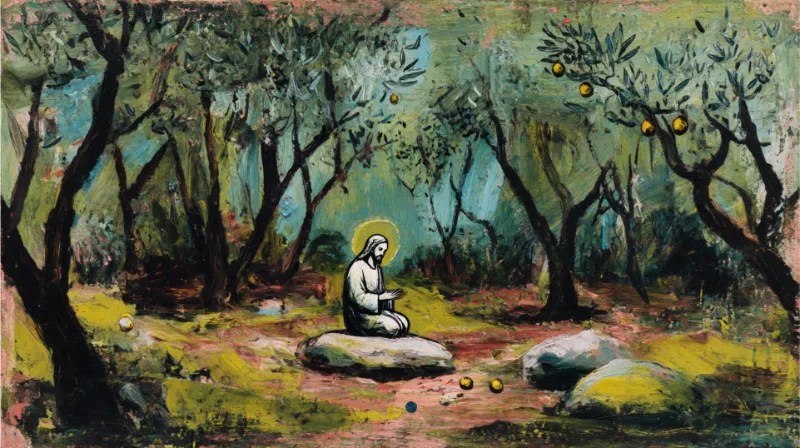
Yes. In the last chapter of the Bible, Jesus calls himself by the title:
I Jesus have sent mine angel to testify unto you these things in the churches. I am the root and the offspring of David, and the bright and morning star. (Revelation 22:16)
The Greek reads ho astēr ho lampros ho prōinos, “the bright, the morning star” (the Greek text the King James translators used reads ho lampros kai orthrinos, “the bright and early”). Earlier in Revelation, in the letter to the church at Thyatira, Christ promises “him that overcometh”: “And I will give him the morning star” (Revelation 2:26–28).
Second Peter uses the Greek word phosphoros, “light-bearer,” the same word that named Venus: “until the day dawn, and the day star arise in your hearts” (2 Peter 1:19). Blue Letter Bible’s outline of the word lists its senses as “the planet Venus, the morning star, day star,” and, as a figure, Christ. Jerome’s Vulgate translated this verse with the same word it used in Isaiah: “donec dies elucescat, et lucifer oriatur in cordibus vestris.” In Latin, then, lucifer names both the fallen king of Isaiah 14 and the light that rises in believers’ hearts.
The Latin Church kept the good sense of the word. The Exsultet, the proclamation sung over the Easter candle at the Easter Vigil, asks that the morning star find the candle still burning: “Flammas eius lucifer matutinus inveniat: ille, inquam, lucifer, qui nescit occasum,” “may the morning star find its flame: that morning star, I say, which never sets.” The current Roman Missal names him in the next words, “Christus Filius tuus,” Christ your Son.
Two Old Testament verses also mention morning stars, one of them only in Latin. In Job 38:7, at the creation of the earth, “the morning stars sang together, and all the sons of God shouted for joy.” In Psalm 110:3, the Latin Bible reads “ex utero ante luciferum genui te,” which Tertullian quoted as “Before the morning star did I beget you from the womb” and applied to Christ, born at night before the morning star rose (Against Marcion, Book 5, chapter 9). The King James Version translates the Hebrew of that verse differently, as “from the womb of the morning.”
Why does the Bible use the same title for Christ and for the king?
Because the image is the same star, used in two directions. The morning star is the brightest light before sunrise. Isaiah uses it to mock a king who claimed a place above the stars of God and fell out of the sky. Revelation and 2 Peter use it for Christ, the light that comes before the full day. The Hebrew and Greek words are different (helel in Isaiah, astēr prōinos and phosphoros in the New Testament). Translation brings them together: the Latin Bible uses lucifer in Isaiah 14:12 and 2 Peter 1:19, and Luther’s German uses Morgenstern in Isaiah 14:12 and Revelation 22:16.

How do Bible translations render Isaiah 14:12?
English Bibles divide between the Latin name and a translation of the Hebrew. The same split appears in other languages, and some use one word for both the fallen king and Christ.
| Translation | Isaiah 14:12 | Revelation 22:16 |
|---|---|---|
| King James Version (1611) | “O Lucifer, son of the morning” | “the bright and morning star” |
| New King James Version | “O Lucifer, son of the morning,” with the footnote “Lit. Day Star” | “the Bright and Morning Star” |
| New American Standard Bible (1995) | “O star of the morning, son of the dawn,” with the footnote “Heb Helel; i.e. shining one” | “the bright morning star” |
| New International Version | “morning star, son of the dawn” | “the bright Morning Star” |
| English Standard Version | “O Day Star, son of Dawn” | “the bright morning star” |
| Latin Vulgate | “Lucifer, qui mane oriebaris” | “stella splendida et matutina” |
| Spanish, Reina-Valera 1960 | “oh Lucero, hijo de la mañana” | “la estrella resplandeciente de la mañana” |
| German, Luther 1545 | “du schöner Morgenstern” | “der helle Morgenstern” |
| French, Louis Segond | “Astre brillant, fils de l’aurore” | “l’étoile brillante du matin” |
| Russian Synodal | “денница, сын зари” | “звезда светлая и утренняя” |
The Japanese Colloquial Bible of 1955 reads “黎明の子、明けの明星よ,” “son of the dawn, morning star.” Spanish lucero, Russian dennitsa (денница) and Japanese ake no myōjō (明けの明星) are each a name for the morning star, Venus. The Japanese Living Bible writes the Latin name in Japanese script, ルシファー (Rushifā).
Is “Morningstar” Lucifer’s last name?
No. The Bible gives Lucifer no surname, and none of the translations above uses “Morningstar” as a name for Satan. In English Bibles “morning star” is a title: for the king of Babylon in modern translations of Isaiah 14:12, and for Christ in Revelation 22:16.
The full name Lucifer Morningstar is best known from comic books and television. DC Comics’ Lucifer, known as Lucifer Morningstar, first appeared in The Sandman #4 in 1989, created by Neil Gaiman, Sam Kieth and Mike Dringenberg, and later had his own series, Lucifer. The television series Lucifer, which ran from 2016 to 2021 on Fox and then Netflix, starred Tom Ellis as an alternate version of the same character.


Leave a Reply