
 English
 Chinese
 Dutch
 Arabic
 Spanish
 Portuguese
 Russian
 French
 Italian
 German
 Japanese
Christian persecution is hostility that comes to someone because they belong to Christ. Jesus warned that it would range from insults and being shut out of company to courts and death, and when he sent the twelve out he gave the reason in one line: “Ye shall be hated of all men for my name’s sake” (Matthew 10:22). Where hardship ends and persecution begins is harder to say, and the bodies that count persecution today each say it differently. Open Doors, which publishes the World Watch List, draws the line widest, at any hostility a believer meets for identifying with Christ, pressure and discrimination as well as violence. Pew Research Center, Aid to the Church in Need, a US government commission and international criminal law all draw it closer in. The figures they publish look far apart for another reason too, because they count different things. Open Doors counts Christians, Pew counts countries, and the US commission lists people of every faith by name. Aid to the Church in Need counts everyone, of every faith, who lives in the 62 countries it named for 2023 and 2024, and so, though it draws its line closer in than Open Doors, it publishes the largest figure of all.
Jesus drew the line at his name, and he went further still: what is done to his people for his sake, he takes as done to him. Saul set out for Damascus “breathing out threatenings and slaughter against the disciples of the Lord,” carrying letters so that he might “bring them bound unto Jerusalem,” and the voice that stopped him on the road asked, “Saul, Saul, why persecutest thou me?” It was the disciples Saul was hunting, and when he asked who was speaking, the answer came, “I am Jesus whom thou persecutest” (Acts 9:1–5).
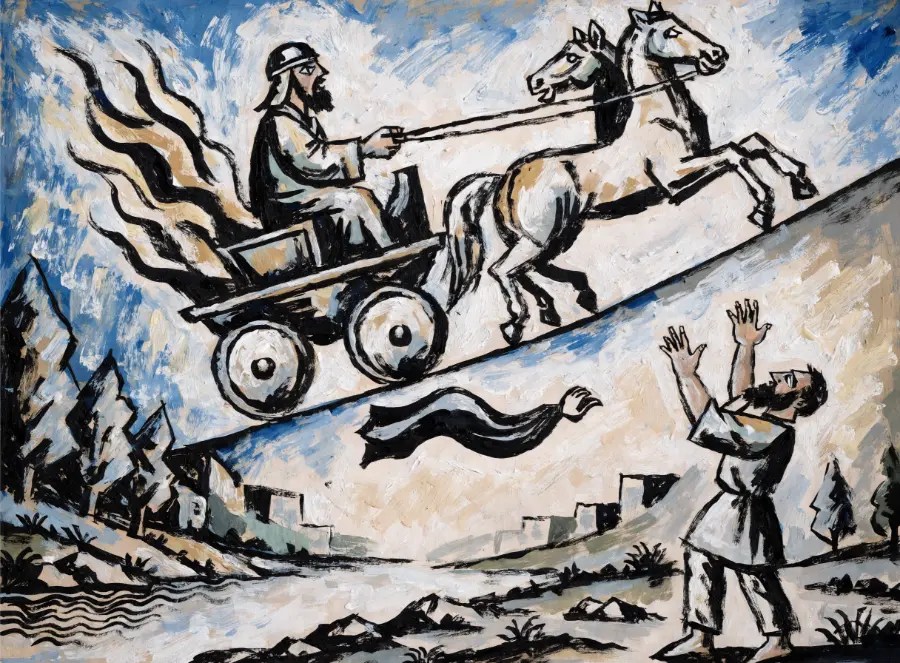
What did Jesus say persecution would look like?
In the Beatitudes he blesses his disciples “when men shall revile you, and persecute you, and shall say all manner of evil against you falsely, for my sake” (Matthew 5:11), so being insulted and lied about stands in the same sentence as being persecuted. Luke’s account comes closer still to ordinary life: “Blessed are ye, when men shall hate you, and when they shall separate you from their company, and shall reproach you, and cast out your name as evil, for the Son of man’s sake” (Luke 6:22). To be dropped from the company we used to keep, and to hear our name spoken of as evil, is already on his list.
When he sent the twelve out “as sheep in the midst of wolves” (Matthew 10:16), he told them it would follow them into the courts and into their own homes. “Ye shall be brought before governors and kings for my sake,” he said, and “the brother shall deliver up the brother to death, and the father the child” (Matthew 10:18, 21), and a few verses on, “a man’s foes shall be they of his own household” (Matthew 10:36). In John’s Gospel he gives the reason for all of it. “If they have persecuted me, they will also persecute you,” he told his disciples, and “all these things will they do unto you for my name’s sake, because they know not him that sent me” (John 15:20–21).
Where does the New Testament draw the line?
Peter drew it for believers facing what he calls “the fiery trial which is to try you” (1 Peter 4:12), and he drew it at the reason. “If ye be reproached for the name of Christ, happy are ye,” he writes, and then he names the suffering that does not count: “But let none of you suffer as a murderer, or as a thief, or as an evildoer, or as a busybody in other men’s matters. Yet if any man suffer as a Christian, let him not be ashamed; but let him glorify God on this behalf” (1 Peter 4:14–16). He puts the busybody in the same list as the murderer and the thief. A believer who suffers for doing wrong, or for meddling in other people’s business, is not being persecuted, however much it hurts, and Peter had said so earlier in the letter: “what glory is it, if, when ye be buffeted for your faults, ye shall take it patiently? but if, when ye do well, and suffer for it, ye take it patiently, this is acceptable with God” (1 Peter 2:20).
That sentence about suffering as a Christian is one of only three verses in the King James Bible that use the word Christian at all. The disciples “were called Christians first in Antioch” (Acts 11:26), King Agrippa told Paul, “Almost thou persuadest me to be a Christian” (Acts 26:28), and the third time the name appears, Peter calls it something a believer may suffer for and not be ashamed.

Were the first Christians punished for the name alone?
After Stephen was stoned, the book of Acts tells us, “there was a great persecution against the church which was at Jerusalem; and they were all scattered abroad throughout the regions of Judaea and Samaria, except the apostles,” and the scattering carried the gospel with it, for “they that were scattered abroad went every where preaching the word” (Acts 8:1, 4). Peter’s letter went “to the strangers scattered throughout Pontus, Galatia, Cappadocia, Asia, and Bithynia” (1 Peter 1:1), and early in the second century the Roman governor of Bithynia wrote to his emperor, unsure whether the Christians brought before him should be punished for crimes or for the name itself.
He was Pliny the Younger, and he told the emperor Trajan that he had never been present at a trial of Christians and did not know “whether the very profession of Christianity, unattended with any criminal act, or only the crimes themselves inherent in the profession are punishable.” In the meanwhile he had followed this method, as he describes it in William Melmoth’s translation of the letter:
I asked them whether they were Christians; if they admitted it, I repeated the question twice, and threatened them with punishment; if they persisted, I ordered them to be at once punished: for I was persuaded, whatever the nature of their opinions might be, a contumacious and inflexible obstinacy certainly deserved correction.
Pliny the Younger to the emperor Trajan
Those who said they were not Christians he tested at the emperor’s statue, having them worship before it and revile the name of Christ, because “there is no forcing, it is said, those who are really Christians into any of these compliances.” Others had been Christians once and had given it up, a few of them more than twenty years before, and they told him that “the whole of their guilt, or their error, was, that they met on a stated day before it was light, and addressed a form of prayer to Christ, as to a divinity, binding themselves by a solemn oath, not for the purposes of any wicked design, but never to commit any fraud, theft, or adultery.” Peter had told the Christians of Bithynia not to suffer as thieves, and their governor heard that they had sworn never to steal.
Trajan wrote back, “Do not go out of your way to look for them.” A Christian who was brought to court and proved to be one “must be punished,” he said, with a single exception: “where the party denies he is a Christian, and shall make it evident that he is not, by invoking our gods, let him (notwithstanding any former suspicion) be pardoned upon his repentance.” The only way out he offered a Christian was to deny the name.
How do Open Doors, Pew and others define persecution?
The counts themselves come from four bodies: Open Doors, Pew Research Center, Aid to the Church in Need and the US Commission on International Religious Freedom. Each reads the word in its own way, and our page on how many Christians are persecuted sets their five figures side by side, each with what it counts. International law has a definition of its own.
Open Doors: any hostility for Christ’s sake
Open Doors, which has gathered evidence for its World Watch List every year since 1993, counts as persecution “any hostility experienced as a result of one’s identification with Christ. This can include hostile attitudes, words and actions towards Christians.” Its own list of what that takes in begins with “restrictions, pressure, discrimination, opposition” and runs on through harassment and abuse to violence and worse. It counts hostility between Christians too, which it says can “also occur between Christian groups”, and it counts as a Christian anyone who calls themselves one or belongs to a Christian community as the church’s historic creeds define it.
It counts so widely, its methodology explains, because the quiet kinds can hurt as much as the violent ones: “Often losing a job can be far worse in its effects than a beating in prison. Or being shunned by one’s parents can be more psychologically scarring than being part of a skirmish on the street.” So its researchers measure two things, violence, which they call the “smash”, and pressure, which they call the “squeeze”. The smash takes in the loss of physical freedom, bodily harm, damage to property and severe threats. The squeeze they look for in five parts of a Christian’s life: private life, family life, community life, national life and church life, and the questions they ask about each country show how ordinary it can be. Has it been dangerous “to privately own or keep Christian materials”? Have parents “been hindered in raising their children according to their Christian beliefs”? Have Christians “had less access to health care because of their faith”? Has it been difficult “to get registration or legal status for churches at any level of government”?
Its own example of the squeeze is the Maldives, where Christians “face pressure from friends, neighbors, family and the government” and are “virtually unable to express their faith in any way”, and yet anyone looking there for beatings and jailings would find very few. A church like that is easy for the rest of us to miss, because it leaves almost nothing to report, and Open Doors says of such places that “the squeeze is what is killing the church.”
“Sometimes, just living in a chaotic world creates substantial amounts of suffering for Christians and others alike,” the methodology says, and the troubles Christians share with all their neighbours it does not call persecution but the “brokenness” of the world.
Counted that way, as any hostility for identifying with Christ, pressure and discrimination as well as violence, Open Doors estimates for its World Watch List 2026, which covers 1 October 2024 to 30 September 2025, that “more than 388 million Christians face high levels of persecution and discrimination for their faith”. The figure takes in the Christians living in regions, or belonging to churches, where pressure and violence together reached its “high” level or above, in the countries that scored at least 41 of its 100 points. “High” describes a place where “prominent Christians are targeted, churches themselves are subject to significant restrictions, and the culture remains largely hostile to a Christian presence in such areas as education and employment.” Open Doors adds its own caution: “it does not mean that all Christians in those situations are directly facing high levels of persecution.”
This estimate is one of five figures quoted for persecution, and the other four count other things: Christians killed, countries where Christians were harassed, and two counts of people of every faith. Our page sets all five side by side with what each one counts.

In those same twelve months, from 1 October 2024 to 30 September 2025, Open Doors recorded 4,849 Christians killed for faith-related reasons in those same countries, the ones scoring at least 41 points, and it calls that “an absolute minimum figure”. Had it counted only killing, its figure for the year would run to thousands; because it counts the squeeze as well, it runs to hundreds of millions. Where the count of deaths comes from, and what the larger estimates of deaths count, is set out in how many Christians are killed for their faith each year.
Pew Research Center: harassment, once it is acted on
Pew Research Center scores 198 countries and territories on government restrictions on religion and on social hostilities involving religion, and the measure it keeps for each faith is harassment, “an offense against an individual or group based on religious identity”, which “may range from physical attacks and direct coercion to more subtle forms of discrimination.” Insults count, “hate-filled, biased remarks” among them, and so do government policies “that make religious practice more difficult”, and Pew counts them against people of every faith and of none. Its line falls at action: “prejudicial opinions or attitudes, in and of themselves, do not constitute harassment unless they are acted upon in a palpable way.” Where Open Doors would count a hostile attitude, Pew waits until somebody acts on it.
In its report of 15 June 2026, Pew found that during 2023 Christians were harassed by government officials or by people and groups outside government in 165 of the 198 countries and territories, counting a country if its sources reported “even a single incident”, and that Muslims were harassed in 143 and Jews in 98. These are counts of countries, not of people, and Pew warns that they “should not be interpreted as determining which religious group faced the most persecution”. What a count like that can tell us, and what it cannot, is the subject of what is the most persecuted religion in the world.
Aid to the Church in Need: persecution and discrimination
Aid to the Church in Need, a pontifical foundation of the Catholic Church, draws two lines in its Religious Freedom in the World Report 2025, which covers 1 January 2023 to 31 December 2024. It speaks of persecution where “people face serious and repeated acts of violence or harassment because of their faith”, acts that “often happen with impunity”, and of discrimination where countries “have laws or practices that unfairly target certain religious groups, limiting their rights and opportunities”, such as “restrictions on worship, unequal access to jobs, education, or justice”. The 62 countries Aid to the Church in Need placed under one or the other for 2023 and 2024 are home to almost 5.4 billion people, and that figure counts everyone who lives in them, of every faith, not Christians alone. The report grants that because its sorting is qualitative, there is “necessarily a subjective element in such an analysis”.
The US commission: severe violations
The United States Commission on International Religious Freedom is an independent, bipartisan advisory body created by the International Religious Freedom Act of 1998, and it works from that law. Under the Act, a country of particular concern is one whose government engages in or tolerates “particularly severe” violations of religious freedom, which the Act describes as “systematic, ongoing, [and] egregious violations”, among them torture or cruel, inhuman or degrading treatment, “prolonged detention without charges” and the disappearance of people.
The commission also keeps a Freedom of Religion or Belief Victims List of people of every religion and belief who have been imprisoned, detained, made to disappear, put under house arrest, tortured or forced to renounce their faith, and at the end of 2025 it held “2,424 individuals targeted by 29 different governments and entities”. It leaves out anyone “credibly known to have committed or promoted violence”. The commission publishes no count of the Christians on the list, and it says the list is not “a representative sample of all those around the world who meet the statutory criteria”. The Christian names on it are gathered in Christians in prison, by name.
International law: a crime against humanity
The Rome Statute of the International Criminal Court, dated 17 July 1998 and in force since 1 July 2002, defines persecution as “the intentional and severe deprivation of fundamental rights contrary to international law by reason of the identity of the group or collectivity”, and religion is among the grounds it names. It becomes a crime against humanity only as part of “a widespread or systematic attack directed against any civilian population, with knowledge of the attack”, and only when it is connected with another of the crimes the Statute lists. The Statute’s word is “severe”, and its test is far narrower than the World Watch List’s.
Is discrimination persecution?
Discrimination is where these bodies part ways most: Open Doors counts it as part of persecution, Aid to the Church in Need gives it a category of its own, Pew counts it as harassment once somebody acts on it, and the law asks whether the deprivation is severe. Pope Francis spoke of two kinds of persecution at his morning Mass on 12 April 2016. The first, as L’Osservatore Romano reported his words, “is due to confessing the name of Christ” and is “a clear, explicit type of persecution”, and he had in mind the Christians in Pakistan “martyred just for celebrating the Risen Christ” that Easter.
The other kind is “disguised as culture, disguised as modernity, disguised as progress”, and he called it, “somewhat ironically”, a “polite persecution”. You can recognize it, he said, “when someone is persecuted not for confessing Christ’s name, but for wanting to demonstrate the values of the Son of God”, and its threat runs, “if you don’t do this, you will be punished: you’ll lose your job and many other things, or you’ll be set aside”. “Christian life continues with these two kinds of persecution,” he said.
Jesus blessed both kinds in the Beatitudes, those “persecuted for righteousness’ sake” and those persecuted “for my sake” (Matthew 5:10–11), and Luke’s list begins with being hated and shut out of company (Luke 6:22), so the quiet kinds belong to the word as he used it. Peter’s line takes in both as well: he counts suffering “as a Christian” (1 Peter 4:16) and suffering for doing well (1 Peter 2:20), and leaves out only what we suffer for our own faults.
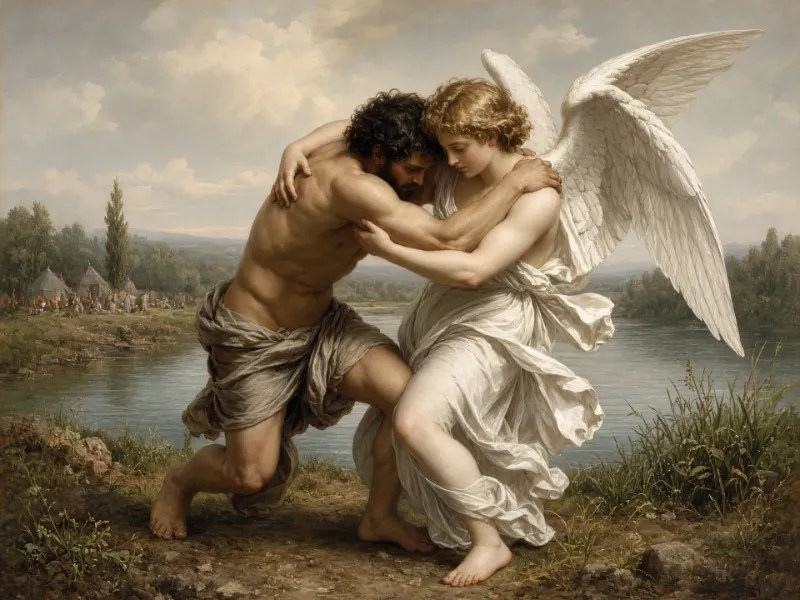
How are Christians told to answer persecution?
Jesus asked of the persecuted something no report can measure: “Love your enemies, bless them that curse you, do good to them that hate you, and pray for them which despitefully use you, and persecute you” (Matthew 5:44). Paul passed it on to the church in Rome, “Bless them which persecute you: bless, and curse not” (Romans 12:14). Stephen, whom the church’s tradition calls its first martyr, knelt as they stoned him and cried with a loud voice, “Lord, lay not this sin to their charge” (Acts 7:60), and when he had said it, Scripture says, he fell asleep. The apostles, beaten and ordered not to speak in the name of Jesus, “departed from the presence of the council, rejoicing that they were counted worthy to suffer shame for his name” (Acts 5:41). And those of us who live in safety are given our part: “Remember them that are in bonds, as bound with them; and them which suffer adversity, as being yourselves also in the body” (Hebrews 13:3).
“Beyond measure I persecuted the church of God, and wasted it,” Paul told the Galatians (Galatians 1:13). The Greek verb behind “persecute” is diōkō, which Thayer’s lexicon explains as “to run swiftly in order to catch some person or thing, to run after”, and in one chapter of Philippians Paul uses it of himself three times. Once it is the man he had been, “persecuting the church” (Philippians 3:6). Twice it is the man he had become: “I follow after” (Philippians 3:12), and “I press toward the mark for the prize of the high calling of God in Christ Jesus” (Philippians 3:14). The man who had run after the church to catch it was now running after Christ.
In his letter to the Romans he puts persecution in a list of things that cannot part us from Christ. “Who shall separate us from the love of Christ? shall tribulation, or distress, or persecution, or famine, or nakedness, or peril, or sword?” he asks, and he answers for every believer who suffers for Christ: “Nay, in all these things we are more than conquerors through him that loved us” (Romans 8:35, 37).

Related reading
- Where are Christians persecuted today? The countries, list by list
- Muslim persecution of Christians: facts and figures
- The 21 martyrs of Libya, killed at Sirte in 2015
- What it means to take up your cross and follow Jesus
- Prayers for your enemies, to bless and forgive them
- 20 Bible verses about suffering


Leave a Reply