
 English
 Chinese
 Dutch
 Arabic
 Spanish
 Portuguese
 Russian
 French
 Italian
 German
 Japanese
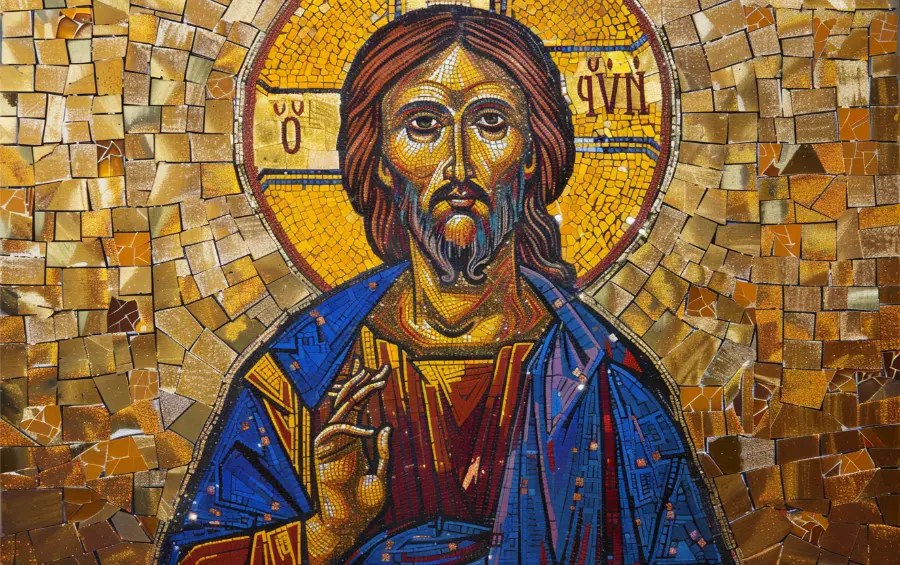
Propitiation is a sacrifice that turns away God’s wrath against sin and restores his favour, and the Bible says Jesus is that sacrifice. It is God himself who provides it: “Herein is love, not that we loved God, but that he loved us, and sent his Son to be the propitiation for our sins” (1 John 4:10).
One man in the Gospels prays for exactly this. Jesus tells of a tax collector who went up to the temple and stood “afar off,” and “would not lift up so much as his eyes unto heaven, but smote upon his breast, saying, God be merciful to me a sinner” (Luke 18:13). The verb he uses, hilaskomai, is the root of the Bible’s words for propitiation. In his mouth it means, as Thayer’s Greek lexicon puts it, “be propitious, be gracious, be merciful”: look on me with favour, though I have sinned. He brought nothing to offer. Jesus says that this man “went down to his house justified” (Luke 18:14). What he asked for in the temple, God gave the world at the cross.
Where does the Bible use the word propitiation?
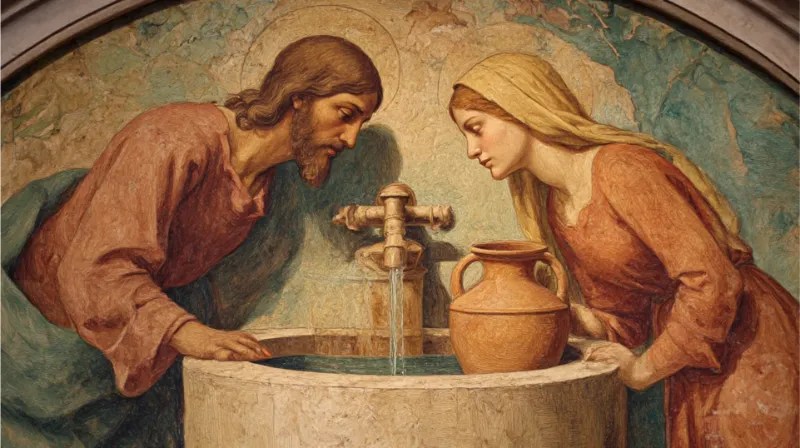
The King James Bible says “propitiation” three times. Paul writes that Christ is the one “Whom God hath set forth to be a propitiation through faith in his blood” (Romans 3:25). John says of Jesus, “he is the propitiation for our sins: and not for ours only, but also for the sins of the whole world” (1 John 2:2), and again that God “sent his Son to be the propitiation for our sins” (1 John 4:10).
Behind these verses stand three Greek words of one family. Hilasmos, the noun in both verses of 1 John, Strong’s dictionary defines as “atonement, i.e. (concretely) an expiator.” Hilasterion, in Romans 3:25, is the word Hebrews uses for the “mercyseat” (Hebrews 9:5). And the verb hilaskomai appears twice: in the tax collector’s prayer, and in Hebrews 2:17, where Jesus became “a merciful and faithful high priest in things pertaining to God, to make reconciliation for the sins of the people.” The King James translators rendered it “reconciliation” there; the New King James and the English Standard Version say “propitiation,” and the New International Version “atonement.”
What does the mercy seat have to do with propitiation?
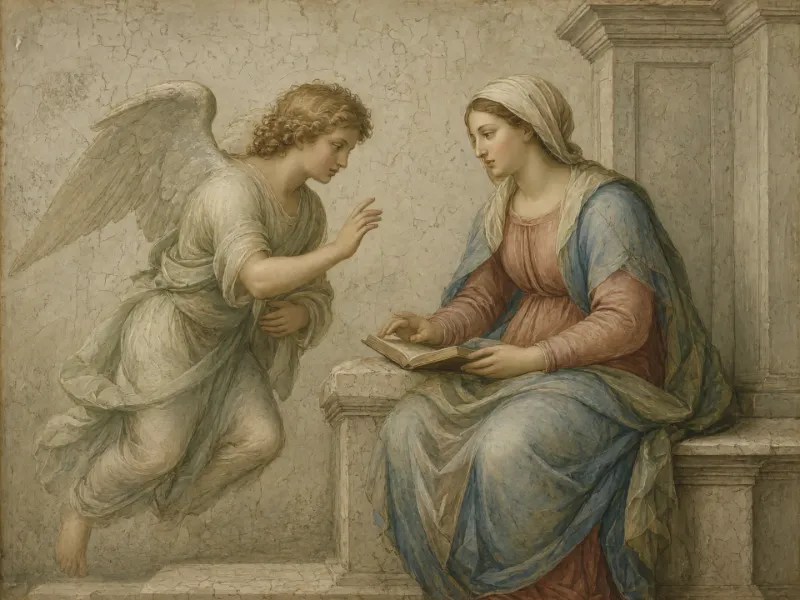
The mercy seat was the gold lid of the ark of the covenant. God told Moses to make it “of pure gold,” with two cherubim whose wings stretched over it, and he promised, “there I will meet with thee, and I will commune with thee from above the mercy seat” (Exodus 25:17, 22). Inside the ark lay “the testimony,” the tablets of the law (Exodus 25:21).
Once a year, on the Day of Atonement, the high priest went in behind the veil with the blood of a bullock and a goat and sprinkled it “upon the mercy seat, and before the mercy seat” (Leviticus 16:15). “For on that day shall the priest make an atonement for you, to cleanse you, that ye may be clean from all your sins before the LORD” (Leviticus 16:30). When the Old Testament was put into Greek, the translators called the lid hilasterion, the place of propitiation. So when Paul says that God set Christ forth as a hilasterion, his readers could hear the mercy seat in it. Scholars still differ over whether Paul meant the mercy seat itself or a propitiating sacrifice more generally; Thayer’s Greek lexicon lists interpreters on both sides. Either way the meaning comes to the same place. What the high priest did once a year behind the veil, God did in the open, at Golgotha, once for all. “This man, after he had offered one sacrifice for sins for ever, sat down on the right hand of God” (Hebrews 10:12).
There is more on the ark and its lid in What was the Ark of the Covenant?

Why does God’s wrath need to be turned away?
Because sin is real, and so is God’s anger against it. “The wrath of God is revealed from heaven against all ungodliness and unrighteousness of men,” Paul writes (Romans 1:18), and he does not leave himself out: “we all had our conversation in times past in the lusts of our flesh … and were by nature the children of wrath, even as others” (Ephesians 2:3). This wrath belongs to God’s holiness; Roger Nicole called it his “righteous anger against sin.”
That leaves a question Paul faces head on. How can God forgive sinners and still be just? His answer is the cross. God set Christ forth as a propitiation “To declare, I say, at this time his righteousness: that he might be just, and the justifier of him which believeth in Jesus” (Romans 3:26). He does not pretend sin away, and he does not leave the sinner to it. “While we were yet sinners, Christ died for us. Much more then, being now justified by his blood, we shall be saved from wrath through him” (Romans 5:8–9).

How is propitiation different from pagan sacrifice?
The word was not new when the apostles used it. In the Greek world people offered gifts to make their gods favourable again, gods who were quick to take offence. The scholar Leon Morris called that a “process of celestial bribery.” The theologian Roger Nicole wrote that the biblical writers “had to use a mortgaged vocabulary,” and they redeemed it. In the Bible God is the one who provides the sacrifice. “Whom God hath set forth,” Paul says (Romans 3:25). “He loved us, and sent his Son,” John says (1 John 4:10). C. H. Dodd, who preferred the word expiation, saw this most clearly: in Scripture God is often the subject of the action, “the very one who provides the means of restoring the sinner to favor.” Nicole, who disagreed with Dodd on much else, granted the point.
Nicole warned against two mistakes about propitiation. One treats it “as a turning of God’s wrath into love, rather than the provision of his love.” The other pictures “the compassionate Christ to shield the helpless sinner against the vengeful blows of God the Father.” The Father sends, the Son gives himself, and love is the cause of the cross, not its result. Nicole called propitiation “the gracious provision made by God himself whereby the effects of his righteous anger against sin may be averted.”
What is the difference between propitiation and expiation?
Expiation is the removing of sin: it is wiped out, cleansed, covered. Propitiation is the turning away of God’s wrath, so that the sinner is welcomed. The first speaks of what happens to our sin, the second of how God now looks on us. In 1931 the scholar C. H. Dodd argued that in the Bible these Greek words do not carry the idea of pacifying God’s displeasure, and that “expiate” should take the place of “propitiate” in the English Bible. Leon Morris and Roger Nicole answered him at length in 1955, and the debate shows in our Bibles today:
| Bible | 1 John 2:2 | Romans 3:25 |
|---|---|---|
| King James Version | propitiation | propitiation |
| English Standard Version | propitiation | propitiation |
| New King James Version | propitiation | propitiation |
| Revised Standard Version | expiation | expiation |
| New American Bible (Revised) | expiation | expiation |
| New International Version | atoning sacrifice | sacrifice of atonement |
| NRSV Updated Edition | atoning sacrifice | sacrifice of atonement |
| Reina-Valera 1960 (Spanish) | propiciación | propiciación |
| Almeida Revista e Corrigida (Portuguese) | propiciação | propiciação |
These two Spanish and Portuguese Bibles keep the old word, propiciación and propiciação, with the same meaning. The two ideas are not rivals, and the Bible holds them together. In Hebrews 2:17 the verb takes “the sins of the people” as its object, so that Jesus deals with the sins themselves, and Thayer’s lexicon renders it there “to expiate, make propitiation for.” The sin is taken away, and God’s face is turned toward us.
Is the Mass a propitiatory sacrifice?
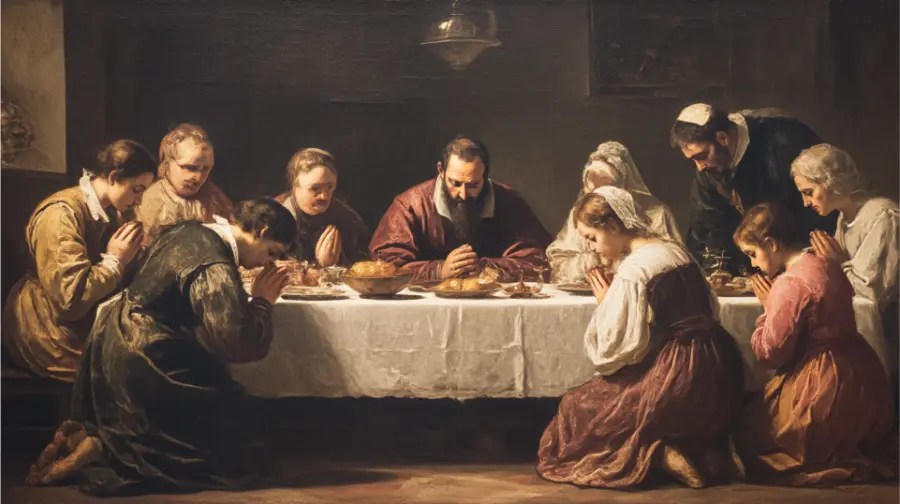
The Catholic Church teaches that it is. The Catechism says that Christ “was once and for all to offer himself to God the Father by his death on the altar of the cross, to accomplish there an everlasting redemption” (paragraph 1366), and that the cross and the Mass are “one single sacrifice”: “The victim is one and the same: the same now offers through the ministry of priests, who then offered himself on the cross; only the manner of offering is different” (paragraph 1367). The Council of Trent taught in 1562 that this sacrifice is propitiatory, and that it is offered for the sins of the living and also “for those who are departed in Christ, and who are not as yet fully purified.” When the Catechism speaks of the Incarnation, it quotes John with the word expiation: the Word became flesh “to save us by reconciling us with God, who ‘loved us and sent his Son to be the expiation for our sins’” (paragraph 457).
Lutheran and Reformed churches confess Christ as the propitiation and do not hold the Mass to be a sacrifice for sin. The Lutheran Augsburg Confession of 1530 says that Christ suffered and died “that He might reconcile the Father unto us, and be a sacrifice, not only for original guilt, but also for all actual sins of men,” and calls him “the Mediator and Propitiation.” The Westminster Confession, a Reformed confession of the 1640s, teaches that Christ, “by his perfect obedience, and sacrifice of himself,” “hath fully satisfied the justice of his Father,” and that the Lord’s Supper is “only a commemoration of that one offering up of himself, by himself, upon the cross, once for all.” Both confess that Christ offered himself on the cross once for all.
What does propitiation mean for us today?
It means we never have to win God over. The gods of the old world had to be coaxed with gifts; our God gave the gift himself, and the gift was his Son. John wrote it for believers who would fail: “if any man sin, we have an advocate with the Father, Jesus Christ the righteous: And he is the propitiation for our sins” (1 John 2:1–2). When we fall tomorrow, we go back to a Father whose favour has already been won, and we come, as Hebrews says, “boldly unto the throne of grace, that we may obtain mercy, and find grace to help in time of need” (Hebrews 4:16). “There is therefore now no condemnation to them which are in Christ Jesus” (Romans 8:1).
The tax collector’s prayer is still the right one, and we can pray it with him at the back of any church: “God be merciful to me a sinner.” The answer has been given once for all. He “went down to his house justified.”


Leave a Reply