
 Dutch
 English
 Chinese
 Arabic
 Spanish
 Portuguese
 Russian
 French
 Italian
 German
 Japanese
Catholics, Eastern Orthodox and Coptic Orthodox Christians ask the saints in heaven to pray for them, much as they would ask a friend in the next pew, and all three say that asking for someone’s prayers is not the worship they give to God. Lutherans, Methodists, Presbyterians, Baptists and most other Protestants do not ask, because their confessions teach that we pray to God alone, through Christ alone, and they honour the saints as examples of faith instead. The Church of England’s Articles reject calling on the saints too, though some Anglicans still ask for their prayers in private devotion. Latter-day Saints and Jehovah’s Witnesses also pray to God and to no one else.
Asking one another to pray is something the Bible gives to every one of us. Paul begged the Christians in Rome to “strive together with me in your prayers to God for me” (Romans 15:30), and James tells us to “pray one for another,” because “the effectual fervent prayer of a righteous man availeth much” (James 5:16). What divides the churches is whether that circle of prayer is broken when a Christian dies. Hebrews says that we are “compassed about with so great a cloud of witnesses” (Hebrews 12:1), and the churches read that cloud in two ways: as friends who are still praying for us, or as examples who have shown us how to run.
| Kerk | Ask the saints to pray? | In eigen woorden |
|---|---|---|
| Katholiek | Ja | The saints, “whose intercession she asks” (Catechism) |
| Oosters-Orthodox | Yes, not as God | “Our helpers, intercessors, and fellow-members of the Church” |
| Koptisch-Orthodox | Ja | “We only ask their prayers and their support” |
| Luthers | No; saints honoured as examples | “Scripture teaches not the invocation of saints” |
| Anglicaans en Episcopalen | No in the Articles; some Anglicans ask | The Articles: invocation of saints “a fond thing vainly invented” |
| Methodistisch | Nee | Invocation of saints “grounded upon no warrant of Scripture” |
| Presbyteriaans en Gereformeerd | Nee | Westminster Confession: worship “to him alone; not to angels, saints” |
| Verenigde Kerk van Christus | No, in its heritage Heidelberg Catechism | Shun “prayer to saints or to other creatures” |
| Baptist | No (1689 Confession) | “Nor in the mediation of any other but Christ alone” |
| Kerken van Christus | Nee | The Father “the only one to whom the prayers may be addressed” |
| Quaker (Evangelical Friends) | Saints not named; the Father approached through Christ | “Without the necessity for any inferior instrumentality” |
| Nazarene, Mennonite, Amish, Salvation Army | No statement on saints | Christ the one intercessor; Nazarenes: he is “engaged in intercession for us” |
| Nondenominationeel en evangelisch | Geen gedeelde verklaring | Lausanne Covenant: Christ “the only mediator between God and people” |
| Discipelen van Christus | No statement | None on praying to the saints |
| Oneness Pinkstergemeente | No statement on saints | “We approach God directly and confidently in prayer” |
| Pinkstergemeente (Assemblies of God) | No statement found | None in its statements |
| Zevendedagsadventist | Niet behandeld | Death “an unconscious state for all people” |
| Heiligen der laatste dagen | Nee | “We should pray to Him and no one else” |
| Jehovah’s getuigen | Nee | “Pray only to God, in Jesus’ name” |
Onze gratis tool, Vergelijk christelijke denominaties, sets any two of 23 churches side by side on praying to the saints and 54 other questions.
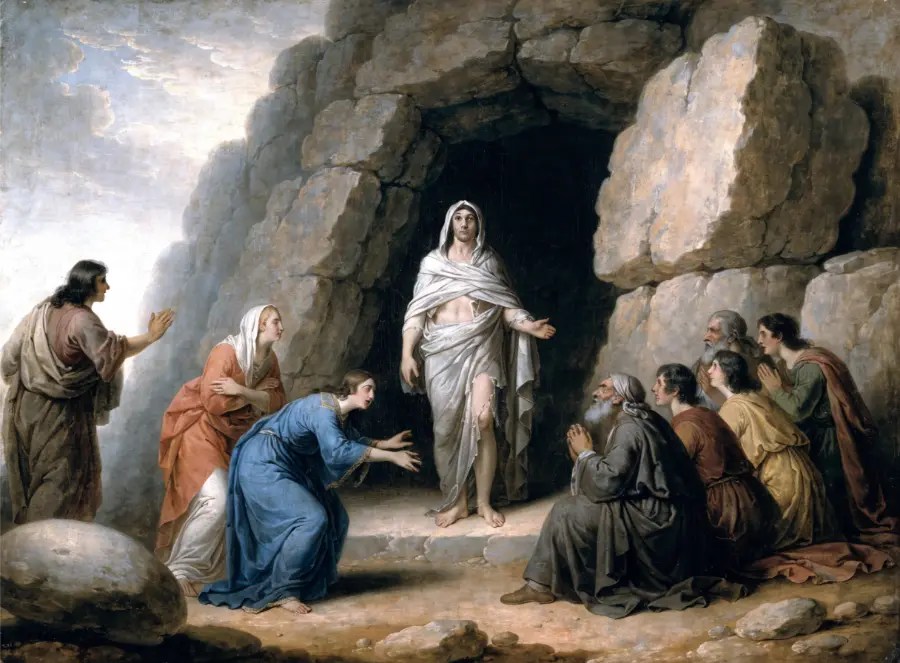
Why do Catholics pray to saints?
Catholics believe that death does not break up the family of God. “The union of the wayfarers with the brethren who sleep in the peace of Christ is in no way interrupted,” the Catechism of the Catholic Church says (paragraph 955), and so a Catholic can go on asking a brother or sister in heaven for prayer just as she would ask one on earth. The Catechism takes its picture of the saints from Hebrews. Under the heading “A cloud of witnesses,” it says that they “contemplate God, praise him and constantly care for those whom they have left on earth,” and then, “Their intercession is their most exalted service to God’s plan. We can and should ask them to intercede for us and for the whole world” (paragraph 2683).
Two saints whom the Catechism quotes were looking forward to that work. Saint Dominic, dying, told his brothers, “Do not weep, for I shall be more useful to you after my death and I shall help you then more effectively than during my life,” and Saint Thérèse of Lisieux said, “I want to spend my heaven in doing good on earth” (paragraph 956). In December 1563, in Session XXV of the Council of Trent, the bishops were told to teach “that it is good and useful suppliantly to invoke them,” and in the same sentence the council said where every answer comes from: “from God, through His Son, Jesus Christ our Lord, who is our alone Redeemer and Saviour.” The prayers Catholics address to the Virgin Mary have a story of their own, told in waarom katholieken tot Maria bidden.
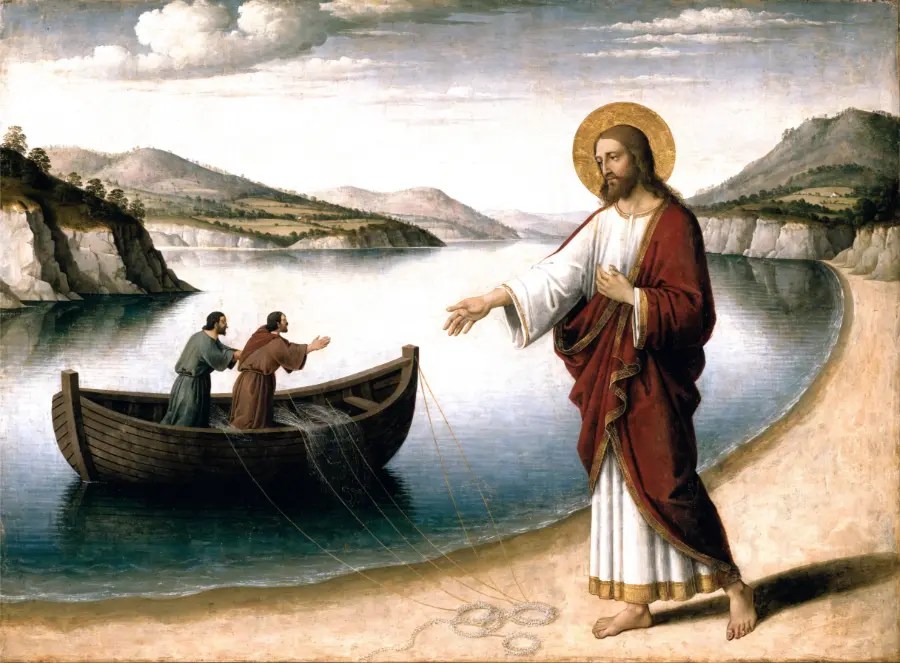
Do Orthodox Christians pray to saints?
Eastern Orthodox Christians pray to the saints, and the Orthodox Church in America is careful to say first where all prayer goes. “In the Orthodox Church all prayer is Trinitarian,” its book The Orthodox Faith teaches. “We pray in the Holy Spirit, through Jesus the Son of God, and in his name, to God the Father.” Only then does it go on: “In the Church we also pray to the saints—not in the same way as we pray to the Persons of the Holy Trinity, but as our helpers, intercessors, and fellow-members of the Church who are already glorified with God in his divine presence.” Mary, the Theotokos, is “the leader among our saintly intercessors before God.”
Coptic Orthodox Christians keep the same practice and are more careful still with the words for it. Pope Shenouda III of the Coptic Orthodox Church, answering the objections in his Comparative Theology, wrote, “We reply that we do not pray to the saints; we only ask their prayers and their support for us.” His reasoning is the reasoning of a family: “If the saints ask us to pray for them, shall we not ask them to pray for us?” And he saw the living and the departed holding each other up: “We plead for the departed in our prayers and they intercede for us through their prayers; it is an inseparable relationship.” How the Copts differ from the Eastern Orthodox on other things is told in Coptic Orthodox beliefs.

Is praying to saints worship?
Here the two sides use the word worship for different things. For Catholics, Orthodox and Copts, worship belongs to God, and asking a saint for prayer is no more worship than asking a friend. The line they draw is very old. Before Polycarp was put to death at Smyrna, the crowd in the stadium cried out in fury that he was “the father of the Christians,” and afterwards the church there wrote a letter about how he died. Of Christ and his martyrs they said, “For Him indeed, as being the Son of God, we adore; but the martyrs, as disciples and followers of the Lord, we worthily love on account of their extraordinary affection towards their own King and Master.” The Catechism quotes that letter in its own teaching on the saints (paragraph 957). The letter also tells how the Christians of Smyrna gathered up his bones, “as being more precious than the most exquisite jewels.” The letter does not show anyone asking Polycarp to pray, but it shows them adoring one and loving the other.
For many Protestants a prayer is itself an act of worship, whatever we call it. The Westminster Confession, which Presbyterian churches hold, teaches, “Religious worship is to be given to God, the Father, Son, and Holy Ghost; and to him alone; not to angels, saints, or any other creature: and, since the fall, not without a Mediator; nor in the mediation of any other but of Christ alone” (21.2). The Second London Baptist Confession of 1689 teaches the same in almost the same words, that worship goes to God “and to him alone; not to angels, saints, or any other creatures” (22.2). So when a Catholic says she is only asking a friend to pray, and a Baptist says that is praying to a creature, the two are looking at the same act and measuring it by two different rules.

Is praying to saints in the Bible?
Both sides open the same book. In Revelation the elders fall down before the Lamb holding “golden vials full of odours, which are the prayers of saints” (Revelation 5:8), and a few chapters on, “the smoke of the incense, which came with the prayers of the saints, ascended up before God out of the angel’s hand” (Revelation 8:4). Pope Shenouda reads those scenes as heaven carrying our prayers to God, and of the elders he wrote, “This is proof that they know the prayers which they ascend to God.” Catholics and Orthodox also read in 2 Maccabees, which their Bibles contain, of a dream in which Jeremiah, “the prophet of God,” is shown as “he that prayeth much for the people, and for all the holy city” (2 Maccabees 15:14).
None of the Protestant confessions quoted here takes up those verses from Revelation. The churches that do not ask start from Paul instead: “For there is one God, and one mediator between God and men, the man Christ Jesus” (1 Timothy 2:5). The Augsburg Confession adds John’s “we have an advocate with the Father, Jesus Christ the righteous” (1 John 2:1), and the 1689 Baptist Confession points to the angel at whose feet John fell: “See thou do it not: I am thy fellowservant, and of thy brethren that have the testimony of Jesus: worship God” (Revelation 19:10). The Lutherans’ defence of their confession, the Apology of the Augsburg Confession, grants that the saints in heaven “pray for the Church in general,” and it names that same dream from 2 Maccabees as the only Scripture that speaks of it. What it will not grant is the next step: “even supposing that the saints pray for the Church ever so much, yet it does not follow that they are to be invoked,” because “neither a command, nor a promise, nor an example can be produced from the Scriptures concerning the invocation of saints.”
Pope Shenouda answers 1 Timothy 2:5 with a distinction. “In fact there is a fundamental difference between the mediation of the Lord Jesus Christ and the intercessions of the saints,” he wrote. Christ’s mediation “is an atonement,” while the saints’ intercession “has no connection with atonement or redemption”; they are “merely praying for us.” The Catechism keeps that verse inside its own teaching, saying the saints offer their merits “through the one mediator between God and men, Christ Jesus” (paragraph 956). So both sides hold to the one Mediator, and they part over whether asking a Christian who has died to pray for us takes anything away from him.
Can the saints hear our prayers?
The Apology asks it outright: “Whence do we know without the testimony of Scripture that the saints perceive the prayers of each one?” Pope Shenouda answers, “We reply in the affirmative,” and takes us through the Gospels. Jesus said that “joy shall be in heaven over one sinner that repenteth” (Luke 15:7), so heaven hears the news from earth. The martyrs under the altar cry, “How long, O Lord, holy and true, dost thou not judge and avenge our blood on them that dwell on the earth?” (Revelation 6:10). “Therefore the martyrs know, after their death, that the Lord has not yet avenged their blood,” Shenouda writes, and the saints, he says, “understand more than we do.”
Seventh-day Adventists stand at the far end of this question, though they say nothing about saints. Their Fundamental Belief 26 teaches that God “will grant eternal life to His redeemed,” and “Until that day death is an unconscious state for all people.” The church’s page on that belief explains, “The Bible says those who have died know nothing. That means we aren’t aware of the passage of time after death. We aren’t aware of what’s happening in the world.” On that teaching, as we read it, nobody who has died is there to hear a prayer, so the question of asking them never comes up.
How old is asking the saints to pray?
The oldest witness comes from the church’s worship. When Cyril of Jerusalem explained the prayers of the Eucharist to his hearers, he told them, “Then we commemorate also those who have fallen asleep before us, first Patriarchs, Prophets, Apostles, Martyrs, that at their prayers and intercessions God would receive our petition.” In that prayer the church is still speaking to God, asking him to hear it for the sake of the saints’ prayers. In the sixteenth century, when Rome and the Reformers argued over calling on the saints, both sides went back to those early years and came away with different answers. The Lutheran Apology, answering Rome’s reply to the Augsburg Confession, said that the oldest writers of the church had not “made mention of invocation.” The Council of Trent, in 1563, said the practice had been received “from the primitive times of the Christian religion.”
Why don’t Protestants pray to saints?
The Lutheran Reformers kept the memory of the saints and stopped calling on them. The Augsburg Confession of 1530 teaches “that the memory of saints may be set before us, that we may follow their faith and good works, according to our calling, as the Emperor may follow the example of David in making war to drive away the Turk from his country.” The emperor was to follow David, not pray to him. Lutherans teach in the same confession that “the Scripture teaches not the invocation of saints or to ask help of saints, since it sets before us the one Christ as the Mediator, Propitiation, High Priest, and Intercessor.” The Apology honours the saints for the strengthening of our faith, “when we see the denial forgiven Peter.” What Protestants mean by a saint at all is answered in Geloven protestanten in heiligen?
The Church of England’s Thirty-nine Articles, in Article XXII, say that “invocation of Saints, is a fond thing vainly invented, and grounded upon no warranty of Scripture, but rather repugnant to the Word of God.” The Episcopal Church prints the Articles in its Prayer Book among its historical documents, and not every Anglican reads Article XXII as closing the door. St Michael’s Anglican Church in Matthews, North Carolina, writes that it condemns “only the Romish, that is, the popularly-believed late medieval” view, and that among Anglicans “the practice of the invocation of the Saints is limited in the main to private devotions and extraliturgical services.” Methodists carried nearly the same sentence into their Articles of Religion, where Article XIV calls the invocation of saints “a fond thing, vainly invented, and grounded upon no warrant of Scripture, but repugnant to the Word of God.” The United Church of Christ has no ruling of its own, but the Heidelberg Catechism of 1563, which it keeps among its heritage testimonies, teaches that the first commandment means we “avoid and shun all idolatry, magic, superstitious rites, and prayer to saints or to other creatures.”
The Churches of Christ give their answer as a question and a reply. Batsell Barrett Baxter’s booklet on who they are asks, “Are prayers addressed to the saints?” and answers, “No. God the Father is considered the only one to whom the prayers may be addressed,” and it points to Hebrews, where Christ “ever liveth to make intercession for them” (Hebrews 7:25). Quakers of the Evangelical Friends Church, Mid-America Yearly Meeting, keep the Richmond Declaration of Faith of 1887, which teaches of Christ, “Through His mediation, without the necessity for any inferior instrumentality, is the Father to be approached and reverently worshipped.”
What do other churches say?
Several churches have never ruled on praying to the saints. What they do say, each in its own words, is that Christ himself prays for us and that we come to God through him. The Church of the Nazarene’s Articles of Faith say that Christ “ascended into heaven and is there engaged in intercession for us,” and Mennonite Church USA’s Confession of Faith in a Mennonite Perspective of 1995 says much the same: “As faithful high priest, he has made the final atonement for sin and now intercedes for us.” The Amish, who keep the Dordrecht Confession of 1632, confess “with all the saints” that Christ is the one “in whom alone consist all our hope, consolation, redemption, and salvation, which we neither may nor must seek in any other.” The Salvation Army’s Handbook of Doctrine teaches that “All Christians have direct access to God through the priesthood of Christ (1 Peter 2:4-10),” and it gives every Christian a part in that work: all “are called to exercise the challenging ministry of intercession on behalf of one another and for the world.”
Churches without one shared confession are harder to pin down. Nondenominational and evangelical churches have no single statement, but the Lausanne Covenant of 1974 says that Jesus Christ “is the only mediator between God and people.” Oneness Pentecostals of the United Pentecostal Church International say in a 2019 position paper, “Through Jesus Christ, our high priest, we approach God directly and confidently in prayer.” The Disciples of Christ have no statement on it either; a 1997 study document speaks of a church that “extends across time as well as space, binding together all who confess Jesus Christ in whatever age,” without saying whether that bond includes asking the departed to pray. We found no statement on praying to the saints from the Assemblies of God.
The Church of Jesus Christ of Latter-day Saints teaches that God “wants us to communicate with Him through prayer. We should pray to Him and no one else.” Jehovah’s Witnesses answer the question “Should I Pray to Saints?” with “No. The Bible shows that we should pray only to God, in Jesus’ name,” and they add, “We offend God if we pray to anyone else, even to saints or holy angels.” They point to the prayer Jesus gave his disciples: “After this manner therefore pray ye: Our Father which art in heaven, Hallowed be thy name” (Matthew 6:9).
A Copt who asks the martyrs to pray for her and a Presbyterian who never would can both begin with those words, and both read the same letter to the Hebrews. Whether the cloud of witnesses around us is praying for us or showing us the way, Hebrews tells all of us what to do next: “let us run with patience the race that is set before us, Looking unto Jesus the author and finisher of our faith” (Hebrews 12:1–2).
Gerelateerde artikelen
- Vergelijk christelijke denominaties: wat 23 kerken leren over 55 vragen
- Protestants versus katholiek: hoe hun overtuigingen en aanbidding verschillen
- Orthodox vs Katholiek: Hoe de twee kerken verschillen en waarom ze splitsten
- Anglicaans versus Katholiek: Waarom de Church of England niet Rooms-Katholiek is
- Why Lutheran churches are named after saints
- 21 Bijbelverzen over voorbede


Een reactie plaatsen