
 Portuguese
 English
 Chinese
 Dutch
 Arabic
 Spanish
 Russian
 French
 Italian
 German
 Japanese
In the Bible, hail often means that God is bringing judgment. When God sends hail on Egypt, he gives the very people in its path time to find shelter. He tells Pharaoh, “to morrow about this time I will cause it to rain a very grievous hail” (Exodus 9:18). That leaves a whole day to bring the people in from the fields.
God remembers the cattle too. “Send therefore now, and gather thy cattle, and all that thou hast in the field” (Exodus 9:19). Some of Pharaoh’s own servants believe Israel’s God. “He that feared the word of the LORD among the servants of Pharaoh made his servants and his cattle flee into the houses” (Exodus 9:20). The hail strikes what is left in the field. For the people those men brought indoors, mercy was a roof over their heads when the hail came down.
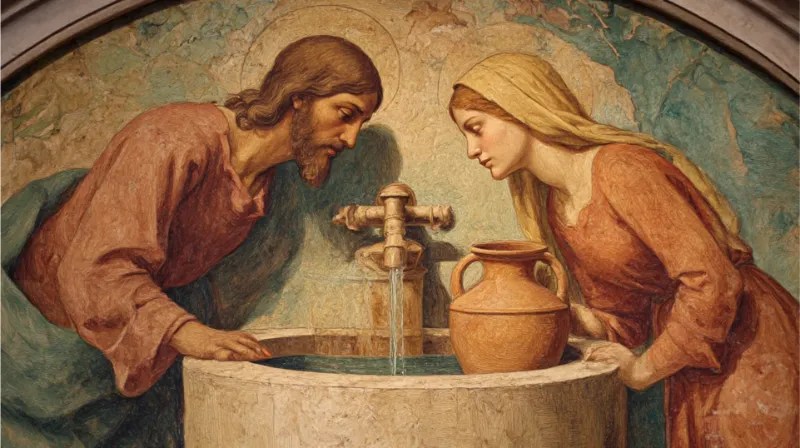
What happened when the hail fell on Egypt?
What would it take for Pharaoh to listen? He had seen the water turn to blood and lived through the frogs, lice and flies. Even after the cattle sickened and the boils broke out, he still kept Israel in Egypt. Now came the seventh of the ten plagues of Egypt. Moses raised his staff and “the LORD sent thunder and hail, and the fire ran along upon the ground” (Exodus 9:23). The hail broke every tree in the fields it struck. Yet a family in Goshen could have stayed outdoors. “Only in the land of Goshen, where the children of Israel were, was there no hail” (Exodus 9:26).
I think of Goshen when I hear Israel sing, “He gave them hail for rain, and flaming fire in their land” (Psalm 105:32). The people singing about that fire are the very people whose homes God spared. Listen to how closely they remember what happened in their neighbours’ fields. Even the vines Egypt lost have a place in their song. “He destroyed their vines with hail” (Psalm 78:47).
Exodus calls the storm “hail, and fire mingled with the hail, very grievous” (Exodus 9:24). When Rashi, a medieval Jewish commentator in France, read those words around 1100, he paused where we might have read straight on. How could a fire keep burning in all that ice? Citing the midrash on Exodus, he calls it “a miracle within a miracle! Fire and hail mingled, although hail is water! But in order to perform the will of their Creator they made peace one with the other.” Rashi hears both fire and water obey the same voice. Pharaoh has heard it too.
While the storm lasts, Pharaoh calls for Moses and tells him, “I have sinned this time: the LORD is righteous, and I and my people are wicked” (Exodus 9:27). Moses promises to pray “that thou mayest know how that the earth is the LORD’s” (Exodus 9:29). He spreads out his hands and the thunder and hail cease. What becomes of the king’s confession? “And when Pharaoh saw that the rain and the hail and the thunders were ceased, he sinned yet more, and hardened his heart” (Exodus 9:34). If we’ve ever asked God to forgive us and then gone back to the same old wrong once the trouble passed, we know something about Pharaoh.
Where does hail appear in the Bible?
Imagine hearing the news in Gibeon. Five kings had come to attack your city, and on the road down to Beth-horon the hail struck their fleeing armies (Joshua 10:5, 11). For the people of Gibeon, that was a story of rescue.
| Passage | Where it falls | O que acontece |
|---|---|---|
| Exodus 9:18–35 | All Egypt except Goshen | The seventh plague; Pharaoh confesses, then hardens his heart |
| Joshua 10:11 | Five Amorite armies | More die by hailstones than by the sword |
| Job 38:22–23 | Nowhere yet | God keeps “the treasures of the hail” for the day of battle |
| Psalms 18, 78, 105, 148 | God’s enemies; Egypt; all creation | Hail goes before God, and is called to praise him |
| Isaiah 28, 30, 32 | Jerusalem’s scoffers; Assyria | Hail sweeps away “the refuge of lies” |
| Ezekiel 13:10–14 | The wall the false prophets whitewashed | Hail brings it down and exposes its foundation |
| Ezekiel 38:22 | Gog and his army | God rains hailstones, fire and brimstone on the troops |
| Haggai 2:17 | The crops of the returned exiles | “Yet ye turned not to me” |
| Revelation 8, 11, 16 | The earth | At the seventh bowl, stones “about the weight of a talent” |
If you look up hail in the King James Version, you’ll find the weather mentioned 37 times in 33 verses. That’s 32 uses of “hail” and five of “hailstones”. Seventeen of the 37 belong to the account of Egypt’s plague and its aftermath in Exodus 9–10. A Bible that uses “hailstorm” can give you a different count, and a search for “hail” in the King James will also turn up six greetings in the Gospels.
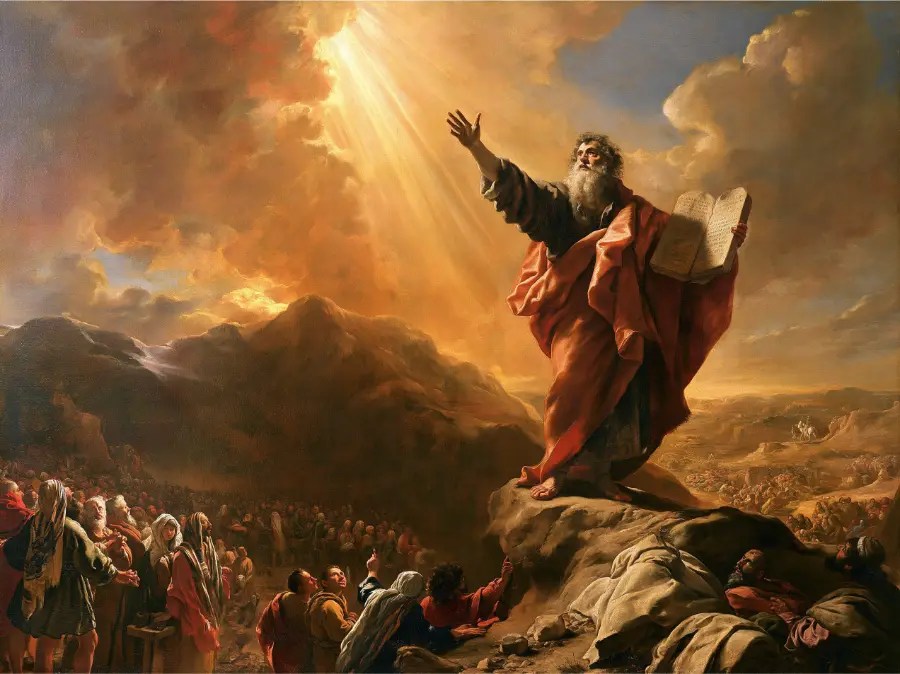
Why did hailstones fall at Beth-horon?
The five Amorite kings of Jerusalem, Hebron, Jarmuth, Lachish and Eglon had gone to war against Gibeon. Now their men are fleeing from Israel down the road to Beth-horon, and “the LORD cast down great stones from heaven upon them unto Azekah, and they died: they were more which died with hailstones than they whom the children of Israel slew with the sword” (Joshua 10:11). Imagine an army telling the story of a victory and giving so little credit to its own swords.
The rabbis who wrote the Babylonian Talmud between about 450 and 550 had a question about those stones. What became of the hail already in the air when Moses spread out his hands in Egypt? Exodus says “the rain was not poured upon the earth” (Exodus 9:33). The rabbis imagined that those stones “remained suspended in the air,” held there for Moses until God let them fall for Joshua (Berakhot 54b). That’s a Jewish tradition about the two storms. What we can read in Scripture itself is that God could stop the hail at Moses’ prayer as surely as he could send it to Joshua’s aid.
What did Job and the psalmists hear in the storm?
When God speaks to Job out of the whirlwind, he asks, “hast thou seen the treasures of the hail, Which I have reserved against the time of trouble, against the day of battle and war?” (Job 38:22–23). Picture what’s in that storehouse. The hail that could break a tree in Egypt can stay there, held in reserve, until God has work for it to do. In Psalm 18 we hear the “hail stones and coals of fire” and then the voice of the man who saw God coming through them. “He sent from above, he took me, he drew me out of many waters” (Psalm 18:13, 16). The man in the water knows whose hand reached down for him.
Gregory the Great wrote about those “treasures of the hail” in Constantinople before he became pope in 590. The weather that God describes to Job made Gregory think of a person whose heart has gone cold and hard. Would any of us have looked at Saul, holding the coats of the men who stoned Stephen, and seen Paul the apostle? Gregory could look back on Saul and say, “O what a treasure did the Lord keep him, stored up in snow or hail.” He had noticed something very ordinary about a hailstone, too. As he put it, “hail strikes as it falls, and waters when it melts.” When someone we love seems as hard as ever, we can remember who once stood holding those coats and pray for them again. In his words, “let no one despair of those, whom he sees still cold.”
We might expect the people who found shelter in Egypt to praise God for bringing them through the hail. In Psalm 148 the hail itself gets called on to sing. “Praise the LORD from the earth… Fire, and hail; snow, and vapours; stormy wind fulfilling his word” (Psalm 148:7–8). Augustine, the bishop of Hippo in North Africa, preached about that wind and whom it obeys. “Think not then that these things are moved by chance, which in every motion of theirs obey God,” he told his congregation. “Whither God wills, there the fire spreads, there the cloud hurries, whether it carry in it rain, or snow, or hail.” If all we can do in a storm is argue with God about the weather, Augustine thinks we’ve forgotten how the psalm begins. “You have lost your Halleluia.”
What shelter does Isaiah say will stand?
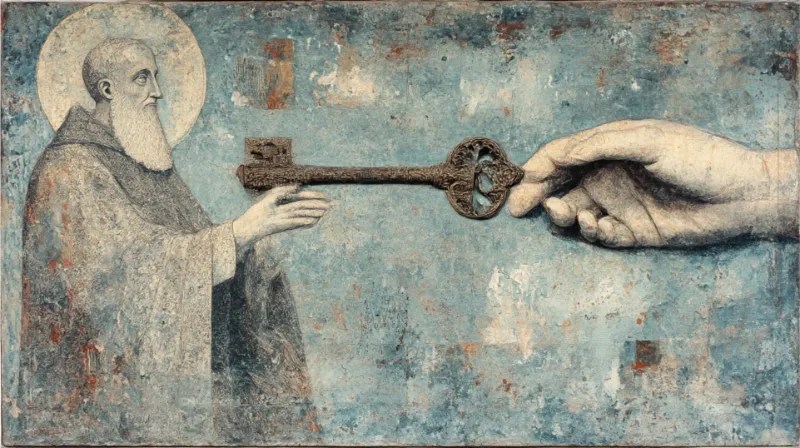
The rulers of Jerusalem think they already have a safe place. They boast that disaster will pass them by because “we have made lies our refuge, and under falsehood have we hid ourselves” (Isaiah 28:15). Before God tells them what will happen to their hiding place, he tells them what he is building in their own city. “Behold, I lay in Zion for a foundation a stone, a tried stone, a precious corner stone, a sure foundation: he that believeth shall not make haste.” Then comes the hail. God says “the hail shall sweep away the refuge of lies, and the waters shall overflow the hiding place” (Isaiah 28:16–17). Those servants in Egypt had time to come in from the fields. Here too God offers shelter while there’s still time to take it. Peter quotes Isaiah’s promise and names Christ as the cornerstone we can trust, for “he that believeth on him shall not be confounded” (1 Peter 2:6).
O hebraico barad is the ordinary word for hail. Reading Isaiah, the Brown–Driver–Briggs lexicon calls it “figurative of judgment”, and Ezekiel lets us see just what such a judgment reveals. His false prophets have been plastering over a weak wall, promising “Peace; and there was no peace,” and the hail God sends will expose what the plaster covers. “Ye, O great hailstones, shall fall,” he says. The wall will come down “so that the foundation thereof shall be discovered” (Ezekiel 13:10–14). Ezekiel calls those stones ‘elgabish, hail “as if a great pearl” in Strong’s dictionary. It’s a hard thing to learn that someone who promised you peace was only covering up the cracks.
When Haggai speaks to the people who have come home from exile, it is their harvest they have lost. Listen to what grieves God as he remembers it. “I smote you with blasting and with mildew and with hail in all the labours of your hands; yet ye turned not to me, saith the LORD” (Haggai 2:17). After all that hail, he was still waiting for his people to turn to him.
How do Christians read the hail in Revelation?
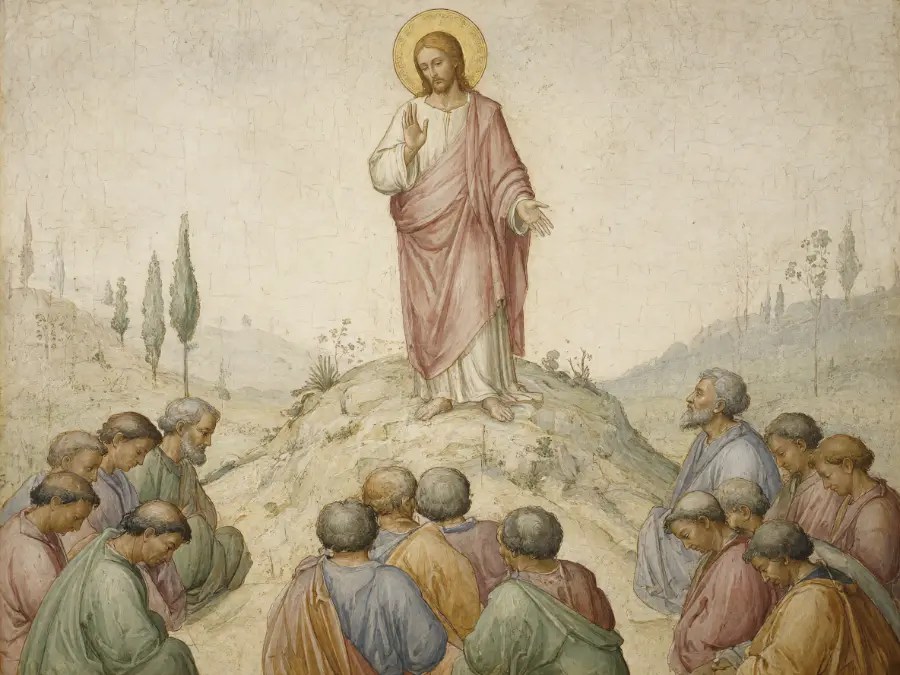
John uses the Greek word chalaza for hail, the very word the old Greek translation of Exodus used for barad. And when the first of As sete trombetas do Apocalipse sounds, we can almost hear Egypt again. John sees that “there followed hail and fire mingled with blood” (Revelation 8:7), as Moses had seen “fire mingled with the hail” (Exodus 9:24). Albert Barnes, a Presbyterian pastor in Philadelphia who died in 1870, heard armies on the march in that first trumpet. He wrote that “Hail is usually a symbol of the Divine vengeance” and traced the vision to the invasions before Rome fell, beginning with “the invasion of Alaric, king of the Goths, A.D. 410”.
When the hail comes again, John can see the ark in God’s open temple in heaven (Revelation 11:19). He calls it “great hail”, but only when the seventh angel pours out his bowl do we learn what a single stone weighs. John writes that “there fell upon men a great hail out of heaven, every stone about the weight of a talent: and men blasphemed God because of the plague of the hail” (Revelation 16:21). Modern translations put that at about a hundred pounds.
Does John mean that stones that heavy will fall? Thomas Ice of the Pre-Trib Research Center thinks he does. He writes that “God will actually throw 100 pound hailstones at mankind during a future tribulation judgment.” Barnes calls the hail in this same verse “a frightful image to denote the terrible and certain destruction that would come upon Babylon”. In his reading, Babylon stood for the power of the papacy. Whatever we make of the stones, listen to the people beneath them. They curse God. Pharaoh went back on his word once the hail stopped, and Haggai’s people lost a harvest and still would not turn to God. Here at the end of the Bible we can still hear people refusing him.
Why does Gabriel say “Hail” to Mary?
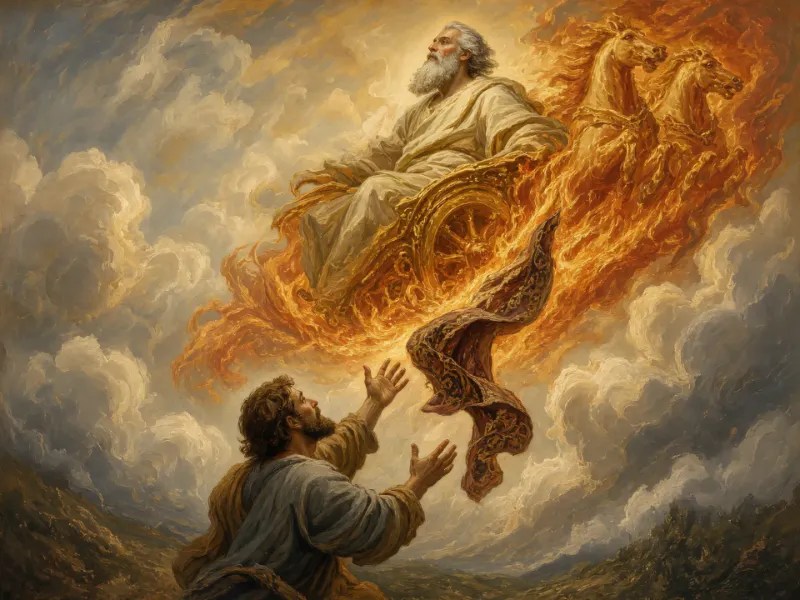
When Gabriel says “Hail, thou that art highly favoured, the Lord is with thee” (Luke 1:28), his Greek word for “Hail” is chaire, from a verb meaning to rejoice or be glad. You can hear that meaning in the opening of the Hail Mary, which the Catholic Catechism gives as “Hail Mary [or Rejoice, Mary]”. Catholics still pray Gabriel’s words in their orações à Virgem Maria.
Listen to who gives the greeting near the end of Matthew’s Gospel. The soldiers mock Jesus with “Hail, King of the Jews!” (Matthew 27:29). On Easter morning, as the women went to tell the disciples, “Jesus met them, saying, All hail” (Matthew 28:9). This time it is the risen Jesus who greets them, and the women take hold of his feet and worship him.
Does a hailstorm today mean God is judging someone?
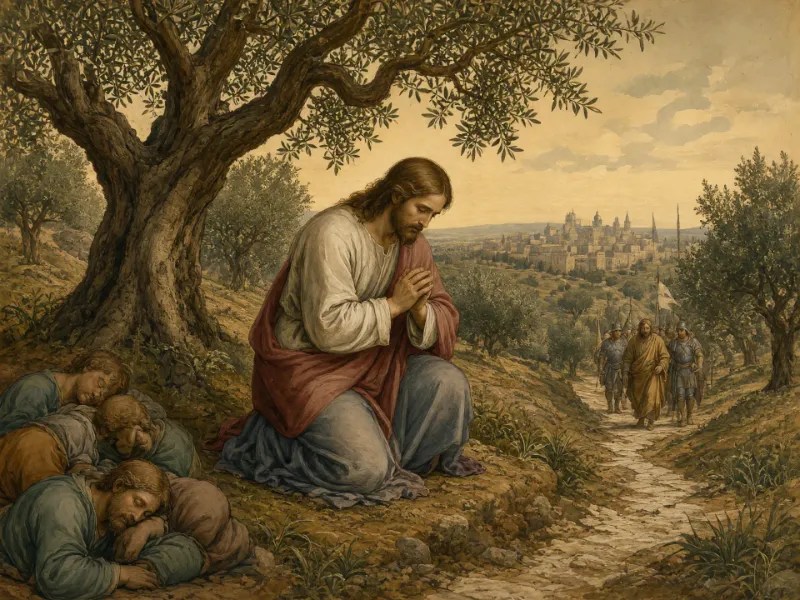
If hail has flattened your crop, you needn’t search your conscience for a sin that would explain why the storm fell on your field. When people told Jesus of the Galileans Pilate had killed, he reminded them of the eighteen who died when a tower fell in Siloam. “Think ye that they were sinners above all men that dwelt in Jerusalem? I tell you, Nay: but, except ye repent, ye shall all likewise perish” (Luke 13:4–5). Jesus asks the people who heard the news to consider their own lives. He gives them no grounds to accuse the people who died.
Augustine asked his hearers to consider lightning that strikes a mountain while a thief goes unharmed. “Perhaps He yet seeks the robber’s conversion, and therefore is the mountain which fears not smitten, that the man who fears may be changed.” I love that word of his, perhaps. Augustine trusts God with the thief’s life and leaves room for what he doesn’t know. We know from Jesus that our Father “sendeth rain on the just and on the unjust” (Matthew 5:45), and hail falls on both as well. When the cars up and down the street are dented and we’ve come through safely, we can thank God for the roof over our heads and go see who needs help.
Isaiah gives us words for the hope we can offer one another. “A man shall be as an hiding place from the wind, and a covert from the tempest” (Isaiah 32:2). He sees the people of God at home, and he can still see the hail falling beyond their doors. God says, “my people shall dwell in a peaceable habitation, and in sure dwellings, and in quiet resting places; When it shall hail, coming down on the forest” (Isaiah 32:18–19).


Deixe um comentário