圣经中象征性地使用木材的主要方式是什么?
圣经中的木材具有强大的象征意义,说明了我们人类状况的本质和我们与神的关系。 当我们反思圣经的页面时,我们发现木材的使用方式照亮了救赎历史的道路。
Wood often symbolizes the frailty and transience of human life. Just as a tree can be cut down, so too are we mortal beings. The prophet Isaiah reminds us, “All people are like grass, and all their faithfulness is like the flowers of the field. The grass withers and the flowers fall” (Isaiah 40:6-7). This imagery invites us to contemplate our own mortality and the fleeting nature of earthly existence.
Yet, paradoxically, wood also represents strength and stability. The cedars of Lebanon, mentioned frequently in Scripture, stand as symbols of might and endurance. King Solomon used these cedars in the construction of the Temple, linking the strength of wood to the permanence of God’s dwelling place among His people.
Wood in the Bible also carries connotations of renewal and regeneration. The olive branch brought to Noah by the dove after the flood symbolizes new life and God’s covenant with humanity. This powerful image reminds us of the hope that springs eternal, even in the face of great tribulation.
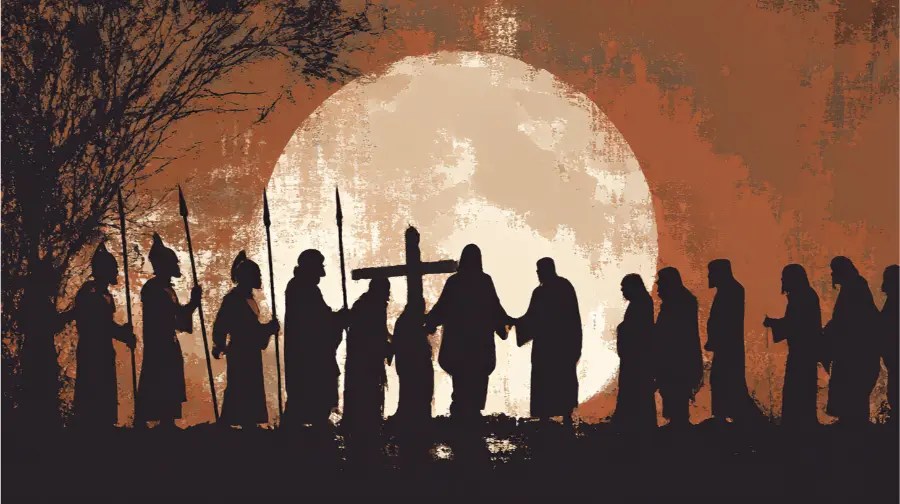
也许最重要的是,木材是牺牲和救赎的象征。 从拯救诺亚和他的家人的方舟的木头,到我们主耶稣基督为我们的救赎而献出的十字架上的木头,我们看到木材作为神圣拯救的工具的一贯主题。
在出埃及记事中,我们发现了摩西手杖的木头,神通过这些木头创造奇迹来解放他的子民。 让我们不要忘记会幕的木头和后来的圣殿的木头,它把上帝与以色列人同在。
these varied uses of wood symbolism in Scripture speak to deep human needs – for security, for meaning in the face of mortality, for hope of renewal, and for reconciliation with the Divine. I am struck by how these themes resonate across cultures and epochs, finding their fullest expression in the Christian understanding of the cross.
In all these ways, the symbolism of wood in the Bible invites us to a deeper contemplation of our human journey and our ultimate destiny in God’s loving plan. It challenges us to see beyond the material to the spiritual realities that wood represents in the divine economy of salvation.

十字架的木头在基督教象征主义中代表什么?
The wood of the cross stands at the very heart of our Christian faith, a powerful symbol that encompasses the entirety of God’s salvific plan for humanity. As we contemplate this sacred wood, we are drawn into the mystery of Christ’s sacrificial love and the transformative power of His redemptive act.
The wood of the cross represents the ultimate paradox of our faith – that through death comes life, through defeat comes victory. As St. Paul so eloquently states, “For the message of the cross is foolishness to those who are perishing to us who are being saved it is the power of God” (1 Corinthians 1:18). This paradox speaks to the powerful psychological truth that often our greatest growth comes through our deepest suffering.
Historically, we must remember that the cross was an instrument of shame and torture in the Roman world. Yet, through Christ’s sacrifice, it has been transformed into a symbol of hope and salvation. This transformation reminds us of God’s power to bring good out of evil, to make the rejected stone the cornerstone of His edifice of love.
十字架的木头也代表着天地之间的桥梁,神与人之间的和解。 它作为一个宇宙轴 mundi,神圣恩典的垂直维度与人类存在的水平平面相交。 通过这种方式,它象征着伊甸园失去的和谐的恢复。
木头的十字架让人想起伊甸园里的生命树。 一旦人类到达禁果,把死亡带到世界上,现在基督伸出双臂在十字架的木头上,提供永生的果实给所有相信的人。 十字架的木头和原始树之间的这种联系说明了我们对治愈原始伤口的深刻心理需求。
the cross serves as a powerful symbol of integration – of suffering and joy, of death and life, of divine and human. It offers a focal point for our deepest emotions and existential questions, providing a path to wholeness and meaning.
在歷史上,我們看到十字架的象徵如何塑造了西方文明,影響了藝術、文學和哲學。 它不断提醒基督徒通过牺牲,挑战和鼓舞无数代人的救赎叙述。
In our modern world, where the search for meaning often leads to despair, the wood of the cross continues to offer hope. It reminds us that our sufferings are not meaningless can be united with Christ’s redemptive sacrifice. It challenges us to take up our own crosses, not in a spirit of defeat in the confidence that God can bring life out of death, joy out of sorrow.

木头在圣经中如何代表人性或死亡?
在圣经叙述的开头,我们遇到了伊甸园中善恶知识的树。 这棵树,它的木头和果实,成为人类选择和我们行动后果的象征,这个强大的形象说明了我们天生的自主欲望和自由意志带来的道德责任。
The prophet Isaiah uses the imagery of wood to describe human frailty: “All people are like grass, and all their faithfulness is like the flowers of the field. The grass withers and the flowers fall the word of our God endures forever” (Isaiah 40:6-8). This comparison of humanity to vegetation that withers reminds us of our transient nature, echoing the words spoken to Adam: “For dust you are and to dust you will return” (Genesis 3:19).
In the wisdom literature, we find further reflections on human nature through wood imagery. Ecclesiastes tells us, “If a tree falls to the south or to the north, in the place where it falls, there it will lie” (Ecclesiastes 11:3). This can be seen as a metaphor for the finality of death and the importance of how we live our lives. A psychologist might note how such imagery can motivate us to live with purpose and intentionality.
The Psalms also employ wood imagery to describe the human condition. Psalm 1 compares the righteous person to “a tree planted by streams of water, which yields its fruit in season and whose leaf does not wither” (Psalm 1:3). This beautiful metaphor suggests that Although we are mortal like trees, we can also be sources of life and stability when rooted in divine truth.
Historically we see how this understanding of human nature as “wood-like” – both strong and fragile, living yet mortal – has shaped religious and philosophical thought throughout the ages. It has informed our understanding of ethics, the meaning of life, and our relationship with the divine.
In the New Testament, St. Paul extends this wood symbolism in a powerful way. He speaks of our old nature as a “body of sin” that was nailed to the cross with Christ (Romans 6:6). Here, the wood of the cross becomes the means by which our mortal, sinful nature is put to death, making way for new life in Christ.

圣经中提到了哪些类型的木材,它们象征着什么?
The Holy Scriptures mention various types of wood, each carrying its own rich symbolism that speaks to different aspects of our spiritual journey and God’s divine plan. Let us explore these woods and their meanings, drawing insights from theology, psychology, and history.
We encounter the cedar of Lebanon, a wood prized for its strength, fragrance, and durability. King Solomon used this wood in the construction of the Temple, symbolizing the enduring nature of God’s presence among His people. Psychologically, cedar represents resilience and the human capacity to stand firm in faith amidst life’s storms. Historically, the use of cedar in sacred architecture across cultures points to a universal recognition of its special qualities.
The acacia wood, used in the construction of the Ark of the Covenant and the Tabernacle, symbolizes incorruptibility and the eternal nature of God’s covenant. This hardy desert wood reminds us of God’s faithfulness even in the most challenging environments of our lives. Psychologically acacia represents the core of our being that remains untouched by the corrosive effects of sin when we abide in God’s presence.
Olive wood, mentioned in the construction of Solomon’s Temple, symbolizes peace, reconciliation, and God’s blessing. The olive branch brought by the dove to Noah has become a universal symbol of peace. In Christian tradition, the Mount of Olives is associated with key events in Christ’s life, linking this wood to the narrative of salvation. Psychologically, the olive represents the human need for peace and the divine gift that satisfies this need.
无花果树虽然通常不用于木材,但在圣经象征意义中仍然占主导地位。 耶稣诅咒一棵无花果树,用它作为精神贫瘠的比喻。 这种强大的形象说明了没有工作的信心已经死亡的心理真理,挑战我们在生活中结出果实。
Gopher wood, used in the construction of Noah’s Ark, symbolizes God’s provision for salvation. While its exact nature is debated, its use in the ark story represents God’s guidance in preserving life amidst judgment. Psychologically, it speaks to our deep-seated need for security and divine protection in times of crisis.
The sycamore, mentioned in Luke’s Gospel in the story of Zacchaeus, symbolizes the curiosity and effort required in seeking Christ. Zacchaeus climbed this tree to see Jesus, representing our need to elevate ourselves spiritually to encounter God. From a psychological viewpoint, the sycamore represents the human drive for transcendence and meaning.
Lastly, we must not forget the wood of the cross, traditionally believed to be made of dogwood or olive wood. This wood, transformed from an instrument of death to a symbol of salvation, represents the total self-giving love of Christ and the transformative power of God’s grace.

木材象征主义如何与圣经意象中的树木相关联?
The symbolism of wood in the Bible is intimately connected with the imagery of trees, forming a vast web of meaning that spans from the creation narrative to the vision of the New Jerusalem. This connection invites us to contemplate the continuity of God’s creation and redemption, the cycle of life and death, and the growth of the kingdom of God. The use of wood in biblical narratives often carries deep spiritual significance, pointing to moments of covenant, sacrifice, and restoration—for instance, Noah’s ark, the wood of the cross, and the tree of life in Revelation. This rich symbolism raises questions such as, 聖誕樹是聖經? While the Bible does not explicitly mention Christmas trees, their connection to evergreen life can be understood as reflecting themes of eternal hope and the unchanging nature of God’s promises. The 生命之树的象征意义, first introduced in the Garden of Eden, serves as a powerful reminder of humanity’s original communion with God and the promise of eternal life. It reappears in the book of Revelation, linking the beginning and end of Scripture, and highlights God’s redemptive plan for His people. Through the imagery of wood and trees, we are invited to reflect on God’s sustaining presence throughout history and His ultimate plan to restore creation.
In the beginning, we encounter the Tree of Life and the Tree of the Knowledge of Good and Evil in the Garden of Eden. These trees represent fundamental aspects of human existence – eternal life in communion with God, and moral autonomy with its attendant responsibilities. The wood of these trees, by extension, symbolizes the potential for both life and death inherent in human choices. Psychologically this imagery speaks to our deepest desires for immortality and self-determination.
Throughout Scripture, we find trees used as metaphors for human spiritual conditions. The Psalmist declares that the righteous person is “like a tree planted by streams of water, which yields its fruit in season and whose leaf does not wither” (Psalm 1:3). This image of a flourishing tree represents the vitality and fruitfulness of a life rooted in God’s word. Conversely, the prophet Jeremiah compares those who trust in mere mortals to “a bush in the wastelands” (Jeremiah 17:6), highlighting the withering effect of misplaced faith.
The prophets often use tree imagery to describe God’s judgments and restorative actions. Isaiah prophesies that “A shoot will come up from the stump of Jesse; from his roots a Branch will bear fruit” (Isaiah 11:1), foretelling the coming of the Messiah from the lineage of David. This powerful image connects the wood of a seemingly dead stump with the promise of new life and hope, a theme that resonates deeply with the human experience of renewal after loss.
In the New Testament, Jesus often uses tree imagery in his teachings. He speaks of knowing trees by their fruit (Matthew 7:16-20), using this natural metaphor to teach about discernment and the outward manifestation of inner character. The parable of the mustard seed (Mark 4:30-32) likens the kingdom of God to a tree that grows from the smallest of seeds, offering shelter to many – a beautiful image of the expansive and inclusive nature of God’s reign.
也许最重要的是,来自一棵树的十字架木头成为基督教信仰的中心象征。 这种将活树变成救赎工具的转变,在自然世界和神圣的救赎行为之间建立了强有力的联系,这种象征主义说明了人类转化和救赎痛苦的能力。 它提醒我们,即使是普通的,自然的元素也可以具有深刻的精神意义,弥合世俗生命和神圣目的之间的差距。 这种联系在考虑时会进一步扩展。 圣诞树的历史, 一种传统,将树木重新想象为一年中最黑暗时期的生命,希望和光明的象征。 在这两种情况下,这棵树都成为对信仰,更新和人类与神圣之间持久关系的更深入反思的容器。
Historically, we see how this connection between wood and trees has influenced Christian art and architecture, with the cross often depicted as a living tree, bridging death and life. This artistic tradition reflects the deep-seated understanding of wood we come full circle to the Tree of Life, now flourishing in the New Jerusalem, “bearing twelve crops of fruit, yielding its fruit every month. And the leaves of the tree are for the healing of the nations” (Revelation 22:2). This eschatological image connects the wood of paradise lost with the eternal life of paradise regained, offering a powerful symbol of hope and restoration.

圣经叙事中与木材相关的属灵意义是什么?
伍德在圣经的神圣叙述中具有强大的精神意义。 当我们反思它的意义时,我们必须敞开心扉,接受上帝通过这种卑微的物质所揭示的深刻智慧。
In the biblical context, wood often symbolizes human nature in its frailty and mortality. Just as trees can wither and decay, so too are we subject to the impermanence of earthly life. Yet wood also represents the potential for new life and growth. Consider how a fallen seed can sprout into a mighty tree – this mirrors our own spiritual journey of rebirth and transformation in Christ.
木头在神圣的相遇和盟约的故事中占有突出地位。 诺亚方舟,用gopher木头制作,在洪水中成为救赎的工具。 聖約會幕和方舟的樹木是上帝和祂的子民之間的聚會場所。 在这些情况下,木材调解神圣的,弥合天地。
We see wood as a symbol of sacrifice and redemption. Abraham’s willingness to offer Isaac is punctuated by the wood Isaac carries up Mount Moriah. This foreshadows Christ’s own sacrificial journey, bearing the wooden cross to Calvary. The cross itself – that blessed wood – becomes the ultimate symbol of God’s love and our salvation.
Wood also signifies healing and restoration. Moses cast a piece of wood into bitter waters to make them sweet. The prophet Elisha used a stick to make an axe head float. These miracles point to wood’s power to bring wholeness and reconciliation.
In the Wisdom literature, trees and their wood represent the fruits of righteousness and wisdom. Proverbs speaks of wisdom as a “tree of life” Although the Psalms compare the righteous to trees planted by streams of water. This imagery invites us to sink our roots deep into God’s truth.
I see how these wood symbols speak to our deepest longings for meaning, growth, and connection to the divine. I recognize wood’s central place in the unfolding story of salvation. And I encourage you to contemplate how God is using the “wood” of your own life circumstances to shape you into His image.

木材如何用作精神成长或转化的隐喻?
伍德作为我们整个圣经和基督教传统的灵性成长和转变的有力比喻。 让我们用开放的心灵和思想来探索这种丰富的象征意义。
Just as a tree grows from a tiny seed into a mighty oak, our faith journey often begins with small stirrings of the Spirit and gradually develops into a robust spiritual life. This process requires patience, nurturing, and trust in God’s timing. As Jesus taught in the parable of the mustard seed, the Kingdom of God grows in ways that may seem imperceptible at but ultimately yield abundant fruit.
The process of refining wood – cutting, shaping, and smoothing – mirrors our own spiritual formation. God, the master craftsman, works to remove our rough edges and imperfections. This can be a painful process, much like the pruning of a tree it is necessary for our growth and fruitfulness. As Saint Paul reminds us, we are God’s workmanship, being shaped for His purposes.
Wood’s transformation by fire also holds deep spiritual significance. Just as fire purifies and strengthens wood, the refining fire of the Holy Spirit burns away our impurities and fortifies our faith. This echoes the words of John the Baptist, who spoke of Christ baptizing with the Holy Spirit and fire.
The grafting of branches, a common practice in arboriculture, serves as a beautiful metaphor for our adoption into God’s family through Christ. As wild olive shoots, we are grafted into the cultivated olive tree of God’s covenant people. This process of spiritual grafting transforms our very nature and identity.
Wood’s ability to absorb water reminds us of our need to be continually soaked in God’s Word and presence. Like a tree planted by streams of water, we are called to sink our roots deep into the living water of Christ, drawing nourishment for our ongoing transformation.
一棵树的年生长环讲述了它通过丰富和稀缺的季节发展的故事。 同样,我们的灵性生活以丰富和考验的时期为标志,每个时期都有助于我们的整体成长和韧性。
I see how these metaphors of growth, refinement, and transformation resonate with our innate human longing for progress and meaning. They speak to the deep work of healing and integration that occurs in our psyche as we align ourselves with God’s purposes.
从历史上看,我们可以追溯基督教神秘主义者和精神作家如何利用这些木质比喻来阐明灵魂的旅程。 十字架的圣约翰和阿维拉的特蕾莎使用生动的树形图像来描述精神发展的阶段。

教父们在圣经中教导木材的象征意义是什么?
Many of the Fathers saw in wood a symbol of the cross of Christ, the instrument of our salvation. Saint Justin Martyr, writing in the 2nd century, drew parallels between the wood of the cross and the tree of life in Eden. He saw Christ’s crucifixion as a reversal of the Fall, with the wood of the cross becoming a new tree of life offering redemption to humanity.
Tertullian, in his treatise “Against Marcion,” elaborated on this theme, seeing prefigurations of the cross in various Old Testament passages involving wood. He pointed to Moses stretching out his wooden staff to part the Red Sea as a foreshadowing of how Christ’s cross would deliver us from sin and death.
Saint Augustine, that great doctor of the saw in Noah’s ark a type of the with the wood of the ark representing the wood of the cross. In his view, just as the ark’s wood saved Noah and his family from the flood, so the wood of the cross saves believers from eternal destruction.
父亲们在圣经中提到的木材类型中也发现了意义。 例如,圣安布罗斯(Saint Ambrose)写到了建造约柜中使用的阿卡西亚木头。 他在其不腐的本性中看到了基督不可腐化的人性的象征。
Many Fathers, including Saint Jerome, interpreted the “rod from the stem of Jesse” prophesied by Isaiah as a reference to the Virgin Mary and the wood of the cross. They saw in this image a connection between Christ’s human lineage and His salvific mission.
Saint John Chrysostom, in his homilies, often spoke of how God used wood – a symbol of the curse brought by the tree in Eden – to bring about blessing through the cross. This reversal demonstrated for him the wisdom and power of God in bringing good out of evil.
I am struck by how these patristic interpretations tap into deep archetypes of transformation and redemption in the human psyche. The Fathers’ teachings resonate with our innate understanding of how apparent curses can become blessings through divine intervention.
Historically, we can see how these patristic interpretations of wood symbolism shaped Christian art, liturgy, and spirituality throughout the centuries. The prevalence of wooden crucifixes and the veneration of relics of the True Cross stem from this rich tradition of symbolism. These sacred symbols underscored the profound theological connection between Christ’s salvific sacrifice and the humbleness of earthly materials like wood. Over time, this association extended into various cultural expressions, including the use of evergreen trees and other 聖誕節意義的神聖象徵, which came to signify eternal life and hope in Christ’s promise. Thus, the symbolism of wood serves as a thread weaving together the story of redemption with the enduring traditions of Christian worship and celebration.

木頭象徵如何與耶穌連結為木匠?
木材象征主义和耶稣作为木匠之间的联系是我们信仰的一个强大而美丽的方面,丰富了我们精神生活的意义。
耶稣,上帝永恒的话语,选择进入我们的世界不仅作为一个人,而且作为一个木头工人。 这个神圣的木工具有很深的意义。 当圣子接受他地上的父亲约瑟的贸易时,他使人类劳动成圣,并将木材的卑微材料提升到一个神圣重要的地方。
In Jesus’ hands, wood became more than mere material; it became a medium through which divine love was expressed. We can imagine the young Christ, carefully shaping and joining pieces of wood, prefiguring how He would later join humanity to divinity through the wood of the cross. His work as a carpenter was not separate from His mission as Savior an integral part of it.
The Greek word used in the Gospels to describe Jesus’ occupation, “tekton,” can mean not just carpenter craftsman or builder. This broader meaning invites us to see Jesus as the master builder of our faith, carefully constructing the Church and shaping each of us into living stones for God’s spiritual house.
作為一個木匠,耶穌會親密地知道木材的特性 - 它的穀物,它的優勢,它的弱點。 这些知识与他对人性的完美理解相提并论。 正如一个熟练的木匠知道如何处理每块木头的独特特征一样,基督也知道如何根据我们各自的本性和上帝的设计塑造和塑造我们每个人。
木工的过程 - 切割,塑造,连接,平滑 - 反映了基督在我们的生活中进行的精神形成。 他切断了不必要的东西,按照上帝的旨意塑造我们,在基督的身体中加入我们,并通过生命挑战的温柔的磨损来平滑我们粗糙的边缘。
从心理上讲,基督作为木匠的形象说明了我们在生活中对目的和工艺的深切需求。 它肯定了人类工作的尊严和创造力是神圣活动的反映。 它还为患者提供了一个强有力的比喻,在我们允许基督塑造我们的心灵中发生的治疗和融合的熟练工作。
从历史上看,基督作为木匠的传统激励了无数的艺术家,诗人和精神作家。 它引起了像工人圣约瑟这样的奉献精神,并告知了基督徒对职业和日常生活成圣的理解。

基督徒可以从圣经中的木材象征中学到什么教训?
聖經中豐富的木頭象徵,為我們基督徒的旅程提供了有力的教訓。 让我们以敞开的心来反思这些教导,让圣灵深深地把它们刻在我们的灵魂上。
伍德教我们如何转化。 正如一棵活生生的树可以被塑造成新的和有用的东西一样,我们的生命也可以被上帝的恩典所改变。 这提醒我们,无论我们过去或现在的情况如何,我们永远不会超出神圣更新的范围。 正如圣保罗所写,"如果有人在基督里,他就是一个新造物。"让我们接受这个转变的应许,与神在我们生命中的工作合作。
木材的耐久性说明了我们信仰中坚持不懈的重要性。 许多最强壮的森林生长缓慢,经久不衰的季节。 同樣地,我們的靈性成長經常逐漸發生,通過試驗和祝福的時代。 我们必须保持坚定,相信即使进展缓慢,上帝也在工作。
圣经中木材的不同用途 - 从诺亚方舟到基督的十字架 - 教导我们上帝的恩典的多功能性。 正如木材可以用于各种目的一样,神也可以以意想不到的方式为他的国度使用我们。 这要求我们对神的旨意保持开放和灵活,随时准备以他选择的任何方式『活着的牺牲』。
伍德需要适当的护理和维护,提醒我们自己需要持续的精神营养。 正如木材必须被油脂,保护,有时修补,我们的灵魂需要通过祈祷,圣礼和社区定期照顾。 我們不要忽視這種重要的精神維護。
修剪过程是健康的树木生长所必需的,教导我们精神纪律的作用,甚至痛苦在我们的生活中。 虽然痛苦,但如果我们以信心和相信上帝的智慧接受它们,这些经历可以带来更大的成果。
我在木材象征中看到了个人成长和愈合的强大隐喻。 正如保罗所描述的那样,被『根植在爱中并扎根』的想法说明了我们在基督里对安全依恋和强烈认同感的需要。
从历史上看,基督徒从木材象征主义中汲取灵感,发展出谦卑(如低矮的马槽)、力量(如坚固的橡木)和灵活性(如弯曲芦荟)。 这些品质对于我们今天的精神生活来说仍然是必不可少的。
让我们把这些教训放在心上。 愿我们像被水流栽种的树木一样,在上帝的爱中长出根深蒂固。 愿我们允许自己被神圣的木匠塑造成适合他使用的容器。 愿我们通过十字架的木头,在基督的牺牲之爱中找到我们最终的意义和目的。
当我们走出去时,让我们用新的眼睛看着我们世界的树木和木制物体。 愿他们不断提醒这些属灵真理,帮助我们更充分地成长为基督的形象。