
 Spanish
 English
 Chinese
 Dutch
 Arabic
 Portuguese
 Russian
 French
 Italian
 German
 Japanese
A nativity scene holds Mary and Joseph with the child Jesus in the manger, an angel, shepherds and their sheep, an ox and a donkey, the star, and the wise men with their gifts, often with camels behind them. Most of these come straight from the Gospels, from Luke 2 and Matthew 2. The ox and the donkey, the camels and the wise men’s crowns came in from prophecies Christians heard in the story, and the number three and the wise men’s names came from later tradition.
Luke puts the heart of every set into one verse. The shepherds said to one another, “Let us now go even unto Bethlehem, and see this thing which is come to pass,” and they “came with haste, and found Mary, and Joseph, and the babe lying in a manger” (Luke 2:15–16). Those three are the scene, however small the set. Everything else we lift out of the box gathers round them, as the shepherds did.
What is in a full set, and when does each figure go in?
In the order the story brings them in, a full set holds:
- Mary and Joseph
- The child in the manger, who goes in at Christmas
- The angel
- The shepherds and their sheep
- The ox and the donkey
- La estrella
- The wise men with their gold, frankincense and myrrh, who come in for the Epiphany
- The camels
Pope Francis, in his 2019 letter on the nativity scene, encourages families in “preparing the nativity scene in the days before Christmas”, and the child goes in later. The Vatican’s Directory on Popular Piety and the Liturgy (2001) has him placed in the church’s crib after Midnight Mass, and the crib at home inaugurated on Christmas Eve. The wise men come in for the Epiphany, on 6 January, or on Sunday 3 January 2027 in the United States. The scene comes down when the Christmas season ends, at the Baptism of the Lord on Sunday 10 January 2027, though many Catholics in Germany keep theirs standing until Candlemas on 2 February.
Where does each figure come from?
Here is the place each one comes from, in the same order:
| Figura | De dónde viene | What the source says |
|---|---|---|
| María | Luke 1–2; Matthew 1–2 | She laid him in a manger and “pondered” it all |
| José | Matthew 1; Luke 2 | Told in a dream to take Mary home |
| The child in the manger | Luke 2:7, 12 | “Wrapped in swaddling clothes” |
| The angel | Luke 2:9–14 | “The angel of the Lord”, then a heavenly host |
| Shepherds and sheep | Luke 2:8–20 | Watching “their flock by night” |
| Ox and donkey | Isaiah 1:3; tradition | Not in Luke; at Greccio in 1223 |
| La estrella | Matthew 2:2, 9–10 | It “stood over where the young child was” |
| The wise men | Matthew 2:1–12 | Not counted, not called kings |
| Gold, frankincense, myrrh | Mateo 2:11 | Three gifts; tradition gives three givers |
| Camels | Isaiah 60:6; tradition | Not in Matthew |
Mary, Joseph and the child in the manger
We can begin with Mary, because Luke does. The angel Gabriel was sent to Nazareth, “to a virgin espoused to a man whose name was Joseph, of the house of David; and the virgin’s name was Mary” (Luke 1:27), and she answered him, “Behold the handmaid of the Lord; be it unto me according to thy word” (Luke 1:38). She came to Bethlehem “great with child” (Luke 2:5), and there it was Mary herself who “wrapped him in swaddling clothes, and laid him in a manger” (Luke 2:7). When the shepherds had come and gone, “Mary kept all these things, and pondered them in her heart” (Luke 2:19).
Joseph comes to us from Matthew, and his part begins with a dream. An angel told him, “Joseph, thou son of David, fear not to take unto thee Mary thy wife” (Matthew 1:20), and he woke and “did as the angel of the Lord had bidden him, and took unto him his wife” (Matthew 1:24). Luke tells how he went up to Bethlehem “To be taxed with Mary his espoused wife” (Luke 2:5), and the shepherds found him beside the manger. In most sets he stands with a staff in his hand, or holds up a lamp.
The child is the one figure the angel described before anyone saw him. “Ye shall find the babe wrapped in swaddling clothes, lying in a manger,” he told the shepherds (Luke 2:12), and that was their sign. A manger is a feeding trough, and its Latin name, praesepium, is why Italians call the whole scene a presepe. In Isaiah the King James Bible calls the same kind of trough a “crib”, and the Vatican’s Directory, in English, calls the whole scene a crib too. Luke does not say where the manger stood. It may have been in the lower room of a house or in a cave, and Justin Martyr, in the second century, is the first writer we know of to place the birth in a cave. Our page on the manger and the cave at Bethlehem tells that part of the story in full.
Some sets put the holy family among ruined buildings where you might expect a stable. The ruins appear to come from the Leyenda Dorada, written in the thirteenth century by the Dominican Jacobus de Varagine, which tells of a pagan belief that the Temple of Peace in Rome would collapse when a virgin gave birth. Pope Francis read the broken walls as a sign that “Jesus is newness in the midst of an aging world”.
The angel, the shepherds and their sheep
The angel in our sets is the one who came to the shepherds in the fields: “And, lo, the angel of the Lord came upon them, and the glory of the Lord shone round about them: and they were sore afraid” (Luke 2:9). Luke never gives his name, though Saint Cyprian took him for Gabriel. He was not alone for long, because “a multitude of the heavenly host” joined him, “praising God, and saying, Glory to God in the highest, and on earth peace, good will toward men” (Luke 2:13–14).
The shepherds were “abiding in the field, keeping watch over their flock by night” (Luke 2:8), so the sheep come out of the Gospel with the men who kept them, and they are the only animals in Luke’s account of the birth. The shepherds were the child’s first visitors. The angel sent them to find him, and they went at once.
Why are an ox and a donkey in the nativity scene?
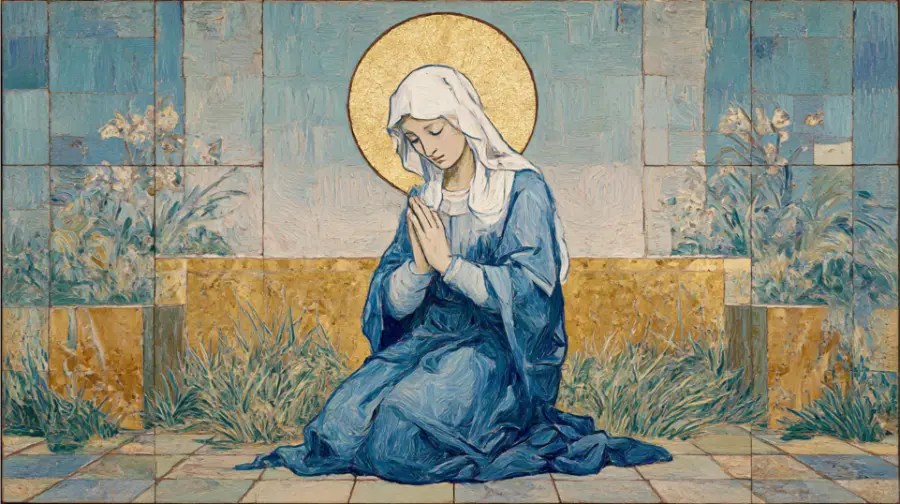
Luke names no animal at the manger. The only ones in his story of the birth are the shepherds’ sheep, out in the fields. The ox and the donkey came into the scene from Isaiah, from a verse where God grieves over his people: “The ox knoweth his owner, and the ass his master’s crib: but Israel doth not know, my people doth not consider” (Isaiah 1:3). There is that word “crib” again. Christians heard in it the manger at Bethlehem, and pictured two animals standing at it who knew their master. They heard a second verse too, in the old Greek translation of Habakkuk 3:2, the Septuagint: “In the midst of two animals thou shalt be known.”
The animals were apparently first brought into the story of the birth by the Gospel of Pseudo-Matthew, an apocryphal Latin gospel that the Church never counted as Scripture. It says that “on the third day after the birth of our Lord Jesus Christ, the most blessed Mary went forth out of the cave, and entering a stable, placed the child in the stall, and the ox and the ass adored Him,” and then it quotes Isaiah and Habakkuk as prophecies fulfilled. Nobody knows quite when it was written. Some have put it in the fourth or fifth century and others call it a late compilation, but there is evidence that it existed by the middle of the ninth century.
Who made the first nativity scene?
Saint Francis of Assisi began the custom we keep, at Christmas 1223, in the little town of Greccio, near Rieti in Italy. Churches had shown the birth long before him. The Vatican’s Directory on Popular Piety speaks of “the representations of the crib found in churches since antiquity”, and says that the custom of building cribs at home “was widely promoted from the thirteenth century, influenced undoubtedly by St. Francis of Assisi’s crib in Greccio”.
Francis had most likely come from Rome, where on 29 November 1223 Pope Honorius III had confirmed the Rule of his friars, and the caves at Greccio reminded him of the countryside around Bethlehem. Fifteen days before Christmas he asked a local man named John to help him. Thomas of Celano, his first biographer, gives his reason: he wanted “to bring to life the memory of that babe born in Bethlehem, to see as much as possible with my own bodily eyes the discomfort of his infant needs, how he lay in a manger, and how, with an ox and an ass standing by, he was laid upon a bed of hay”.
On 25 December friars came from all around, and people from the farms brought flowers and torches into the night. Francis found a manger full of hay, an ox and a donkey, and the priest celebrated the Eucharist over the manger. Celano tells of the manger, the hay and the two animals, and of no statues. The scene was played by the people who were there, standing where our little figures stand now. Later writers gave Francis figures: the Catholic Encyclopedia of 1908 says he “grouped around it figures of the Blessed Virgin and St. Joseph, the ass, the ox, and the shepherds”.
Sixty-nine years later the figures were carved in marble. In 1292 Pope Nicholas IV, “the first Franciscan pope”, commissioned a set from the sculptor Arnolfo di Cambio for the Chapel of the Nativity in the Basilica of St Mary Major in Rome. Joseph, the three wise men and a single carving of a cow and a donkey survive from it, while the Virgin and Child were heavily restored in the late sixteenth century. Christ’s birth had been pictured many times before, but the art historian Sante Guido calls this “the first nativity scene in history”, the first in the form we know today.
La estrella
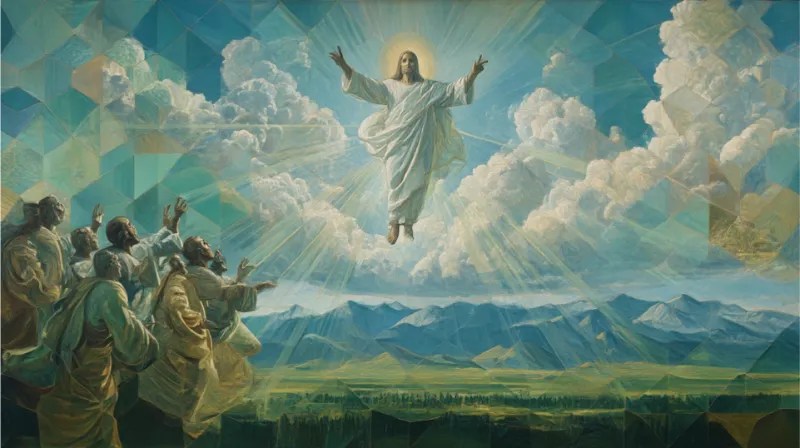
It is Matthew who tells of the star. The wise men came to Jerusalem saying, “we have seen his star in the east, and are come to worship him” (Matthew 2:2), and when they set out for Bethlehem, “the star, which they saw in the east, went before them, till it came and stood over where the young child was. When they saw the star, they rejoiced with exceeding great joy” (Matthew 2:9–10). When we fix the star above the stable, we are putting it where Matthew says it stopped, over the child.
Who were the wise men, and why are there three?
Matthew calls them “wise men from the east” (Matthew 2:1). He does not call them kings, and he does not say how many there were. The crowns on our figures come from a psalm the Church applies to them in her liturgy: “The kings of Tarshish and of the isles shall bring presents: the kings of Sheba and Seba shall offer gifts. Yea, all kings shall fall down before him” (Psalm 72:10–11). Even so, none of the Fathers of the Church held them to be kings, and the furthest Tertullian would go was “wellnigh kings”.
Some of the Fathers spoke of three wise men, very likely because there were three gifts, and three is the number our sets hold. The painters of the early Church never settled on one. They show two, three, four, even eight, and in the East tradition favours twelve.
An early list of their names comes in a little chronicle, the Excerpta Latina Barbari, probably written in Greek about the year 500 and later put into Latin. It says that “on 1st January the Magi brought him gifts and worshipped him. The names of the Magi were Bithisarea, Melichior and Gathaspa.” Melichior and Gathaspa are not far from names we know. From the seventh century Latin writers give the three, in slightly varying forms, as Gaspar, Melchior and Balthasar, which English often spells Caspar, Melchior and Balthazar. Syrian Christians knew them by other names, Larvandad, Hormisdas and Gushnasaph.
The gifts are Matthew’s own: “when they were come into the house, they saw the young child with Mary his mother, and fell down, and worshipped him: and when they had opened their treasures, they presented unto him gifts; gold, and frankincense and myrrh” (Matthew 2:11). Irenaeus, about the year 180, read the gold as a gift for a king, the frankincense for God and the myrrh for one who would die and be buried.
Read that verse again and you will notice that Matthew does not put the wise men at the manger with the shepherds. They came “into the house”, and he names Mary there and not Joseph. A nativity scene gathers the visitors of both Gospels into one place. When the wise men came, and how old Jesus was by then, is the question of our page on qué edad tenía Jesús cuando llegaron los sabios.
Where do the camels come from?
Matthew does not mention camels either. They come from the prophecy the Church reads at the Epiphany Mass beside Matthew’s story of the wise men, the chapter where Isaiah sees the nations coming to Jerusalem’s light: “the Gentiles shall come to thy light, and kings to the brightness of thy rising” (Isaiah 60:3). A few verses on come the camels: “The multitude of camels shall cover thee, the dromedaries of Midian and Ephah; all they from Sheba shall come: they shall bring gold and incense; and they shall shew forth the praises of the Lord” (Isaiah 60:6). Christians heard that verse beside Matthew’s and saw the camels in his story, carrying gold and incense to the child.
When does the baby Jesus go in the manger?
At Christmas: in church after Midnight Mass, and at home on Christmas Eve. The Directory on Popular Piety suggests that at the end of Midnight Mass the faithful could be invited to kiss the image of the Child Jesus, “which is then placed in a crib erected in the church or somewhere nearby.” For the home it gives the evening of Christmas Eve, between the first evening prayer of Christmas and Midnight Mass, to “the inauguration of the crib in the homes of the faithful”, as “an opportunity for family prayer”. The prayer it describes has a reading of St Luke’s account of the birth, carols, and prayers of petition and praise, “especially those of children”.
When do the wise men arrive?
In homes that keep the custom, the wise men join the scene as the Epiphany draws near. “As the feast of Epiphany approaches, we place the statues of the Three Kings in the Christmas crèche,” Pope Francis writes. The feast is 6 January, which in 2027 falls on a Wednesday. In the United States the Catholic Church keeps it on the Sunday between 2 and 8 January, which in 2027 is Sunday 3 January.
When should the nativity scene come down?
In the Catholic Church the Christmas season ends with the feast of the Baptism of the Lord, usually kept on the Sunday after 6 January, and in 2027 that is Sunday 10 January. If you keep the Catholic calendar, that is the natural day to put the figures away, and it is what the Vatican does. In the 2025–26 season its nativity scene in St Peter’s Square stayed “until the end of the Christmas season, which coincides with the Feast of the Baptism of the Lord on Sunday, January 11, 2026.”
Some keep their scene longer, and they have old custom on their side. In 1908 the Catholic Encyclopedia described a crib shown every year in Catholic churches “from the eve of Christmas until the day of the octave of Epiphany”, which is 13 January. Until the reform of 1970 the Catholic Christmas season ran on to Candlemas, 2 February, the day the Church remembers Mary and Joseph bringing the child to the Temple (Luke 2:22–40), and many Catholics in Germany still take down the tree and the crib only then. The German Protestant church year has ended its Christmas cycle at Candlemas too, officially, since 2018–19. Our page on how long Christmastide lasts sets the churches’ reckonings side by side.
What about the other figures in big nativity sets?
Large sets fill the hills around the stable with a whole village: the blacksmith and the baker, musicians, women carrying jugs of water, children at play, beggars and the poor, and sometimes “Herod’s palace in the background, closed and deaf to the tidings of joy.” None of these people is in the Gospels, and Pope Francis welcomed every one of them. To him they show “that in the new world inaugurated by Jesus there is room for whatever is truly human and for all God’s creatures.” Nor did he ask for one right way to lay it all out. “It does not matter how the nativity scene is arranged: it can always be the same or it can change from year to year,” he wrote. “What matters is that it speaks to our lives.”
How do Orthodox Christians picture the Nativity?
The Orthodox Church tells the same night in the icon of the Nativity, and the icon shows what a crib set seldom does. The child, Fr John Breck of the Orthodox Church in America writes, “lies not in a manger, but in a cave, a black hole carved into the heart of the created and fallen world,” and “He is bound with the garment of the dead, prefiguring His own burial.” In a fifteenth-century icon from Novgorod, Mary looks away from the child and gazes with compassion at Joseph, “who is tortured by doubt concerning the origin of her child.” The icon paints the birth with the burial already in view.
At Greccio, Thomas of Celano tells us, “everyone went home with joy.” The shepherds went home the same way. They had found Mary, and Joseph, and the babe lying in a manger, and they “returned, glorifying and praising God for all the things that they had heard and seen, as it was told unto them” (Luke 2:20).
Lecturas relacionadas
- ¿Por qué nació Jesús en un pesebre, y qué es un pesebre?
- ¿Qué edad tenía Jesús cuando llegaron los magos?
- ¿Quiénes eran los pastores de la natividad?
- ¿Qué fue la estrella de Belén y qué significa?
- ¿Qué es la Epifanía y por qué la celebran los cristianos?
- ¿Dónde está la historia de Navidad en la Biblia?


Deja una respuesta