
 French
 English
 Chinese
 Dutch
 Arabic
 Spanish
 Portuguese
 Russian
 Italian
 German
 Japanese
The dove represents above all the Holy Spirit, who came down on Jesus “like a dove” at his baptism. In the Bible it also stands for peace and a new start, because a dove brought Noah an olive leaf. Scripture also uses it for innocence, love, mourning and homecoming, and Christian art kept it as the Spirit’s sign.
What does the dove represent in the Bible?
The Bible gives the dove one great meaning and several smaller ones, each tied to particular passages.
| sens | où | Ce que dit le texte |
|---|---|---|
| Le Saint-Esprit | Matthew 3:16; Mark 1:10; Luke 3:22; John 1:32 | The Spirit came down on Jesus “like a dove” |
| Peace and a new start | Genesis 8:8–12 | The dove brought Noah “an olive leaf pluckt off” |
| Innocence | Matthieu 10:16 | “Harmless as doves” |
| Love and beauty | Song of Solomon 1:15; 2:14; 5:2 | “My love, my dove, my undefiled” |
| Mourning | Isaiah 38:14; 59:11; Ezekiel 7:16 | “I did mourn as a dove” |
| Foolishness | Hosea 7:11 | “Like a silly dove without heart” |
| Homecoming | Hosea 11:11; Isaiah 60:8 | “As the doves to their windows” |
| The offering of the poor | Leviticus 5:7; 12:8; Luke 2:24 | “Two turtledoves, or two young pigeons” |
Doves are also counted in Scripture: the pair a poor family brought to the Temple, and the dove Noah sent out three times. Both numbers are traced in where two doves appear in the Bible et where three doves appear.
Why did the Holy Spirit come down like a dove?
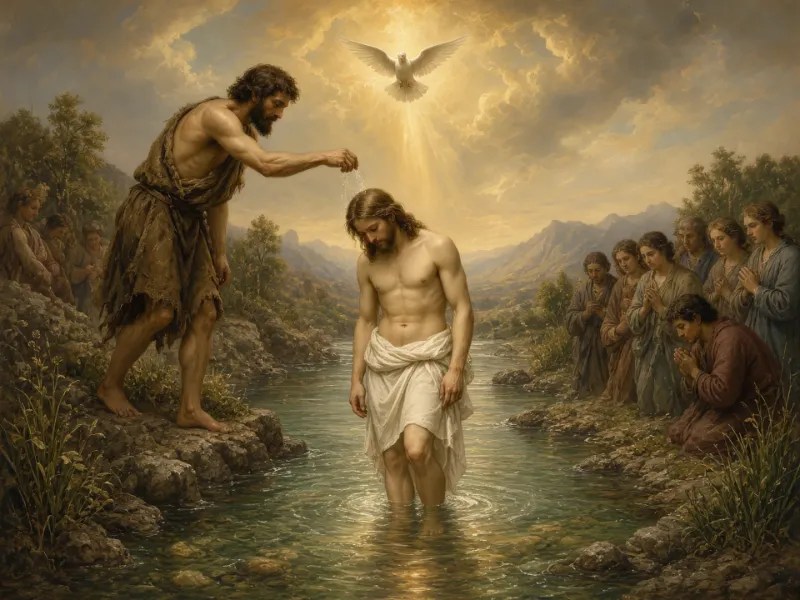
All four Gospels tell of it. Matthew writes that when Jesus came up out of the Jordan, “the heavens were opened unto him, and he saw the Spirit of God descending like a dove, and lighting upon him: And lo a voice from heaven, saying, This is my beloved Son, in whom I am well pleased” (Matthew 3:16–17). Mark tells it more briefly (Mark 1:10). Luke is the most concrete: “the Holy Ghost descended in a bodily shape like a dove upon him” (Luke 3:22). John’s Gospel does not narrate the baptism, but it gives John the Baptist’s own witness: “I saw the Spirit descending from heaven like a dove, and it abode upon him” (John 1:32).
The Gospels say what was seen and heard. None of them says why the Spirit took the shape of a dove, and each says “like,” which describes what was seen without making the Spirit a bird. The Catholic Catechism puts it this way: “When Christ comes up from the water of his baptism, the Holy Spirit, in the form of a dove, comes down upon him and remains with him” (701).
Early Christian writers offered reasons. Tertullian, in his treatise on baptism, said the Spirit came “in the shape of a dove” so that his nature would be shown by “the creature (the emblem) of simplicity and innocence,” and he tied the scene to Jesus’ own words, “Be simple as doves” (ON BAPTISM 8). Augustine, preaching on John’s Gospel, drew a lesson for every Christian: the Spirit came as a dove “that every one might understand that if he has the Holy Spirit he ought to be simple as the dove, to have true peace with his brethren” (Tractates on John 6).
A second line of reading goes back to the first page of the Bible, where “the Spirit of God moved upon the face of the waters” (Genesis 1:2). Jewish teachers also pictured that moment with a dove. In the Talmud one of them, Ben Zoma, says the Spirit hovered over the waters “like a dove which hovers over her young without touching” them (Hagigah 15a). Rabbi Joshua ben Hananiah, who heard him, did not accept his line of thought and told his disciples that “Ben Zoma is still outside.” The image lasted all the same: the Jewish Encyclopedia lists later Jewish writings, Rashi’s commentary on Genesis 1:2 among them, in which the dove “is also an image of the Spirit of God.” Tertullian made the same link for Christian baptism: the Spirit rests over its waters, he wrote, “recognising as it were His primeval seat” (ON BAPTISM 8).
The Spirit who came down at the Jordan is the Spirit Christians confess in the Nicene Creed as “the Lord, the Giver of Life,” the one “Who with the Father and the Son together is worshipped and glorified,” in the words the Orthodox Church in America prints. What Christians of every church have believed about the Father, the Son and the Spirit is the subject of a free course, Christianisme : Ce que les chrétiens croient depuis 2 000 ans.
What does Noah’s dove with the olive leaf mean?
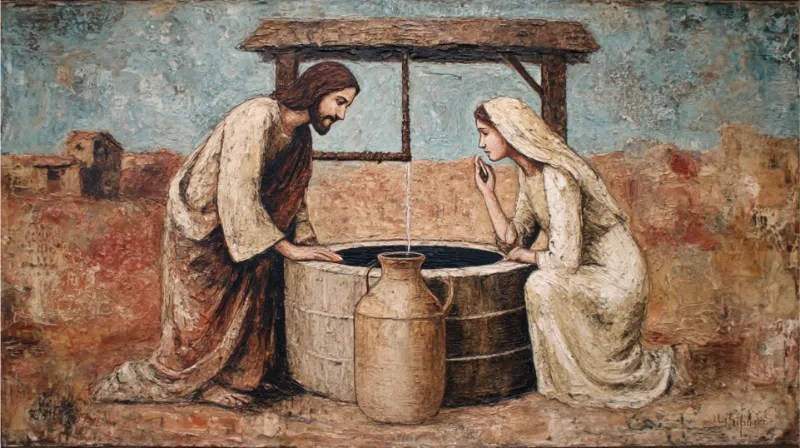
At the end of the flood Noah opened the ark’s window and “sent forth a raven, which went forth to and fro, until the waters were dried up from off the earth” (Genesis 8:7). Then he sent a dove. The first time, “the dove found no rest for the sole of her foot, and she returned unto him into the ark,” and Noah “put forth his hand, and took her, and pulled her in unto him.” Seven days later he sent her again, “and the dove came in to him in the evening; and, lo, in her mouth was an olive leaf pluckt off: so Noah knew that the waters were abated from off the earth.” After seven more days he sent her a third time, and she “returned not again unto him any more” (Genesis 8:9–12).
In Genesis the olive leaf is news: there were trees above the water again and the earth could be lived on. Christians came to read it as a sign of peace after judgment, and the image of a dove carrying a sprig of olive in its beak comes from this chapter. Genesis says a leaf; the Catechism and much Christian art speak of a branch.
The New Testament makes the flood a figure of baptism. Peter writes of the ark, “wherein few, that is, eight souls were saved by water. The like figure whereunto even baptism doth also now save us” (1 Peter 3:20–21). Tertullian joined the two doves. As Noah’s dove announced that God’s wrath had passed, he wrote, so to the baptized, coming up from the font, “after its old sins flies the dove of the Holy Spirit, bringing us the peace of God” (ON BAPTISM 8). The Catechism keeps the same pairing: it calls the flood a sign “whose symbolism refers to Baptism,” and sets Noah’s dove beside the dove at the Jordan (701).
Why were doves offered as sacrifices?
Doves were the offering a poor Israelite could afford. The law of Moses let a worshipper bring “turtledoves, or of young pigeons” as a burnt offering (Leviticus 1:14), and for a sin or trespass it made the birds the alternative to a lamb: “if he be not able to bring a lamb, then he shall bring for his trespass, which he hath committed, two turtledoves, or two young pigeons” (Leviticus 5:7). A mother who had given birth brought a lamb and a bird; “if she be not able to bring a lamb, then she shall bring two turtles, or two young pigeons” (Leviticus 12:8). The Jewish Encyclopedia notes that “the dove and turtle-dove were the only birds admitted as sacrifices.”
Mary and Joseph made that offering for Jesus. When the days of Mary’s purification were over, they brought him to the Temple “to offer a sacrifice according to that which is said in the law of the Lord, A pair of turtledoves, or two young pigeons” (Luke 2:24). Luke mentions no lamb, which suggests the family brought the offering the law set aside for those who could not afford one.
Readers of the King James Version meet the same bird under another name. The “turtle” of Leviticus 12:8 and of the Song of Solomon, “the voice of the turtle is heard in our land” (Song of Solomon 2:12), is the turtledove, called tor in Hebrew, while yonah is the ordinary Hebrew word for dove. The prophet Jonah carries that word as his name: in Hebrew he is Yonah.

What did Jesus say about doves?
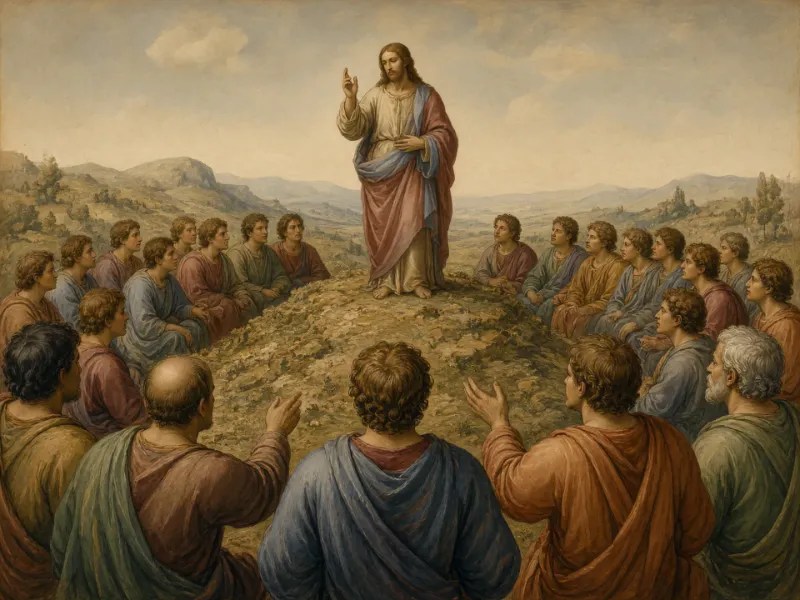
When he sent out the twelve apostles, Jesus told them, “Behold, I send you forth as sheep in the midst of wolves: be ye therefore wise as serpents, and harmless as doves” (Matthew 10:16). The serpent stands for shrewdness and the dove for innocence, and the apostles were to have both.
Doves also appear when Jesus drove the traders out of the Temple. Matthew says he “overthrew the tables of the moneychangers, and the seats of them that sold doves” (Matthew 21:12). In John’s account he spoke to the dove-sellers directly: “Take these things hence; make not my Father’s house an house of merchandise” (John 2:16). The dove-sellers were there because worshippers needed birds for the offerings the law required; Jesus’ anger was at the trading in his Father’s house.
What do doves mean in the Psalms, the Song of Songs and the prophets?
In the Song of Solomon the dove is the beloved: “O my dove, that art in the clefts of the rock, in the secret places of the stairs, let me see thy countenance, let me hear thy voice” (Song of Solomon 2:14), and later “Open to me, my sister, my love, my dove, my undefiled” (5:2). A man in trouble in the Psalms longs for a dove’s escape: “Oh that I had wings like a dove! for then would I fly away, and be at rest” (Psalm 55:6). Another psalm calls God’s afflicted people his dove: “O deliver not the soul of thy turtledove unto the multitude of the wicked” (Psalm 74:19).
The dove’s low moan made it a picture of grief. King Hezekiah, “sick unto death,” wrote after his recovery, “I did mourn as a dove: mine eyes fail with looking upward” (Isaiah 38:14), and Ezekiel pictured survivors “on the mountains like doves of the valleys, all of them mourning, every one for his iniquity” (Ezekiel 7:16).
The prophets used the bird for Israel itself, both in rebuke and in promise. Hosea scolded a people who turned to foreign powers instead of God: “Ephraim also is like a silly dove without heart: they call to Egypt, they go to Assyria” (Hosea 7:11). Four chapters later he promised their return: “They shall tremble as a bird out of Egypt, and as a dove out of the land of Assyria: and I will place them in their houses, saith the Lord” (Hosea 11:11). Isaiah, describing Zion restored, asked, “Who are these that fly as a cloud, and as the doves to their windows?” (Isaiah 60:8).
How did the dove become a Christian symbol?
The Christian dove is old. “In Christian antiquity the dove appears as a symbol and as a Eucharistic vessel,” the Catholic Encyclopedia of 1909 explains. On a sarcophagus or other funeral monument, it says, the dove signifies “the peace of the departed soul, especially if, as is often the case in ancient examples, it bears an olive branch in its beak,” and “the hope of the Resurrection,” both drawn from the story of Noah. The same meaning lies behind the word “dove” (Latin columbula) in “numerous epitaphs of the Roman catacombs.” As a sign of the Holy Spirit, the same article says, the dove appears “especially in representations of the baptism of Our Lord” and of Pentecost, and Pope Gregory the Great (590–604) “is generally shown with a dove on his shoulder.”
| quand | où | What the dove shows |
|---|---|---|
| Christian antiquity | Sarcophagi and other funeral monuments | Peace of the dead, often with an olive branch |
| Christian antiquity | Epitaphs in the Roman catacombs | The word “dove” for the dead at peace |
| About 1215–35 | Enamelled dove from Limoges, now in the Metropolitan Museum | The Holy Spirit; it would have hung over an altar |
| Probably 1437–45 | Piero della Francesca, Le Baptême du Christ, National Gallery, London | The Holy Spirit over Christ in the Jordan |
| 1949 | Picasso’s dove for the Paris peace congress | Peace between nations |
The dove also became a vessel. At least since the early Middle Ages, churches in many parts of Europe kept the Eucharist for the sick in a dove-shaped vessel hung above the altar; when the custom began, the Catholic Encyclopedia says, “is disputed.” The Metropolitan Museum holds one made in Limoges in about 1215–35, which it says “would have hung over an altar as an evocation of the Holy Spirit”: “A tear-shaped door on its back conceals a small cavity once used to hold the bread of the Eucharist.” The Catechism still mentions the custom: “In certain churches, the Eucharist is reserved in a metal receptacle in the form of a dove (columbarium) suspended above the altar.” It sums up the history in one line: “Christian iconography traditionally uses a dove to suggest the Spirit” (701).
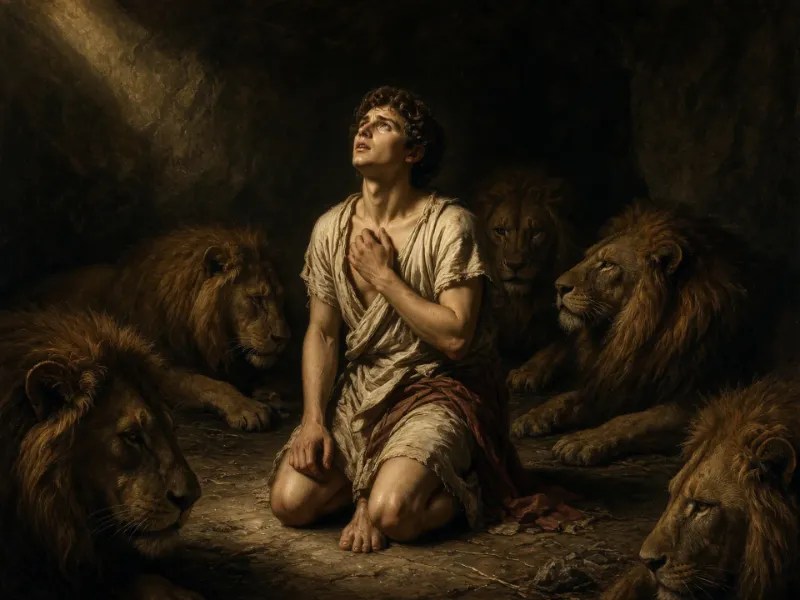
Painters followed the Gospels. In Piero della Francesca’s Le Baptême du Christ, painted probably about 1437–1445, the National Gallery notes “the Holy Ghost, shown here as a dove flying over Christ’s head.” Scenes of Pentecost use the dove as well, although Acts describes “cloven tongues like as of fire” and no dove (Acts 2:3). Augustine set the two signs side by side: at the Jordan “a dove descending upon the Lord,” at Pentecost “cloven tongues upon the assembled disciples: in the former, simplicity is shown; in the latter, fervency” (Tractates on John 6).
Is the dove of peace a Christian symbol?
It has a biblical root and a modern history. The dove with an olive branch goes back to Noah, and early Christians put it on tombs as a sign of peace. The worldwide peace dove of today comes from Pablo Picasso. The Victoria and Albert Museum records that “in 1949, Pablo Picasso designed a lithograph of a dove for the International Peace Congress” in Paris, and that “it is Picasso’s dove and its biblical allusion to the end of the flood that has come to symbolise peace in the second half of the Twentieth century.” A dove on a peace poster draws on Genesis. A dove over a font or an altar is the holy dove, the sign of the Holy Spirit.
Is the dove the only symbol of the Holy Spirit?
No. Scripture gives the Spirit several signs, and Christian teaching gathers them. The Catholic Catechism lists eight: water, anointing, fire, cloud and light, the seal, the hand, the finger, and the dove (694–701). Fire comes from Pentecost (Acts 2:3), and anointing from the title Christ, which means “anointed” (695).
What is the spiritual meaning of a dove?
For Christians the dove points to the Holy Spirit, to the peace God gives, and to the innocence Jesus asked of his followers. Scripture does not teach that a particular dove carries a personal message. Some readers see a dove after someone they love has died and wonder whether it is a sign; that question is answered gently in ce que signifie la visite d'une tourterelle triste.


Laisser un commentaire