
 French
 English
 Chinese
 Dutch
 Arabic
 Spanish
 Portuguese
 Russian
 Italian
 German
 Japanese
The year 2027 begins on Friday 1 January, and in the calendar most churches keep, that day is the eighth day of Christmas. Luke tells us what happened on the eighth day after the birth: “when eight days were accomplished for the circumcising of the child, his name was called Jesus” (Luke 2:21). The angel had given the name before the child was conceived, and had given the reason with it: “thou shalt call his name Jesus: for he shall save his people from their sins” (Matthew 1:21). So every new year opens with that name, before we have made a single plan, and it is the name we pray in as one year ends and the next begins.
Here are prayers for each part of that turning, from the last hour of 31 December to the first morning back at work, each short enough to say aloud and each with a line on when it fits.
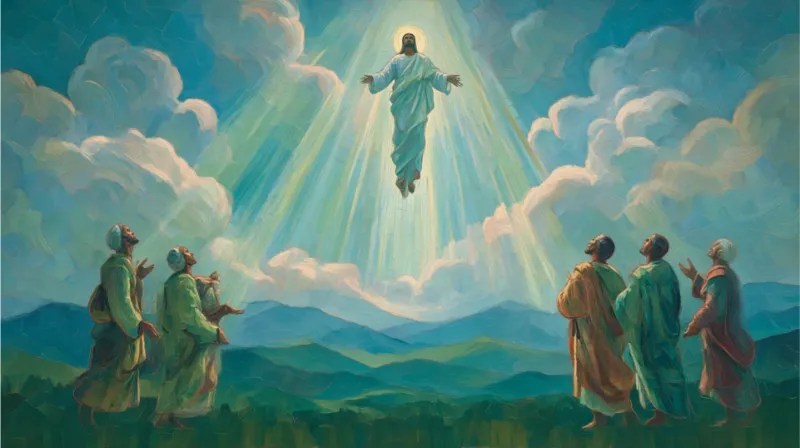
A prayer for the last hour of New Year’s Eve
This one is for the evening of 31 December, at home or in church, alone or with the people you love. It looks back before it asks for anything, the way Samuel did. When the Philistines came against Israel, “the LORD thundered with a great thunder on that day upon the Philistines”, and Israel won the day. Afterwards Samuel set up a stone, “and called the name of it Ebenezer, saying, Hitherto hath the LORD helped us” (1 Samuel 7:12), which means that up to this day the Lord has helped us. That is a good way for us to end a year too, by naming the places where God has already carried us.
Lord God, this year is almost over, and we give it back to you. Thank you for every day of it: for the meals we shared, the work we finished, the people who were kind to us, and the mornings we did not expect to see. Forgive us for the words we should not have said and for the good we did not do. What we leave unfinished, we put into your hands. Up to this hour you have helped us, and we trust you with the hour that comes next. In the name of Jesus. Amen.
If you are with family or friends, each person can first name one thing from the year that they want to thank God for, and then everyone can say the prayer together.
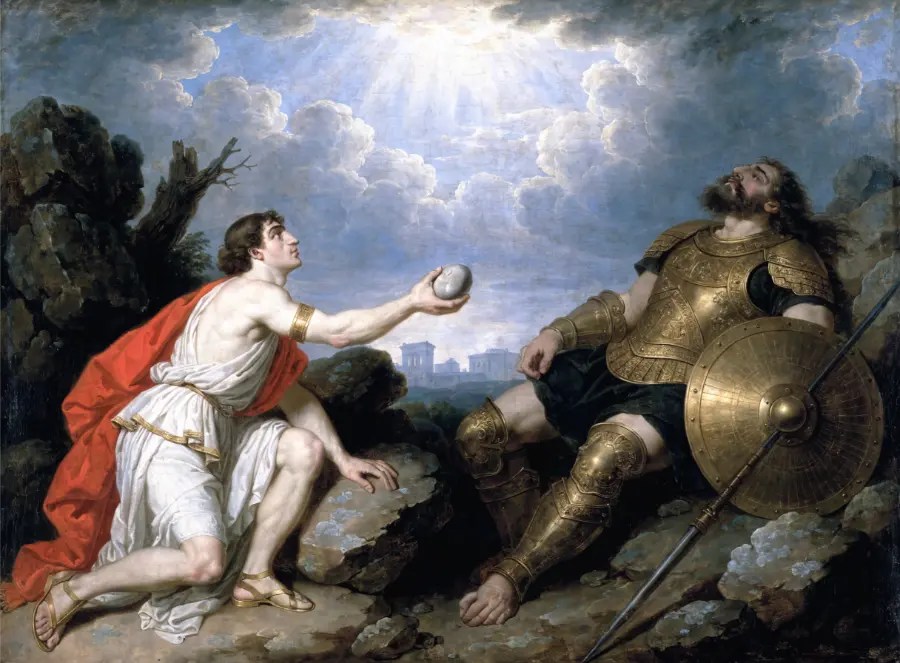
A prayer at midnight
When the clock passes twelve there is time for only a few words, and a few are enough. Everyone in the room can say this one at once:
Jesus, the new year has begun, and it begins with your name. Stay with us through every day of it, as you stayed with us through every day of the year that has ended. Amen.
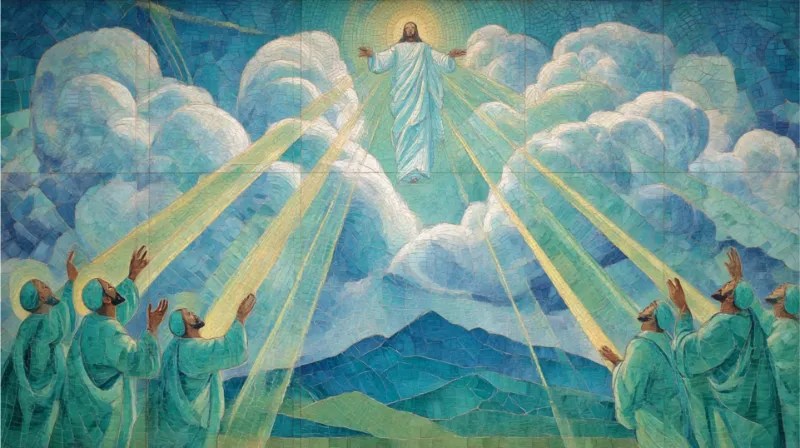
A prayer for the morning of New Year’s Day
This one is for the morning of 1 January, before the day becomes busy. The psalmist prayed these words while his enemies were persecuting him: “But I trusted in thee, O LORD: I said, Thou art my God. My times are in thy hand” (Psalm 31:14–15). All the days of the new year are still ahead of us, and every one of them is already in that hand.
Father, this is the first morning of the year, and it belongs to you. My times are in your hand: the days I can see coming and the days I cannot. Give me a heart that listens to you, hands that are ready to help, and the patience to begin again each time I fail. Teach me to call on the name of Jesus on ordinary days as well as on hard ones. Let this be a year in which I come to know you better and to love the people around me more. Amen.
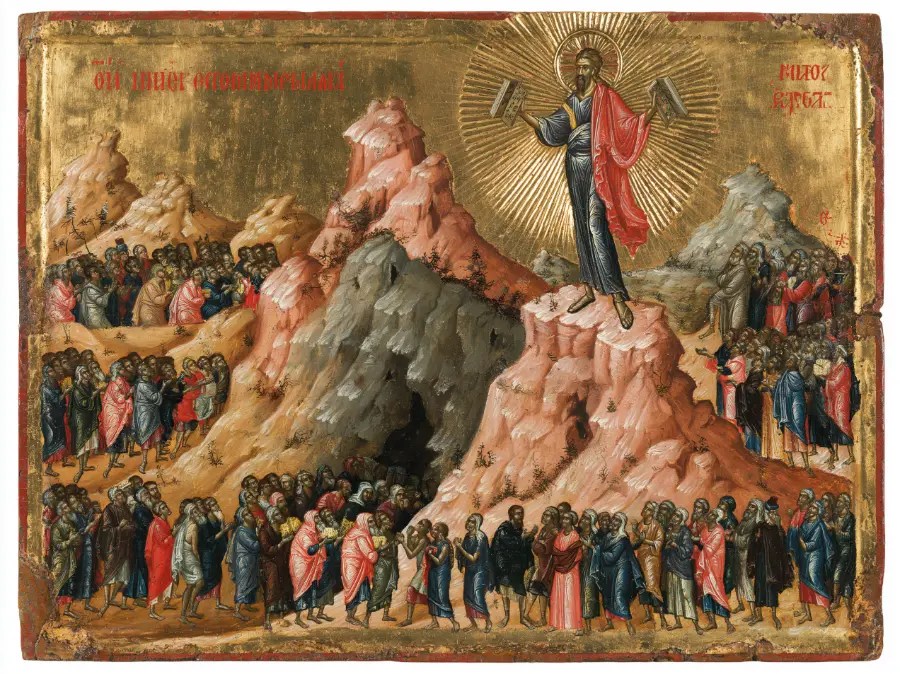
A family prayer for the new year
Pray this at the table on New Year’s Day, or whenever the family is together in the first days of January. The lines are short, so a child can say them one at a time after a parent. The psalm says, “Except the LORD build the house, they labour in vain that build it” (Psalm 127:1), and so the prayer asks him to build ours.
Lord Jesus, bless our family in this new year. Be the first one we speak to in the morning and the last one we speak to at night. Keep us safe when we go out, and bring us home again. Help us to forgive each other quickly and to say thank you often. Be near to the people we miss, and to everyone who will sit at this table this year. Build our home, Lord, because we cannot build it without you. Amen.
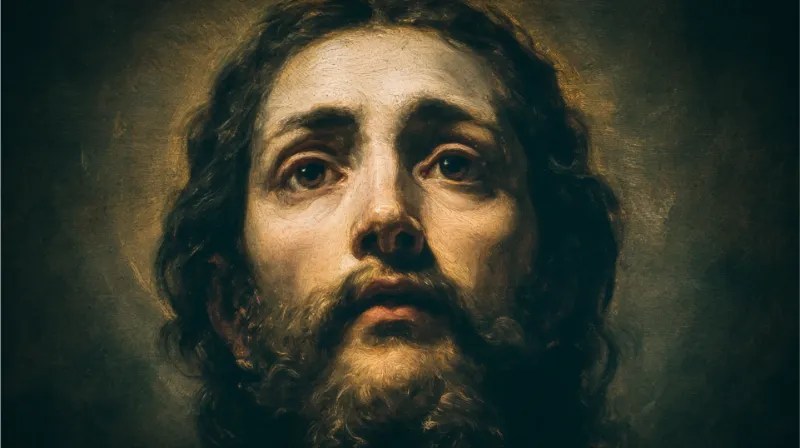
A prayer before going back to work
This one is for the first working day of January, or for the night before a new job begins. Paul told the Colossians, “And whatsoever ye do in word or deed, do all in the name of the Lord Jesus, giving thanks to God and the Father by him” (Colossians 3:17). The name that opens the year goes with us into the office, the classroom, the kitchen and the field.
Lord, I give you the work of this year: the tasks I enjoy and the tasks I dread, the people I work with and the people I serve. Give me a clear mind and careful hands. When I am tired, give me strength. When things go well, keep me humble. When I fail, help me to learn and to try again. If I am looking for work, open the right door, and give me patience while I wait. Whatever I do this year, let me do it in the name of Jesus, and with thanks. Amen.
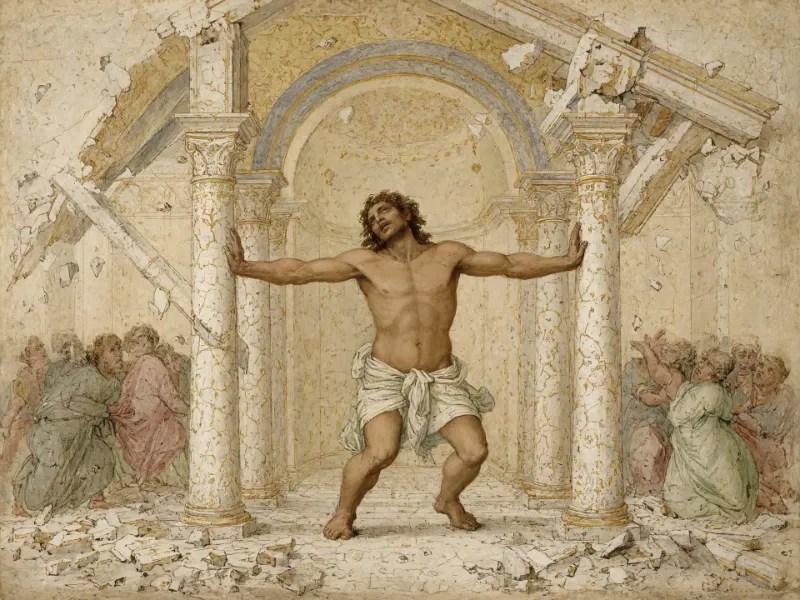
A prayer when the year behind was hard
Some of us come to the new year tired. In the year just ended we lost someone we love, or we faced an illness, a lost job, a broken marriage, or a fear that would not go away. Through the prophet Joel, God made a promise to his people: “I will restore to you the years that the locust hath eaten” (Joel 2:25). While we wait for it, Proverbs tells us where to go: “The name of the LORD is a strong tower: the righteous runneth into it, and is safe” (Proverbs 18:10).
Lord, this was a hard year, and you know it better than I do. You saw the nights I could not sleep and the tears that no one else saw. I do not have to pretend with you. I bring you what I lost, and I ask you to carry what I cannot carry. I am not asking you to make me forget. I am asking you to stay with me as I walk into the new year. Your name is a strong tower; let me run into it and be safe. Give back what was taken, in your time and in your way. And if this year is hard too, be near me in it. Amen.
If the hard thing was the death of someone you love, there are more prayers for that sorrow in our prayers for grief, listed at the end of this page.
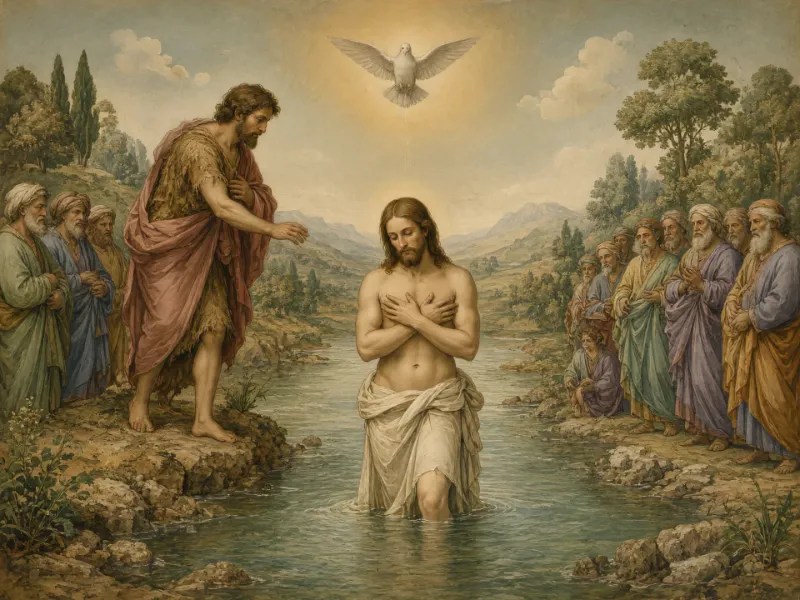
A prayer for the plans of the new year
Pray this when you sit down with a new calendar, or when you make your resolutions for 2027. James wrote to people who planned to go to a city for a year to buy and sell, and he reminded them, “Whereas ye know not what shall be on the morrow.” Then he told them what to say instead, and it still leaves room for the plans: “If the Lord will, we shall live, and do this, or that” (James 4:14–15). When Moses blessed the tribes of Israel before his death, he gave Asher a promise that belongs beside it: “as thy days, so shall thy strength be” (Deuteronomy 33:25).
God of every year, I have plans for 2027, and I bring them to you. Some of them are good, and some I made too quickly. Bless the plans that please you, change the ones that need changing, and stop the ones that would lead me away from you. If it is your will, I will live and carry out my plans, and if you change them, help me to accept it. As my days are, so let my strength be. And whatever comes, let me end this year knowing you better than I know you today. Amen.
For verses to carry into those plans, see Bible verses about the new year.
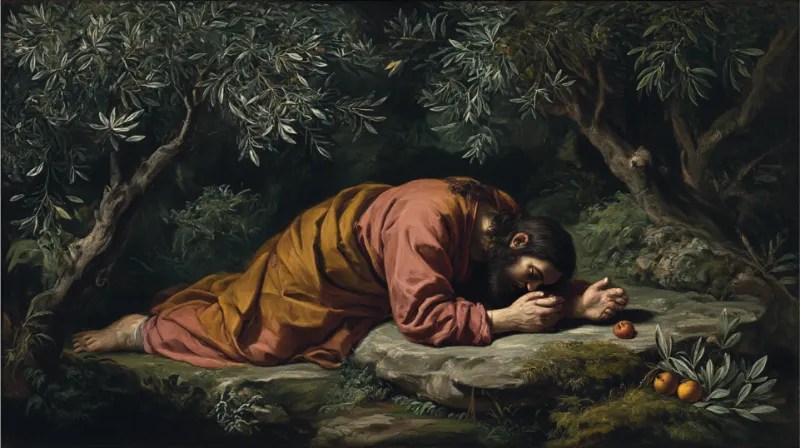
A New Year blessing to give someone
For a message to a friend, or a word at the door when guests leave on New Year’s Day, there is a blessing that God himself gave. He told Moses to tell Aaron and his sons, “On this wise ye shall bless the children of Israel” (Numbers 6:23), and then he gave them the words:
« Que le Seigneur te bénisse et te garde ! Que le Seigneur fasse briller sa face sur toi, qu'il t'accorde sa grâce ! Que le Seigneur tourne son visage vers toi, qu'il t'apporte la paix ! » (Nombres 6, 24-26)
Or, in our own words, for a card or a message:
May the Lord bless you and keep you in 2027. May every day of the new year find you in his hand, and may his peace be with you at its beginning, in its middle and at its end.
How do the churches keep New Year’s Day?
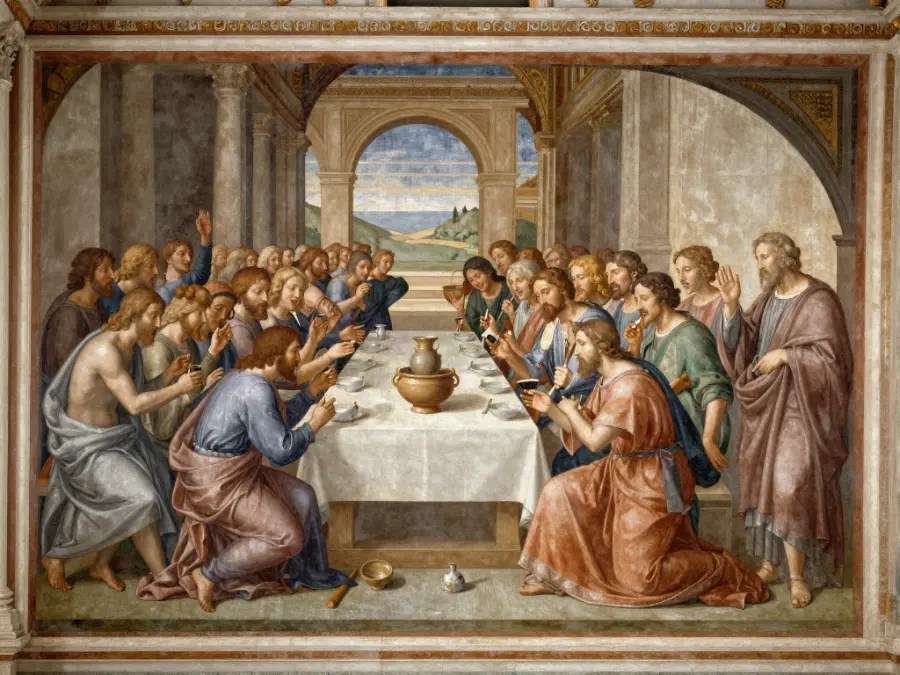
For Catholics, 1 January is the Solemnity of Mary, Mother of God, a day to remember, in Pope Paul VI’s words, “the part played by Mary in this mystery of salvation.” Since 1 January 1968 it has also been the World Day of Peace, a day to ask God for the gift of peace, and Paul VI wanted all people of good will to keep it with the Church, not Catholics alone.
The Orthodox Church in America keeps 1 January as the Circumcision of the Lord, the day the child “received the Name Jesus [Savior]”, and as the feast of Saint Basil the Great. For churches on the old calendar, the Russian Church among them, civil 1 January falls in the fast before Christmas, because their Christmas is 25 December by the Julian calendar, which falls on 7 January in ours (we explain the dates in Orthodox Christmas). Even so, since the beginning of the twentieth century the Russian Church has had a prayer service for the civil new year. In it the people thank God for his help and mercy in the year that has ended, ask forgiveness for their sins, and ask his blessing on the year ahead: “bless this coming year with Your goodness, O Lord.” The monastery at Diveyevo served it after the liturgy on 1 January 2021.
The Church of England’s Book of Common Prayer of 1662 calls the day “The Circumcision of Christ”, and its Gospel is Luke’s account of the shepherds and the naming of Jesus, the verse this page began with. In the Episcopal Church’s Prayer Book of 1979 the day is “The Holy Name”, and its prayer asks God to plant in every heart “the love of him who is the Savior of the world.”
Methodists begin the year by renewing their covenant with God, in a service often held on the first Sunday of the year; in 2027 that Sunday is 3 January. New Year’s Eve has a service of its own as well, and we tell its story in Watch Night.
Wesley’s covenant of 1755: “I will be no longer mine own”
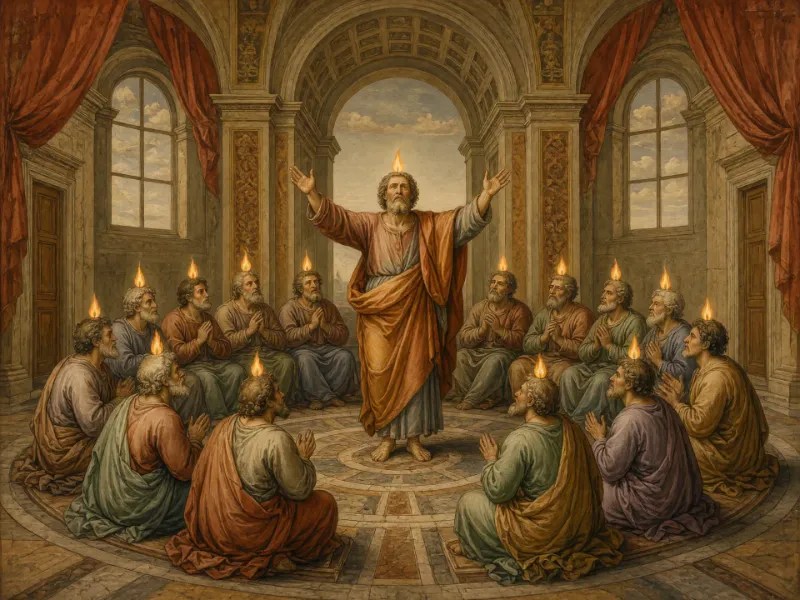
The covenant goes back to John Wesley. On 6 August 1755 he spoke to his people about “joining in a covenant to serve God with all our heart”, and on 11 August, at six in the evening, they met for it at the French church in Spitalfields. “After I had recited the tenor of the covenant proposed, in the words of that blessed man, Richard Alleine,” Wesley wrote in his Journal, “all the people stood up, in testimony of assent, to the number of about eighteen hundred persons. Such a night I scarce ever saw before.”
Twenty-five years later, in 1780, Wesley printed Directions for Renewing our Covenant with God, which sets out the words a believer says to Christ before making the covenant. As Wesley said that night in Spitalfields, the words are Richard Alleine’s. Alleine, a Puritan, had printed them in 1664 in his book Vindiciae Pietatis, and Wesley adapted them with small changes. These lines come from Wesley’s second edition, of 1781:
“I will be no longer mine own, but give up myself to thy will in all things.” … “make me what thou wilt, Lord, and set me where thou wilt” … “I put myself wholly into thy hands: put me to what thou wilt, rank me with whom thou wilt; put me to doing, put me to suffering, let me be employed for thee, or laid aside for thee, exalted for thee, or trodden under foot for thee; let me be full, let me be empty, let me have all things, let me have nothing, I freely, and heartily resign all to thy pleasure and disposal.”
In today’s words, the believer says: I belong to you now, not to myself; use me as you choose, in good times and in hard times, and I accept whatever you give me. Whoever says these words at the start of a year gives that year away before it begins, the doing and the suffering, the full months and the empty ones, to the one whose name the year begins with.
Samuel Johnson’s prayer at two in the morning
Less than two years after that night in Spitalfields, Samuel Johnson wrote a New Year prayer of his own, and he noted the hour at the top: “Jan. 1, 1757, at two in the Morning.” Johnson kept certain days of the year with prayer, and New Year’s Day came first in the list his friend George Strahan gave. He wrote his prayers down for his own use, “without any view to their publication,” as Strahan said when he published them in 1785, the year after Johnson died.
“Almighty God, who hast brought me to the beginning of another year, and by prolonging my life invitest to repentance, forgive me that I have mispent the time past, enable me from this instant to amend my life according to thy holy Word, grant me thy Holy Spirit, that I may so pass through things temporal as not finally to lose the things eternal. O God, hear my prayer for the sake of Jesus Christ. Amen.”
Johnson spelled “misspent” with one s. Any of us can pray his prayer at the turn of the year, or say a few words of our own, and go out into 2027 under the promise of the psalm: “The LORD shall preserve thy going out and thy coming in from this time forth, and even for evermore” (Psalm 121:8).
Lectures connexes
- 17 versets bibliques sur la nouvelle année
- Quel était le vrai nom de Jésus ? Yeshua, et comment il est devenu Jésus
- Prières pour le deuil
- Prières pour la famille : courtes prières pour les repas, le coucher, la paix et les moments difficiles
- Prayers for success at work
- Quand ont lieu les 12 jours de Noël ? Du 25 décembre au 5 janvier


Laisser un commentaire