
 Japanese
 English
 Chinese
 Dutch
 Arabic
 Spanish
 Portuguese
 Russian
 French
 Italian
 German
“O Come, O Come, Emmanuel” is John Mason Neale’s English, first printed in 1851, of a Latin hymn, Veni, veni, Emmanuel, whose author nobody knows. Its words come from prayers far older than the hymn: the O Antiphons, seven short prayers the Church sings at evening prayer on the seven nights before Christmas Eve, from 17 to 23 December. Each of them calls on Christ by a name from Scripture, Wisdom, Lord, Root of Jesse, Key of David, Dayspring, King of the nations and Emmanuel, and each ends with the same Latin word, veni, come.
The dates never move, so in 2026 the first is sung on Thursday 17 December and the last on Wednesday 23 December, the evening before Christmas Eve. If you take the first letters of the seven names and read them backwards, they spell ero cras, which in Latin means, tomorrow I will be there. So the Church spends a week asking Christ to come, and on the last night, whether or not anyone planned it, the names she has sung spell out his answer.
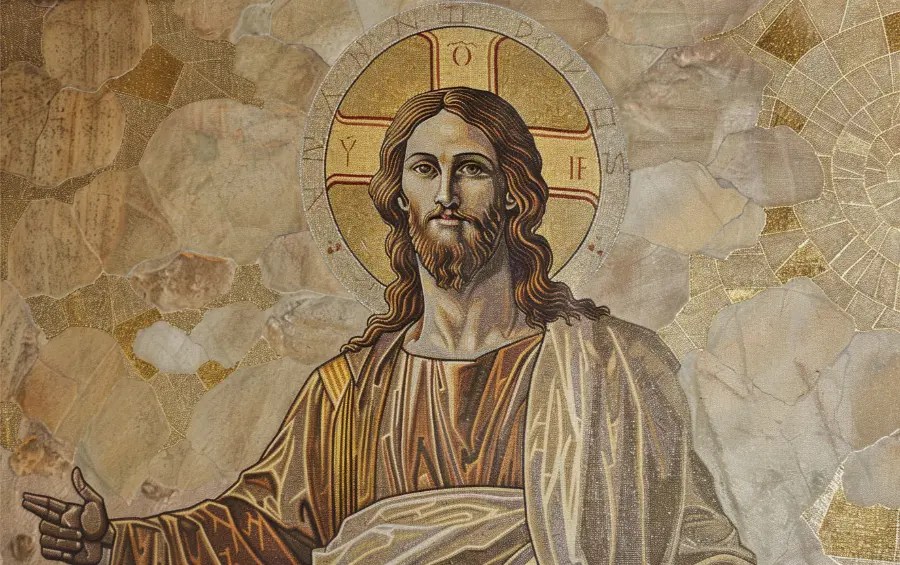
The seven O Antiphons in 2026
Here is the evening for each one, the name it gives Christ, and the passage of Isaiah it leans on:
| Evening (2026) | Antiphon | Christ is called | From Isaiah |
|---|---|---|---|
| Thu 17 Dec | O Sapientia | 知恵 | 11:2 |
| Fri 18 Dec | O Adonai | Lord and leader of Israel | 33:22 |
| Sat 19 Dec | O Radix Jesse | Root of Jesse | 11:1, 11:10 |
| 12月20日(日) | O Clavis David | Key of David | 22:22 |
| Mon 21 Dec | O Oriens | Dayspring, the rising sun | 9:2 |
| Tue 22 Dec | O Rex Gentium | King of the nations | 28:16 |
| Wed 23 Dec | O Emmanuel | 神は我らと共におられる | 7:14 |
The words of O Come, O Come, Emmanuel
This is the hymn as Hymns Ancient and Modern printed it in 1861, under the line “The Redeemer shall come to Zion”:
O come, O come, Emmanuel,
And ransom captive Israel;
That mourns in lonely exile here,
Until the Son of God appear.
Rejoice! Rejoice! Emmanuel
Shall come to thee, O Israel!O come, Thou Rod of Jesse, free
Thine own from Satan’s tyranny;
From depths of hell Thy people save,
And give them victory o’er the grave.
Rejoice! Rejoice! Emmanuel
Shall come to thee, O Israel!O come, Thou Day-Spring, come and cheer
Our spirits by Thine Advent here;
Disperse the gloomy clouds of night,
And death’s dark shadows put to flight.
Rejoice! Rejoice! Emmanuel
Shall come to thee, O Israel!O come, Thou Key of David, come
And open wide our heavenly home;
Make safe the way that leads on high,
And close the path to misery.
Rejoice! Rejoice! Emmanuel
Shall come to thee, O Israel!O come, O come, Thou Lord of Might
Who to Thy tribes, on Sinai’s height,
In ancient times didst give the law,
In cloud, and majesty, and awe.
Rejoice! Rejoice! Emmanuel
Shall come to thee, O Israel!
Each verse is one of the antiphons: Emmanuel of 23 December, the Root of Jesse of the 19th, the Dayspring of the 21st, the Key of David of the 20th, and last the Adonai of the 18th, with the law given on Sinai. There is no verse for Wisdom or for the King of the nations, because the Latin hymn Neale translated had none. The Presbyterian pastor Henry Sloane Coffin wrote verses for them in 1916, for Hymns of the Kingdom of God, a hymnbook he helped edit in New York, and those verses have gone on being reprinted in other hymnbooks:
O come, Thou Wisdom from on high,
And order all things, far and nigh;
To us the path of knowledge show,
And cause us in her ways to go.
Rejoice! Rejoice! Emmanuel
Shall come to Thee, O Israel!O come, Desire of nations, bind
All peoples in one heart and mind;
Bid envy, strife and quarrels cease;
Fill the whole world with heaven’s peace.
Rejoice! Rejoice! Emmanuel
Shall come to Thee, O Israel!
The antiphons themselves had been in English long before that. A. J. Beresford Hope, a colleague of Neale’s, translated all seven word for word in 1846. The first hymn to give all seven a verse, all by one writer, is Ronald Knox’s, written for The Westminster Hymnal of 1939. The hymn is now in Catholic, Anglican, Lutheran, Methodist and Presbyterian hymnals.
When are the O Antiphons sung?
An antiphon is a verse sung with a psalm or a canticle, and these seven go with the Magnificat, the song Mary sang when she came to the house of Zacharias to greet Elisabeth: “My soul doth magnify the Lord, And my spirit hath rejoiced in God my Saviour” (Luke 1:46–47). The Church sings Mary’s song at Vespers, her evening prayer, and the United States Catholic bishops describe the O Antiphons as the ones that accompany it at Evening Prayer “from December 17-23”.
Dom Prosper Guéranger, the nineteenth-century abbot of Solesmes, gave two reasons for where they stand in the day. They are sung in the evening, he wrote, because “it was in the Evening of the world (vergente mundi vespere) that the Messias came amongst us”, and they are sung with Mary’s song “to show us that the Saviour, whom we expect, is to come to us by Mary.” We do not need a choir to pray them with the Church. A family can say the day’s antiphon at the evening meal, and the last week before Christmas becomes seven evenings of asking Christ to come.
How old are the O Antiphons?
We know they are older than the year 804, because Alcuin of York sang one of them in his last days, and he died at Tours on Whitsunday of that year. The life written of him tells that, longing to die and be with Christ, he would say the evening office for himself beside the church of St Martin, at the place he had chosen to be buried, and there sing Mary’s song with one antiphon, O Clavis David, the prayer to the Key of David to lead the captive out of prison. The oldest copy with all seven that survives is in a ninth-century book of chants from Compiègne, now in the national library of France.
Over the Middle Ages many churches added antiphons of their own, and some sang as many as twelve. In England, Salisbury, Exeter, Hereford and York began them on 16 December, and the calendar of the Book of Common Prayer still has the words “O Sapientia” against that day, a note to remind the reader that the great O’s begin. When Pope Pius V issued the revised Roman Breviary in 1568, the Roman rite kept the seven, and those are the seven the Catholic Church sings today.
The seven antiphons and the prophecies behind them
Every antiphon is woven out of Scripture, most of it from Isaiah. The English is Laurence Shepherd’s translation of Guéranger’s Liturgical Year, printed in Dublin in 1867, and the Bible verses are from the King James Version, with the Douay-Rheims for Ecclesiasticus, Wisdom and wherever the Latin wording matters.
17 December: O Sapientia, O Wisdom
O Sapientia, quae ex ore Altissimi prodiisti, attingens a fine usque ad finem, fortiter, suaviterque disponens omnia; veni ad docendum nos viam prudentiae. “O Wisdom, that proceedest from the mouth of the Most High, reaching from end to end, disposing all things with strength and sweetness! come and teach us the way of prudence.”
The first lines echo the Bible’s books of Wisdom. “I came out of the mouth of the most High,” Wisdom says in Ecclesiasticus (24:5), and the Book of Wisdom says of her, “She reacheth therefore from end to end mightily, and ordereth all things sweetly” (Wisdom 8:1). Isaiah promises that the shoot of Jesse will carry that wisdom in himself, for on him will rest “the spirit of wisdom and understanding, the spirit of counsel and might” (Isaiah 11:2). So the first thing we ask of the coming Christ is that he teach us.
18 December: O Adonai, O Lord
O Adonai, et dux domus Israel, qui Moysi in igne flammae rubi apparuisti, et ei in Sina legem dedisti; veni ad redimendum nos in brachio extenso. “O Adonai, and leader of the house of Israel, who appearedst to Moses in the fire of the flaming bush, and gavest him the law on Sinai; come and redeem us by thy outstretched arm.”
Adonai, “my Lord”, is a Hebrew title for God. The antiphon takes us back to the desert, where “the angel of the Lord appeared unto him in a flame of fire out of the midst of a bush” (Exodus 3:2), and to God’s promise to Moses, “I will redeem you with a stretched out arm” (Exodus 6:6). Isaiah gathers it into one line: “For the Lord is our judge, the Lord is our lawgiver, the Lord is our king; he will save us” (Isaiah 33:22). The God of the burning bush and of Sinai is the one we ask to come to us as a child.
19 December: O Radix Jesse, O Root of Jesse
O radix Jesse, qui stas in signum populorum, super quem continebunt reges os suum, quem gentes deprecabuntur: veni ad liberandum nos, jam noli tardare. “O Root of Jesse, who standest as the standard of the people; before whom Kings shall not open their lips; to whom the nations shall pray: come and deliver us; tarry now no more.”
Jesse was the father of King David (Ruth 4:22), and Isaiah promised new life from that family’s roots: “there shall come forth a rod out of the stem of Jesse, and a Branch shall grow out of his roots” (Isaiah 11:1), and “there shall be a root of Jesse, which shall stand for an ensign of the people; to it shall the Gentiles seek” (Isaiah 11:10). The kings who fall silent are Isaiah’s too: “the kings shall shut their mouths at him” (Isaiah 52:15). This is the only one of the seven that adds “tarry now no more”, and by the third evening the asking has grown urgent.
20 December: O Clavis David, O Key of David
O Clavis David et Sceptrum domus Israel, qui aperis, et nemo claudit; claudis, et nemo aperit; veni, et educ vinctum de domo carceris, sedentem in tenebris, et umbra mortis. “O Key of David, and Sceptre of the house of Israel! who openest, and no man shutteth: who shuttest, and no man openeth; come and lead the captive from prison, sitting in darkness and in the shadow of death.”
In Isaiah, God says, “And the key of the house of David will I lay upon his shoulder; so he shall open, and none shall shut; and he shall shut, and none shall open” (Isaiah 22:22). In Revelation the risen Christ takes those words for himself, “he that hath the key of David, he that openeth, and no man shutteth” (Revelation 3:7). This is the antiphon Alcuin sang in his last days.
21 December: O Oriens, O Dayspring
O Oriens, splendor lucis aeternae, et sol justitiae; veni et illumina sedentes in tenebris, et umbra mortis. “O Orient! splendour of eternal light, and Sun of Justice! come and enlighten them that sit in darkness, and in the shadow of death.”
Oriens is the rising of the sun, the east the light comes from. In the song of Zacharias, the father of John the Baptist, the King James Version says that “the dayspring from on high hath visited us, To give light to them that sit in darkness and in the shadow of death” (Luke 1:78–79), and the Douay-Rheims, which was made from the Latin, keeps the antiphon’s own word: “the Orient from on high hath visited us” (Luke 1:78). The darkness and the shadow of death are Isaiah’s: “The people that walked in darkness have seen a great light: they that dwell in the land of the shadow of death, upon them hath the light shined” (Isaiah 9:2). The Sun of Justice is Malachi’s “Sun of righteousness”, who will “arise with healing in his wings” (Malachi 4:2).
22 December: O Rex Gentium, O King of the nations
O Rex gentium, et desideratus earum, Lapisque angularis, qui facis utraque unum; veni, et salva hominem quem de limo formasti. “O King of nations, and their Desired One, and the Corner-Stone that makest both one; come and save man whom thou formedst out of slime.”
Jeremiah asks, “Who would not fear thee, O King of nations?” (Jeremiah 10:7), and Haggai promises that “the desire of all nations shall come” (Haggai 2:7). The corner-stone is Isaiah’s: “Behold, I lay in Zion for a foundation a stone, a tried stone, a precious corner stone” (Isaiah 28:16). Paul says that Christ is the one “who hath made both one” (Ephesians 2:14). Guéranger’s “slime” is the Latin limus, the earth of the Bible’s first pages, where “the Lord God formed man of the dust of the ground” (Genesis 2:7), and so on this evening the King of every people is asked to come and save the creature he made from the dust.
23 December: O Emmanuel, O God with us
O Emmanuel, Rex et Legifer noster, exspectatio gentium, et salvator earum; veni ad salvandum nos, Domine Deus noster. “O Emmanuel, our King and Lawgiver, the Expectation and Saviour of the nations! come and save us. O Lord our God!”
The last antiphon gives the name the hymn took for its own. “Behold, a virgin shall conceive, and bear a son, and shall call his name Immanuel,” Isaiah promised (Isaiah 7:14), and Matthew, telling of Jesus’ birth, explains it: “they shall call his name Emmanuel, which being interpreted is, God with us” (Matthew 1:23). The name itself is told in full in what Emmanuel means in the Bible, and the King and Lawgiver are Isaiah 33:22 again. On the evening before Christmas Eve, after six names, the Church calls him God with us.
What does ERO CRAS mean in the O Antiphons?
Write the seven titles in their order, Sapientia, Adonai, Radix, Clavis, Oriens, Rex, Emmanuel, and read the first letters from the bottom up: E, R, O, C, R, A, S. Word for word, ero cras means “I will be tomorrow”, or as we would say it, tomorrow I will be there.
The earliest description of it we have found is in a paper Everard Green read to the Society of Antiquaries of London on 11 December 1884: “If the first letter after each O, of the Gregorian O’s, is read in the inverse order, that is upwards, the words Ero cras are formed.” Nobody knows whether it was planned. Herbert Thurston, writing in 1905, thought the effect “may very probably have been designed”, since the early church poets were so fond of acrostics. But as the hymnologist Chris Fenner points out, the old books do not always have just these seven: many have eight or more, and some put them in another order.
Who wrote O Come, O Come, Emmanuel?
Nobody knows who wrote the Latin hymn. Someone took five of the seven antiphons and set them in rhyming verse, beginning with the last, Emmanuel, and going on to the Root of Jesse, the Dayspring, the Key of David and Adonai, and added a refrain the antiphons never had, “Gaude, gaude, Emmanuel”. With Wisdom and the King of the nations left out, the acrostic was lost too. Neale supposed that the hymn went back to the twelfth century, but no copy anywhere near that old has been found. It is first found in two Catholic books printed in the same part of Germany, both times in five verses of four lines. The reference books name the Psalteriolum Cantionum Catholicarum, printed at Cologne in 1710. Chris Fenner, the hymnologist, found it seventeen years earlier, in the Triplex Horologium Juventutis Studiosae, printed in Westphalia in 1693, and shows a photograph of the page.
The hymn scholar Hermann Adalbert Daniel printed the Latin in his Thesaurus Hymnologicus in 1844, and Neale worked from Daniel’s book. Its first verse runs:
Veni, veni Emmanuel!
Captivum solve Israel!
Qui gemit in exilio,
Privatus Dei Filio.
Gaude, gaude, Emmanuel
Nascetur pro te, Israel.
How Neale’s “Draw nigh” became “O come, O come”
John Mason Neale (1818–1866), warden of Sackville College, published his translations of old Latin hymns as 中世の賛美歌と続唱 in 1851. He gave this one a modest note, “This Advent Hymn is little more than a versification of some of the Christmas antiphons commonly called the O’s”, and his first verse read:
Draw nigh, draw nigh, Emmanuel,
And loose Thy captive Israel,
That mourns in lonely exile here,
Until the Son of God appear!
Rejoice! rejoice! Emmanuel
Is born for thee, O Israel!
He revised it for the Hymnal Noted, a book of hymns set to plainchant, and there Israel is no longer loosed but ransomed, “And ransom captive Israel”, and Emmanuel “Shall be born for thee”. The editors of Hymns Ancient and Modern changed it again, in their trial copy of 1859 and their first edition of 1861. “Draw nigh, draw nigh” became “O come, O come”, and “Shall be born for thee” became “Shall come to thee”. Those changes are generally credited to Henry W. Baker (1821–1877).
Where did the tune Veni Emmanuel come from?
The tune was first printed in London in 1856, in the music edition of the second part of the Hymnal Noted, whose music editor was Thomas Helmore (1811–1890). It stands there with Neale’s “Draw nigh, draw nigh, Emmanuel” under a heading that has puzzled people ever since: “From a French Missal in the National Library, Lisbon.” Neale had been to Lisbon in 1853 and 1854 to write a travel handbook to Portugal and had used the national library there, and in 1881 an article usually credited to Helmore said the tune had been “copied by the late J.M. Neale”. But the missals in Lisbon were searched, and the editors of The Music of the Church Hymnary reported in 1901 that “this melody is not to be found in them”. Later hymnbooks often named Helmore as its composer, and the Lisbon missal has never been found.
Then in 1966 Mother Thomas More (Mary Berry), working in the Bibliothèque nationale in Paris, was shown a processional, a book of chants for processions, that had belonged to French Franciscan nuns. In it the melody we sing was set to “Bone Jesu dulcis cunctis”, a funeral chant that grew out of the Libera me and calls on Jesus, Mary, the angels, the apostles, the martyrs and the saints to pray for the one who has died. The book dates from about 1500. So the oldest copy we have of our Advent tune is a funeral chant of French Franciscan sisters, and the same melody now carries the prayer “From depths of hell Thy people save, And give them victory o’er the grave”.
Seven evenings the Church asks Christ to come, and the Bible ends on the same prayer. On its last page he promises, and John answers for all of us who wait: “Surely I come quickly. Amen. Even so, come, Lord Jesus” (Revelation 22:20).


コメントを残す