
 English
 Chinese
 Dutch
 Arabic
 Spanish
 Portuguese
 Russian
 French
 Italian
 German
 Japanese
Being selfless, in the Bible’s terms, means looking to the interests of others as well as to one’s own. Philippians 2:4 gives that command, and the New Testament grounds it in Jesus, who “came not to be served but to serve” (Mark 10:45).
The passages below include Jesus washing his disciples’ feet (John 13:14-15), the love that lays down its life (John 15:13; 1 John 3:16), the Samaritan who stops for a wounded man on the road to Jericho (Luke 10:33-34), and the believers in Jerusalem who sold their possessions and gave to anyone in need (Acts 2:44-45).
Looking to the interests of others

Philippians 2:3-4
“Do nothing from selfish ambition or conceit, but in humility count others more significant than yourselves. Let each of you look not only to his own interests, but also to the interests of others.”
Reflection: Paul, writing with Timothy to the church at Philippi (1:1), asks the believers to complete his joy by “being of the same mind” (2:2), and the two verses that follow spell out what he is asking for. The next passage points to Christ, who “emptied himself, by taking the form of a servant” and “humbled himself by becoming obedient to the point of death, even death on a cross” (2:7-8). Later in the chapter Paul says he has “no one like” Timothy, “who will be genuinely concerned for your welfare,” and adds, “For they all seek their own interests, not those of Jesus Christ” (2:20-21).

Romans 12:10
“Love one another with brotherly affection. Outdo one another in showing honor.”
Reflection: The command comes in a run of short instructions that opens with “Let love be genuine” (12:9) and continues to “Contribute to the needs of the saints and seek to show hospitality” (12:13). Earlier in the chapter Paul tells everyone among his readers “not to think of himself more highly than he ought to think” (12:3). The second half of verse 10 sets believers competing with one another, and what they compete at is showing honor.

1 Corinthians 10:24
“Let no one seek his own good, but the good of his neighbor.”
Reflection: The subject is food offered to idols, which Paul takes up at 8:1. He quotes the saying “All things are lawful” and answers it twice, “not all things are helpful” and “not all things build up” (10:23); then he tells the believer to eat what the market sells, but to decline food at a meal when someone says it was offered in sacrifice, “for the sake of the one who informed you” (10:28). Paul ends the chapter by describing himself as “not seeking my own advantage, but that of many” (10:33), and three chapters later he says that love “does not insist on its own way” (13:5).

Romans 15:1
“We who are strong have an obligation to bear with the failings of the weak, and not to please ourselves.”
Reflection: Paul counts himself among “we who are strong,” and the weak are those described in chapter 14, such as the believer who “eats only vegetables” (14:2). The next verse says what the strong are to do instead of pleasing themselves: “Let each of us please his neighbor for his good, to build him up.” Verse 3 gives Christ as the reason, “For Christ did not please himself,” and supports it with Psalm 69:9: “The reproaches of those who reproached you fell on me.”
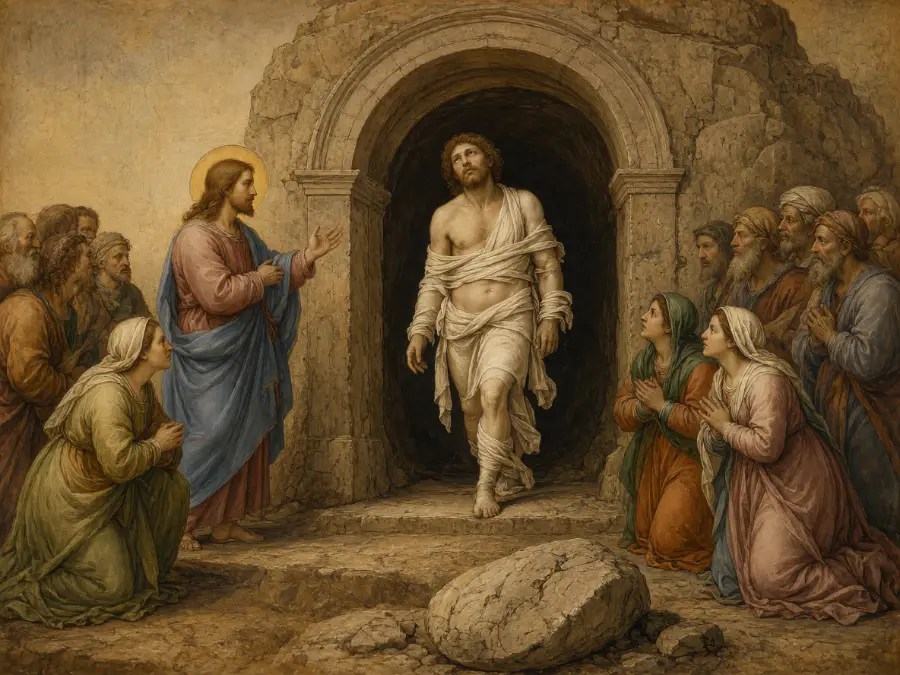
1 Peter 4:10
“As each has received a gift, use it to serve one another, as good stewards of God’s varied grace.”
Reflection: Peter writes with “The end of all things is at hand” (4:7) in view, and the commands in 4:8-10 concern other believers: keep loving one another earnestly, show hospitality “without grumbling,” and use each gift to serve. The holders of gifts are “good stewards of God’s varied grace”: the grace is God’s, and its use is for “one another.” Verse 11 names speaking and serving, and says the one who serves does so “by the strength that God supplies.”
Jesus as the one who serves

Mark 10:43-45
“But whoever would be great among you must be your servant, and whoever would be first among you must be slave of all. For even the Son of Man came not to be served but to serve, and to give his life as a ransom for many.”
Reflection: James and John had asked to sit “one at your right hand and one at your left, in your glory” (10:37), and the other ten were indignant at them (10:41). Jesus calls them to him and contrasts the rulers of the Gentiles, who “lord it over them,” with his own followers, whose great ones are to be servants and whose first is to be “slave of all.” The request came directly after Jesus had told the twelve that he would be condemned, mocked, flogged and killed in Jerusalem (10:32-34), and verse 45 makes his own service, up to giving his life “as a ransom for many,” the reason for the command.
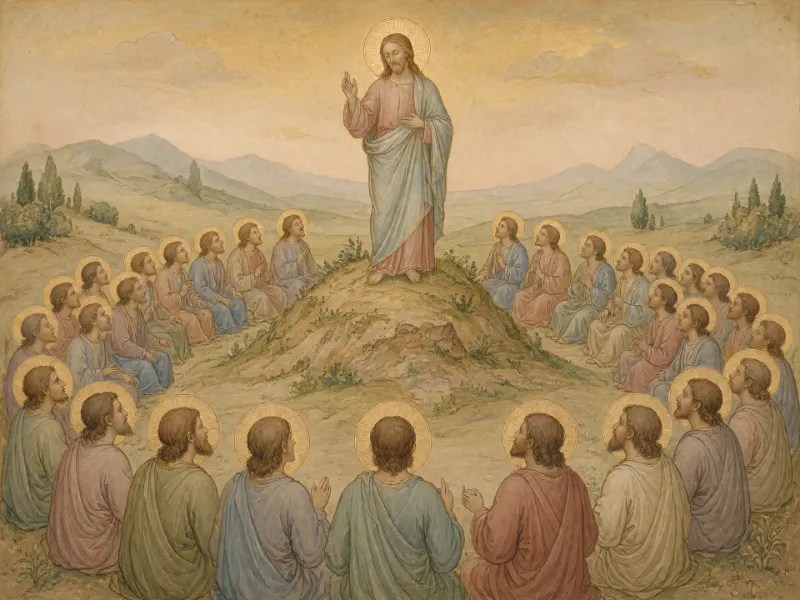
John 13:14-15
“If I then, your Lord and Teacher, have washed your feet, you also ought to wash one another’s feet. For I have given you an example, that you also should do just as I have done to you.”
Reflection: John sets the foot washing during supper before the Feast of the Passover, with Jesus “knowing that the Father had given all things into his hands” (13:1-3). He laid aside his outer garments, tied a towel around his waist and washed the disciples’ feet, and when he sat down again he asked, “Do you understand what I have done to you?” (13:12). If the Lord and Teacher washes feet, his followers cannot claim to be above it: “a servant is not greater than his master” (13:16).
Laying down one’s life
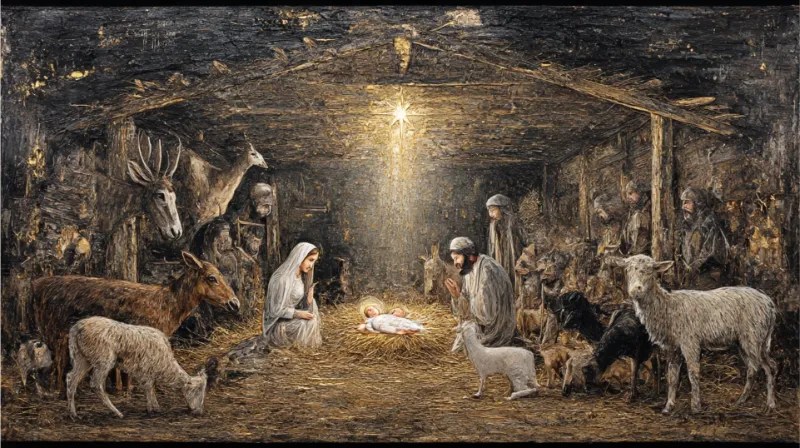
John 15:13
“Greater love has no one than this, that someone lay down his life for his friends.”
Reflection: The saying sits between the command “that you love one another as I have loved you” (15:12) and the words “You are my friends if you do what I command you” (15:14). The friends of verse 13 are the disciples Jesus is speaking to, and the love he describes there is the “as I have loved you” of the command before it.
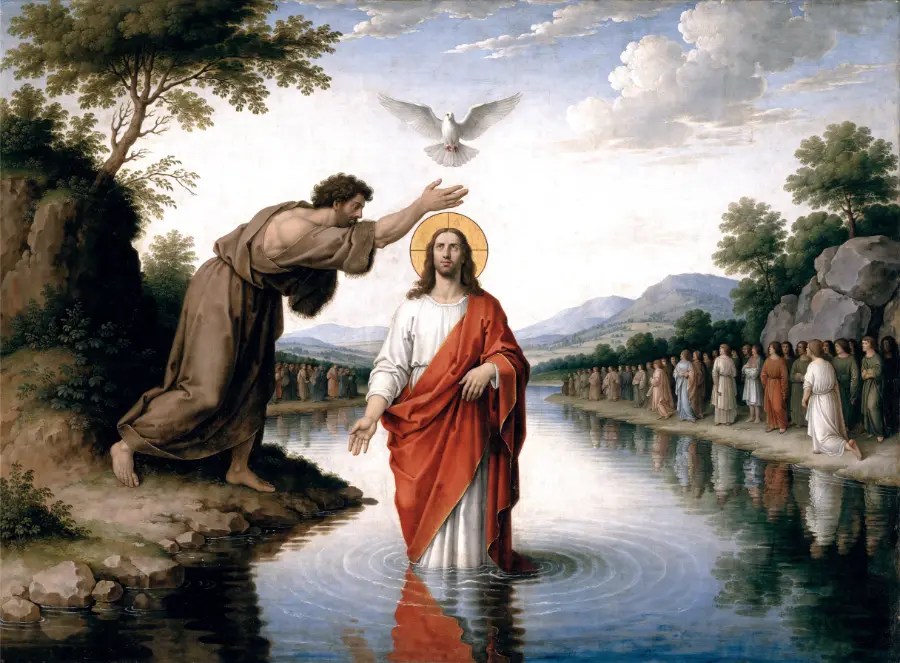
1 John 3:16
“By this we know love, that he laid down his life for us, and we ought to lay down our lives for the brothers.”
Reflection: The letter takes its definition of love from Jesus’ death, “he laid down his life for us,” and turns it straight into a duty owed among believers. The next verse brings it down to possessions: if anyone “has the world’s goods and sees his brother in need, yet closes his heart against him, how does God’s love abide in him?” (3:17). Verse 18 closes the thought: “let us not love in word or talk but in deed and in truth.”

Ephesians 5:1-2
“Therefore be imitators of God, as beloved children. And walk in love, as Christ loved us and gave himself up for us, a fragrant offering and sacrifice to God.”
Reflection: The “Therefore” reaches back to the end of chapter 4: “Be kind to one another, tenderhearted, forgiving one another, as God in Christ forgave you” (4:32). Paul measures walking in love by what Christ did: he “loved us and gave himself up for us,” an act described in the language of the altar as “a fragrant offering and sacrifice to God.” Later in the chapter the same words set the pattern for husbands, who are to love their wives “as Christ loved the church and gave himself up for her” (5:25).

Matthew 16:25
“For whoever would save his life will lose it, but whoever loses his life for my sake will find it.”
Reflection: Jesus has just begun to tell his disciples that he must suffer and be killed in Jerusalem, and Peter has rebuked him: “Far be it from you, Lord! This shall never happen to you” (16:21-22). Jesus answers that Peter is setting his mind “on the things of man,” then sets the terms for anyone who follows him: “let him deny himself and take up his cross and follow me” (16:24). The life lost in verse 25 is lost “for my sake,” and John 12:25 records a similar saying: “whoever hates his life in this world will keep it for eternal life.”

2 Corinthians 5:14-15
“For the love of Christ controls us, because we have concluded this: that one has died for all, therefore all have died; and he died for all, that those who live might no longer live for themselves but for him who for their sake died and was raised.”
Reflection: Paul names the love of Christ as what “controls us” and reasons from Christ’s death: “one has died for all, therefore all have died.” Verse 15 gives the purpose of that death, that the living “might no longer live for themselves” but for the one who died and was raised for them.
Carrying another person’s load

Galatians 6:2
“Bear one another’s burdens, and so fulfill the law of Christ.”
Reflection: The verse follows instructions for restoring someone “caught in any transgression,” gently and with a watch on oneself, “lest you too be tempted” (6:1). A chapter earlier Paul told the Galatians to “serve one another” through love, because “the whole law is fulfilled in one word: ‘You shall love your neighbor as yourself’” (5:13-14). Three verses on he adds that “each will have to bear his own load” (6:5), after telling each one to “test his own work” (6:4).

Luke 10:33-34
“But a Samaritan, as he journeyed, came to where he was, and when he saw him, he had compassion. He went to him and bound up his wounds, pouring on oil and wine. Then he set him on his own animal and brought him to an inn and took care of him.”
Reflection: Jesus tells the parable to a lawyer who, “desiring to justify himself,” had asked, “And who is my neighbor?” (10:29). After a priest and a Levite pass by on the other side, the Samaritan binds the man’s wounds, sets him on his own animal and the next day pays the innkeeper two denarii, promising to repay “whatever more you spend” (10:35). John’s Gospel notes that “Jews have no dealings with Samaritans” (John 4:9). Jesus turns the lawyer’s question around, asking which of the three “proved to be a neighbor,” and ends with “You go, and do likewise” (10:36-37).
Sharing what one has

Luke 3:11
“And he answered them, ‘Whoever has two tunics is to share with him who has none, and whoever has food is to do likewise.’”
Reflection: John the Baptist had told the crowds coming out to be baptized to “bear fruits in keeping with repentance” (3:8), and this is his answer when they ask, “What then shall we do?” (3:10). Tax collectors and soldiers ask the same question and get answers fitted to their work: collect no more than is authorized, do not extort, be content with wages (3:12-14). The crowds are told to share clothing and food with whoever has none.

Acts 2:44-45
“And all who believed were together and had all things in common. And they were selling their possessions and belongings and distributing the proceeds to all, as any had need.”
Reflection: Acts describes the believers in Jerusalem in the days after Pentecost (2:1), who sold “possessions and belongings” and distributed the proceeds “as any had need.” Acts 4:32 describes the same community: “no one said that any of the things that belonged to him was his own,” and 4:34 adds, “There was not a needy person among them.” When Ananias kept back part of the proceeds of his land, Peter told him, “While it remained unsold, did it not remain your own? And after it was sold, was it not at your disposal?” (5:4); the charge against Ananias was that he lied “to the Holy Spirit” (5:3).

Hebrews 13:16
“Do not neglect to do good and to share what you have, for such sacrifices are pleasing to God.”
Reflection: Hebrews 13 opens with “Let brotherly love continue,” hospitality to strangers, and remembering prisoners “as though in prison with them” (13:1-3). Verse 15 calls praise a sacrifice, “the fruit of lips that acknowledge his name,” and verse 16 adds doing good and sharing to “such sacrifices,” which please God.
A person’s own interests
Philippians 2:4 tells each believer to look “not only to his own interests, but also to the interests of others,” and Galatians 6 places “Bear one another’s burdens” (6:2) three verses before “each will have to bear his own load” (6:5). The command that the lawyer recites in Luke 10:27 and Paul quotes in Galatians 5:14, “You shall love your neighbor as yourself,” makes a person’s love for himself the measure of love for a neighbor, and Ephesians 5:29, in its passage on marriage, says that “no one ever hated his own flesh, but nourishes and cherishes it.”
Jesus’ sayings in Matthew 16:24-25 go further, to denying oneself and losing one’s life, and John 15:13 and 1 John 3:16 speak of laying it down. 1 John 3:17 applies that to the believer who has “the world’s goods” and sees a brother in need.


Leave a Reply