
 English
 Chinese
 Dutch
 Arabic
 Spanish
 Portuguese
 Russian
 French
 Italian
 German
 Japanese
Baptists and Catholics are both Christians, but they differ over baptism, Communion and who leads the church. Baptists baptize only believers, by immersion, see no change in the bread and cup of the Lord’s Supper, and let each congregation govern itself. Catholics baptize infants, believe Christ is truly present in the Eucharist, and follow the Pope and the bishops.
Start with what they share, because it is the heart of the faith. Both confess one God in three persons: “The eternal triune God reveals Himself to us as Father, Son, and Holy Spirit,” says the Baptist Faith and Message, and the Catholic Catechism speaks of “one God in three persons.” Both look to the death of Jesus on the cross for salvation. Beneath the differences that show lies a question of authority: Baptists test every belief against the Bible alone, while Catholics receive the Bible together with the Church’s Tradition and look to the Pope and the bishops to interpret both.
Baptist and Catholic beliefs side by side
Baptist churches are independent, so the Baptist column follows the Southern Baptist Convention’s confession, the Baptist Faith and Message 2000, and the Second London Baptist Confession of 1689 where it says more. Other Baptist bodies differ on some rows, women pastors above all.
| Baptist | Catholic | |
|---|---|---|
| Began | English exiles in Amsterdam, 1608 or 1609 | Traces itself to Christ and the apostles |
| Size | 53 million baptized believers in the Baptist World Alliance, which the SBC left in 2004 | About 1.422 billion baptized, infants included (2024) |
| Final authority | The Bible alone | Scripture and Tradition, interpreted by the Pope and bishops |
| Bible | 66 books | 73 books, including Tobit, Judith, 1 and 2 Maccabees, Wisdom, Sirach and Baruch |
| Leadership | Each congregation governs itself | The Pope, bishops, priests and deacons |
| Rites | Two ordinances: baptism and the Lord’s Supper | Seven sacraments |
| Baptism | Believers only, by immersion; a sign of faith already held | Infants and adults, by pouring or immersion; frees from sin |
| Communion | A memorial (SBC); Christ spiritually present to faith (1689) | Christ’s body and blood, truly present |
| Salvation | By personal faith in Christ; the SBC holds true believers never fall away, Free Will Baptists disagree | Justification given in baptism; grave sin loses it, confession restores it |
| After death | Heaven or hell | Heaven, hell, and purgatory for those still being purified |
| Mary and the saints | Mary honored as the virgin mother of Jesus; prayer to God alone | Mary conceived without sin and taken up to heaven; saints intercede |
| Ministers | Pastors and deacons; SBC pastors are men only | Men only; Latin Church priests normally celibate |
Is a Baptist church Catholic?
No. The Baptist Faith and Message describes a church as “an autonomous local congregation of baptized believers.” It answers to no bishop and no pope. Baptist churches join conventions and associations, such as the Southern Baptist Convention, which counted 12,331,954 members in 2025, but the same confession says such bodies “have no authority over one another or over the churches.” The Southern Baptist Convention voted in June 2004 to leave the Baptist World Alliance, so the Alliance’s worldwide count of 53 million baptized believers in 283 member conventions and unions does not include it. Because Baptists baptize only believers, it leaves out children; the Catholic count of about 1.422 billion (2024) includes everyone baptized Catholic, infants too.
A Baptist, then, is a Christian who is not a Catholic, and the Catholic Church agrees that Baptists are Christians. Its Catechism says of baptized believers outside its own communion: “All who have been justified by faith in Baptism are incorporated into Christ; they therefore have a right to be called Christians.”
Which came first?
The Catholic Church traces its beginning to Christ and the apostles; its Catechism calls the Pope “Bishop of Rome and Peter’s successor.” Baptists did not break away from Rome directly. The first Baptist church formed in Amsterdam in 1608 or 1609, among English separatists who had fled there after an English church court suppressed their congregations. Its leaders were John Smyth, once a Church of England priest, and Thomas Helwys. Having come to believe that baptism belongs to believers and not to infants, Smyth baptized himself and then the rest of the congregation, pouring water from a dipper. Immersion became the Baptist practice later. Helwys led his followers back to England and formed the first Baptist church there in 1611 or 1612.
Baptism: believers by immersion, or infants as well
The Baptist Faith and Message puts it in one sentence: “Christian baptism is the immersion of a believer in water in the name of the Father, the Son, and the Holy Spirit.” The confession calls it “an act of obedience symbolizing the believer’s faith in a crucified, buried, and risen Saviour,” and it acts out Paul’s words to the Romans:
“We were buried therefore with him by baptism into death, in order that, just as Christ was raised from the dead by the glory of the Father, we too might walk in newness of life.” (Romans 6:4, ESV)
The 1689 Confession says that those who profess repentance and faith “are the only proper subjects of this ordinance,” and that immersion “is necessary to the due administration” of it. A baby cannot profess faith, so Baptists do not baptize babies.
For Catholics, baptism does what it signifies. The Catechism teaches that “through Baptism we are freed from sin and reborn as sons of God,” and that “the Lord himself affirms that Baptism is necessary for salvation.” The same paragraph adds: “God has bound salvation to the sacrament of Baptism, but he himself is not bound by his sacraments.” Children are born with original sin, so they too need that new birth; the Catechism calls infant baptism “an immemorial tradition of the Church,” with explicit testimony from the second century. Immersion is allowed, and the Catechism calls triple immersion the “most expressive” form, but water has also been poured three times over the head “from ancient times.”
Catholic canon law says those baptized in another Christian community “must not be baptized conditionally” without serious reason to doubt the baptism, so a Baptist baptized with water in the name of the Trinity is not baptized again on becoming Catholic. A Catholic who joins a church that holds the Baptist Faith and Message is asked to be baptized by immersion, because that confession counts only a believer’s immersion as Christian baptism and makes it “prerequisite to the privileges of church membership.”
The Lord’s Supper and the Eucharist
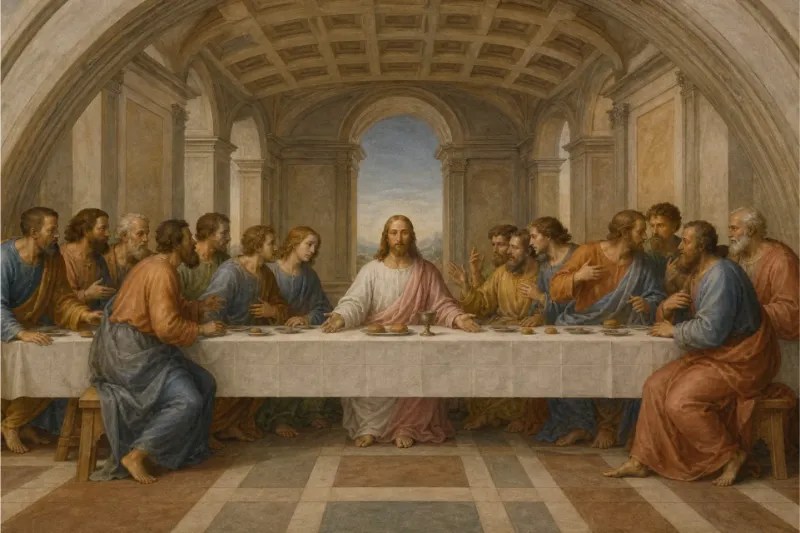
Both churches read Jesus’ words at the Last Supper, and they read them differently. Matthew records him saying, “Take, eat; this is my body.” Paul adds the command “Do this in remembrance of me.”
The Catholic Church takes “this is my body” at its word. Quoting the Council of Trent, the Catechism teaches that at the consecration “there takes place a change of the whole substance of the bread into the substance of the body of Christ,” which the Church calls transubstantiation. Christ is present “truly, really, and substantially,” and the Mass makes his one sacrifice present: “The sacrifice of Christ and the sacrifice of the Eucharist are one single sacrifice.” The Catechism also quotes John 6:53 as Christ’s invitation to receive him in the Eucharist: “unless you eat the flesh of the Son of Man and drink his blood, you have no life in you.”
The Baptist Faith and Message calls the Lord’s Supper “a symbolic act of obedience” in which church members “memorialize the death of the Redeemer and anticipate His second coming.” The older 1689 Confession rejects transubstantiation outright, yet it says more than memorial: believers “spiritually receive, and feed upon Christ crucified,” with his body and blood “spiritually present to the faith of believers.” Neither Baptist confession teaches that the bread changes.
The Pope, or the congregation
Catholics believe Christ gave his church a visible head. They read Jesus’ words to Peter in Matthew 16:18, “you are Peter, and on this rock I will build my church,” as founding an office that passes to each Bishop of Rome. The Catechism says the Pope has “full, supreme, and universal power over the whole Church.”
The Baptist Faith and Message cites the same passage in its article on the church and draws a different structure from it. Each congregation “operates under the Lordship of Christ through democratic processes,” and “each member is responsible and accountable to Christ as Lord.” The confession’s preamble names the convictions behind this: “We honor the principles of soul competency and the priesthood of believers.” Each believer answers to God directly, and, in the confession’s words on religious liberty, “God alone is Lord of the conscience.”
The Bible alone, or the Bible with Tradition
The Baptist Faith and Message calls the Bible “the supreme standard by which all human conduct, creeds, and religious opinions should be tried.” The 1689 Confession says nothing is to be added to Scripture, “whether by new revelation of the Spirit, or traditions of men.”
Catholics hold that God’s revelation reaches the Church through Scripture and Tradition together, which, “flowing out from the same divine well-spring, come together in some fashion to form one thing.” The Church “does not derive her certainty about all revealed truths from the holy Scriptures alone,” and the task of interpreting both “has been entrusted to the living teaching office of the Church alone”: the bishops in communion with the Pope.
The two Bibles also differ in length. The 1689 Confession lists 66 books and says the books “commonly called Apocrypha” are “no part of the canon.” The Catholic Old Testament has 46 books, seven more than the Baptist one, for 73 in all.
How each church says a person is saved
Both churches teach that salvation is a gift won by Christ and that no one earns the start of it. The Catechism says “no one can merit the initial grace of forgiveness and justification.” The Baptist Faith and Message says salvation “is offered freely to all who accept Jesus Christ as Lord and Saviour” and that “There is no salvation apart from personal faith in Jesus Christ as Lord.”
They part over how the gift is received and whether it can be lost. For Baptists, justification is “God’s gracious and full acquittal” of sinners “who repent and believe in Christ,” received by faith, and baptism follows as its sign. Those whom God has accepted “will never fall away from the state of grace, but shall persevere to the end,” the teaching many call once saved, always saved. Not every Baptist body agrees. Thomas Helwys’s Declaration of Faith of 1611 says “men may fall away from the grace of God,” and the National Association of Free Will Baptists teaches that a believer’s “final salvation” is “neither determined nor certain.”
For Catholics, “Justification is conferred in Baptism, the sacrament of faith,” and it “conforms us to the righteousness of God, who makes us inwardly just.” That grace can be lost: mortal sin “results in the loss of charity and the privation of sanctifying grace.” The sacrament of Penance, or confession to a priest, offers a way “to recover the grace of justification,” and every Catholic who has reached the age of discretion must confess serious sins “at least once a year.” The Catechism also teaches that believers moved by the Holy Spirit can then merit further grace, and it counts that merit as God’s own gift: “The merits of our good works are gifts of the divine goodness.”
Mary, the saints and purgatory
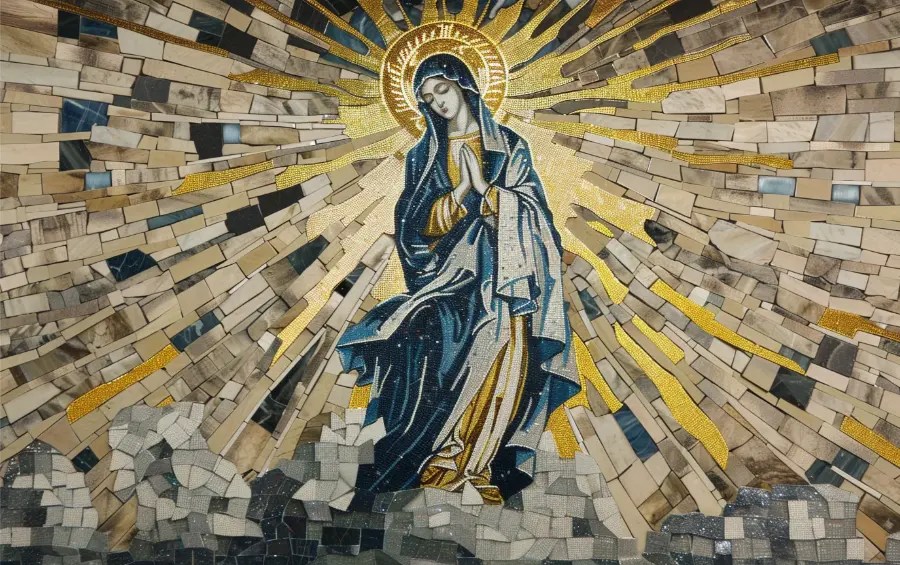
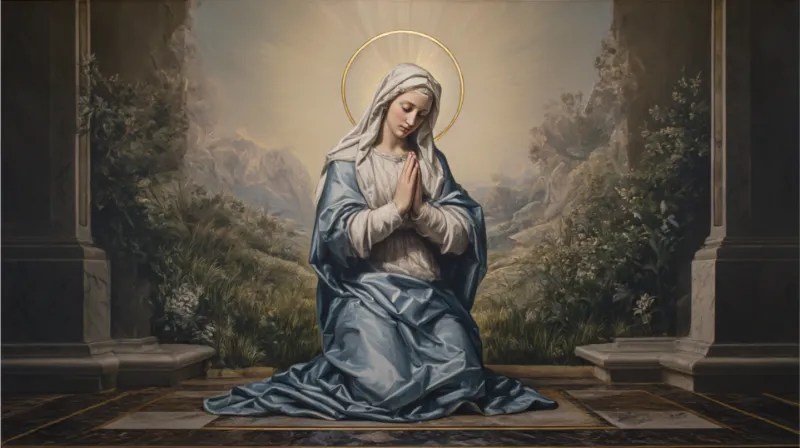
Baptists honor Mary as the mother of Jesus, who, in the words of their confession, was “born of the virgin Mary.” They do not pray to her or to the saints. The 1689 Confession says religious worship belongs to Father, Son and Holy Spirit “and to him alone; not to angels, saints, or any other creatures,” with no mediator “but Christ alone.”
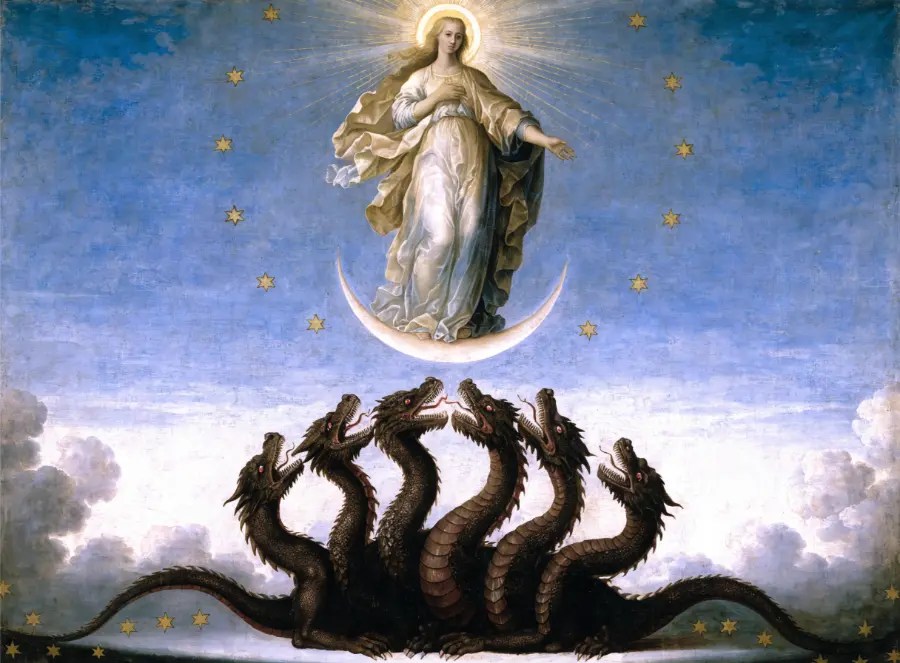
Catholic teaching says more about Mary. She was kept free of original sin from her conception, as Pope Pius IX defined in 1854, and, as Pope Pius XII defined in 1950, at the end of her life she “was taken up body and soul into heavenly glory.” Catholics ask Mary and the saints to pray for them, and the Catechism teaches that the saints “do not cease to intercede with the Father for us.” The honor given to Mary, it says, “differs essentially from the adoration which is given to the incarnate Word and equally to the Father and the Holy Spirit.”
The churches also differ on what follows death. The Baptist Faith and Message names heaven and hell. Catholics add purgatory: those “who die in God’s grace and friendship, but still imperfectly purified, are indeed assured of their eternal salvation; but after death they undergo purification.”
Pastors and priests
Catholic ordination is one of the seven sacraments. The Catechism says, “Only a baptized man (vir) validly receives sacred ordination,” and the Latin Church’s ordained ministers, apart from permanent deacons, are “normally chosen from among men of faith who live a celibate life.”
Baptists ordain but do not treat ordination as a sacrament; their confession names two offices, pastor and deacon, and sets no rule of celibacy. On women the Baptist family is divided. The Southern Baptist Convention amended its confession in 2023 and now says “the office of pastor/elder/overseer is limited to men as qualified by Scripture.” American Baptist Churches USA takes the other side: in June 2023 the board of directors of American Baptist Home Mission Societies said it “wholeheartedly affirms women pastors.”
Can Baptists and Catholics take Communion together?
Not as a rule. Catholic canon law says Catholic ministers give the sacraments “to Catholic members of the Christian faithful alone,” who likewise receive them “from Catholic ministers alone.” The Catechism explains that communities that came from the Reformation “have not preserved the proper reality of the Eucharistic mystery in its fullness, especially because of the absence of the sacrament of Holy Orders.” A Catholic therefore does not receive the Lord’s Supper at a Baptist service. Canon law allows a Baptist to receive at Mass only in danger of death or another grave necessity recognized by the bishop, and then only a Baptist who “cannot approach a minister of their own community,” asks freely, and shares “Catholic faith in respect to these sacraments.”
On the Baptist side, the Baptist Faith and Message makes believer’s baptism a prerequisite for the Lord’s Supper. A church that applies this strictly would not offer the Supper to a Catholic baptized as an infant, though each congregation decides its own practice.
Can a Baptist marry a Catholic?
Yes, on conditions the Catholic Church sets for its members. Such a mixed marriage “cannot be celebrated without the express permission” of the bishop or his delegate. Before permission is given, the Catholic promises to stay in the faith and to “do all in his or her power so that all offspring are baptized and brought up in the Catholic Church,” and the Baptist partner is told of that promise. The wedding normally takes place before a Catholic priest or deacon and two witnesses, though the bishop can dispense from that form for grave reasons.
The Baptist Faith and Message defines marriage as “the uniting of one man and one woman in covenant commitment for a lifetime” and sets no rule about marrying outside the denomination.
A Baptist and a Catholic who marry bring their churches’ differences into one home: the water, the bread, the question of who leads. They bring what their churches share as well, one God in three persons and salvation through the death of Jesus on the cross. Paul’s hope for the baptized is theirs together: “we too might walk in newness of life” (Romans 6:4).
Related reading
- Baptist vs Christian
- Methodist vs Baptist
- Catholic vs Methodist
- Why Do Catholics “Pray” to Mary?
- Baptist vs Southern Baptist: The SBC Is One Branch of the Baptist Family


Leave a Reply